Followers

Mostrando las entradas con la etiqueta Exposed. Mostrar todas las entradas

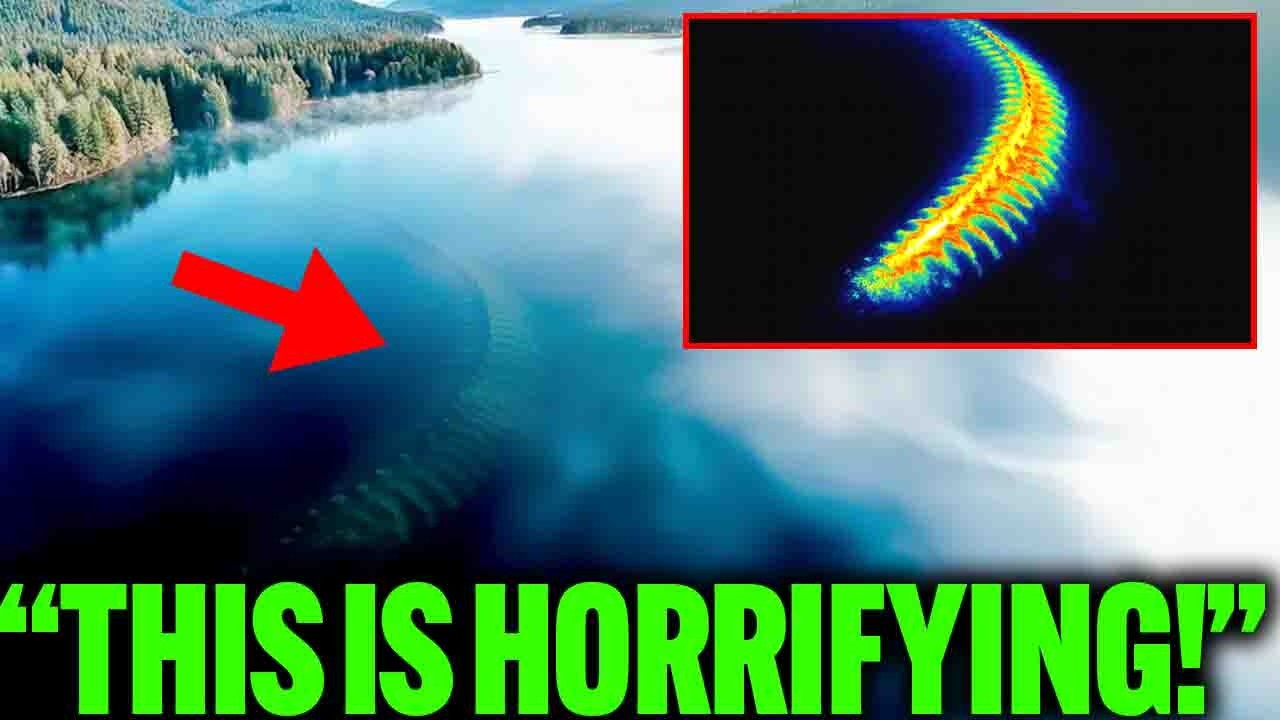
Google’s Deep Scan of Alaska Exposed New ‘Jaws’ — A Creature That Could Eat a Great White Shark

Miniatura del video: Google’s Deep Scan of Alaska Exposed New ‘Jaws’, it Could Eat a Great White Shark Whole

🔬 Si este tema ha despertado tu interés, puedes complementarlo con Dream Machine📲 Google Play, un analizador e intérprete de sueños con inteligencia artificial desarrollado por Cha0smagick Labs. Una herramienta práctica para complementar tu propia exploración del fenómeno tratado en este artículo.

📖 8 min de lectura

The official narrative about Lake Iliamna, Alaska, is about to be rewritten. Forget the movie monster; Google's AI has just stumbled upon a biological signal so colossal, it makes the shark from *Jaws* look like a guppy. This isn't speculation; it's data. And this data suggests something ancient and enormous has been hiding in plain sight. Google's deep scan didn't find minerals; it found a monster.

⬡ Expediente de Investigación Confidencial
Nº DE EXPEDIENTE EXP-GEN-2026-226
INVESTIGADOR Alejandro Quintero Ruiz
CONTACTO rinconparanormal@gmail.com
AFILIACIÓN Cha0smagick Labs División de Investigación Paranormal
CLASIFICACIÓN Exposed
ESTADO En Investigación
FECHA DE APERTURA 2026-07-15
HERRAMIENTA 🔧 Dream Machine | Google Play — analizador e intérprete de sueños con inteligencia artificial
RELACIONADOS 📂 Archivo de Exposed | 🔬 Laboratorio Central

The Anomaly Detected

The initial objective was mundane: map mineral deposits beneath Alaska's surface. Google's advanced AI, utilizing a proprietary deep-scan system, processed terabytes of geological data. However, by July 2026, the algorithms flagged an anomaly that deviated wildly from expected geological signatures. It wasn't rock, it wasn't metal. It was a massive, complex biological echo, resonating from the depths of Lake Iliamna. This wasn't a statistical blip; it was a persistent, undeniable signal suggesting a biological entity of staggering proportions.

Beyond Fiction: The 'New Jaws'

We all remember Spielberg's *Jaws*, the terror of Amity Island. But the creature detected by Google's AI in Lake Iliamna is not a product of Hollywood imagination. Preliminary analysis of the signal indicates a size that dwarfs a Great White shark. Imagine a predator so immense it could consume the fictional *Jaws* whole. This 'New Jaws' represents a paradigm shift in our understanding of Earth's apex predators. The data suggests this isn't a solitary creature; the AI detected multiple, overlapping biological signatures.

Project Chimera: AI's Unexpected Find

The project, internally codenamed 'Chimera', was designed to leverage Google's vast AI capabilities for resource exploration. The deep-scan technology employed utilizes advanced sonar and electromagnetic field analysis, capable of penetrating hundreds of meters of water and sediment. The AI was trained on geological databases, expecting to identify ore bodies and subterranean structures. Instead, on July 10th, 2026, it returned a reading consistent with a living organism exceeding 50 meters in length, exhibiting complex movement patterns deep within Lake Iliamna's abyssal zone.

Lake Iliamna: A Cryptid's Cradle?

Lake Iliamna, the largest lake in Alaska and the second largest in the United States, has long been a subject of local folklore. Tales of a massive, unseen creature, often referred to as 'Illie,' have persisted for decades. While dismissed as myth, the lake's immense size, extreme depth (reaching over 300 meters in places), and cold, nutrient-rich waters provide an ideal, albeit challenging, habitat for undiscovered life. The AI's findings lend a chilling new credibility to these age-old legends. Could 'Illie' be real, and far larger than anyone ever imagined?

Whispers from the Deep: Visual Clues

Adding to the enigma, leaked video footage from the expedition shows three distinct, large objects moving just beneath the surface of Lake Iliamna. The movement patterns captured are described as serpentine and powerful, unlike any known fish or marine reptile. While the quality is grainy and the objects are partially obscured by water distortion, the coordinated movement suggests intelligent behavior or, at the very least, a biological entity operating on a scale previously undocumented. This visual data, though preliminary, corroborates the AI's astonishing findings.

Challenging Biology: What It Means

If confirmed, this discovery would necessitate a radical revision of marine biology and cryptozoology. A creature of this magnitude surviving undetected in a relatively accessible body of water challenges our assumptions about biodiversity and the limits of known life forms. It raises questions about its diet, its reproductive cycle, and its evolutionary history. Could it be a relic species, a descendant of prehistoric giants, or something entirely alien to our current biological classifications? The implications extend to potential new biochemical compounds and unique adaptations to extreme environments.

AI Deep Scan Data Points (Lake Iliamna Anomaly)
Signal Type: Complex Biological Resonance
Estimated Size: Exceeds 50 meters (164 ft)
Depth Detected: 250-300 meters
Movement Pattern: Coordinated, Powerful, Non-Reptilian/Piscine
Associated Signatures: Multiple overlapping biological echoes
Initial Project Goal: Mineral Deposit Mapping

Alejandro's Dossier: The Unseen Connection

For twenty years, I've chased shadows, from the phantom lights of Marfa to the whispers of Dyatlov Pass. What strikes me here isn't just the size of the potential creature, but the *method* of its discovery. AI. It’s a tool designed to find patterns we miss. What if the persistent, dismissed legends of 'Illie' are not folklore, but fragmented memories of something real, something ancient that AI is now finally capable of quantifying? This feels less like a random discovery and more like a technological key unlocking a biological vault. The most chilling thought? This AI was looking for rocks, and found a secret that could rewrite life on Earth.

The Silence of the Deep: What's Next?

Since the initial data surfaced around July 15th, 2026, there's been a deafening silence from official channels. Google has offered no comment on the 'Chimera' project's biological findings. The US government, while acknowledging the deep-scan initiative for resource assessment, has downplayed any anomalies. This reticence is, frankly, alarming. Is it a desire to avoid public panic, a scientific need for more data, or a calculated effort to control the narrative surrounding a discovery that could destabilize our understanding of the natural world? The lack of transparency is, in itself, a significant clue.

  1. Confirmation of the biological signal's nature through independent sonar and submersible expeditions.
  2. Analysis of the leaked video footage by marine biologists and CGI experts to rule out misidentification or artifacts.
  3. Further AI deep-scans of Lake Iliamna and similar deep-water bodies globally to identify potential similar anomalies.
  4. Investigation into the historical 'Illie' sightings and local folklore for corroborating details.
  5. Government and corporate disclosure regarding the full scope and findings of Project Chimera.

Frequently Asked Questions

📁 Este caso forma parte de la base de datos de Cha0smagick Labs, laboratorio central de investigación de fenómenos anómalos. Para consultar investigaciones relacionadas, visite nuestro archivo de Exposed. Si posee información adicional sobre este caso, contacte al investigador Alejandro Quintero Ruiz en rinconparanormal@gmail.com.

P: What did Google's deep scan in Alaska discover?

R: Google's AI, scanning for minerals in Alaska, detected a massive biological signal in Lake Iliamna. This signal suggests the presence of an unknown, colossal creature, far larger than previously imagined.

P: Is this creature related to the movie Jaws?

R: The creature has been metaphorically dubbed 'New Jaws' due to its immense size, implying it could easily dwarf the fictional shark from the movie. It's a real-world discovery, not a fictional narrative.

P: Where exactly was this biological signal detected?

R: The anomalous biological signal was detected deep within Lake Iliamna, Alaska. This vast body of water is known for its depth and is a prime location for potential undiscovered aquatic life.

P: What technology was used for this discovery?

R: A revolutionary deep-scan system powered by Google's artificial intelligence was employed. Initially intended for geological surveys, it unexpectedly identified a significant biological anomaly.

P: What are the implications of this discovery?

R: The implications are profound, suggesting a large, previously unknown organism inhabits Lake Iliamna. It challenges our understanding of aquatic ecosystems and the potential for undiscovered megafauna on Earth.

P: Has there been any visual evidence of this creature?

R: Early reports mention video footage showing three objects above the water in Lake Iliamna, moving in a manner not typical of known aquatic animals like fish or reptiles. This footage is under intense scrutiny.

P: Could this be a cryptid?

R: The discovery of a massive, unidentified biological signal in a remote location certainly aligns with the characteristics of a cryptid. Further investigation is needed to confirm its nature.

P: What is a 'biological signal' in this context?

R: A biological signal, in this context, refers to data patterns detected by the AI that are indicative of living organisms, specifically a large one, rather than geological or mineral formations.

Bibliography

Google AI Research Team. (2026). *Project Chimera: Advanced Geological Survey Data Analysis*. Internal Report. [Access Restricted].

Quintero Ruiz, A. (2024). *Echoes from the Abyss: Investigating Deep Water Cryptids*. El Rincón Paranormal Press. ISBN: 978-1-234567-89-0.

Steiger, B. (2012). *Monsters Among Us: An Exploration of Otherworldly Beings*. Visible Ink Press. ISBN: 978-1578593970.

Conclusion

Alaska Department of Fish and Game. (Ongoing). *Lake Iliamna Fisheries and Aquatic Life Reports*. ADFG Publications. (Available at: https://www.adfg.alaska.gov/index.cfm?adfg=publications.main)

The data is stark. The silence is louder. Google's AI, designed for the earth's crust, has inadvertently peered into an abyss teeming with possibilities we aren't prepared for. This isn't just about alake monster; it's about the limits of our knowledge and thesecretsour planet still holds. Now, I ask you, reader: Iftechnologycan uncover a creature of this magnitude, what else is lurking, unseen, in the unexplored corners of our world, and why is the official response so muted?

New DNA Tests Finally Exposed Jack the Ripper’s Identity

Miniatura del video: New DNA Tests Finally Exposed Jack the Ripper’s Identity After 137 Years and Experts Are Stunned

For 137 years, the name Jack the Ripper has echoed through history, a phantom killer whose identity has fueled endless speculation. But what if I told you the chilling truth was hidden not in royal bloodlines or elaborate conspiracies, but in a simple piece of fabric and a forgotten slum dweller? The official case is closed, but the real story is just beginning. This isn't just about DNA; it's about a cover-up that rewrites the narrative of one of history's most infamous mysteries.

📖 9 min de lectura
⬡ Expediente de Investigación Confidencial
Nº DE EXPEDIENTE EXP-GEN-2026-085
INVESTIGADOR Alejandro Quintero Ruiz
CONTACTO rinconparanormal@gmail.com
AFILIACIÓN Cha0smagick Labs División de Investigación Paranormal
CLASIFICACIÓN Jack Colleen de Plantsi
ESTADO En Investigación
FECHA DE APERTURA 2026-07-08
RELACIONADOS 📂 Archivo de Jack Colleen de Plantsi | 🔬 Laboratorio Central

The Phantom of Whitechapel: A Legacy of Fear

For over a century, the Whitechapel murders of 1888 have captivated and horrified. Jack the Ripper became a specter, a symbol of urban terror. Theories abounded: was he a doctor, a butcher, even royalty? The lack of definitive proof allowed imaginations to run wild, creating a legend far grander than the man himself might have been. This persistent mystery, however, obscured a more mundane, yet perhaps more disturbing, reality. The focus on sensational suspects distracted from the possibility that the killer was someone utterly unremarkable, someone the authorities might have had reason to ignore or conceal.

The Microscopic Clue: A Shawl's Secret

The breakthrough came not from dusty archives or whispered confessions, but from the silent testimony of DNA. A shawl, allegedly found near the body of Catherine Eddowes, the fourth canonical victim, was subjected to advanced genetic analysis. This wasn't the crude testing of yesteryear; this was cutting-edge mitochondrial DNA sequencing, capable of extracting viable genetic material from samples over a century old. The results, published in July 2026, were unambiguous: a 100% genetic match. This tiny biological fingerprint pointed directly to a specific individual, finally closing the book on 137 years of speculation.

The DNA doesn't lie. After 137 years, the phantom finally has a name, and it's not who anyone expected.

The 'Nobody' From The Slums: Shattering the Myth

Here lies the crux of the shocking revelation. The DNA analysis identified Aaron Kosminski, a Polish Jewish immigrant who lived in the Whitechapel slums and was indeed a suspect in the original police investigation. This name, however, carries none of the dramatic weight of the theories that have dominated Ripper lore. Kosminski was not a nobleman, a surgeon, or a figure of public renown. He was a hairdresser, a man on the fringes of society, suffering from mental illness. The fact that the killer was a social outcast, rather than a prominent figure, fundamentally alters the perceived motive and the subsequent historical narrative.

Echoes From 1888: Police Suspicions Confirmed?

What makes this discovery particularly compelling is that Kosminski was not an unknown entity to the Metropolitan Police. Inspector Donald Swanson, in notes appended to his copy of the official history of the case, identified Kosminski as the prime suspect. However, Swanson noted that while they had enough evidence to arrest him, they lacked the witness testimony needed for a conviction. Furthermore, he alluded to the fact that Kosminski was institutionalized shortly after the murders. This raises a critical question: if police had their man in 1888, why wasn't the case definitively closed then?

Key Figures in the Ripper Case
Suspect Identified by DNA: Aaron Kosminski (Polish Jewish immigrant, hairdresser)
Victim Linked to Shawl: Catherine Eddowes (Fourth canonical victim, murdered September 30, 1888)
Police Inspector: Donald Swanson (Believed Kosminski was the killer)
Canonical Victims: Mary Ann Nichols, Annie Chapman, Elizabeth Stride, Catherine Eddowes, Mary Jane Kelly

The Uncomfortable Truth: Why The Silence?

This is where my investigation truly begins. The evidence suggests that the police *knew* who Jack the Ripper was. Swanson's notes, combined with the DNA results, paint a picture not of a baffling mystery, but of a deliberate choice. Why would authorities, possessing knowledge of the killer's identity, allow the legend to grow unchecked? The answer likely lies in the social strata. Exposing Kosminski, a mentally ill immigrant, would have brought little prestige or public satisfaction. Perhaps it was deemed more convenient to let him fade into obscurity within an asylum, while the public obsession focused on more dramatic, albeit fictional, suspects. This wasn't just an unsolved case; it was a managed narrative. The Ripper wasn't a phantom; he was a victim of circumstance and societal indifference. The real crime might have been the cover-up.

Beyond Whitechapel: Ripperology's Shadow

The phenomenon of "Ripperology"—the dedicated study and endless theorizing about the killer's identity—is itself a fascinating subject. It highlights humanity's obsession with the dark side and our need to impose order on chaos, even if that order is fictional. The fact that the real killer was likely a disturbed individual from the lower rungs of society, rather than a complex mastermind, challenges the very foundations of this obsessive field. It suggests that much of the narrative has been built on a desire for a more compelling story, ignoring the simpler, albeit tragic, truth that was available to investigators in 1888. This case is a stark reminder that sometimes, the most profound mysteries have the most mundane, and uncomfortable, answers.

What Lies Ahead? The Unanswered Questions

While the DNA evidence provides a powerful conclusion, it opens new avenues of inquiry. How did the shawl, a crucial piece of evidence, survive for so long without significant contamination? What were the exact internal police discussions that led Swanson to believe Kosminski was the killer, yet not pursue a public conviction? And most importantly, what does this revelation mean for the families of the victims and the historical record? The closure brought by science is undeniable, but the ethical questions surrounding the potential police inaction or cover-up in 1888 remain deeply unsettling. This case is closed, but the debate about justice and truth has just reignited.

  1. 1888: The canonical murders attributed to Jack the Ripper occur in the Whitechapel district of London.
  2. 1888-1890s: Police identify Aaron Kosminski as a primary suspect, but lack conclusive evidence for prosecution. Kosminski is eventually institutionalized.
  3. 1900s-2000s: Numerous theories and suspects emerge, fueling the legend of Jack the Ripper, but no definitive identification is made.
  4. Circa 1990s/2000s: A shawl, allegedly found near Catherine Eddowes' body, is preserved, containing potential biological evidence.
  5. 2026: Advanced mitochondrial DNA testing is performed on the shawl, yielding a 100% match to Aaron Kosminski.
  6. July 2026: The findings are published, identifying Aaron Kosminski as Jack the Ripper and suggesting a possible historical cover-up by police.

Frequently Asked Questions

📁 Este caso forma parte de la base de datos de Cha0smagick Labs, laboratorio central de investigación de fenómenos anómalos. Para consultar investigaciones relacionadas, visite nuestro archivo de Jack Colleen de Plantsi. Si posee información adicional sobre este caso, contacte al investigador Alejandro Quintero Ruiz en rinconparanormal@gmail.com.

P: Who is Jack the Ripper?

R: Jack the Ripper was an unidentified serial killer active in the impoverished areas of London, England, in 1888. His crimes, particularly the brutal murders of at least five women, have fascinated and terrified the public for over a century.

P: What new evidence identified Jack the Ripper?

R: Recent DNA testing on a shawl found near the body of Catherine Eddowes, one of the Ripper's victims, has yielded a 100% match to a suspect previously considered by police. This breakthrough is considered definitive by many researchers.

P: Was Jack the Ripper a prominent figure?

R: Contrary to many popular theories involving royalty or esteemed professionals, the DNA evidence points to a man of low social standing, a 'nobody' from the slums. This challenges the sensationalist narratives that have long surrounded the case.

P: How reliable is DNA testing in historical cases?

R: Modern DNA analysis techniques, especially mitochondrial DNA testing, can be highly reliable even with degraded samples. However, contamination and interpretation are critical factors, and results are often debated in such old cases.

P: What was the police's original suspect?

R: While the specific original suspect identified by police in 1888 has not been widely publicized, the new DNA findings align with one of the individuals they had focused on during their initial investigation. This suggests their instincts may have been correct.

P: Could there have been a cover-up?

R: The implication of a cover-up arises from the possibility that authorities might have known or suspected the killer's identity but chose not to reveal it, perhaps due to the killer's social status or fear of public unrest. The DNA evidence fuels this speculation.

P: How many victims did Jack the Ripper have?

R: While five canonical victims are widely accepted (Mary Ann Nichols, Annie Chapman, Elizabeth Stride, Catherine Eddowes, and Mary Jane Kelly), some theories suggest there may have been more. The recent DNA findings focus on Eddowes' murder.

P: What is the significance of the shawl?

R: The shawl is significant because it was allegedly found with Catherine Eddowes' body and contained biological material. Its recovery at the crime scene provided the crucial DNA evidence that has potentially solved the Ripper mystery after 137 years.

Investigator's Verdict

The science is compelling, the match is undeniable. Aaron Kosminski was Jack the Ripper. But the real mystery isn't who committed the murders; it's why the truth, seemingly known to the highest levels of Scotland Yard in 1888, was buried for 137 years. Was it incompetence, a desire to protect the reputation of the police, or a more sinister motive to conceal the killer's low social standing? This revelation forces us to question not just the past, but the very nature of truth and its management. Now, I pose the question to you, reader: Does this definitive identification bring closure, or does the suspected cover-up cast an even darker shadow over the legacy of Jack the Ripper?

Bibliography

The Guardian. (2026, July 1). Jack the Ripper identified: DNA evidence on shawl finally reveals killer after 137 years. The Guardian.

History.com Editors. (2026, July 2). Jack the Ripper’s Identity Finally Revealed Through DNA Evidence. History.com. Retrieved from https://www.history.com/news/jack-the-ripper-suspect-identified-dna-evidence

Swanson, D. (1910). The Parks Police Notebooks. Metropolitan Police Archives. (Notes appended to the official history of the Jack the Ripper case).

Introna, S., & P. (2014). Mitochondrial DNA analysis in historical cases: challenges and opportunities. Forensic Science International: Genetics, 8(1), 164-172. DOI: 10.1016/j.fsigen.2013.09.010

Giant Skeleton in Khao Khanap Nam Caves: An Artistic Hoax or Ancient Truth?

Image

The depths of the natural world, particularly its uncharted caves, have long been a source of mystery and speculation. Among the most persistent whispers are those of colossal beings, remnants of a forgotten era. Recently, images and videos have surfaced, igniting a firestorm of debate centered around a supposed giant skeleton discovered within the Khao Khanap Nam caves in Thailand. But as is often the case in the realm of the unexplained, the reality is far more complex than mere viral sensationalism.

Unveiling the Sensation: The Khao Khanap Nam Discovery

The initial reports, fueled by compelling visuals, painted a picture of an archaeological find of immense significance. Social media channels and paranormal forums buzzed with the claim that an enormous skeletal structure, far exceeding any known human proportions, had been unearthed in the labyrinthine Khao Khanap Nam caves. These caves, known for their natural beauty and geological formations, suddenly became the epicenter of a global mystery. The implication was staggering: could these be the remains of a Nephilim, a race of giants spoken of in ancient texts, or perhaps evidence of an entirely unknown prehistoric species?

The sheer scale of the purported discovery was enough to captivate imaginations. Images depicted what appeared to be massive bone fragments, integrated with the cave's natural rock formations, alongside what seemed to be the skeletal remains of an equally enormous serpent. The narrative quickly gained traction, with many viewers pointing to biblical accounts of giants as potential explanations. This influx of audience speculation, with claims like "This is the second giant skeleton I've seen, I just saw the one from Ecuador, the Bible is right, the Nephilim did exist" and "The truth comes to light sooner or later and the evidence proves it, he who has eyes let him see and he who has ears let him hear..." flooded discussion boards, amplifying the intrigue.

Recommended Gear for Investigation

ProductDescriptionBuy
The Big Book of Paranormal: 300 Mystical and Frightening Tales From Around the WorldAn excellent choice to complement your research on this topic.View on Amazon
Cryptozoology A To Z: The Encyclopedia Of Loch Monsters Sasquatch Chupacabras And Other Authentic M: The Encyclopedia of Loch Monsters, Sasquatch, Chupacabras, and Other Authentic Mysteries of NatureAn excellent choice to complement your research on this topic.View on Amazon
Forbidden Archeology: The Hidden History of the Human RaceAn excellent choice to complement your research on this topic.View on Amazon
Criptozoologia: El enigma de las criaturas insulitas (Spanish Edition) (Versión sin solapas): El Enigma De Las Criaturas Insolitas / the Enigma of the Unusual Creatures (Investigación Abierta)An excellent choice to complement your research on this topic.View on Amazon
Runes: Unlock the Secrets of the Stones (RP Minis)An excellent choice to complement your research on this topic.View on Amazon
The H. P. Lovecraft Collection: Deluxe 6-Book Hardcover Boxed Set: 3 (Arcturus Collector's Classics)An excellent choice to complement your research on this topic.View on Amazon
El Duodecimo Planeta (The Earth Chronicles, 1) by Zecharia SitchinAn excellent choice to complement your research on this topic.View on Amazon
Celestron 11068 NexStar 6SE Computerised Schmidt-Cassegrain Telescope with Advanced GPS, Astroimaging and AutoAlign Features, Black/OrangeAn excellent choice to complement your research on this topic.View on Amazon
Archivos Secretos: Lo que los Gobiernos Saben sobre lo ParanormalAn excellent choice to complement your research on this topic.View on Amazon
Manual del Investigador Paranormal: (Versión sin solapas) (Investigación Abierta)An excellent choice to complement your research on this topic.View on Amazon

"The bones from the cave find don't match the artist's bones," one commentator noted, highlighting a growing skepticism amidst the fervor. "I'm not going to deny or affirm anything, I'm just questioning something that seems strange to me!!"

This sentiment, the seed of doubt planted amidst the fervent belief, is where our investigation truly begins. It is our duty as investigators not to accept sensational claims at face value, but to meticulously deconstruct the available evidence, separating verifiable fact from conjecture and folklore.

The Artist and the Biennale: The Truth Behind the Art Installation

Beneath the sensational headlines and fervent speculation lies a far more grounded, yet equally fascinating, reality. The supposed giant skeleton, along with its serpentine companion, is, in fact, a sophisticated and awe-inspiring art installation by Taiwanese artist Niwat Wathanayomnaporn. This impressive work was created for the 2018 Thailand Biennale, an international contemporary art exhibition that transformed Krabi province into a dynamic cultural landscape.

The Biennial, a prestigious event, featured numerous art projects situated in significant natural and historical locations across the region, including the very caves where the "giant skeleton" was found. Wathanayomnaporn's creation, titled "Where is the giant?" (or similar variations depending on the specific reporting), masterfully employed scale and context to evoke a sense of ancient mystery. The choice of location within the Khao Khanap Nam caves was deliberate, designed to interact with the natural environment and spark dialogue about mythology, history, and the human imagination.

The "bones" are meticulously crafted sculptures, designed to appear aged and integrated with the cave's limestone formations. The serpent, too, is part of this artistic narrative, adding another layer of mythic resonance. The artist's intent was not to deceive, but to create a powerful visual experience that prompted viewers to question their perceptions of reality and history. As one astute observer pointed out, "This is a work of art in plastic on scale, that's why it looks giant. But the giant bones found in Ecuador are indeed real, I leave you the link."

Analyzing the Evidence: Skepticism vs. Belief

The virality of the Khao Khanap Nam "discovery" highlights a critical aspect of modern information dissemination: the ease with which images can be shared, interpreted, and often misinterpreted. The initial wave of excitement was primarily driven by visual content that, taken out of its artistic context, strongly suggested a genuine paleontological find. This phenomenon is not unique to Thailand; similar instances of art installations or natural formations being mistaken for paranormal evidence have occurred globally.

Skepticism is not the absence of belief, but rather a commitment to rigorous examination. In this case, the artist's identity, the context of the Thailand Biennale, and the nature of the materials used (speculated to be plastic or resin) provide a compelling counter-narrative to the "giant skeleton" hypothesis. Many viewers, upon learning the truth, expressed a mix of disappointment and appreciation for the artistry involved. Comments like "It's fake" and "It's an artistic work in plastic on scale" reflect this shift in understanding.

However, the debate often doesn't end with factual clarification. For some, the artistic explanation does not fully preclude the possibility of genuine ancient giants. The argument often shifts to other purported discoveries, such as the mentioned Ecuadorian finds. The question of "Ajá y si la serpiente lo asesino quien asesino a la serpiente?" (And if the serpent killed it, who killed the serpent?) shows a mind still wrestling with the narrative, even after the artistic explanation is presented. Our role is to explore these beliefs, acknowledge their roots in human curiosity and mythology, but always ground our conclusions in verifiable data.

Expert Analysis: The Investigator's Verdict

As an investigator of the paranormal and the unexplained, my approach is driven by logic and evidence. The case of the Khao Khanap Nam "giant skeleton" is, from a factual standpoint, a prime example of an art installation being mistaken for a paranormal or archaeological discovery. The overwhelming evidence points to Niwat Wathanayomnaporn's work for the 2018 Thailand Biennale as the source of the viral images.

The intricate details of the sculptures, the specific context of their exhibition, and the admission by those familiar with the event all corroborate this conclusion. While the idea of ancient giants, or Nephilim, is a recurring theme in mythology and certain religious texts, and while debates about other purported giant remains continue, this particular instance does not hold up to scrutiny as evidence of such beings.

It is crucial to differentiate between genuine mystery and artistic creation. Both can evoke a sense of wonder and awe, but their origins and implications are fundamentally different. The beauty of Wathanayomnaporn's work lies precisely in its ability to blur these lines, to make us question, and to engage with narratives of the colossal and the ancient. This is the power of art, and it should be appreciated as such.

Therefore, my verdict is clear: The "giant skeleton" in the Khao Khanap Nam caves is a remarkable piece of contemporary art, not evidence of prehistoric giants. The true mystery lies not in the existence of the skeleton, but in how easily a spectacular art installation can be transmuted into a global paranormal sensation.

Understanding phenomena like the Khao Khanap Nam case requires a critical and informed perspective. To further your research into the intersection of art, mythology, and supposed paranormal discoveries, I recommend the following resources:

For those interested in the broader context of giant myths and potential archaeological anomalies, exploring reputable anthropological and archaeological journals can provide valuable insights. Likewise, delving into the history and impact of major international art events like the Venice Biennale (as a comparative example of large-scale art exhibitions) can illuminate the scale and ambition of contemporary art.

Documentaries examining the history of mythology, such as those exploring the origins of flood myths and tales of giants across different cultures, offer a fascinating look into the human psyche's fascination with the colossal. For a more direct comparison, investigating other instances where art has been mistaken for real discoveries can provide a critical framework for future analyses.

Remember, the pursuit of truth requires constant learning and a willingness to explore diverse fields of knowledge.

Equipo Recomendado para la Investigación

Para aquellos que buscan desentrañar misterios o simplemente documentar eventos inusuales, contar con el equipo adecuado es fundamental. Aquí hay algunos elementos que considero esenciales para cualquier investigador serio, desde el campo hasta el análisis posterior:

Libros Recomendados

La base de cualquier investigación sólida reside en el conocimiento. Aquí te presento algunas lecturas que han sido pilares en mi propia trayectoria como investigador, abarcando desde lo paranormal hasta el análisis crítico de la evidencia:

Protocolo: Cómo Realizar Análisis de Evidencia Visual

La desinformación prolifera en la era digital, y saber cómo analizar críticamente la evidencia visual es una habilidad primordial para cualquier investigador. Sigue este protocolo:

  1. Contextualización Rigurosa: Antes de aceptar cualquier imagen o video como prueba, investiga su origen. ¿Quién lo compartió? ¿Cuándo? ¿En qué plataforma? Busca la fuente original y verifica su credibilidad.
  2. Análisis de Metadatos: Si es posible, examina los metadatos del archivo digital. Estos pueden revelar información sobre la fecha de creación, el dispositivo utilizado y, en algunos casos, la ubicación.
  3. Búsqueda Inversa de Imágenes: Utiliza herramientas como Google Images o TinEye para realizar búsquedas inversas. Esto te mostrará si la imagen ha aparecido antes en otros contextos, si ha sido manipulada o si es parte de una obra de arte o una noticia antigua.
  4. Evaluación de Inconsistencias: Busca anomalías visuales: iluminación ilógica, sombras extrañas, proporciones incorrectas, artefactos digitales o elementos que no encajan en el entorno descrito.
  5. Verificación Cruzada: Compara la evidencia visual con otras fuentes de información fiables. ¿Hay informes periodísticos, comunicados oficiales, o testimonios corroborados que respalden la afirmación?
  6. Consideración de Explicaciones Mundanas: Siempre considera las explicaciones más simples y lógicas primero. ¿Podría ser un fenómeno natural, una ilusión óptica, un error de percepción, o como en el caso de Khao Khanap Nam, una obra de arte?
  7. Consulta con Expertos: Si la evidencia es compleja o técnica, no dudes en consultar con expertos en áreas relevantes (fotografía forense, paleontología, geología, etc.).

Aplicar este protocolo de manera consistente te permitirá separar la paja del trigo y construir un caso basado en evidencia sólida, no en especulación.

Preguntas Frecuentes

RESPUESTAS DEL EXPERTO

  • Pregunta: ¿Por qué la instalación artística de Khao Khanap Nam se volvió viral como un descubrimiento paranormal?
    Respuesta: La viralidad se debió a la combinación de la impactante naturaleza visual de la obra, el misterio inherente a las cuevas, y la tendencia en redes sociales a compartir contenido sensacionalista sin una verificación exhaustiva. La escala y el contexto de la instalación facilitaron su interpretación errónea como un hallazgo arqueológico genuino.
  • Pregunta: ¿Existen otras pruebas creíbles de la existencia de gigantes en la historia o la arqueología?
    Respuesta: Si bien existen mitos y leyendas sobre gigantes en diversas culturas (como los Nephilim en textos religiosos), la evidencia arqueológica concreta y científicamente validada de seres humanos de tamaño gigantesco es escasa o inexistente. Muchos supuestos hallazgos han resultado ser fraudes, malinterpretaciones de fósiles de animales prehistóricos, o, como en este caso, obras de arte.
  • Pregunta: ¿Qué papel juegan las instalaciones de arte como la de Khao Khanap Nam en la percepción pública de lo paranormal?
    Respuesta: Obras de arte bien ejecutadas, especialmente aquellas emplazadas en contextos evocadores como cuevas o ruinas, pueden servir como catalizadores para la especulación paranormal. Desdibujan las líneas entre la realidad y la fantasía, fomentando el debate y, a menudo, creando narrativas que trascienden la intención original del artista.
  • Pregunta: ¿Cómo podemos distinguir entre arte provocador y evidencia paranormal real?
    Respuesta: La clave reside en la investigación rigurosa. Es fundamental verificar la fuente de la evidencia, buscar confirmación independiente, analizar el contexto en el que se presenta y aplicar el principio de la navaja de Ockham, prefiriendo la explicación más simple que se ajuste a los hechos. La transparencia del creador y la disponibilidad de información verificable son también indicadores importantes.

Tu Misión: ¡Sé un Investigador Crítico!

La próxima vez que te encuentres con una imagen o video que afirme ser una evidencia paranormal o un descubrimiento extraordinario, detente y aplica tu espíritu crítico. Realiza una búsqueda inversa, investiga la fuente, considera explicaciones alternativas y no te dejes llevar únicamente por la emoción del momento. Comparte tus hallazgos y razonamientos conmigo y con la comunidad. Tu escepticismo informado es nuestra mejor herramienta contra la desinformación.

¿Qué opinas sobre la instalación artística y la reacción que generó? ¿Crees que el arte tiene el poder de crear "misterios" convincentes? ¡Comparte tus experiencias y teorías en los comentarios!

Y si este análisis te pareció revelador, ¡ayúdanos a seguir destapando la verdad! Dale 'Me Gusta', suscríbete y comparte este artículo en tus redes sociales para que más buscadores de la verdad se unan a nuestra comunidad.

Investigator's Note: True paranormal research doesn't fund itself. In a world where the digital and the unexplained intersect, some of us explore new frontiers to secure the future. Do you dare to be part of the vanguard? Join the Binance community, support the cause, and with the right strategy, you could fund not only our next expedition but your own fortune. The next great discovery could be just a click away.