Followers

Mostrando las entradas con la etiqueta Unidentified Creatures. Mostrar todas las entradas

Unidentified Creatures: Investigating the Unexplained with "The Proof Is Out There"

Image

The world is teeming with mysteries, from fleeting glimpses of impossible beings to fleeting shapes in the sky. "The Proof Is Out There" makes it its mission to investigate these baffling encounters with unidentified creatures, pushing the boundaries of what we perceive as reality. As host Tony Harris, a veteran journalist, delves into photographic evidence, video footage, and eyewitness accounts, the question remains: what are these beings, and are they truly among us?

Introduction: Encounters with the Unknown

The HISTORY Channel's series "The Proof Is Out There" tackles those "seemingly impossible things 'caught on film'," and at the forefront of these investigations are unidentified creatures. These aren't just folklore or campfire tales; they are subjects of scrutiny, analyzed with the best technology and expert knowledge available. From alleged giant beasts to beings that defy classification, the series aims to separate fact from fiction. This investigative approach is crucial for understanding unexplained phenomena, and it's a methodology I, Alejandro Quintero Ruiz, have employed throughout my own career.

The nature of these encounters is as varied as the creatures themselves. Some reports detail massive aquatic beings, others speak of bipedal, hairy humanoids, while still others suggest interdimensional entities or genetically engineered monstrosities. The challenge lies in the ephemeral nature of such sightings – often fleeting, grainy, and open to interpretation. Yet, the sheer volume of these reports across different cultures and eras demands serious consideration.

Recommended Gear for Investigation

ProductDescriptionBuy
Cryptozoology A To Z: The Encyclopedia Of Loch Monsters Sasquatch Chupacabras And Other Authentic M: The Encyclopedia of Loch Monsters, Sasquatch, Chupacabras, and Other Authentic Mysteries of NatureAn excellent choice to complement your research on this topic.View on Amazon
The Big Book of Paranormal: 300 Mystical and Frightening Tales From Around the WorldAn excellent choice to complement your research on this topic.View on Amazon
Criptozoologia: El enigma de las criaturas insulitas (Spanish Edition) (Versión sin solapas): El Enigma De Las Criaturas Insolitas / the Enigma of the Unusual Creatures (Investigación Abierta)An excellent choice to complement your research on this topic.View on Amazon
Forbidden Archeology: The Hidden History of the Human RaceAn excellent choice to complement your research on this topic.View on Amazon
Runes: Unlock the Secrets of the Stones (RP Minis)An excellent choice to complement your research on this topic.View on Amazon
The H. P. Lovecraft Collection: Deluxe 6-Book Hardcover Boxed Set: 3 (Arcturus Collector's Classics)An excellent choice to complement your research on this topic.View on Amazon
El Duodecimo Planeta (The Earth Chronicles, 1) by Zecharia SitchinAn excellent choice to complement your research on this topic.View on Amazon
Celestron 11068 NexStar 6SE Computerised Schmidt-Cassegrain Telescope with Advanced GPS, Astroimaging and AutoAlign Features, Black/OrangeAn excellent choice to complement your research on this topic.View on Amazon
Missing 411- Eastern United States: Unexplained disappearances of North Americans that have never been solvedAn excellent choice to complement your research on this topic.View on Amazon
Ghost-Hunting For Dummies [Idioma Inglés] An excellent choice to complement your research on this topic.View on Amazon

Many viewers expressed their fascination and skepticism, with comments ranging from humorous takes on cryptid nomenclature ("How does Bigfoot pay for her groceries? Cryptid-currency.") to direct accusations of deception ("You people hide the truth from us, tell me everything you know."). This public discourse is vital; it fuels the investigation and highlights the differing perspectives on the evidence presented.

The Investigation Methodology: Beyond the Grainy Footage

"The Proof Is Out There" employs a rigorous methodology, aiming to deliver a "credible verdict" on each case. Host Tony Harris, a veteran journalist, leads this charge by tracking down eyewitnesses, subjecting photographic and film evidence to extensive testing, and meticulously calling out hoaxes. This multi-faceted approach is essential when dealing with claims of unidentified creatures.

The process often involves:

  • Eyewitness Interviews: Gathering firsthand accounts to understand the context and details of the encounter.
  • Expert Analysis: Utilizing specialists in various fields—from zoology to digital forensics—to examine the evidence.
  • Technological Scrutiny: Employing advanced tools to analyze video quality, photographic anomalies, and audio recordings for signs of manipulation or natural explanations.
  • Hoax Detection: Identifying and debunking fraudulent claims to maintain the integrity of the investigation.

This systematic approach mirrors the protocols I follow in my own investigations. It's easy to dismiss strange sightings, but as any seasoned investigator knows, the inexplicable often hides in plain sight, waiting for a keen eye and a methodical mind. The comments from the audience echo this sentiment, with one user noting, "Something behind that creature's head splashes the water, suggesting moveable ears or possibly a blow hole near the back of its head. Surprised none of the experts pointed that detail out." This keen observation from a viewer underscores the value of diverse perspectives in analysis.

The program's commitment to debunking hoaxes is particularly important. As one viewer cynically put it, "Most of it is publicity stunts. How else would you have even heard of these backward places?" While such cynicism is not uncommon, it highlights the public's demand for genuine evidence rather than manufactured sensationalism. The goal isn't just to sensationalize, but to uncover truth, however elusive.

Types of Unidentified Creatures: A Cryptid Compendium

The scope of "The Proof Is Out There" covers a wide array of cryptids and unexplained entities. The series investigates:

  • Giant Beasts: Reports of colossal animals, often aquatic or terrestrial, that defy known biological classifications.
  • Hairy Humanoids: Encounters with creatures resembling large, ape-like beings, most famously Bigfoot or Sasquatch, but also including figures like Dogman.
  • UFOs and Anomalous Aerial Phenomena: While often categorized separately, some UFO sightings involve occupants or beings that could be considered unidentified creatures.
  • Mutants and Genetic Anomalies: Speculation about creatures resulting from scientific experimentation or natural evolutionary divergences, as one comment suggested: "It is been known for a long time that the authorities of various countries (CHINA, RUSSIA, USA) are experimenting with human DNA and cross-breeding it with animal DNA."
  • Mythological Beings: Investigations into creatures deeply embedded in folklore and mythology, such as the Jersey Devil or potential depictions of fairies. One comment humorously points out, "#1..jersey devil? #2..definitely a fairy. Mr. Crocker can stop looking now. THEY'RE REAL! 😂😂".

The diversity of these reports is staggering. From the alleged "Goat Sucker" (Chupacabra) to creatures that might inhabit our freshwater systems, the evidence, however contentious, points to a world far stranger than often admitted. For instance, the mention of eels in Florida acting similarly to some reported creature behaviors offers a glimpse into how known biology can sometimes inform our understanding of the unknown.

However, skepticism is also a valid response, as seen in comments like "Such utter bull patties" or "Can you script it a little harder... it's ridiculously funny." This tension between belief and disbelief is where the true investigation lies. As one user pointed out a specific detail suggesting a potential "blow hole," it highlights how even blurry footage can spark insightful debate among viewers.

Equipment Recommended for Investigation

When venturing into the field, whether for personal exploration or professional research into unidentified creatures, having the right tools is paramount. Based on my experience and the types of evidence often presented in cases like those on "The Proof Is Out There," I recommend the following:

  • High-Resolution Cameras: Capable of capturing clear images and video in various lighting conditions. Night vision capabilities are essential for nocturnal encounters.
  • Audio Recorders: Sensitive enough to pick up subtle sounds, including potential vocalizations or environmental anomalies. Digital voice recorders for Electronic Voice Phenomena (EVP) are a staple.
  • EMF Meters: To detect fluctuations in electromagnetic fields, which are sometimes associated with paranormal activity or unknown energy sources.
  • Infrared Thermometers: To measure temperature variations in an area, which could indicate the presence of unseen entities.
  • Binoculars and Spotting Scopes: For observing distant phenomena without disturbing the environment.

The Verdict: Researcher's Opinion

From my perspective as an investigator of the unexplained, "The Proof Is Out There" represents a valuable, albeit sometimes sensationalized, effort to document and analyze claims of unidentified creatures. The show's commitment to journalistic rigor, spearheaded by Tony Harris, is commendable. It acknowledges that extraordinary claims require extraordinary evidence, and it attempts to apply that standard.

However, the nature of cryptid evidence is inherently challenging. Grainy footage, subjective eyewitness accounts, and the sheer difficulty of obtaining irrefutable proof mean that many cases remain firmly in the realm of "unexplained" rather than "proven." The comments from the audience reflect this spectrum of belief and skepticism. Some see clear evidence and believe authorities are hiding the truth ("You people hide the truth from us, tell me everything you know."), while others readily identify potential hoaxes or misidentifications ("1:30 that's a squirrel head and front shoulder & arm....or same body parts but from a fox baby").

My professional stance is one of open-minded skepticism. I do not discount the possibility of undiscovered species or unknown phenomena. However, I prioritize verifiable data and logical deduction. While shows like "The Proof Is Out There" may sometimes lean into dramatic presentation, they serve a vital purpose: they bring these fascinating anomalies to a wider audience and encourage critical thinking. The key is to approach such content not as definitive proof, but as compelling case files that warrant further investigation and open dialogue.

The assertion that "IF ITS NOT HUMAN ITS A FORM OF DEMON FOLKS!!!" is a common interpretation rooted in older belief systems, but from a scientific and parapsychological standpoint, we must first exhaust all natural explanations before resorting to supernatural ones. The investigation demands neutrality.

The Researcher's Archive

For those seeking to deepen their understanding of cryptids and unexplained phenomena, I recommend the following resources:

  • "The Field Guide to Bigfoot and Other Common Mystery Creatures" by Loren Coleman: A seminal work cataloging numerous cryptid reports and sightings.
  • "Cryptozoology A to Z: The Encyclopedia of the World's Most Wild," "Mysterious Creatures" by Karl Shuker: Comprehensive encyclopedias offering detailed entries on a vast array of cryptids.
  • Documentaries on Unidentified Aerial Phenomena and Anomalous Sightings: Exploring related phenomena can provide context for the broader landscape of the unexplained.
  • Paranormal Investigation Forums and Communities: Engaging with other researchers and enthusiasts online can offer diverse perspectives and shared experiences.

These resources, much like the investigative approach of "The Proof Is Out There," aim to compile and analyze evidence, pushing the envelope of our understanding.

Frequently Asked Questions

What is the primary goal of "The Proof Is Out There"?
The show aims to investigate mysterious videos, photos, and audio recordings, using technology and experts to determine the credibility of claims, including those involving unidentified creatures.
How does the show handle potential hoaxes?
Host Tony Harris and his team explicitly test evidence to identify and debunk fraudulent claims, ensuring a more rigorous assessment of credible cases.
Can viewers submit their own evidence?
Yes, viewers interested in submitting content can visit the official HISTORY website for "The Proof Is Out There" submission page and agree to the terms and conditions.
What types of creatures are typically investigated?
The show investigates a wide range of phenomena, including giant beasts, hairy humanoids, UFO-related entities, and creatures stemming from folklore or alleged scientific experiments.
What is the general audience reaction to the show?
Audience reactions vary widely, from enthusiastic belief and detailed analysis of evidence to outright skepticism and accusations of sensationalism or staged content.

Your Mission: Become a Citizen Investigator

The world is full of mysteries waiting to be understood. "The Proof Is Out There" might present compelling cases, but the true spirit of investigation lies in your own curiosity and critical analysis. Your mission, should you choose to accept it, is to approach every unexplained phenomenon with an open mind, but a critical eye. When you encounter something out of the ordinary, whether it's a strange sound, an odd light, or a fleeting glimpse of something unidentifiable, don't dismiss it outright. Document it. Analyze it. Compare it to known phenomena. Share your findings and engage in respectful debate. The more we collectively observe, question, and analyze, the closer we may get to understanding the true nature of our reality.

Share your own experiences or thoughts on unidentified creatures in the comments below. Have you ever witnessed something you couldn't explain? Let us know! And if you found this analysis compelling, spread the word by sharing this post on your social media channels. Together, we can illuminate the shadows of the unknown.

```

Investigator's Note: True paranormal research doesn't fund itself. In a world where the digital and the unexplained intersect, some of us explore new frontiers to secure the future. Do you dare to be part of the vanguard? Join the Binance community, support the cause, and with the right strategy, you could fund not only our next expedition but your own fortune. The next great discovery could be just a click away.

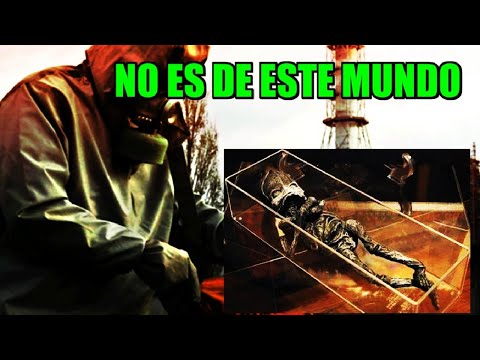
The Siberian Anomaly: Is This 'Non-Human' Creature the Proof We've Been Seeking?


Introduction: Whispers from the Taiga

The vast, untamed wilderness of Siberia has long been a canvas for the inexplicable. From the Tunguska event to tales of unknown creatures lurking in its depths, the region consistently fuels our fascination with the unknown. Today, we dissect a claim that has ignited the paranormal community: the purported discovery of a non-human creature in the remote reaches of Russia. This isn't about spectral apparitions or fleeting UFOs; this is about a physical anomaly, a potential biological outlier that challenges our understanding of life itself. Prepare to examine the evidence, or lack thereof, as we open the file on this Siberian enigma.

Case File: The Siberian Anomaly

The claim emerged on August 3, 2022, disseminated through channels like TOPVIDEO MAKER, a platform known for its curation of the unusual and unexplained. The central assertion: a creature, distinctly non-human in its characteristics, was discovered in Russia. The details, as is often the case with such sensational claims, are sparse and fragmented. We are presented with a viral assertion, often accompanied by limited visual or testimonial data, demanding our rigorous scrutiny. Was this a genuine biological discovery that slipped through scientific cracks, a elaborate hoax designed to capture attention, or perhaps something else entirely—a misidentification, a legend amplified by the digital age?

The narrative surrounding such discoveries rarely adheres to a linear progression. Instead, it tends to coalesce around specific pieces of evidence, often presented without robust verification. In such cases, the investigator's duty is to peel back the layers of assertion and speculation to find any kernel of verifiable truth. The Siberian anomaly, by its very nature, invites comparison to established fields such as cryptozoology and the broader study of anomalies. While definitive proof remains elusive, the persistence of such narratives warrants a structured examination.

Analysis of Evidence: Beyond Human Ken?

When confronted with claims of a "non-human" entity, the first and most crucial step is to evaluate the available evidence critically. In the context of the Siberian discovery, this primarily involves examining any visual or testimonial accounts. The initial reporting often consists of short video clips or blurry photographs. My experience has taught me that such media, while compelling at first glance, are frequently susceptible to several pitfalls:

  • Pareidolia and Apophenia: Our brains are wired to find patterns, even where none exist. Blurry shapes in shadows or ambiguous forms in low-resolution footage can easily be anthropomorphized into something extraordinary.
  • Intentional Fabrication: The digital age has democratized content creation, but it has also made fabrication easier than ever. Hoaxes, from simple doctored images to elaborate staged events, are a constant concern in paranormal investigation.
  • Misidentification: Siberia is home to a diverse range of fauna. A poorly lit or partially obscured view of a known animal, especially one exhibiting unusual behavior or in an unexpected locale, could be misinterpreted as something entirely novel.

For any claim of a "non-human" discovery to hold water, it must possess a series of characteristics that defy conventional explanation. These would include, but are not limited to: anatomical features demonstrably outside the known biological spectrum, consistent and verifiable eyewitness accounts from multiple credible sources, and ideally, physical evidence such as biological samples or definitive tracks that can withstand scientific analysis. The Siberian anomaly, as presented, largely falters on these critical criteria. The visual artifacts, often the primary evidence, tend to be too ambiguous to conclusively identify any subject, let alone classify it as non-human.

"The burden of proof lies with the claimant. Extraordinary claims require extraordinary evidence, and a grainy video from an unverified source does not meet that threshold." - A.Q.R.

The technical aspects of photographic and video evidence are paramount. Issues like motion blur, poor lighting conditions, lens distortion, and digital compression artifacts can all conspire to create misleading impressions. Without access to raw, unedited footage and detailed metadata (such as camera type, settings, and GPS coordinates, if available), any interpretation remains speculative. Furthermore, the context in which such evidence is presented is critical. Viral dissemination through unverified channels like social media often bypasses the peer-review process essential for scientific validation, prioritizing sensationalism over accuracy.

Geographical and Historical Context

Siberia, occupying over 77% of Russia's territory, is a land of extremes. Its immense size, sparse population, and harsh climate have historically served as a fertile ground for myths, legends, and unexplained phenomena. The region's rich history of shamanism and indigenous folklore includes numerous tales of spirits, animalistic entities, and beings that blur the line between the mundane and the supernatural. This cultural backdrop is important; it primes a population and an audience to accept narratives of the extraordinary. Known phenomena, such as the anomalous seismic activity in the region or the persistent folklore surrounding "bigfoot" or "wildman" type creatures in various cultures, provide a framework upon which new claims can be grafted.

Historically, claims of unusual biological discoveries in remote regions have often been met with skepticism, only for some to be later explained by science. However, the reverse is also true: many purported discoveries remain unexplained, fueling ongoing debate. The scientific community's approach to such claims is typically cautious, demanding rigorous methodology and repeatable results. The alleged Siberian creature falls into a category that, without verifiable physical samples, remains within the realm of cryptozoology and speculative inquiry. For a more comprehensive understanding of similar phenomena, exploring resources on cryptozoology and historical accounts of unidentified creatures is recommended.

Investigator's Verdict: Fraudulent Hoax or Genuine Enigma?

Based on the typical presentation of such viral claims, particularly those emerging from unverified social media channels, my assessment leans heavily towards a sophisticated hoax or a significant misidentification. The lack of verifiable, high-quality evidence—such as clear video footage, authenticated biological samples, or corroborating testimony from independent, credible sources—precludes a definitive classification as a genuinely "non-human" entity. The narrative, while intriguing, lacks the substance required for serious scientific or investigative consideration.

The history of paranormal investigation is littered with cases that initially appeared extraordinary, only to be debunked as elaborate hoaxes or simple misunderstandings. The ease with which digital media can be manipulated means that extraordinary visual claims must be treated with extreme caution. Without independent verification and rigorous scientific analysis, the "Siberian Anomaly" remains, at best, an unsubstantiated anecdote that piques curiosity but fails to advance our understanding of the unknown.

The Researcher's Archive

For those seeking to delve deeper into the study of unidentified creatures and anomalous phenomena, certain resources are indispensable:

  • Books:
    • "The Field Guide to Bigfoot and Other Mystery Primates" by Loren Coleman and Patrick Huyghe: A foundational text for cryptozoological research.
    • "The Beasts That Vanish: Discovering the Mythical Creatures of the Wilderness" by Brian Regal: Explores the cultural context and scientific investigation of cryptids.
    • "The Coming of the Saucers" by George Adamski: While focused on UFOs, it touches upon the perceived biological nature of some alleged extraterrestrial visitors, a related concept to 'non-human' entities.
  • Documentaries:
    • "Finding Bigfoot" (Animal Planet series): Though often dramatized, it showcases the methods and challenges of searching for unknown species.
    • "The Mysterious Death of Elisa Lam" (Netflix): A case study in how limited evidence in a specific location can lead to rampant speculation, highlighting the importance of critical analysis.
    • UFO Documentaries exploring alleged alien encounters often discuss the physical characteristics of supposed extraterrestrials, providing context for 'non-human' forms.
  • Platforms:
    • Gaia.com: A streaming service with a vast library of content on paranormal, spiritual, and alternative science topics, often featuring discussions on unidentified beings.
    • The extensive archives found on sites like Wikipedia for Cryptozoology and specific alleged creatures offer a starting point for factual background checks and historical context.

Field Protocol: Documenting Unidentified Organisms

Should you ever encounter what you believe to be an unidentified organism, maintaining a disciplined investigative approach is paramount. Follow these steps diligently:

  1. Observation Without Contamination: Observe from a safe distance without approaching or disturbing the subject. Note its behavior, size, shape, color, and any distinguishing features.
  2. Documentary Evidence: If possible and safe, use still photography and video recording. Aim for multiple angles and maintain focus. Document the surrounding environment for context.
  3. Environmental Context: Record details about the location—terrain, vegetation, weather conditions, time of day, and any unusual atmospheric phenomena.
  4. Sensory Inputs: Note any unusual sounds, smells, or tactile sensations associated with the encounter. This is where tools like EMF meters or audio recorders might prove useful in identifying subtle anomalies.
  5. Personal Testimony: Record your experience immediately afterward, detailing everything you remember, no matter how insignificant it may seem. Be specific about your emotional state and any perceived threats.
  6. Seek Corroboration: If others were present, interview them separately to gather independent accounts and compare them.
  7. Physical Evidence (with Extreme Caution): If any physical trace is left behind (e.g., footprints, hair, scat), document it thoroughly in situ before considering collection. Collection should only be attempted with appropriate safety gear and protocols, ideally with the intention of submitting it for scientific analysis.

Remember, the goal is not sensationalism, but documentation. The more objective and detailed your record, the more valuable it becomes for subsequent analysis, whether by yourself or by external investigators and scientists.

Frequently Asked Questions

Q1: What is the specific location in Siberia where this creature was allegedly found?
A1: The exact geographical coordinates or even the general region have not been definitively provided in the widely circulated reports. This lack of specificity is a common characteristic of unverified claims.

Q2: Has any scientific body or research institution officially commented on or investigated this supposed discovery?
A2: To date, there have been no credible reports of official scientific bodies investigating or validating the claim of a "non-human creature" discovered in Siberia based on the information circulating on social media.

Q3: What are the most common explanations for alleged sightings of unknown creatures?
A3: Common explanations include misidentification of known animals, hoaxes, pareidolia, hallucinations, and atmospheric or lighting effects. These are the first avenues of investigation for any paranormal researcher.

Q4: How can I differentiate between a genuine anomaly and a digital manipulation?
A4: Look for inconsistencies in lighting, shadows, proportions, and resolution. Advanced forensic analysis can often detect digital alterations, but a critical eye trained in recognizing common digital artifacts is also valuable.

Your Mission: Document Your Local Anomalies

The world is full of mysteries waiting to be cataloged. While sensational claims from distant lands capture our attention, the most valuable field research often begins in our own backyards. Your mission, should you choose to accept it, is to become the chronicler of your local unexplained. Whether it's a strange sound in the woods behind your house, an inexplicable light in the night sky over your town, or an oddity reported in local folklore, document it. Use the principles of our Field Protocol: observe, record, and contextualize. The most profound discoveries often start with the quiet observation of the seemingly mundane. Share your findings (with due caution and anonymity if necessary) and let us analyze them together.

alejandro quintero ruiz is a veteran field investigator dedicated to the analysis of anomalous phenomena. His approach combines methodological skepticism with an open mind to the inexplicable, always seeking the truth behind the veil of reality.

Bigfoot, Phantom Women, and Unidentified Creatures: An Examination of \"Scary Comp. V50\"


{
  "title": "Scary Comp. V50",
  "content": "in this scary comp we are going to see bigfoot and ghost of a woman in an abandoned place and a scary and creepy looking creature caught on camera by a couple so lets start the scariest videos caught on camera #ScaryVideos #ScaryComp #ScaryGhostVideos #GhostVideos Copyright Disclaimer under section 107 of the Copyright Act 1976, allowance is made for “fair use” for purposes such as criticism, comment, news reporting, teaching, scholarship, education and research. Fair use is a use permitted by copyright statute that might otherwise be infringing."
}

Introduction: The Allure of the Anomalous

The digital age has become an unparalleled archive of the strange. Within the vast expanse of video content, compilations like "Scary Comp. V50" emerge, promising glimpses into phenomena that defy conventional explanation. These collections, often pieced together from user-submitted footage and anecdotal accounts, tap into a primal human curiosity about the unknown. They present a curated selection of alleged encounters with beings and specters, from the elusive Bigfoot to apparitions in desolate locales and inexplicable creatures captured on camera. Our task here is not to simply consume these visuals, but to dissect them with the rigor of an investigative mind, separating potential truths from elaborate deceptions.

Case Files: Deconstructing the Footage

"Scary Comp. V50" purports to showcase three distinct categories of anomalous events. The common thread? A visual medium, the camera, acting as the witness to the extraordinary. This reliance on photographic or video evidence, while compelling, is also our primary point of critical inquiry. The history of paranormal investigation is littered with hoaxes, misidentifications, and pareidolia masquerading as genuine phenomena. Therefore, each segment within this compilation warrants a meticulous, almost forensic, examination.

The Bigfoot Enigma: Primate or Phantom?

The legend of Bigfoot, or Sasquatch, is deeply embedded in North American folklore, with alleged sightings spanning decades and vast geographical regions. The typical portrayal is that of a large, hairy, ape-like hominid. The visual evidence presented in such compilations often consists of fleeting glimpses, lumbering figures in dense forests, or large footprints. A critical analysis must first consider the possibility of misidentification: bears, deer, or even individuals in costumes can be mistaken for the creature, especially under duress or in low-light conditions. Furthermore, the grainy, often unstable nature of amateur footage makes definitive identification nearly impossible. We must ask: Does the footage present characteristics unique to the Bigfoot narrative, or could it be explained by known zoological or human activity? The consistent lack of definitive, irrefutable physical evidence, such as clear DNA samples or a verifiable carcass, fuels the debate between cryptozoology and outright myth.

For those seeking to delve deeper into the Bigfoot phenomenon, resources like the Wikipedia entry on Bigfoot offer a broad overview of reported sightings, cultural impact, and scientific skepticism. Investigating the methodologies used in alleged Bigfoot hunts, such as the use of cryptid hunting equipment, can also provide insight into the serious, albeit often inconclusive, efforts to document these elusive creatures.

Spectral Occupant: The Woman in the Abandoned Place

Abandoned locations are fertile ground for ghost stories. Their decay, silence, and association with past human lives lend themselves to spectral interpretations. When footage emerges from such a place, depicting a figure that resembles a woman, the immediate assumption for many is a residual haunting or an intelligent apparition. However, the principles of investigative analysis dictate that we first eliminate all mundane explanations. Could the figure be a trick of light and shadow, a reflection, a transient observer, or an intentional addition to the footage? The psychological phenomenon of pareidolia—the tendency to perceive a specific, often meaningful, image in a random or ambiguous visual pattern—plays a significant role here. The human brain is wired to find faces and forms, especially in environments that evoke a sense of unease. A proper investigation would analyze the lighting, the context of the filming, and any corroborating testimonies. Was the place truly empty? Were there any known historical connections to a female presence? Without such details, the spectral claim remains speculative.

The study of apparitions and residual hauntings is a cornerstone of paranormal investigation. For further understanding of these concepts, one might consult works by renowned researchers like Ed and Lorraine Warren, whose case files often detail spectral encounters in abandoned or historically significant sites. Learning to differentiate between actual paranormal activity and natural phenomena like light refractions is paramount.

The Unidentified Creature: Apparition or Hoax?

The third element presented is a "scary and creepy looking creature caught on camera by a couple." This is perhaps the most ambiguous category. Without specific details about the creature's appearance or the circumstances of the filming, analysis becomes highly speculative. Is it an animal unknown to science (a cryptid)? Is it a known animal captured in an unusual pose or condition? Or is it, as is often the case with such footage, a deliberate fabrication designed to shock or deceive? The "creepiness factor" is subjective and often employed in hoaxes to sensationalize otherwise mundane imagery. The fact that it was captured by a "couple" might suggest a personal encounter, but it also opens the door to collusion.

Analyzing such footage requires a comparative approach. Does the creature resemble known cryptids like the Chupacabra, or does it have features that point towards it being a digitally manipulated image or a misidentified local fauna? The tools used by investigators often include advanced video analysis software, which can help detect digital artifacts indicative of manipulation. Understanding the common tropes and visual cues of modern monster myths is crucial in assessing such claims.

Analysis of Evidence: Skepticism Meets the Unexplained

The compilation's reliance on visual evidence alone presents a significant challenge to rigorous analysis. In each segment, we must apply a hierarchy of evidence, prioritizing verifiable data over subjective interpretation. For Bigfoot, this means examining gait patterns, scale, and potential environmental interactions, while remaining aware of the photographic limitations and the prevalence of elaborate hoaxes. For the ghost, the focus shifts to environmental anomalies, corroborating sensory data (if any), and the elimination of natural light phenomena. For the unidentified creature, the analysis leans heavily towards digital forensics and comparative zoology.

The primary tools for debunking or validating such evidence are critical thinking and a thorough understanding of common visual anomalies. Is the lighting consistent with the purported environment? Are there digital artifacts suggesting editing? Do the movements or behaviors depicted align with known biological or physical principles? The term "#ScaryVideos" itself suggests a genre intended for entertainment, blurring the lines between genuine mystery and manufactured fright. Exploring resources on paranormal investigation techniques, such as the use of EMF meters and audio recorders for corroborating evidence (EVP), highlights what is typically missing from such compilations: multi-sensory data and controlled observation.

"The camera sees what it sees, but the mind interprets what it wants to see. Our job is to ensure the latter doesn't override the former." - A.Q.R.

Investigator's Verdict: Myth, Misidentification, or Genuine Anomaly?

Based on the limited information provided by the description of "Scary Comp. V50," a definitive verdict is impossible. However, as an investigator, my default position is one of profound skepticism, tempered by an openness to the truly anomalous. The compilation presents classic archetypes of unexplained phenomena: the cryptid, the spectral resident, and the unknown entity. Each requires its own rigorous investigative approach. Without access to the raw footage and accompanying data, we are left to evaluate the claims based on a generalized understanding of similar cases. Most compilations of this nature lean heavily towards misidentification, pareidolia, and outright fabrication. The consistent lack of irrefutable, scientifically verifiable evidence across these categories, despite decades of alleged sightings, suggests that while the *desire* to believe is strong, the *proof* remains elusive. The most significant anomalies will always demand more than fleeting video clips; they require comprehensive, multi-faceted investigation that stands up to intense scrutiny. Until such rigorous evidence surfaces for these specific clips, they remain firmly in the realm of entertaining speculation.

The Investigator's Archive

For those seeking to deepen their understanding of these phenomena and the methodologies used to investigate them, the following resources are invaluable:

  • Books:
    • "The Mysterious World" by Charles Fort: A foundational text cataloging unexplained phenomena.
    • "The Bigfoot File" by Ken Gerhard: A comprehensive look at the evidence and theories surrounding Bigfoot.
    • "Ghost Hunting For Dummies" by John Frasier: A practical guide to paranormal investigation techniques.
  • Documentaries:
    • "Finding Bigfoot" (Series): Explores various alleged Bigfoot sightings across North America.
    • "A Haunting" (Series): Dramatizations and investigations of alleged paranormal activity.
    • "The Phenomenon" (2020 Film): A modern exploration of UFOs and government secrecy.
  • Platforms:
    • Gaia.com: Offers a wide range of documentaries and series on consciousness, spirituality, and the paranormal.
    • Discovery+ / Streaming Services: Regularly feature paranormal investigation shows and documentaries.

These resources provide context, explore different theoretical frameworks, and showcase the tools and techniques employed by both skeptics and believers in the field of paranormal research.

Your Field Mission

Your mission, should you choose to accept it, is to become your own investigator. The next time you encounter a compilation of "scary videos," do not simply consume it. Pause. Analyze. Ask yourself: What mundane explanation could account for this? Is there any corroborating evidence beyond the visual? Could this be a product of pareidolia, misidentification, or digital manipulation? Furthermore, consider the source. If a video is presented anonymously or under a generic title like "Scary Comp. V50," its credibility is inherently low. Your critical faculties are your most powerful investigative tools. Report back your findings in the comments below. What inexplicable footage has challenged your skepticism the most?

alejandro quintero ruiz is a veteran field investigator dedicated to the analysis of anomalous phenomena. His approach combines methodological skepticism with an open mind to the inexplicable, always seeking the truth behind the veil of reality.