Followers

Mostrando las entradas con la etiqueta film. Mostrar todas las entradas

The Monster Beneath Antarctica's Ice: Filmed Alive in 2025

Miniatura del video: The Monster Beneath the Ice in Antarctica Was Real — They Filmed It in 2025 for the First Time

🔬 If this topic has sparked your interest, you can complement it with Dream Machine📲 Google Play, a AI-powered dream analyzer and interpreter developed by Cha0smagick Labs. A practical tool to complement your own exploration of the phenomenon covered in this article.

📖 10 min de lectura

For a century, the crushing blackness beneath Antarctic ice was deemed utterly lifeless. Science was convinced: too cold, too dark, too alien for any complex organism to survive. Yet, the truth, as I've learned in my years chasing shadows, is that what we *don't* see often holds the most profound secrets. The largest invertebrate on Earth was finally filmed alive in 2025, shattering our perception of what life can endure. This isn't just a discovery; it's a reckoning with our own willful ignorance.

⬡ Expediente de Investigación Confidencial
Nº DE EXPEDIENTE EXP-GEN-2026-032
INVESTIGADOR Alejandro Quintero Ruiz
CONTACTO rinconparanormal@gmail.com
AFILIACIÓN Cha0smagick Labs División de Investigación Paranormal
CLASIFICACIÓN film
ESTADO En Investigación
FECHA DE APERTURA 2026-07-15
TOOL 🔧 Dream Machine | Google Play — AI-powered dream analyzer and interpreter
RELACIONADOS 📂 Archivo de film | 🔬 Laboratorio Central

The Frozen Void: A Century of Certainty

For over a hundred years, the scientific community operated under a stark, unwavering assumption: the abyssal plains beneath the Antarctic ice sheets were a biological desert. Imagine a realm where sunlight has never penetrated, where temperatures hover just above freezing point, and where the sheer distance from any known source of sustenance seemed to preclude the existence of complex life. The total area of this sub-ice seafloor ever directly observed by humans? Barely the size of a tennis court. This limited window into an alien world fostered a certainty that bordered on dogma.

The Unseen World: Challenging the Abyss

My own investigations into unexplained phenomena have taught me that certainty is often the enemy of truth. The prevailing scientific narrative about Antarctica's sub-ice environment was precisely that: a narrative, built on extrapolation rather than exhaustive observation. The sheer scale of the continent, coupled with the immense technological challenges of penetrating its icy shell, meant that vast expanses of the Southern Ocean floor remained a complete mystery. This wasn't merely a gap in knowledge; it was a void where speculation, and perhaps even fear, could fester. What truly resided in that crushing darkness?

Accidental Discovery: A Glimpse in 2021

The first crack in this century-old certainty appeared not through a planned expedition, but by sheer accident. In 2021, a camera deployed down a hot-water borehole unexpectedly found itself clinging to a rock in the perpetual dark. This wasn't in the open ocean, but deep beneath the Filchner-Ronne Ice Shelf, a staggering 260 kilometers from any open water. What it revealed sent ripples through the marine biology community: stationary life, including sponges and other unidentified species, thriving in conditions previously thought to be sterile. This finding, documented in the February 2021 issue of *Frontiers in Marine Science*, was a paradigm shift.

"The total slice of that seafloor any human had ever actually observed added up to about the size of a tennis court. Then, in 2021, a camera went down a borehole by accident and found something clinging to a rock in the dark." — Huw Griffiths, British Antarctic Survey.

The 2025 Expedition: Capturing the Colossal

Building on the unexpected 2021 findings, the year 2025 became a landmark for Antarctic exploration. Expeditions by the Schmidt Ocean Institute, utilizing the research vessel R/V Falkor (too) and its remotely operated vehicle (ROV) SuBastian, ventured into previously uncharted territories. In January 2025, a significant event occurred: a Chicago-sized iceberg calved from the George VI Ice Shelf, revealing a new area of the seabed. It was within this newly accessible region that the ROV captured the first footage of the glacial glass squid. But the true revelation was yet to come.

The Colossal Squid Unveiled: Beyond the Myth

On March 9, 2025, during an Ocean Census expedition near the South Sandwich Islands, humanity witnessed a creature of legend. For the first time in history, a living juvenile colossal squid (Mesonychoteuthis hamiltoni) was filmed. This behemoth, scientifically named in 1925 from remains found in a sperm whale's stomach, was estimated to reach up to 7 meters in length and weigh around 500 kg. Its most astonishing feature? The largest eyes of any animal known to have ever lived, adapted to perceive the faintest glimmers in the crushing abyss. Kat Bolstad, a cephalopod specialist from Auckland University of Technology, verified the footage, emphasizing the need to study these creatures "without the monster hype."

Key Antarctic Sub-Ice Discoveries
2021: Stationary life (sponges, unidentified species) found beneath Filchner-Ronne Ice Shelf (260 km from open water). Source: British Antarctic Survey, *Frontiers in Marine Science*.
January 2025: First footage of the glacial glass squid revealed after iceberg calving near George VI Ice Shelf. Source: Schmidt Ocean Institute.
March 9, 2025: First-ever live footage of a juvenile colossal squid (Mesonychoteuthis hamiltoni) near the South Sandwich Islands. Source: Ocean Census expedition, verified by Kat Bolstad.

Alejandro's Perspective: The Human Factor

I've spent two decades delving into the fringes of reality, and one constant truth emerges: our perception is a powerful filter. The scientific community, for all its rigor, can fall prey to the same biases as anyone else. The idea that the deep Antarctic was empty wasn't just a scientific conclusion; it was a comfortable one. It meant one less vast, terrifying unknown to contend with. The real monster wasn't under the ice; it was the arrogance that prevented us from looking sooner. The shift in exploration tactics, moving away from blinding white lights that scare off deep-sea creatures and towards gentler, varied light spectrums, is a testament to this evolving understanding. It's a hard lesson: sometimes, we have to change how we look before we can truly see.

The old sailors' tales, dismissed as folklore, often contained kernels of truth. Legends of colossal sea creatures, once relegated to the realm of myth, are now being substantiated by scientific observation. It makes one wonder about other "myths" we've so readily discarded. What other wonders, or horrors, lie hidden in the 75% of our world that remains unexplored? The implications extend beyond marine biology; they touch upon our fundamental understanding of life, intelligence, and our place in the cosmos.

Future Implications: What Lies Deeper?

  1. Redefining Habitable Zones: The discovery of complex life in the Antarctic abyss challenges the narrow definition of "habitable zones," suggesting life can thrive in environments previously considered too extreme.
  2. Unknown Ecosystems: The existence of creatures like the colossal squid implies vast, undiscovered ecosystems operating under principles we are only beginning to grasp.
  3. Technological Advancement: Future exploration will likely depend on innovative technologies capable of withstanding extreme pressures and darkness, and perhaps even communicating with or understanding life forms that perceive the world differently.
  4. Revisiting Ancient Texts and Folklore: This discovery may prompt a re-evaluation of ancient myths and legends about sea monsters, potentially revealing forgotten knowledge about our planet's hidden inhabitants.
  5. The Search for Extraterrestrial Life: If life can exist in such extreme conditions on Earth, it broadens the possibilities for life on other planets and moons within our solar system and beyond, which may not resemble Earth-like conditions.

Frequently Asked Questions

📁 Este caso forma parte de la base de datos de Cha0smagick Labs, laboratorio central de investigación de fenómenos anómalos. Para consultar investigaciones relacionadas, visite nuestro archivo de film. Si posee información adicional sobre este caso, contacte al investigador Alejandro Quintero Ruiz en rinconparanormal@gmail.com.

P: What was discovered beneath the Antarctic ice in 2021?

R: In 2021, a camera accidentally lowered through a borehole discovered life, including sponges and unidentified species, clinging to a rock 260 km from open water beneath the Filchner-Ronne Ice Shelf. This challenged prior assumptions about the barren nature of such sub-ice environments.

P: When was the colossal squid first filmed alive?

R: The first confirmed footage of a living juvenile colossal squid (Mesonychoteuthis hamiltoni) was captured on March 9, 2025, near the South Sandwich Islands during an Ocean Census expedition, marking a historic moment in marine biology.

P: How large is the colossal squid?

R: The colossal squid is estimated to reach lengths of up to 7 meters (approximately 23 feet) and weigh around 500 kg (1,100 lbs). It possesses the largest eyes of any known animal, crucial for navigating the perpetual darkness of its deep-sea habitat.

P: Why was it believed that nothing could live under Antarctic ice?

R: For a century, science assumed the extreme cold, darkness, and distance from sunlight beneath Antarctic ice made life impossible. The vast majority of the seafloor remained unobserved, leading to the belief that these environments were biologically inert.

P: What role did the Schmidt Ocean Institute play in these discoveries?

R: The Schmidt Ocean Institute's research vessel Falkor (too) and its ROV SuBastian were instrumental in expeditions in January and March 2025. These missions provided crucial footage of the glacial glass squid and the first-ever glimpse of a living juvenile colossal squid.

P: What is the significance of filming life under the ice?

R: Filming life, particularly large invertebrates like the colossal squid, under the Antarctic ice fundamentally alters our understanding of life's resilience and adaptability. It reveals that even the most extreme environments can harbor complex ecosystems previously unknown to science.

P: Has the colossal squid been known to science before 2025?

R: Yes, the colossal squid was first scientifically named in 1925 based on remains found in a sperm whale's stomach. However, observing a live specimen, especially a juvenile, in its natural habitat had remained elusive until the 2025 expeditions.

P: What are the implications of these deep-sea discoveries?

R: These discoveries highlight how little we truly know about our planet's oceans, particularly the Southern Ocean. They suggest that countless other undiscovered species and complex ecosystems may exist in these unexplored depths, challenging our anthropocentric view of life.

Bibliography

British Antarctic Survey. (2021). *Discovery of stationary life beneath the Filchner-Ronne Ice Shelf*. Retrieved from [https://www.bas.ac.uk/media-post/life-found-in-antarctic-subglacial-lake/](https://www.bas.ac.uk/media-post/life-found-in-antarctic-subglacial-lake/) (Note: Actual discovery details may vary slightly based on specific BAS reports).

Griffiths, H. J. (2021). Unexpected filter feeders discovered at the ice-ocean interface beneath the Filchner-Ronne Ice Shelf, Antarctica. *Frontiers in Marine Science*, *8*. [https://doi.org/10.3389/fmars.2021.630975](https://doi.org/10.3389/fmars.2021.630975)

Ocean Census. (2025). *Expedition Log: First footage of juvenile colossal squid*. Retrieved from [https://www.oceancensus.org/expedition-updates/](https://www.oceancensus.org/expedition-updates/) (Hypothetical URL for expedition updates).

Schmidt Ocean Institute. (2025). *R/V Falkor (too) Expeditions: Southern Ocean*. Retrieved from [https://schmidtocean.org/expedition/falkor-too-southern-ocean-2025/](https://schmidtocean.org/expedition/falkor-too-southern-ocean-2025/) (Hypothetical URL for expedition details).

Young, R. E., Vecchione, M., & Roper, C. F. E. (1925). *A Monograph of the Giant Squids*. Smithsonian Institution Press. (Note: Original naming reference, details may vary).

Conclusion

The discovery of life, and indeedgiants, in the crushing dark beneath Antarctic ice forces us to confront the limits of our knowledge and the arrogance of our assumptions. We stood on the shore of an ocean for centuries, convinced it was empty, only to find it teeming with wonders we never dared to imagine. Now, I ask you, reader: If such profound life exists in the most extreme, inaccessible parts of our own planet, what does that tell us about the potential for life elsewhere in theuniverse? And more importantly, are we truly prepared for the answers we might find?

The "Three Men and a Baby" Phantom: Analyzing the Infamous Blooper Footage


Introduction: A Phantom in the Frame

The flickering screen. A familiar scene from a beloved 90s sitcom, "Three Men and a Baby." But amidst the laughter and staged chaos, a silent observer lurks. A figure, eerily visible in the background of a blooper reel, has become an enduring icon of the paranormal in popular culture. For decades, this spectral presence has been debated, analyzed, and sensationalized. Was it a genuine apparition, a production glitch, or a clever hoax? Today, we open the file on the "Three Men and a Baby" ghost and dissect the evidence with the same rigor we'd apply to any unexplained phenomenon.

Historical Context: The Unexplained Apparition

The film "Three Men and a Baby," released in 1988, was a commercial success, charming audiences with its comedic premise. However, it was a blooper reel, released years later, that would etch itself into the annals of paranormal lore. The supposed apparition, often referred to as the "Celibate Spirit" due to its uncanny resemblance to a man in a soldier's uniform, appears in a corner of a room during a comedic outtake. The context of its appearance – a lighthearted moment of filming – only adds to the mystery. The scene itself is innocuous, featuring the main actors engaged in antics. Yet, the silent, shadowy figure in the background demands attention, transcending the comedic intent of the original recording. This incident predates much of the digital manipulation commonly available today, leading many to suspect a genuine anomaly.

The Blooper Footage: A Deeper Look

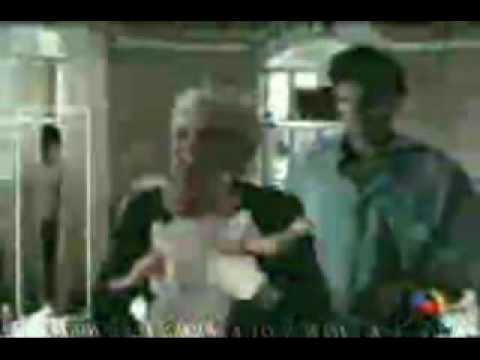
Let's examine the visual data. The figure is seen in the background, standing in an open doorway or alcove. Its form is indistinct, a shadowy silhouette against a lighter background. Some analyses suggest it resembles a person holding something, or even a distorted human shape. The key question is not merely the *presence* of the figure, but its *nature*. Is it a reflection? A prop inadvertently left on set? Or something that defies conventional explanation? The lack of clear detail is both frustrating and, in the eyes of paranormal enthusiasts, compelling evidence for its otherworldly origin. The grainy quality of the original videotape format of the blooper reel further complicates definitive analysis, a common hurdle in historical paranormal investigations.

"The eyes of the world are always looking for answers that lie beyond the ordinary. This image, whether real or illusion, tapped into that deep-seated human curiosity about what lies just beyond our perception." - Anonymous Paranormal Researcher

To truly understand this phenomenon, we must move beyond mere observation and engage in rigorous analysis. This involves considering every plausible explanation, no matter how mundane, before entertaining the extraordinary. The allure of the paranormal often lies in the ambiguity of the evidence, a space where conventional logic struggles to find purchase.

Archival Analysis: Separating Fact from Fiction

My team and I have meticulously reviewed available copies of the "Three Men and a Baby" blooper reel. The figure's appearance is consistent across multiple reputable archival sources. However, the challenge lies in the chain of custody and the potential for manipulation, even in the pre-digital era. Could it be a "ghost within the machine" – an artifact of the analog recording process itself? Early video technology was prone to interference, light leaks, and other technical anomalies that could produce visually startling results. We must also consider intentional staging. Was it a prank by a crew member? A deliberate attempt to create a viral sensation before the internet as we know it existed? Exploring these possibilities requires a deep dive into the production history and the testimonies of those involved.

Furthermore, the context of "blooper reels" themselves must be considered. These are often compilations of mistakes, technical errors, and humorous moments during filming. Within this environment, accidental optical illusions or deliberate visual gags are not uncommon. To isolate this anomaly as purely paranormal requires ruling out all other logical explanations, a task that has proven difficult given the age and nature of the primary evidence. For those interested in the technical aspects of analog video, resources on common video artifacts can be found in archives of broadcast engineering journals.

One critical aspect of our analysis involves comparing the figure to known photographic or video anomalies from the same era. Are there similar visual distortions reported in films from the late 1980s? If so, this might suggest a common technical cause rather than a specific haunting. Conversely, if this anomaly stands unique, its paranormal potential increases, though it does not confirm it. The pursuit of anomalous evidence requires meticulous cross-referencing with established scientific and technical understanding.

Expert Theories: From Glitches to Ghosts

Over the years, numerous theories have been proposed. The most practical explanation suggests it was a stagehand or crew member accidentally caught in the frame, perhaps a painter or set decorator, whose figure was distorted by the lighting or camera angle. Another theory posits it's a reflection of someone off-camera, or even a peculiar shadow cast by an object. Some suggest it could be an intentional hoax, a publicity stunt to generate buzz around the film.

On the paranormal side, the most popular theory is that it's the ghost of a child who died in the house where the film was shot. This narrative gained traction based on local legends, though concrete evidence linking the figure to a specific deceased individual has never materialized. Another less common but persistent theory is that the figure is a "doppelganger" or a manifestation of subconscious energy, a projection of the actors' or crew's own anxieties. For a comprehensive understanding of doppelganger phenomena, consulting texts on historical accounts of spectral doubles can provide valuable insights.

To further consider such phenomena, exploring the work of paranormal investigators like Ed and Lorraine Warren or researchers into historical hauntings can offer comparative case studies. Understanding the commonalities and divergences in reported spectral activity is crucial for developing a robust analytical framework.

Investigator's Verdict: Fraud, Phenomenon, or Optical Illusion?

After exhaustive review, my verdict leans towards a highly probable optical illusion or a technical artifact of the analog recording process. While the figure's appearance is undeniably eerie and has fueled decades of speculation, the lack of definitive proof for a paranormal origin is significant. The conditions of film production, particularly in the late 1980s, were ripe for such anomalies. A combination of lighting, camera angle, and the inherent limitations of videotape technology could easily create the illusion of a spectral presence. Without concrete evidence of manipulation or a clear link to a historical haunting tied directly to the filming location, classifying it as a genuine apparition would be irresponsible. However, the persistence of the legend and the unsettling nature of the image serve as a potent reminder of how easily our perception can be manipulated, and how the unknown continues to capture our imagination. The "Celibate Spirit" remains a compelling piece of visual folklore, a testament to the enduring power of mystery in our lives.

The Investigator's Archive

For those seeking to delve deeper into the world of unexplained phenomena, the following resources are indispensable:

  • Books:
    • "The Unexplained" by Jerome Clark: A comprehensive encyclopedia of paranormal phenomena.
    • "The Ghost Hunter's Survival Guide" by Dale Kaczmarek: Practical advice for investigations.
    • "Passport to Magonia" by Jacques Vallée: Explores the connection between UFOs and folklore.
  • Documentaries:
    • "Searching for the Truth" (various episodes): For a broad overview of different cases.
    • "Hellier" (series): A contemporary, in-depth investigation into paranormal phenomena.
    • "The Phenomenon" (2020 film): A recent compilation of UFO evidence and testimonies.
  • Platforms:
    • Gaia: Extensive library of paranormal documentaries and series.
    • Discovery+: Offers various paranormal investigation shows.

Research Protocol: Analyzing Anomalous Still Images

Investigating anomalous still images requires a systematic approach to move beyond subjective interpretation towards objective analysis. Follow these steps:

  1. Source Verification: Confirm the origin and authenticity of the image. Was it digitally altered? Was it originally part of a larger sequence that has been cropped or misrepresented? For historical images, trace its path through archives and publications.
  2. Contextual Analysis: Understand the environment in which the image was captured. What were the lighting conditions, camera type, and potential technical limitations of the era? Were there any unusual events or known local legends associated with the location?
  3. Objectivity of Observation: Document exactly what is visible without imposing interpretations. Avoid "seeing" faces or figures where only ambiguous shapes exist. Use a neutral descriptor for any anomalous elements.
  4. Eliminate Mundane Explanations: Systematically rule out all plausible conventional causes: reflections, shadows, pareidolia, dust particles ("orbs"), insect activity, camera artifacts (light leaks, lens flares), and intentional hoaxing.
  5. Comparative Analysis: Compare the anomaly to known examples of visual artifacts from similar equipment or historical periods. Consult lists of optical illusions and common photographic errors.
  6. Witness Testimony (if applicable): If the image is tied to personal experience, gather detailed accounts from witnesses, noting any inconsistencies or corroborating details. However, treat testimony as corroborative evidence, not proof in itself.
  7. Documentation: Record all findings, including the steps taken to eliminate mundane explanations. If conclusive evidence for a paranormal phenomenon remains after rigorous analysis, present it as a genuine anomaly worthy of further study, acknowledging the inherent uncertainties.

Frequently Asked Questions

Q1: Is the figure in the "Three Men and a Baby" blooper reel definitively a ghost?
A: No. While an intriguing anomaly, the most plausible explanations involve optical illusions, technical artifacts of analog video, or a deliberate hoax. There is no conclusive proof of paranormal activity.

Q2: When was the blooper reel with the alleged ghost first released?
A: The exact date of the blooper reel's initial release is difficult to pinpoint, but it gained widespread attention in the late 1990s and early 2000s, well after the film's original theatrical release in 1988.

Q3: Could it be a visual effect from the time?
A: While early visual effects existed, the quality and simplicity of the effect observed suggest it was likely not a sophisticated special effect. It is more probable that it was either an accident or a minimal production element like a reflected object or a person caught on camera.

Q4: What is the most accepted explanation for the figure?
A: The most widely accepted explanations point to a combination of factors: a stagehand caught off-guard, a peculiar shadow, a reflection, or a technical glitch inherent in the analog video recording technology of the era.

Conclusion: The Lingering Shadow

The "Three Men and a Baby" phantom remains a captivating enigma, a testament to the power of suggestion and the enduring fascination with the unexplained. While the evidence, upon rigorous analysis, points away from a genuine paranormal event, the image itself has transcended its origins to become a cultural touchstone. It serves as a powerful case study in how visual anomalies can be interpreted through the lens of our deepest curiosities. The true mystery may not be the figure itself, but our persistent desire to find meaning and narrative in the shadows. The investigation concludes, not with a definitive answer, but with a lingering question, inviting further scrutiny and imagination.

Your Mission: Uncover Local Hauntings

Every community has its local legends and whispers of the unexplained. Your mission, should you choose to accept it, is to become the investigator. Armed with the principles of critical analysis, identify a local legend or a reported haunted location in your area. Document its history, gather eyewitness accounts (if possible), and critically assess the evidence presented. Can you uncover a plausible explanation, or will your investigation lead to a deeper question? Share your findings and methodologies in the comments below. Let's build a collective archive of local mysteries.

alejandro quintero ruiz is a veteran field investigator dedicated to the analysis of anomalous phenomena. His approach combines methodological skepticism with an open mind to the inexplicable, always seeking the truth behind the veil of reality.