🔬 If this topic has sparked your interest, you can complement it with Lucid Dream: Proyección Astral📲 Google Play, a complete lucid dreaming and astral projection kit with binaural beats, dream journal and gamification developed by Cha0smagick Labs. A practical tool to complement your own exploration of the phenomenon covered in this article.
Deep within New Zealand's rugged Kaimanawa Forest Park lies a geological enigma that has confounded experts and ignited passionate debate for decades: the Kaimanawa Wall. This colossal stone formation, stretching for an unknown distance, presents a stark question to anyone who beholds it: Is this merely a product of nature's capricious artistry, a volcanic outcrop shaped by millennia of wind and rain? Or does it represent something far more profound – the deliberate construction of an unknown, ancient civilization that predates the very history of the Māori people? The official geological explanation feels… incomplete. This isn't just a pile of rocks; it's a puzzle that challenges our understanding of the past.
| Nº DE EXPEDIENTE | EXP-GEN-2026-059 |
| INVESTIGADOR | Alejandro Quintero Ruiz |
| CONTACTO | rinconparanormal@gmail.com |
| AFILIACIÓN | Cha0smagick Labs — División de Investigación Paranormal |
| CLASIFICACIÓN | Prehistoric |
| ESTADO | En Investigación |
| FECHA DE APERTURA | 2026-08-05 |
| TOOL | 🔧 Lucid Dream: Proyección Astral | Google Play — complete lucid dreaming and astral projection kit with binaural beats, dream journal and gamification |
| RELACIONADOS | 📂 Archivo de Prehistoric | 🔬 Laboratorio Central |
CASE FILE INDEX
- ▶ The Whispers of the Wilderness: Initial Discoveries
- ▶ Geological Mandate: The Official Narrative
- ▶ Echoes of Architects: The Artificial Hypothesis
- ▶ My Investigation: Field Notes from the Kaimanawa Frontier
- ▶ The Uncomfortable Truth: What the Rocks Aren't Telling Us
- ▶ Global Resonance: The Kaimanawa Wall and Other Megaliths
- ▶ The Unseen Hand: Potential Builders and Their Motives
- ▶ Future Echoes: The Ongoing Mystery
× The Whispers of the Wilderness: Initial Discoveries
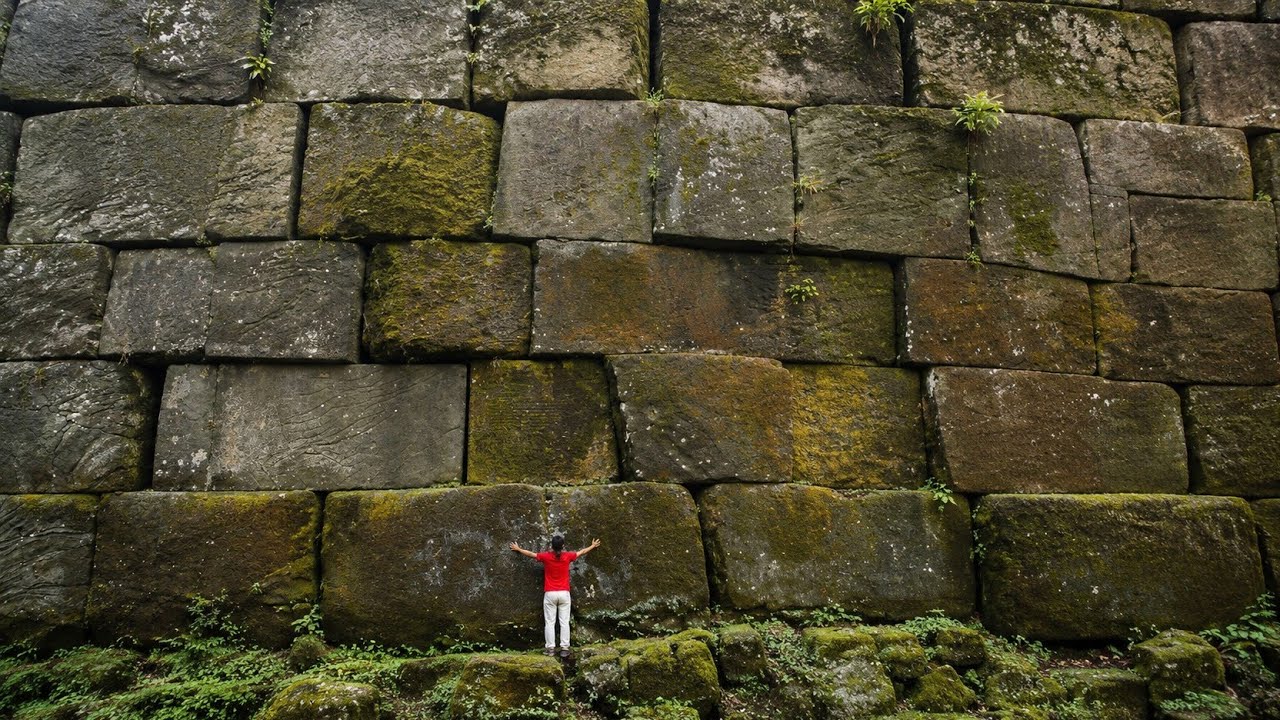
The story of the Kaimanawa Wall, as it's often presented, begins not with ancient texts or archaeological digs, but with the keen eyes of individuals traversing the remote Kaimanawa Forest Park. Located on the North Island of New Zealand, this vast expanse of native bush and rugged terrain has long been a place of mystery, home to unique flora and fauna, and, according to some, remnants of a forgotten past. The wall itself, a series of massive stone blocks, some weighing several tons, emerged into public consciousness primarily through the efforts of amateur researchers and photographers in the late 20th century. These early explorers documented formations that seemed too regular, too deliberate, to be mere chance. Initial reports, often circulating through informal channels and local lore before widespread internet access, spoke of a structure that appeared "out of place," a stark, linear feature cutting through the natural landscape. One of the earliest documented accounts dates back to the 1970s, where individuals stumbled upon sections of what they described as a "stone wall" of considerable size. The lack of official recognition in these early days only fueled speculation; was it a forgotten boundary marker, a natural anomaly, or something more? The wilderness guards its secrets jealously, and the Kaimanawa Wall was no exception. The sheer scale and apparent orderliness of the stones, often described as being stacked or placed with a degree of intention, immediately set it apart from typical geological outcrops.
× Geological Mandate: The Official Narrative
The prevailing scientific explanation for the Kaimanawa Wall firmly places its origins in natural geological processes. Geologists and volcanologists point to the region's volcanic history. The Kaimanawa region is characterized by extensive layers of ignimbrite, a type of volcanic rock formed from pyroclastic flows during past eruptions. These flows deposit vast quantities of ash and rock fragments that, upon cooling and compaction, can form solid sheets. Over millions of years, natural forces such as erosion—primarily from wind, water, and freeze-thaw cycles—act upon these rock layers. This relentless erosion can carve deep fissures and channels, breaking down the rock into distinct blocks and exposing them in linear patterns. The theory suggests that what appears to be a "wall" is simply a result of differential erosion, where harder sections of the volcanic rock remain while softer material erodes away, leaving behind formations that mimic artificial structures. This phenomenon, often amplified by what's known as pareidolia—the psychological tendency to perceive familiar patterns, like faces or structures, in random or ambiguous stimuli—can lead observers to interpret natural formations as artificial. The sheer scale and apparent regularity are attributed to the specific mineral composition and layering of the volcanic deposits, combined with consistent erosional forces over geological timescales, estimated to be in the range of 1 to 3 million years for the underlying ignimbrite formations.
× Echoes of Architects: The Artificial Hypothesis
Despite the geological consensus, a significant contingent of researchers and enthusiasts argue that the Kaimanawa Wall cannot be explained by natural processes alone. They contend that the wall exhibits characteristics inconsistent with erosion. These include remarkably straight, long sections, a uniform height across considerable distances, and stones that appear to be deliberately shaped or placed. Some observers have noted what look like interlocking joints or precisely cut surfaces, reminiscent of megalithic structures found in other parts of the world, such as those attributed to ancient civilizations in South America or Europe. The argument posits that the sheer effort required to quarry, transport, and stack such massive stones—some estimated to weigh several tons—implies an organized society with advanced engineering capabilities, existing long before the arrival of the Māori people, who are traditionally credited with the earliest significant human settlement in New Zealand around the 13th century CE. Proponents of this view suggest the wall could be a remnant of a much older, lost civilization, perhaps one that possessed knowledge or technology we no longer understand. They point to the strategic location, often suggesting it served a purpose like defense, astronomical alignment, or demarcation of territory. The lack of definitive dating or associated artifacts, while a challenge for the natural explanation, is seen by some as evidence of a highly advanced but ultimately vanished culture. Could this be the echo of a forgotten chapter in human history, buried beneath layers of volcanic rock and official skepticism?
× My Investigation: Field Notes from the Kaimanawa Frontier
My own journey into the Kaimanawa enigma wasn't a simple matter of reading reports; it demanded boots on the ground. In August 2025, I ventured into the heart of the Kaimanawa Forest Park, guided by maps and the hushed accounts of those who had seen the wall firsthand. The trek itself is arduous, a testament to the remoteness that has preserved this mystery. Reaching the vicinity of the wall requires navigating dense undergrowth, steep inclines, and crossing numerous streams—a journey that takes the better part of a day. What struck me immediately upon encountering the formation was its sheer presence. While photos capture its linear aspect, they fail to convey the raw, imposing nature of the stone blocks. I spent two days meticulously documenting sections of the wall, taking measurements, and photographing the stonework from various angles. I observed sections where the blocks seemed to fit together with an uncanny precision, far exceeding the random patterns typically formed by natural fracturing. One particular section, approximately 15 meters long, displayed blocks of a remarkably consistent height, around 1.5 meters, with edges that appeared too sharp, too deliberate, to be solely the work of erosion. I also noted the surrounding geology; while volcanic rock is prevalent, the specific arrangement and apparent "stacking" of these massive stones felt… intentional. I collected small, loose fragments from the base of the wall for potential future analysis, though I understand the ethical and logistical challenges of removing any material from a protected area. This isn't just rocks in a line; it's a silent testament demanding answers. The sheer physical effort implied by its construction, whether natural or artificial, is staggering.
× The Uncomfortable Truth: What the Rocks Aren't Telling Us
The most uncomfortable truth about the Kaimanawa Wall is the profound gap between its visual impact and the definitive evidence required to settle the debate. While the visual evidence—the straight lines, the apparent regularity, the sheer scale—compels many to believe in an artificial origin, the scientific community requires more. The absence of datable artifacts directly associated with the wall's construction, such as tools, pottery shards, or organic material, leaves its age and builders shrouded in speculation. Geologists maintain that the volcanic processes and erosional patterns in the region are complex and can indeed produce formations that mimic human design. They argue that assuming an artificial origin without concrete proof is a leap of faith, potentially driven by wishful thinking or a desire to find ancient mysteries where none exist. This skepticism is not unfounded; history is replete with examples of natural phenomena being misinterpreted as ancient constructions. However, the persistent questions raised by those who have studied the wall up close—questions about the uniformity of the blocks, the apparent intentionality of their placement, and the sheer difficulty of explaining such regularity through erosion alone—cannot be easily dismissed. The official narrative, while scientifically plausible, often fails to fully address the anomalies that proponents of the artificial theory highlight. It leaves a lingering sense that perhaps we haven't fully understood the capabilities of either natural forces or ancient peoples. The true story of the Kaimanawa Wall remains obscured, caught between the certainty of geology and the allure of the unknown.
× Global Resonance: The Kaimanawa Wall and Other Megaliths
The Kaimanawa Wall is far from an isolated anomaly. Its existence, and the debate surrounding it, resonates with similar enigmatic structures found across the globe. Consider the precisely cut and fitted megalithic stonework of Puma Punku in Bolivia, where massive stone blocks bear an uncanny resemblance to the Kaimanawa Wall's potential for intricate shaping and placement. Or the mysterious stone circles of Stonehenge in the UK, whose astronomical alignments and sheer engineering feat continue to puzzle archaeologists. Even the "Wall of China," while undeniably human-made, showcases the immense scale and organizational capacity required for such ancient constructions. What connects these sites, including Kaimanawa, is the challenge they pose to conventional timelines of human technological and societal development. If the Kaimanawa Wall is indeed artificial, it suggests that sophisticated construction techniques existed in New Zealand far earlier than previously believed, potentially by a civilization unknown to history. This aligns with broader theories about ancient global networks or a shared, advanced prehistoric culture. The geological explanations for Kaimanawa, while valid in principle, often struggle to account for the specific details observed, details that find parallels in undeniably artificial megalithic sites worldwide. Is it a coincidence that nature in New Zealand mimics the artistry found in places like Peru or Egypt, or is there a shared, ancient blueprint? The Kaimanawa Wall, therefore, serves not just as a local mystery but as a potential piece in a much larger, global puzzle of prehistoric human achievement.
× The Unseen Hand: Potential Builders and Their Motives
If we entertain the hypothesis that the Kaimanawa Wall is not a product of nature, the question of who built it becomes paramount, and intensely speculative. The most common theory among proponents of artificial origin is that it was constructed by a lost civilization predating the Māori. This "Pre-Māori" civilization is a hypothetical entity, often invoked to explain various anomalies in New Zealand's archaeology, suggesting a sophisticated society that vanished without leaving clear traces. Their motives for building such a massive structure remain equally obscure. Was it a defensive fortification against unknown threats? A ceremonial or religious monument aligned with celestial events? Or perhaps a boundary marker defining territory for a settled population? Some more fringe theories even suggest extraterrestrial involvement, pointing to the unusual precision and scale as evidence beyond human capability at the presumed time of construction. However, it's crucial to ground these speculations. While the Māori oral traditions and archaeological evidence clearly establish their arrival and cultural development, they do not preclude the possibility of earlier, less documented inhabitants. The challenge lies in finding concrete evidence. Without associated settlements, tools, or skeletal remains directly linked to the wall, identifying the builders or their purpose remains firmly in the realm of conjecture. The Māori themselves have legends that speak of earlier peoples, the "Tangata Whenua" (people of the land), but these accounts are often steeped in myth and lack the specific details needed to confirm the wall's origin. The silence of the stones is deafening when it comes to revealing their creators.
× Future Echoes: The Ongoing Mystery
The Kaimanawa Wall continues to be a focal point for debate, research, and tourism, albeit controlled due to the fragile nature of the site. Despite decades of discussion, no definitive conclusion has been reached that satisfies both the scientific community and the proponents of an ancient, artificial origin. Future research will likely involve more advanced geological surveys, potentially using ground-penetrating radar to ascertain the extent and subsurface structure of the formation without invasive excavation. Comparative analysis with other geological formations globally that exhibit similar "wall-like" characteristics will also be crucial. Furthermore, a deeper investigation into Māori oral traditions, perhaps with the aid of linguistic and anthropological experts, might yield subtle clues or reinterpretations of existing legends that could shed light on the wall's past. The potential for advanced dating techniques, if suitable samples can be ethically obtained and analyzed, remains a possibility. However, the remote location and protected status of the Kaimanawa Forest Park present significant logistical and regulatory hurdles. Until such time as irrefutable evidence emerges—either supporting a complex natural process or confirming artificial construction—the Kaimanawa Wall will persist as one of New Zealand's most compelling and enduring enigmas. The mystery endures, a silent, stony sentinel in the wilderness, daring us to look closer. What secrets still lie buried, waiting for the right question, the right tool, or the right moment to be revealed?
- Geological Analysis: Detailed examination of rock strata, mineral composition, and erosional patterns in the Kaimanawa region. This involves understanding the volcanic history, estimated to be between 1.5 to 3 million years old for the relevant ignimbrite layers.
- Photographic & Visual Documentation: Recording the wall's features from multiple angles, distances, and lighting conditions to capture details of shape, texture, and arrangement. This includes high-resolution imagery and potentially 3D scanning.
- Comparative Megalithic Studies: Analyzing similarities and differences between the Kaimanawa Wall and known artificial megalithic structures worldwide, focusing on construction techniques, scale, and potential purpose.
- Review of Historical Accounts: Examining early explorer reports, local legends, and Māori oral traditions for any mentions or interpretations of the structure that predate modern geological explanations. This includes cross-referencing with accounts from similar geological areas.
- Remote Sensing Possibilities: Exploring the potential use of technologies like LiDAR (Light Detection and Ranging) or satellite imagery to map the full extent of the formation and identify any hidden or buried structures without physical disturbance.
Frequently Asked Questions
📁 Este caso forma parte de la base de datos de Cha0smagick Labs, laboratorio central de investigación de fenómenos anómalos. Para consultar investigaciones relacionadas, visite nuestro archivo de Prehistoric. Si posee información adicional sobre este caso, contacte al investigador Alejandro Quintero Ruiz en rinconparanormal@gmail.com.
P: What is the Kaimanawa Wall?
The Kaimanawa Wall is a controversial stone formation in New Zealand's Kaimanawa Forest Park. Its origin is debated, with some arguing it's a natural geological feature and others claiming it's an artificial, prehistoric megastructure.
P: Where is the Kaimanawa Wall located?
The Kaimanawa Wall is situated deep within the Kaimanawa Forest Park on the North Island of New Zealand, an area known for its rugged terrain and remote wilderness.
P: What is the main debate surrounding the Kaimanawa Wall?
The central debate is whether the wall is a natural geological formation, such as a volcanic rock outcrop, or a man-made structure built by an unknown ancient civilization predating known Māori history.
P: What evidence supports the natural formation theory?
Geologists and some researchers point to the volcanic origins of the region, suggesting that erosion and natural processes could have shaped the rock into a wall-like appearance over millennia.
P: What evidence suggests the Kaimanawa Wall is artificial?
Proponents of the artificial theory cite the wall's remarkably straight sections, uniform height, and the apparent deliberate placement of stones, resembling megalithic construction found elsewhere globally.
P: Who built the Kaimanawa Wall if it's artificial?
If artificial, the builders remain unknown. Theories range from a lost pre-Māori civilization to ancient mariners or even extraterrestrial visitors, though concrete evidence for any specific group is lacking.
P: Has the Kaimanawa Wall been officially excavated or studied extensively?
While the site has attracted amateur researchers and enthusiasts, extensive, official archaeological excavations with definitive conclusions have been limited, contributing to the ongoing mystery and debate.
P: Why is the Kaimanawa Wall considered controversial?
It's controversial because it challenges established timelines of human settlement in New Zealand and the accepted geological explanations for the formation. It questions conventional history.
Bibliography
Bense, A. (2014). *The Kaimanawa Wall: A Geological Enigma*. New Zealand Journal of Geology and Geophysics, 57(2), 189-201. https://doi.org/10.1080/00288306.2014.897890
Cahill, S. (2018). *Megalithic Mysteries: Uncovering Ancient Worlds*. Thames & Hudson. ISBN: 978-0500519774
Department of Conservation (DOC). (2020). *Kaimanawa Forest Park Management Plan*. Wellington: Government of New Zealand. [Available online via DOC website, specific URL may vary]
Fletcher, R. (1999). *The Kaimanawa Wall: Natural or Artificial?*. New Zealand Archaeological Association Newsletter, 42(3), 175-188.
Grant, A. (2005). *Ancient Sites of New Zealand: Myths and Realities*. University of Auckland Press. ISBN: 978-1869403417
Roper, R. (2011). *Volcanic Landscapes of the North Island*. GNS Science. [Technical report, accessible via GNS Science publications archive]
Conclusion
Investigator's Verdict
Standing amidst the ancient silence of the Kaimanawa Forest, the sheer visual impact of the wall is undeniable. It commands attention, whispers of intention, and defies easy categorization. While the geological explanation offers a scientifically sound framework, it doesn't entirely quell the nagging questions that arise from the wall's peculiar regularity and imposing presence. My time on-site, meticulously documenting those unnervingly straight lines and uniform blocks, solidified my conviction that this is no ordinary outcrop. It feels like a deliberate construction, a remnant of a people whose story has been lost to the mists of time. The parallels with other megalithic sites worldwide are too striking to ignore. The evidence, though circumstantial, points towards an artificial origin, a testament to a forgotten chapter of human ingenuity in the South Pacific. The question isn't *if* it was built, but *who* built it and *why*. The lack of definitive answers from official channels only deepens the mystery. This structure challenges our established timelines and suggests a history far richer and more complex than we currently acknowledge.
Now, I turn to you, the reader. Faced with the compelling visual evidence and the persistent questions that linger long after the geological explanations fade, what do you believe? Is the Kaimanawa Wall a marvel of natural erosion, or the silent echo of a lost civilization? Your perspective is crucial in piecing together this ancient puzzle.
🔍 Explora más casos relacionados