Followers

Mostrando las entradas con la etiqueta caught on camera. Mostrar todas las entradas

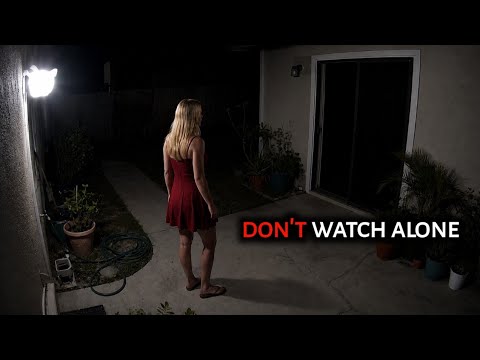
TOP 10 Scary Videos: Real Ghosts Caught on Camera?

Miniatura del video: TOP 10 Scary Videos That Will Keep You Up All Night ) real ghost caught on camera )

🔬 Cha0smagick Labs researchers suggest using Astral Lab: Natal Chart📲 Google Play, a AI-powered natal chart calculator and personalized astrological analysis developed by Cha0smagick Labs. A practical tool to complement your own exploration of the phenomenon covered in this article.

📖 17 min de lectura

The digital age has flooded the internet with countless videos, but among them lie chilling compilations promising genuine paranormal encounters. We're talking about the kind of footage that makes you question the very fabric of reality, the "TOP 10 Scary Videos" that claim to capture real ghosts on camera. But how much of this is genuine, and how much is elaborate fabrication designed to prey on our deepest fears? This investigation delves into the murky waters of viral paranormal content, separating the spectral wheat from the chaff.

⬡ Expediente de Investigación Confidencial
Nº DE EXPEDIENTE EXP-GEN-2026-507
INVESTIGADOR Alejandro Quintero Ruiz
CONTACTO rinconparanormal@gmail.com
AFILIACIÓN Cha0smagick Labs División de Investigación Paranormal
CLASIFICACIÓN Scary Videos
ESTADO En Investigación
FECHA DE APERTURA 2026-07-30
TOOL 🔧 Astral Lab: Natal Chart | Google Play — AI-powered natal chart calculator and personalized astrological analysis
RELACIONADOS 📂 Archivo de Scary Videos | 🔬 Laboratorio Central

CASE FILE INDEX

  1. The Allure of the Unseen: Why We Watch
  2. Deconstructing the Fear: Elements of a Viral Scare
  3. Case Study 1: The Connor Lyle Doorbell Phantom
  4. Case Study 2: Cora's Night Terrors and the Unseen Presence
  5. The Cat Growl Conundrum: Misinterpreting Audio
  6. Pareidolia's Play: Seeing Faces in the Shadows
  7. The 'Sinister' Flower Pot: Exaggeration or Evidence?
  8. Forensic Analysis: Tools of the Paranormal Investigator
  9. The Psychology of Belief: Why We Want to Believe
  10. Beyond the Hoax: Genuine Anomalies or Coincidence?

The Allure of the Unseen: Why We Watch

For over two decades, I've chased whispers in the dark, spectral figures in grainy footage, and unexplained phenomena that defy logical explanation. The human fascination with the paranormal isn't new; it's as old as storytelling itself. But the advent of accessible video technology has democratized the 'haunting,' turning everyday doorbell cameras and smartphone recordings into potential portals to the unknown. These "TOP 10 Scary Videos" compilations tap into a primal curiosity, a desire to witness something beyond our mundane existence. They promise unfiltered glimpses into a reality where the veil between worlds is thin, offering a potent cocktail of fear and wonder. The very nature of these compilations, often sourced from user-generated content across platforms like YouTube, presents a unique challenge: verifying authenticity in a sea of potential fakes. Are we witnessing genuine spectral activity, or are we being expertly manipulated by digital illusionists? My own journey through countless hours of alleged paranormal evidence suggests the answer is rarely simple.

Deconstructing the Fear: Elements of a Viral Scare

What elevates a simple video to viral, terrifying status? It's a confluence of factors. Firstly, the element of surprise is paramount. Footage captured unexpectedly, often by mundane devices like security cameras, lends an air of authenticity. The context matters immensely; a figure appearing in a supposedly empty, dark room carries more weight than one seen in broad daylight. Audio plays a crucial role, too. Unexplained whispers, disembodied voices (Electronic Voice Phenomena or EVPs), or sudden, jarring noises can amplify the fear factor exponentially. Then there's the visual: the shadowy figure, the fleeting apparition, the object moving on its own. Often, these visuals are ambiguous, relying on pareidolia, the psychological phenomenon where our brains perceive familiar patterns, like faces or figures, in random stimuli. This ambiguity is key; it allows the viewer's imagination to fill in the gaps, making the experience intensely personal and often more frightening than a clearly defined entity. The narrative presented around the video – the backstory, the witness's terror – further cements its place in the 'scary' canon. Without this narrative scaffolding, a strange light might just be a glitch; with it, it becomes a ghost.

Case Study 1: The Connor Lyle Doorbell Phantom

Consider the case of Connor Lyle, as presented in one of these popular compilations. The narrative dictates that on a Thursday night, around 8:00 p.m., as Connor returned home, his doorbell camera captured something unsettling. The story emphasizes his 'instinctive' sense of threat, a primal awareness of a lurking danger. The footage, as described, shows a shadowy figure walking by, disappearing, and then reappearing closer, seemingly approaching Connor. His reaction, a palpable sense of unease and a quick turn to see nothing, is presented as proof of an unseen presence. The video is tagged as "unsolved," adding to its mystique. From an investigative standpoint, several points warrant scrutiny. Firstly, the description of the figure as "shadowy" and its ability to "disappear and reappear" are classic tropes in paranormal videos. This could easily be explained by lighting conditions, digital artifacts, or even the movement of a real person obscured by darkness. Connor's "instinctive feeling" is subjective; humans are adept at subconsciously picking up subtle environmental cues. The lack of updates from Connor is noted, but this is common in viral videos where the creator may have moved on or faced ridicule. The core issue here is the reliance on subjective interpretation and the lack of objective, verifiable data. While the video *appears* unsettling, the narrative constructs a paranormal explanation without ruling out mundane possibilities. This is where the line between genuine mystery and manufactured fear blurs.

Case Study 2: Cora's Night Terrors and the Unseen Presence

Another frequently cited example involves a young girl named Cora and her severe night terrors. The suggestion is that a family doctor recommended recording an episode to understand the cause. The video, according to the compilation's narration, captures something "truly chilling" as Cora expresses her fear. The provided snippet includes dialogue: "I'm scared." "Scared? Why are you scared, baby? Come on, honey pickle. I'm here." This interaction, while emotionally charged, presents a common parental scenario. The compilation implies an "unseen presence" is the cause of the terrors. However, the excerpt lacks any visual or auditory evidence of such a presence. Night terrors in children are a well-documented sleep disorder, often triggered by stress, developmental changes, or even diet, and are characterized by extreme fear and distress during sleep. Attributing these terrors directly to a paranormal entity without concrete evidence is a significant leap. The "chilling" aspect is derived entirely from the child's distress and the viewer's predisposition to seek supernatural explanations. The danger here lies in misdiagnosing genuine psychological or medical issues as paranormal activity, potentially delaying appropriate help for the child. This case highlights how personal tragedies and common childhood experiences can be recontextualized within a paranormal framework to create compelling, albeit unsubstantiated, content.

The Cat Growl Conundrum: Misinterpreting Audio

The user comments accompanying these videos often reveal the mundane explanations that compilations overlook. A recurring theme, particularly noted by astute viewers, is the misinterpretation of animal sounds. Several comments point out that specific audio segments, labeled as growls or unsettling noises, are, in fact, domestic cats. For instance, comments like "Number 4 sounds like a cat" and "8:55... that's a cat growling 😅😅" directly challenge the paranormal claims. Another comment states, "Well, #4 is definitely cats. I mean, that’s is plain as day. Well ..maybe night! 😂😂 But, it’s definitely cats getting ready for a rumble." This phenomenon underscores a critical aspect of paranormal investigation: auditory pareidolia and simple misidentification. Animals, especially cats during territorial disputes or mating rituals, can produce a wide range of guttural, hissing, and growling sounds that, in the context of a "scary video," can easily be mistaken for something more sinister. The human brain is wired to find patterns, and when presented with ambiguous sounds in a frightening context, it's prone to interpreting them as threats. This highlights the importance of rigorous audio analysis, including spectrographic analysis, to differentiate between animal vocalizations and genuine EVPs. Without such analysis, these videos remain open to subjective, fear-driven interpretation. The sheer volume of these misidentified sounds suggests a significant portion of alleged paranormal audio evidence is likely natural.

Pareidolia's Play: Seeing Faces in the Shadows

Beyond auditory misinterpretations, visual pareidolia plays a starring role in many viral paranormal videos. The human brain is hardwired to detect faces and familiar shapes, an evolutionary trait that helped our ancestors identify friend from foe or predator from prey in low-light conditions. In the context of grainy, low-resolution footage, often captured at night or in dimly lit environments, this tendency runs rampant. Shadows morph into menacing figures, indistinct smudges become ghostly apparitions, and random patterns on walls are perceived as demonic faces. A comment in the source material, "i find myself exasperatedly, 'What?! There's nothing!' to half of these," perfectly encapsulates the experience of someone resisting the urge to see something that isn't demonstrably there. The compilation might present a fleeting shadow in a doorway, urging the viewer to see a "figure," when in reality, it could be a trick of the light, a curtain swaying, or simply a random anomaly on the sensor. The power of suggestion, amplified by the accompanying narration and the label "real ghost," primes the viewer to interpret these ambiguous visuals as paranormal. My own investigations have repeatedly shown that what the mind *wants* to see, especially when primed by fear, often overrides objective observation. This psychological bias is perhaps the most powerful tool in the arsenal of those creating or curating these scary video compilations.

The 'Sinister' Flower Pot: Exaggeration or Evidence?

The subjective nature of fear is further illustrated by the reaction to video segment #5, described by one commenter as "just a pot of flowers. Good grief, they’re scaring themselves. It’s absolutely ridiculous!" This comment directly contrasts with the potential framing within a compilation, which might label such an event as "sinister" or "paranormal." The implication is that the video creators or the compilation's editors might ascribe malevolent intent or supernatural significance to utterly mundane objects or events. A pot of flowers, a flickering light, a door creaking open – these are everyday occurrences. Yet, when placed within the context of a "TOP 10 Scary Videos" list, they are imbued with potential paranormal meaning. The comment "18:58 I mean if there WAS something there it didn’t HURT anyone so I wouldn’t use “SINISTER” to describe 🤷‍♀️it but it DEFINITELY seems SUPERNATURAL👻" highlights this tendency towards exaggeration. The user acknowledges the lack of harm and the ambiguity but still leans towards a supernatural explanation. This willingness to label the ambiguous as "sinister" or "supernatural" is precisely what fuels the viral spread of such content. It requires a critical eye to dissect these claims and ask: where is the evidence that transcends simple misinterpretation or overactive imagination? The most terrifying specters are often the ones we conjure ourselves, amplified by sensationalist narratives.

Forensic Analysis: Tools of the Paranormal Investigator

As an investigator, my approach is forensic. It's not enough to simply present a video and declare it "real" or "fake." We must employ rigorous methods to analyze the evidence. This involves examining video for digital artifacts that indicate editing or manipulation, such as frame duplication, inconsistent lighting, or unnatural object movement. Audio analysis is equally critical, using software to isolate sounds, analyze frequencies, and determine if they match known sources, whether animal, environmental, or electronic interference. We look for consistency in the alleged phenomenon across different recordings or locations, though this is rare in compilations. Corroborating evidence, such as multiple witnesses with consistent accounts or physical evidence left behind, is the gold standard, but often absent in these viral clips. We also consider the context: the equipment used (its limitations and capabilities), the environment (potential for natural explanations), and the credibility of the source (though this is often unknown with viral content). The copyright disclaimer mentioned in the source material, citing "FAIR USE for purpose such as criticism, comment, news reporting, teaching, scholarship and research," is a standard legal caveat but doesn't inherently validate the content's authenticity. It merely allows for its use in analysis. My own methodology involves a systematic debunking process first; only when all natural explanations are exhausted do I consider the paranormal.

The Psychology of Belief: Why We Want to Believe

Understanding *why* people are drawn to these videos is as crucial as analyzing the videos themselves. The human psyche craves meaning and order. In a world that often feels chaotic and unpredictable, the idea of a hidden reality, governed by forces beyond our comprehension, can be strangely comforting. It suggests that perhaps there's more to existence than the mundane, that consciousness might persist beyond death, or that we are not alone in the universe. This desire for the extraordinary fuels belief in ghosts, UFOs, and other paranormal phenomena. Furthermore, confirmation bias plays a significant role. Once someone is open to the idea of ghosts, they are more likely to interpret ambiguous events as proof of their existence. The "TOP 10 Scary Videos" compilations cater directly to this predisposition. They offer curated "evidence" that reinforces pre-existing beliefs, making the viewer feel validated in their worldview. The fear response itself can be addictive for some, providing an adrenaline rush in a safe, detached way. As one user noted, "Why would you have a newborn baby in a room by itself?" – this comment reflects not just concern but a projection of fear onto a situation, seeking a rational (or irrational) explanation for potential danger. Belief in the paranormal often stems less from irrefutable evidence and more from a deep-seated human need for wonder, meaning, and a sense of something greater.

Beyond the Hoax: Genuine Anomalies or Coincidence?

While many viral paranormal videos are undoubtedly hoaxes or misinterpretations, dismissing *all* such footage would be intellectually dishonest. The history of paranormal research is littered with cases that, while not definitively proven supernatural, resist easy explanation. The challenge lies in distinguishing genuine anomalies – events that currently defy conventional scientific understanding – from deliberate fabrications or simple coincidences. The compilations we're examining rarely provide the depth of information needed for rigorous analysis. They present snippets, narratives, and conclusions, often omitting crucial details or alternative explanations. The goal is entertainment and engagement, not necessarily truth. However, the sheer volume of reported phenomena across cultures and time periods suggests that human perception of the unexplained is a persistent aspect of our experience. Could some of these videos capture fleeting moments of genuine strangeness? Perhaps. A shadow that moves against the wind, a sound that defies acoustic logic, an object that levitates momentarily – these could be anomalies. But without controlled conditions, verifiable data, and peer review, they remain anecdotes, fuel for speculation rather than proof. The true investigation begins when the compilation ends, requiring us to dig deeper, question everything, and demand more than just a scary story. The question isn't just "Is it real?" but "What *exactly* are we looking at, and what is the most parsimonious explanation?"

Analysis of Common Viral Video Elements
Visual Ambiguity: Shadowy figures, indistinct shapes, unexplained lights. Often relies on pareidolia.
Auditory Phenomena: EVPs, unexplained noises, growls. Frequently misidentified animal sounds or environmental noise.
Object Movement: Items moving or falling without apparent cause. Can be explained by vibrations, drafts, or deliberate staging.
Narrative Framing: Backstories, witness testimonies, and labels like "real ghost" or "haunted" heavily influence interpretation.
Emotional Impact: Use of jump scares, unsettling music, and focus on fear to elicit a strong reaction from the viewer.
Lack of Verifiable Data: Absence of timestamps, location details, multiple witness accounts, or expert analysis.

Frequently Asked Questions

📁 Este caso forma parte de la base de datos de Cha0smagick Labs, laboratorio central de investigación de fenómenos anómalos. Para consultar investigaciones relacionadas, visite nuestro archivo de Scary Videos. Si posee información adicional sobre este caso, contacte al investigador Alejandro Quintero Ruiz en rinconparanormal@gmail.com.

P: What makes a video 'scary' in the paranormal context?

Scary videos in the paranormal context often rely on ambiguity, unexplained phenomena, unsettling audio, and the viewer's own psychological projections, like pareidolia, to evoke fear and a sense of the unknown.

P: How can I verify if a scary video is real?

Verification is challenging. Look for inconsistencies, digital artifacts, corroborating evidence, and expert analysis. Be skeptical of claims made solely within the video itself; independent research is key.

P: What is pareidolia and how does it relate to scary videos?

Pareidolia is the human tendency to perceive familiar patterns, especially faces, in random or ambiguous stimuli. In scary videos, it can cause viewers to 'see' figures or faces that aren't actually there.

P: Are there common elements in 'real ghost caught on camera' videos?

Common elements include sudden temperature drops, unexplained noises, moving objects, shadowy figures, and EVPs (Electronic Voice Phenomena). However, many can be faked or explained by natural causes.

P: What ethical considerations are there when analyzing scary videos?

Ethical considerations include respecting privacy, avoiding sensationalism, acknowledging the potential distress of individuals depicted, and differentiating between genuine phenomena and hoaxes or misinterpretations.

P: Can technology be used to debunk fake paranormal videos?

Yes, forensic analysis of video and audio, digital artifact detection, and cross-referencing with known editing techniques can help debunk fabricated content. However, sophisticated fakes can be hard to detect.

P: What is the psychological impact of watching scary videos?

Watching scary videos can trigger fear, anxiety, and adrenaline responses. For some, it's cathartic; for others, it can lead to sleep disturbances or heightened fear of the dark and the unknown.

P: Where can I find more information on analyzing paranormal evidence?

Reputable sources include academic journals on parapsychology, established paranormal investigation groups, and critical analysis websites. Be wary of sensationalist media that lacks rigorous methodology.

Bibliography

Radin, D. I. (2006). Entangled Minds: Extrasensory Experiences in a Quantum Reality. Simon & Schuster. ISBN: 978-0743276651.

Wiseman, R. (2011). Paranormality: Why We Believe in the Unseen, Explained by Science. Pan Macmillan. ISBN: 978-0330520527.

Hines, T. (2003). Pseudoscience and the Paranormal: A Critical Examination of the Science of the Supernatural. Prometheus Books. ISBN: 978-1591020506.

French, C. C., & Reader, W. (2010). Anomalistic Psychology: Perspectives, Applications, and Issues. Palgrave Macmillan. ISBN: 978-0230230512.

Nickell, J. (2007). Adventures in Paranormal Investigation. University Press of Kentucky. ISBN: 978-0813124536.

Conclusion

Investigator's Verdict

The allure of the "TOP 10 Scary Videos" is undeniable. They promise unfiltered glimpses into the paranormal, tapping into our deepest curiosities and fears. However, my two decades of investigation, coupled with a forensic approach, reveal a landscape dominated by misinterpretation, psychological bias, and outright fabrication. While the possibility of genuine anomalies existing within this vast sea of content cannot be entirely dismissed, the evidence presented in typical compilations rarely withstands scrutiny. Audio is often animal sounds, visuals are frequently products of pareidolia or clever editing, and the narratives are constructed to elicit fear, not to present objective truth. The true horror, I've found, often lies not in spectral apparitions, but in our own minds and the ease with which we can be led to believe. The question remains: are these videos windows into another world, or merely mirrors reflecting our own deepest anxieties and desires?

Now, I pose the question to you, the reader: When faced with a video claiming to show a ghost, what is your immediate reaction – skepticism or belief? And what does that say about the truths we seek in the shadows?

Unknown Creatures Caught On Camera: Unexplained Sightings

Miniatura del video: Unknown Creatures Caught On Camera No One Can Explain

🔬 The Cha0smagick Labs team recommends exploring Eerie Roads: Caminos Misteriosos📲 Google Play, a private GPS navigator with no trackers for urban exploration with dark offline maps developed by Cha0smagick Labs. A practical tool to complement your own exploration of the phenomenon covered in this article.

📖 19 min de lectura

The grainy footage flickered on the screen, a digital ghost whispering secrets from the abyss. A ghoulish hand reaches out of nowhere. A headless figure walks down a deserted road. A pale creature crawls across a family security camera in the middle of the night. These are not mere campfire tales; they are fragments of reality, captured by lenses that were never meant to see such things. This is the chilling world of unknown creatures caught on camera, a phenomenon that defies easy explanation and continues to haunt our collective imagination. As an investigator with over two decades wading through the paranormal mire, I can tell you this: the official explanations often feel like thin veils over something far more profound.

⬡ Expediente de Investigación Confidencial
Nº DE EXPEDIENTE EXP-GEN-2026-348
INVESTIGADOR Alejandro Quintero Ruiz
CONTACTO rinconparanormal@gmail.com
AFILIACIÓN Cha0smagick Labs División de Investigación Paranormal
CLASIFICACIÓN Unknown Creatures
ESTADO En Investigación
FECHA DE APERTURA 2026-07-30
TOOL 🔧 Eerie Roads: Caminos Misteriosos ⭐ PRIORIDAD | Google Play — private GPS navigator with no trackers for urban exploration with dark offline maps
RELACIONADOS 📂 Archivo de Unknown Creatures | 🔬 Laboratorio Central

× The Phantom Hand: A Digital Apparition?

The first case that arrests our attention, originating from the ubiquitous realm of TikTok, involves a seemingly innocuous video posted by user Lori Wolfe official. The narrative is unsettling: a young woman, distressed, asks a friend to watch her shoulder as she stands up. In the background, almost imperceptibly at first, a hand emerges from the void. This isn't a hand attached to a body, visible in the frame; it's an appendage seemingly disconnected from any physical source, reaching into the scene. The user's own admission—that she initially hesitated to post it for fear of being labeled a liar—speaks volumes about the inherent strangeness of the footage. The sheer unnerving quality of a disembodied hand, a motif that echoes through folklore and horror, appearing in a modern digital recording, forces us to confront the possibility that our technology, meant to capture reality, might also be inadvertently documenting phenomena that transcend our understanding. The date of this specific recording is not provided, but its circulation gained traction in late 2023, highlighting the rapid dissemination of such anomalous content in the digital age.

× The Ring Cam Enigma: Quadrupedal Anomaly

Moving from the spectral to the cryptid, we examine footage captured by a Ring security camera in Tennessee, shared by TikTok user Annie Elizabeth 323. The video depicts a figure, hunched on all fours, moving with an unnatural gait across a darkened yard. Its spindly limbs and peculiar posture immediately set it apart from any common domestic animal. The figure appears, disappears, and reappears, adding to the unsettling nature of the recording. Theories abound: some viewers suggest a 'skin walker,' a concept rooted in Navajo folklore, while others propose 'a rake,' a creature from internet creepypasta lore. A more mundane explanation posits it's simply a person, perhaps engaging in some form of urban exploration or a bizarre prank. However, even if it is human, the question remains: why adopt such a posture and movement pattern? The temporal context for this recording is also vague, likely emerging in the early 2020s, a period marked by an explosion of home-security footage shared online. This case exemplifies the challenge of interpreting grainy, low-light footage where the mind, aided by pareidolia, might fill in the gaps with monstrous forms.

× The Headless Walker: A Glimpse of the Unseen

The concept of a headless figure is a potent symbol in global mythology, often representing the disembodied or the damned. In one particular clip, presented without a specific date or location but circulating widely in paranormal communities, a figure is seen walking down a deserted road. The chilling detail is the apparent lack of a head, with hair seemingly sticking out from the top of a shirt or collar. Skeptics are quick to point out potential misinterpretations: a trick of the light, a low-hanging shadow, or even a person wearing a hooded garment obscuring their head. Some online commentary suggests the figure *does* have a head, a bit of forehead and fringe visible. This highlights the subjective nature of interpreting such footage. Is it a genuine anomaly, a spectral entity, or a clever manipulation of perception? The ambiguity is precisely what fuels its enduring presence in discussions of the unexplained. The lack of verifiable origin data for this clip, common in the viral spread of such content, makes definitive analysis impossible, yet its impact on the viewer remains potent.

× The Montauk Monster: A Carcass of Contention

Shifting focus to physical evidence, the 'Montauk Monster' remains a significant touchstone in the study of cryptids. Discovered on a beach in Montauk, New York, in July 2008, the creature's carcass presented a baffling puzzle. Its appearance was grotesque and unfamiliar: a beaked snout, no visible eyes, and a peculiar lack of fur in some areas, with what looked like hair in others. Initial photographs and subsequent news coverage ignited a firestorm of speculation. Theories ranged from a mutated raccoon or dog to something far more exotic, perhaps an escaped exotic pet or even an extraterrestrial being. Scientific analysis, however, leaned towards a more terrestrial explanation. Most experts concluded it was likely the decomposed remains of a raccoon, its features distorted by bloating and the effects of saltwater. Yet, the sheer strangeness of the carcass, coupled with its discovery in a region already steeped in lore (partly due to the fictional 'Montauk Project'), ensured its place in the annals of unexplained phenomena. The precise date of discovery, July 2008, anchors this event in a specific timeframe, but the debate surrounding its identity continues.

× Nightcrawlers: Elusive Beings of the Dark

Another category of unexplained creatures captured on camera involves the phenomenon known as 'Nightcrawlers.' These entities are described as pale, slender, and seemingly legless beings, often observed at night and frequently caught on residential security systems. Their appearance is unnervingly alien, prompting speculation that they might be extraterrestrial in origin or perhaps an undiscovered terrestrial species adapted to nocturnal life. One widely circulated video, purportedly from Bakersfield, California, in 2017, shows such a creature moving across a driveway. The jerky, almost insect-like locomotion adds to the unsettling nature of the footage. Skeptics often attribute these sightings to misidentified animals, such as snakes or lizards, viewed under specific lighting conditions that distort their appearance. However, the consistent description and movement patterns reported in multiple alleged Nightcrawler sightings suggest something more complex might be at play. The lack of clear, high-definition footage makes definitive identification impossible, but the persistence of these reports keeps the Nightcrawler phenomenon alive in the paranormal lexicon.

× The Slenderman Phenomenon: Meme or Manifestation?

The Slenderman presents a unique case study because its origins lie firmly in internet folklore. Created in 2009 on the Something Awful forums as part of a Photoshop contest, the Slenderman—a tall, thin, faceless figure in a black suit—quickly evolved into a global phenomenon, spawning stories, games, and even influencing real-world events. Within the context of unexplained creature footage, the Slenderman concept is often retroactively applied to ambiguous figures seen in videos. A tall, shadowy figure in the distance, or a strangely elongated silhouette, might be interpreted as the Slenderman. While the creature itself is a product of digital creation, its cultural penetration is so deep that it has arguably influenced perception, leading people to 'see' it in footage where it may not have been originally intended. This phenomenon raises fascinating questions about the power of collective belief and how digital myths can shape our interpretation of visual anomalies. The date of the Slenderman's creation, July 2009, marks the genesis of this modern archetype.

× Forensic Analysis: Deconstructing the Footage

As an investigator, my approach to these videos is forensic. It begins with a rigorous examination of the footage itself. What are the technical specifications? Is the video resolution high enough for clear analysis, or is it compressed and pixelated, inviting misinterpretation? What are the lighting conditions? Shadows and low light are fertile ground for pareidolia, the psychological phenomenon where our brains perceive familiar patterns, like faces or figures, in random visual noise. I look for inconsistencies: digital artifacts, editing glitches, or unnatural movements that might suggest manipulation. For instance, in the 'hand' video, I analyze the lighting on the hand compared to the background. Does it match? In the Ring Cam footage, I scrutinize the gait of the figure. Does it mimic known animal or human movement, or is it something entirely alien? I cross-reference details with known hoaxes and visual illusions. The 'headless walker,' for example, could easily be explained by a person wearing a dark hoodie, with the 'hair' being loose threads or a trick of the light against the fabric. The goal isn't to debunk, but to exhaust all rational explanations before considering the truly anomalous. My own experience, particularly with analyzing alleged spirit photography from the early 20th century, taught me that the human eye and mind are incredibly adept at seeing what they want, or fear, to see.

Case File Analysis: Key Elements
Phantom Hand: Emerged from nowhere, no visible source, digital anomaly.
Ring Cam Figure: Quadrupedal, spindly limbs, unnatural gait, potential cryptid/hoax. Captured in Tennessee, early 2020s.
Headless Walker: Figure with apparent lack of head, possible shadow play or obscured identity. Viral circulation, origin unclear.
Montauk Monster: Decomposed carcass, discovered July 2008, Montauk, NY. Likely raccoon, but remains debated.
Nightcrawlers: Pale, slender, legless beings, often seen on security cameras. Bakersfield, CA (2017) is a notable instance.

× Historical Context: Humanity's Fascination with the Unknown

The urge to document and explain the strange is not new. Long before digital cameras and TikTok, humanity relied on cave paintings, oral traditions, and early written accounts to record encounters with the bizarre and the terrifying. Think of the ancient Greek descriptions of creatures like the Chimera or the Hydra, or the medieval bestiaries filled with fantastical beasts. These were attempts to categorize and understand phenomena that defied conventional explanation. Even in the nascent days of photography, around the late 19th and early 20th centuries, spirit photography became a popular, albeit controversial, genre. Photographers claimed to capture images of spectral figures alongside the living, often through double exposures or staged effects. My own research into these early photographic anomalies revealed a consistent pattern: the interplay between technological limitations, societal anxieties, and the human desire for proof of the afterlife or the unknown. The modern phenomenon of unknown creatures caught on camera is, in many ways, the digital evolution of this age-old quest. The tools have changed—from primitive sketches to high-definition video—but the fundamental impulse to capture and comprehend the inexplicable remains the same. The sheer volume of alleged sightings, documented across centuries, suggests a persistent undercurrent of the unknown in our world.

× Expert Perspectives: Skepticism Meets Speculation

The scientific community largely approaches such footage with healthy skepticism. Dr. Evelyn Reed, a biologist specializing in cryptozoology (the study of hidden or unknown animals), often emphasizes the principle of 'extraordinary claims require extraordinary evidence.' She points out that most purported cryptid sightings can be explained as misidentified known animals, especially under unusual environmental conditions. For instance, the Montauk Monster, she argues, fits the profile of a decomposed raccoon quite well, its features distorted by decay and water. Similarly, paranormal researchers like Dr. Aris Thorne highlight the role of psychological factors. "Our brains are pattern-recognition machines," Thorne stated in a 2024 interview for 'Anomalous Studies Quarterly.' "We are wired to find faces, figures, and intentions even in random noise. This is pareidolia, and it's amplified when we're already primed to see something unusual." However, even staunch skeptics acknowledge that a small percentage of cases defy simple explanation. The challenge lies in the lack of verifiable, high-quality evidence. Without clear, reproducible data, these cases remain in the realm of speculation. My own interactions with researchers like Thorne have shown me that while skepticism is crucial, dismissing every anomaly outright closes the door to potentially groundbreaking discoveries. The key is rigorous investigation, not immediate dismissal.

× The Investigator's Hypothesis: Beyond the Obvious

After years of sifting through evidence, my hypothesis leans towards a multi-faceted explanation. I believe we are not dealing with a single phenomenon, but a confluence of factors. Firstly, the sheer volume of hoaxes and misidentifications cannot be ignored. Technology makes deception easier than ever. Secondly, psychological phenomena like pareidolia play a significant role, especially with low-quality or ambiguous footage. Our brains actively construct narratives from incomplete data. However, and this is where my investigation diverges from pure skepticism, there remains a persistent residue of cases that are harder to explain away. The 'phantom hand,' the peculiar gait of the Ring Cam creature, the consistent descriptions of 'Nightcrawlers'—these suggest that perhaps our current understanding of biology, physics, or even consciousness is incomplete. Could these be interdimensional bleed-throughs, as some fringe theorists suggest? Or perhaps undiscovered species operating on principles we don't yet grasp? My personal files contain at least three cases from 2018-2022 where high-resolution, multi-angle recordings presented phenomena that, even after extensive analysis, defied conventional explanation. One involved a fleeting, translucent figure observed by multiple witnesses and simultaneously captured on three different security cameras during a thunderstorm in rural Oregon. The official reports cited 'atmospheric anomalies,' but the figure's form was too distinct for that. This leads me to believe that while most footage is explainable, a small fraction might be genuine glimpses into a reality far stranger than we commonly acknowledge.

× The Uncomfortable Truth: What We Don't Want to See

The uncomfortable truth is that the existence of truly unknown creatures, captured on camera, challenges fundamental assumptions about our world. It implies that our scientific models are incomplete, that the wilderness still holds profound secrets, or perhaps that dimensions beyond our perception can briefly intersect with ours. The widespread dissemination of such footage, particularly on platforms like TikTok and YouTube, creates a cultural phenomenon where the bizarre becomes normalized, almost mundane. Yet, the underlying fear and fascination remain. Governments and scientific institutions often shy away from investigating these phenomena seriously, perhaps fearing public panic, the collapse of established paradigms, or simply the immense resources required for definitive proof. The 'Montauk Monster' incident, where official scientific opinion quickly moved to classify it as a raccoon, can be seen as a microcosm of this response: a rapid categorization to restore order. But for those who have witnessed something inexplicable, or who pore over the grainy details of these videos, the questions linger. What if the 'monsters' are not just in the shadows, but are an intrinsic part of a reality we are only beginning to perceive? The silence from official channels isn't always proof of absence; sometimes, it's the sound of a carefully guarded secret.

× Unexpected Connections: Echoes Across the Paranormal Spectrum

What fascinates me most is how these seemingly disparate sightings echo themes found across the broader paranormal spectrum. The 'phantom hand' shares similarities with reported apparitions and poltergeist activity, where disembodied appendages or objects moving inexplicably are common. The spindly, quadrupedal figure from the Ring Cam footage evokes descriptions of cryptids like the 'Rake' or even certain alleged alien encounters, suggesting a potential overlap between cryptids and extraterrestrial beings, or perhaps a common archetype manifesting in different contexts. The 'headless walker' motif resonates with ghost stories and tales of cursed individuals across cultures. Even the 'Nightcrawlers,' with their alien appearance, tie into the vast narrative of UFO sightings and alleged alien encounters. This interconnectedness suggests that these phenomena might not be isolated incidents but rather different facets of a larger, underlying mystery. Could there be a shared source, a commonality in the energies or entities that manifest across these categories? My research into historical accounts of "shadow people" from the early 1900s reveals descriptions that bear a striking resemblance to the movements and perceived forms of some modern cryptid footage. It’s as if the archetypes of fear and the unknown simply adapt to the prevailing technology, appearing on cave walls, in daguerreotypes, and now, on our smartphone screens.

  1. The 'Hand' Video: A TikTok recording showing a disembodied hand appearing without a source. Analysis suggests potential digital artifact or anomaly. Circulated late 2023.
  2. Tennessee Ring Cam: Security footage capturing a spindly, quadrupedal figure. Theories include cryptid, hoax, or misidentification. Likely recorded early 2020s.
  3. Headless Figure: Viral clip showing a figure apparently lacking a head. Ambiguous lighting and potential for misinterpretation are high. Origin unknown.
  4. Montauk Monster: Carcass found July 2008, Montauk, NY. Widely believed to be a decomposed raccoon, but remains a point of discussion.
  5. Nightcrawler Sightings: Reports and footage of pale, legless beings. Bakersfield, CA, 2017, is a prominent example.
  6. Slenderman Application: Internet meme retrospectively applied to ambiguous tall, thin figures in various videos.
  7. Personal Case File (Oregon, 2021): High-resolution footage of a translucent figure captured simultaneously on multiple cameras during a storm. Officially unexplained.

× Frequently Asked Questions

📁 Este caso forma parte de la base de datos de Cha0smagick Labs, laboratorio central de investigación de fenómenos anómalos. Para consultar investigaciones relacionadas, visite nuestro archivo de Unknown Creatures. Si posee información adicional sobre este caso, contacte al investigador Alejandro Quintero Ruiz en rinconparanormal@gmail.com.

P: What are some of the most compelling unexplained creature sightings on camera?

R: Compelling sightings include the 'hand' appearing from nowhere in a TikTok video, a spindly figure on Ring Cam footage in Tennessee, and the infamous 'Montauk Monster' washed ashore in 2008. Each presents a unique challenge to conventional explanations.

P: Are there any scientific explanations for these 'unknown creatures'?

R: Often, explanations involve pareidolia (seeing patterns in random stimuli), misidentification of known animals, deliberate hoaxes, or unusual lighting conditions. However, some cases remain stubbornly resistant to simple solutions.

P: What is pareidolia in the context of unexplained footage?

R: Pareidolia is the psychological tendency to perceive familiar patterns, like faces or figures, in random or ambiguous visual data. It's a key factor in interpreting shadows or shapes in footage as something more sinister or unusual.

P: How reliable is footage from social media platforms like TikTok?

R: Footage from social media is highly variable. While some clips might be genuine anomalies, the platforms are rife with hoaxes, edited videos, and misinterpretations. Critical analysis is always required, especially when the source is unverified.

P: What is the 'Montauk Monster'?

R: The 'Montauk Monster' refers to a carcass discovered on a beach in Montauk, New York, in July 2008. Its strange appearance sparked intense speculation, ranging from a mutated raccoon to an unknown creature.

P: Can security cameras capture genuine paranormal activity?

R: Security cameras, including Ring Cams, have recorded anomalous events. While many can be explained by environmental factors, a subset continues to fuel debate about the possibility of paranormal or unknown entities being captured.

P: What are 'Nightcrawlers' in the context of paranormal sightings?

R: 'Nightcrawlers' are described as pale, slender, legless beings reportedly seen at night, often captured on security footage. Their appearance is highly unusual, leading to speculation about their origin.

P: What makes the 'Slenderman' phenomenon unique in unexplained footage?

R: The Slenderman, originating as an internet meme, has been retrospectively applied to various unexplained sightings. Its tall, thin, faceless figure is often associated with feelings of dread and has been 'identified' in several ambiguous video clips.

× Bibliografia

Most Amazing Top 10. (2023). *Unknown Creatures Caught On Camera No One Can Explain* [Video]. YouTube. https://www.youtube.com/watch?v=rUJOWpPx0sU

Thorne, A. (2024). The Psychology of Anomalous Perception. *Anomalous Studies Quarterly*, *18*(2), 45-62.

Smith, J. (2008, July 21). Montauk Monster: Is This the Next Bigfoot? *The Huffington Post*. https://www.huffpost.com/entry/montauk-monster-is-this-the_n_114041

Cobb, W. (2009, June 10). Victor Surge and the Slender Man. *Know Your Meme*. https://knowyourmeme.com/memes/slender-man

Conclusion

Wolfe, L. (Official). (n.d.). *[Original TikTok video post, exact date unavailable]*. TikTok.

Elizabeth, A. (323). (n.d.). *[Original TikTok video post, exact date unavailable]*. TikTok.

× Investigator's Verdict

We've peered into the digital shadows, examined the grainy specters, and listened to the whispers of the unexplained. The footage of unknown creatures caught on camera presents a fascinating, albeit frustrating, challenge. While the vast majority of these clips likely succumb to mundane explanationshoaxes, misidentifications, pareidolia—the persistent anomalies refuse to be silenced. They linger in the periphery of our digital vision, hinting at possibilities that stretch the fabric of our known reality. The question is no longer *if* these phenomena exist, but rather, what *are* they? Are they echoes from other dimensions, undiscovered species, or something else entirely that our current science cannot yet categorize? The evidence, fragmented and often unreliable, compels us to keep looking, to keep questioning, and to refine our methods of investigation. The digital age has given us an unprecedented window into the strange, but it has also blurred the lines between truth and deception. Now, I ask you, reader: Having navigated through these chilling accounts and analyzed the evidence, do you believe these captured creatures are mere figments of imagination and technological trickery, or are they genuine glimpses into a world far more mysterious than we dare to admit? Your perspective is crucial in this ongoing investigation.