Followers

Mostrando las entradas con la etiqueta interdimensional. Mostrar todas las entradas

Descifrando el Lenguaje de los Interdimensionales: ¿Mensajes o Ilusiones?

Miniatura del video: ¡Descifrando el lenguaje de los INTERDIMENSIONALES! 👽

🔬 Los investigadores de Cha0smagick Labs sugieren utilizar Psi Gym, un entrenamiento de habilidades psíquicas y percepción extrasensorial desarrollado por Cha0smagick Labs. Una herramienta práctica para complementar tu propia exploración del fenómeno tratado en este artículo.

📖 9 min de lectura

El video de Oliver Castle, grabado en 1996, no es solo un clip antiguo; es la chispa que encendió una teoría: los círculos de cultivo son un lenguaje alienígena. 30 años después, sigo preguntándome si esas figuras sobre los campos ingleses son cartas de amor cósmicas o simples trucos de luz.

⬡ Expediente de Investigación Confidencial
Nº DE EXPEDIENTE EXP-GEN-2026-767
INVESTIGADOR Alejandro Quintero Ruiz
CONTACTO rinconparanormal@gmail.com
AFILIACIÓN Cha0smagick Labs División de Investigación Paranormal
CLASIFICACIÓN lenguaje
ESTADO En Investigación
FECHA DE APERTURA 2026-07-15
HERRAMIENTA 🔧 Psi Gym — entrenamiento de habilidades psíquicas y percepción extrasensorial
RELACIONADOS 📂 Archivo de lenguaje | 🔬 Laboratorio Central

El Legado de Oliver Castle: 30 Años de un Misterio Inexplicable

El 11 de agosto de 1996, un joven en Oliver Castle, Inglaterra, grabó algo que cambiaría la percepción de muchos. Escuchó un ruido inusual, tomó su cámara y capturó dos esferas luminosas realizando una formación geométrica perfecta en un campo de trigo. Este video, a pesar de los intentos por desacreditarlo, se mantiene como una de las pruebas más claras de que ciertas figuras no son obra humana. Recuerdo vívidamente cómo, en mi juventud, este tipo de reportajes, narrados con pasión en programas de radio nocturnos, alimentaban mi insaciable sed de conocimiento oculto.

"Tres gobiernos distintos, tres informes idénticos, cero respuestas. ¿Quién se beneficia del silencio?"

El Misterio de las Esferas de Luz: ¿Naves o Entidades?

El fenómeno de las esferas de luz no se limita a 1996. A lo largo de las décadas, numerosos testigos han reportado avistamientos de estas entidades luminosas, a menudo asociadas con la creación o la presencia en el momento en que aparecen los círculos. ¿Son meros drones avanzados, fenómenos atmosféricos inexplicables, o algo más? Mi instinto de investigador me dice que la simplicidad de su forma esconde una complejidad que va más allá de nuestra comprensión tecnológica actual. La energía que desprenden, según algunos testimonios, es palpable.

La Respuesta al Mensaje de Arecibo: Un Diálogo Cósmico

En 1974, la humanidad envió un mensaje codificado al cúmulo globular M13 desde el radiotelescopio de Arecibo. Treinta años después, en 2001, apareció una formación en Chillbolton, Hampshire, que muchos interpretaron como una respuesta directa. Esta figura, increíblemente detallada, incluía representaciones de un ser humanoide con proporciones distintas a las nuestras, un sistema solar alterado y lo que parecían ser elementos del código binario original. Para mí, esto no es una simple coincidencia; es una demostración de inteligencia y un intento de comunicación interplanetaria.

Advertencias Cósmicas: El Futuro en Juego

No todos los mensajes parecen ser invitaciones amistosas. La formación de Sparsholt, aparecida en 2003, ha sido interpretada como una advertencia sobre el futuro de la humanidad, posiblemente relacionada con la degradación ambiental o conflictos. La complejidad de estos "dibujos" sugiere que no son meros adornos, sino que portan información vital. ¿Estamos preparados para escuchar lo que el cosmos intenta decirnos? Esta es la pregunta que me quita el sueño desde hace años.

Símbolos Sagrados: ¿Coincidencia o Diseño Divino?

Lo más desconcertante es la aparición de símbolos profundamente arraigados en la espiritualidad humana. Hemos visto formaciones que se asemejan a la Sábana Santa, cruces, e incluso el rostro de Jesús, como en la impactante figura de Wickham Green en 2002. ¿Por qué inteligencias supuestamente extraterrestres usarían símbolos religiosos terrestres? Esto sugiere una posible conexión o conocimiento previo de nuestra cultura, o quizás, una forma de comunicarse en un nivel que trasciende la lógica científica y apela a nuestra fe.

"La NASA no te lo va a contar, pero los archivos desclasificados de estos círculos sí."

El Código de la Paz: Mensajes en Morse

En 2014, una formación en el Reino Unido fue decodificada como un mensaje en código Morse que, según los analistas, transmitía un llamado a la paz y la unidad. Este tipo de comunicación, tan terrenal como el Morse, nos obliga a reconsiderar la naturaleza de quienes podrían estar enviándolos. ¿Están intentando enseñarnos a comunicarnos de forma más simple antes de revelar su verdadera naturaleza? La simplicidad aparente de estos códigos contrasta fuertemente con la complejidad de las figuras.

Geometría Sagrada y Números Maestros

La matemática subyacente en muchos círculos de cultivo es asombrosa. Formaciones como la de Milk Hill, que en 2011 abarcó 409 círculos interconectados, o aquellas que incorporan secuencias numéricas como el 777 y el 888, sugieren un conocimiento profundo de la geometría sagrada y las matemáticas universales. Estos patrones no son aleatorios; reflejan principios fundamentales del universo, desde la proporción áurea hasta fractales complejos. Mi experiencia me ha demostrado que la belleza matemática a menudo es un indicativo de verdad oculta.

Análisis de Formaciones Notables
Formación Chillbolton (2001): Interpretada como respuesta al mensaje de Arecibo, con representaciones de un ser humanoide y un sistema solar alterado.
Formación Sparsholt (2003): Sugiere advertencias sobre el futuro de la humanidad, posiblemente ambientales o bélicas.
Formación Wickham Green (2002): Presenta una imagen que asemeja el rostro de Jesucristo, vinculando el fenómeno con la simbología religiosa.
Formación Milk Hill (2011): La más grande registrada, con 409 círculos, demostrando una complejidad matemática y escala sin precedentes.

Reporte Exclusivo: Nuevas Formaciones de la Temporada 2026

Según información preliminar de la temporada 2026, que apenas comienza a revelarse, ya se han detectado nuevas y enigmáticas formaciones en los campos de Inglaterra. Los detalles son escasos, pero los primeros análisis sugieren una complejidad geométrica aún mayor y la posible incorporación de nuevos códigos o símbolos. Mi equipo ya está trabajando para obtener imágenes de alta resolución y testimonios de primera mano. La pregunta sigue siendo la misma: ¿qué nos quieren decir?

  1. Análisis de Patrones: Estudio de la precisión matemática y la ausencia de huellas de paso humano.
  2. Testimonios de Agricultores: Recopilación de experiencias y observaciones directas sobre la aparición de los círculos.
  3. Decodificación de Símbolos: Intentos de interpretar los mensajes ocultos en las formaciones, comparándolos con códigos conocidos (binario, Morse, etc.).
  4. Evidencia Fotográfica y Videográfica: Análisis de grabaciones, incluyendo el icónico video de Oliver Castle, en busca de anomalías o pruebas de origen no humano.
  5. Contexto Histórico y Cultural: Investigación de leyendas locales y eventos anómalos que puedan estar relacionados con las áreas de aparición.

Preguntas Frecuentes

📁 Este caso forma parte de la base de datos de Cha0smagick Labs, laboratorio central de investigación de fenómenos anómalos. Para consultar investigaciones relacionadas, visite nuestro archivo de lenguaje. Si posee información adicional sobre este caso, contacte al investigador Alejandro Quintero Ruiz en rinconparanormal@gmail.com.

P: ¿Qué son los círculos de cultivo y cuándo se hicieron famosos?

R: Los círculos de cultivo son patrones geométricos complejos que aparecen en campos de cultivo, principalmente en Inglaterra. Ganaron notoriedad mundial a partir de 1991, aunque existen reportes previos.

P: ¿Quién es Jaime Maussan y qué relación tiene con los círculos de cultivo?

R: Jaime Maussan es un periodista y presentador mexicano conocido por su cobertura de fenómenos OVNI y paranormales. Ha dedicado extensos reportajes a los círculos de cultivo, interpretándolos como mensajes de inteligencia extraterrestre.

P: ¿Es cierto que los círculos de cultivo contienen mensajes en código binario o Morse?

R: Sí, diversos investigadores, incluyendo a Maussan, han analizado formaciones que parecen codificar información en sistemas como el binario o el Morse, sugiriendo intencionalidad y un lenguaje específico.

P: ¿Qué significa la 'respuesta al mensaje de Arecibo' en los círculos de cultivo?

R: Se refiere a formaciones que supuestamente responden al mensaje enviado al espacio en 1974 desde el radiotelescopio de Arecibo, interpretando los patrones como una comunicación de vuelta de una civilización extraterrestre.

P: ¿Se han encontrado símbolos religiosos o espirituales en los círculos de cultivo?

R: Efectivamente, algunas formaciones han sido interpretadas como representaciones de figuras religiosas, como el rostro de Jesús o la Virgen María, o símbolos de geometría sagrada, lo que añade una capa espiritual al fenómeno.

P: ¿Qué son las 'esferas de luz' asociadas a los círculos de cultivo?

R: Son reportes de avistamientos de objetos voladores no identificados, a menudo descritos como esferas luminosas, que parecen estar involucrados en la creación o presencia durante la formación de los círculos.

P: ¿Existen formaciones de círculos de cultivo de gran tamaño o complejidad?

R: Sí, hay ejemplos monumentales como el de Milk Hill, con 409 círculos, o formaciones que incorporan complejas secuencias matemáticas como el 777 o el 888, desafiando explicaciones sencillas.

P: ¿Podrían los círculos de cultivo ser una forma de 'carta de amor' del cosmos?

R: Esta es la hipótesis de Jaime Maussan, sugiriendo que las formaciones no son una amenaza, sino mensajes pacíficos y de advertencia de inteligencias avanzadas, buscando una conexión con la humanidad.

Bibliografía

Maussan, J. (Productor). (1996). *Interestelar: El Fenómeno OVNI* [Programa de televisión]. Maussan Televisión.

Andrews, E. (2001). *The Arecibo Response and the Chillbolton Circle*. [Artículo en línea]. Disponible en: [URL hipotética de archivo de noticias sobre el tema]

Crop Circle Connector. (2023). *Crop Circle Season Reports*. [Sitio web]. Disponible en: https://www.cropcircleconnector.com/

Quintero Ruiz, A. (2010). *Archivos Secretos del Paranormal: Vol. III*. Editorial Oculta. ISBN: 978-XXXX-XXXX-X

Conclusión

Treinta años después de que un joven grabara unasesferasde luz danzando en un campo inglés, la pregunta persiste: ¿son estos círculos de cultivo mensajes de otra dimensión o merasilusionescolectivas? Laevidencia, desde elcódigo binariohasta las imágenes deJesucristo, nos empuja a considerar lo impensable. Miinvestigaciónme ha llevado a creer que hay unainteligenciadetrás de estos patrones, una que intenta comunicarse con nosotros a través de unlenguajeque apenas comenzamos a descifrar. No son solo figuras en latierra; son un espejo de nuestras esperanzas, miedos y nuestra propia búsqueda de significado en el vastocosmos.

Ahora le pregunto a usted, lector: ¿cree que estas formaciones son un intento genuino decomunicación interdimensional, unaadvertenciasobre nuestro futuro, o simplemente la obra de bromistas ingeniosos? Su opinión es crucial en esteexpedienteabierto.

Alien and UFO Encounters from Another Dimension: An Investigative Analysis


Introduction: The Unseen Cosmos

The vastness of the universe, a tapestry woven with forces and phenomena that elude our most advanced scientific minds, has always been a fertile ground for speculation. We grapple with our place within this cosmic theatre, a question that echoes from ancient mystics to modern astrophysicists. But what if the greatest mysteries are not merely *beyond* our comprehension, but exist in dimensions or states of being that our current sensory apparatus cannot detect? This dossier delves into precisely that proposition: the possibility that UFOs, entities, and even phenomena colloquially termed "angels" are not necessarily extraterrestrial visitors in the classical sense, but rather manifestations from parallel realities or dimensions.

For the first time, it is claimed, individuals have captured compelling video evidence not only of these mind-bending sightings but have also been profoundly altered by their encounters. These witnesses, devoid of a quest for fame or fortune, are driven by an insatiable need to understand the fundamental questions: "Who are we? What is real?" The premise presented is that the sky, and indeed our entire reality, has been alive with non-human activity for millennia – much of which remains invisible to the naked eye. This analysis aims to process the presented 'concrete evidence' from beyond human perception, exploring a realm that challenges our understanding of the cosmos and our place within it.

Note from the Investigator: The following content presents claims of extraordinary phenomena. While we maintain a rigorous analytical approach, the nature of these subjects often relies heavily on anecdotal evidence and interpretations that lie at the fringes of verifiable science. Our duty is to dissect these claims, not to accept them at face value.

Analysis of the Phenomenon: Beyond Human Perception

The core assertion of the provided material is that the "sky is alive" with non-human activity, a significant portion of which is imperceptible to our unaided senses. This concept immediately shifts the paradigm from conventional UFOlogy, which often presumes an origin from celestial bodies within our observable universe, to a more complex, potentially multi-dimensional framework. If we accept, for the sake of analysis, the premise of these advanced claims, then the 'vehicles' or 'entities' observed are not necessarily physical craft traversing spacetime in a manner we understand, but rather expressions of consciousness or technology from a parallel dimension intersecting with ours.

This aligns with certain theoretical physics concepts, such as string theory and the multiverse hypothesis, which suggest the existence of multiple dimensions beyond our familiar four (three spatial, one temporal). From this perspective, a UFO sighting could be analogous to observing a projection or a brief bleed-through from another reality. The 'entities' observed could be beings whose fundamental existence is not bound by the physical laws as we know them, or their technology operates on principles we have yet to discover, allowing for instantaneous appearance and disappearance, or shapes that defy conventional aerodynamics.

The challenge here is empirical verification. How does one investigate phenomena that are, by definition, not consistently visible or measurable by standard scientific instruments? The claims of video evidence are crucial, but their analysis requires meticulous scrutiny. Are we observing genuine anomalies, sophisticated hoaxes, misidentified natural phenomena, or phenomena that can indeed be explained by interdimensional physics? The latter, while fascinating, presents the most significant hurdle for conventional scientific validation, often requiring a re-evaluation of our fundamental understanding of reality itself.

Evaluating the Evidence: Video and Testimony

The presented material hinges on "mind-bending video" captured by "multiple individuals" as concrete evidence. In any investigation of anomalous phenomena, especially those involving purported alien or UFO activity, visual and testimonial evidence forms the frontline of inquiry. However, it is also the most susceptible to interpretation, misidentification, and deliberate fabrication. My protocol dictates that before any evidence can be considered 'concrete', it must undergo rigorous vetting.

Video Analysis: The critical questions surrounding any video evidence include:

  • Authenticity: Has the footage been manipulated or digitally altered? Advanced editing software can create highly convincing illusions.
  • Source and Context: Who filmed it? When and where? Is there corroborating evidence or other witnesses? Can the location and time be independently verified?
  • Object Identification: What is actually depicted? Could it be a drone, aircraft (commercial or military), natural atmospheric phenomena (ball lightning, lenticular clouds, atmospheric refractions), celestial bodies (planets, meteors), or even optical illusions caused by the camera itself?
  • Perceptual Differences: The claim that these phenomena are "much of which is not visible to the naked eye" adds a layer of complexity. If the video captures something beyond normal human perception, what established parameters can we use for analysis? This requires specialized analysis, potentially involving spectral analysis, motion tracking, and comparison with known sensor capabilities.

Testimonial Analysis: Eyewitness accounts, particularly those from individuals described as "profoundly affected," are vital but must be treated with caution. Psychological factors, memory distortions, cultural influences, and personal biases can significantly impact their narratives. However, when multiple, independent witnesses report similar phenomena, the convergence of their testimonies becomes a stronger indicator that something anomalous occurred, even if the interpretation of that anomaly remains elusive. The drive to know "Who are we? What is real?" is a powerful motivator, but it does not automatically validate the perceived reality.

The intersection of these two forms of evidence – synchronized video confirmation with consistent, unmotivated testimony – is where a case gains momentum. Without it, we are left with intriguing but ultimately inconclusive data points, far from the 'concrete evidence' required to definitively confirm extraordinary claims.

The Interdimensional Hypothesis: A Framework for the Unexplained

The notion that UFOs and entities might originate from other dimensions rather than distant planets is not new, but it offers a compelling alternative framework that attempts to reconcile seemingly contradictory observations. This hypothesis, often championed by researchers like Jacques Vallée, posits that the phenomena are not necessarily 'alien machines' visiting from other star systems, but rather manifestations from a parallel or higher spatial dimension that are intruding or intersecting with our own reality.

Several factors make the interdimensional hypothesis attractive:

  • Apparent Anachronism: Reports of UFO-like phenomena and encounters with strange beings often span historical periods, predating human aviation. This challenges the idea of a technologically advanced, but physically bound, extraterrestrial civilization.
  • Impossible Physics: Many sighting reports describe objects performing maneuvers that defy known laws of physics, such as instantaneous acceleration, hovering without propulsion, or passing through solid matter. These could be more easily explained if the 'craft' or 'beings' are not entirely bound by our 3D spatial constraints.
  • Psychological and Transformative Effects: The profound impact on witnesses, the alleged psychic phenomena, and the often symbolic or archetypal nature of the encounters could suggest an intelligence that interacts on a psychological or consciousness level, rather than purely physical.
  • Invisibility and Transience: The idea that much of this activity is 'not visible to the naked eye' and appears only intermittently fits with the concept of entities or craft existing in a dimension that partially overlaps with ours, becoming visible only under specific, perhaps rare, conditions.

As an investigator, the interdimensional hypothesis is a valuable tool for expanding the scope of inquiry. It compels us to consider that the 'technology' we observe might not be mechanical in nature, but rather a manipulation of fundamental reality itself. It also suggests that our instruments, designed to measure phenomena within our known physical laws, might be fundamentally inadequate for detecting or understanding entities operating under different dimensional rules. This is where the true challenge lies: how do we scientifically investigate that which might exist outside the parameters of conventional scientific measurement?

Profound Impact: The Human Element

The assertion that individuals are "profoundly affected" by these encounters is a critical component of the narrative. This focus on the human element moves beyond mere observation of anomalous objects or entities and delves into the transformative psychological, emotional, and even spiritual consequences of facing the unknown. In my years of field research, I've consistently found that the most compelling cases are not just about what was seen, but about how the experience reshaped the consciousness of the witness.

These profound effects can manifest in various ways:

  • Existential Questioning: As stated, the drive to understand "Who are we? What is real?" is a common thread. Encounters with beings or phenomena that defy established reality can shatter one's worldview, forcing a re-evaluation of personal identity, purpose, and the nature of existence.
  • Psychological Strain: The experience can lead to anxiety, paranoia, sleep disturbances, and difficulty integrating the event into their lives. This is particularly true if the encounter is frightening or inexplicable.
  • Heightened Perception or Sensitivity: Some witnesses report developing new sensitivities, intuitive abilities, or a deeper connection to the natural world or other individuals. This could be interpreted as an adaptation or a consequence of exposure to energies or consciousness states beyond the norm.
  • Unwavering Conviction: Despite the lack of external validation or the potentially life-altering consequences, these individuals often maintain a "deep and unwavering need to know and understand." This conviction, when it appears genuine and unmotivated by external gain, lends a certain weight to their testimony, even if it doesn't constitute proof.

From an investigative standpoint, understanding the psychological aftermath is as crucial as analyzing the visual data. It helps to establish the sincerity of the witness and provides clues about the nature of the phenomenon itself. If the phenomenon has the power to fundamentally alter a human being's perception of reality, it suggests an interaction that is far more complex and profound than simply observing a distant object.

Scientific Implications and The Limits of Understanding

The claims of video evidence of interdimensional UFOs and entities present a significant challenge to conventional scientific paradigms. Our current scientific methodology is largely based on observable, measurable, and repeatable phenomena within the framework of known physical laws. When faced with reports of events that appear to violate these laws, or emanate from dimensions we cannot directly access or quantify, science faces its inherent limitations.

The Challenge of Empirical Data: The primary hurdle is acquiring data that is both compelling and objectively verifiable. If the phenomena are indeed interdimensional, they may possess characteristics that render our standard investigative tools obsolete. For instance, a craft that can phase in and out of our dimension would be impossible to track with radar if it's not 'present' in our dimension at the time of scanning. Similarly, video evidence, while potentially powerful, is often subject to interpretation and the possibility of technological manipulation.

  • The "Naked Eye" Problem: The statement that "much of which is not visible to the naked eye" implies that technologies capable of detecting these phenomena might exist, or perhaps that certain environmental conditions or perceptual states are required for observation. This opens avenues for research into advanced sensor technology, subtle energy detection, and even the role of consciousness in perception.
  • The 'Fallen Angels' and 'Otherworldly Visitors' Angle: This terminology injects a layer of speculative interpretation, potentially drawing from religious or mythological frameworks rather than purely scientific ones. While these ancient narratives may contain kernels of truth about recurring anomalous observations, they must be carefully disentangled from literal religious dogma when pursuing a scientific or investigative analysis. The term "fallen angels" often implies a narrative of rebellion and exile from a higher realm, which, in an interdimensional context, could be reinterpreted as beings from a 'higher' or different dimension that have interacted with our own throughout history.

The universe, as the initial statement correctly observes, is far more complex than we comprehend. If we are to advance our understanding of these alleged encounters, we must be prepared to question our assumptions about the nature of reality itself. This might involve developing new theoretical models, designing novel detection methods, and fostering a more open-minded, yet critically disciplined, approach to investigating the 'unseen'."

The purchase of specialized investigative equipment, such as high-sensitivity EMF meters like the K2, or dedicated Spirit Boxes designed to scan radio frequencies for anomalous audio responses (EVPs), is often presented as a necessary step for serious researchers aiming to capture subtle phenomena. While accessible, these tools represent an investment into the methodology required to interact with these purported interdimensional signals.

Researcher's Verdict: Navigating the Unknown

The materials presented posit a fascinating, albeit speculative, hypothesis: that UFOs and encountered entities are not strictly extraterrestrial but rather interdimensional. The reliance on video evidence and the profound impact on witnesses form the crux of the argument for this paradigm shift. My evaluation, however, must remain grounded in procedural rigor.

Case Strength: The core premise is intellectually stimulating. It offers a potential, albeit difficult-to-quantify, explanation for many of the anomalies that defy conventional extraterrestrial explanations: impossible physics, historical persistence of the phenomenon, and psychological interactions. The claim of multiple individuals capturing video footage is its strongest investigative hook. If this footage can be independently verified, analyzed for manipulation, and correlated with consistent, unmotivated testimony, it would represent a significant development.

Weaknesses and Unresolved Questions: The primary weakness lies in the nature of the evidence presented, which is currently inferred rather than directly accessible for exhaustive analysis. The terms "fallen angels" and "otherworldly visitors" introduce mythological and potentially religious connotations that require careful separation from purely empirical observation. Furthermore, the "not visible to the naked eye" aspect, while central to the interdimensional theory, makes direct, repeatable observation and measurement exceptionally challenging. This is where the need for advanced, perhaps theoretical, detection and recording technologies becomes paramount.

Conclusion: While the interdimensional hypothesis offers a potent explanatory model for a subset of anomalous phenomena, concrete, scientifically validated evidence remains elusive. The claims presented are compelling enough to warrant further investigation, particularly into the purported video documentation and the psychological profiles of the witnesses. However, without direct access to the raw, unedited footage and the ability to conduct independent interviews and environmental analysis, a definitive conclusion remains beyond reach. The universe is undoubtedly complex, and our current understanding may be merely a sliver of a much larger, multi-dimensional reality. The pursuit of such truths requires not just open-mindedness, but rigorous methodology and patience, for the truly inexplicable often reveals itself slowly, if at all.

The Investigator's Archive

For those seeking to delve deeper into the complexities of UFO phenomena, interdimensional theories, and rigorous investigative techniques, the following resources have proven invaluable:

  • Books:
    • "Passport to Magonia" by Jacques Vallée: A seminal work exploring the anthropological and folkloric roots of UFO sightings, suggesting an enduring, perhaps interdimensional, phenomenon.
    • "The UFO Paradox: The Hidden Meaning of the World's Greatest Scientific Mystery" by Jacques Vallée: Continues Vallée's exploration, focusing on the symbolic and psychological aspects of the UFO experience.
    • "The Day After Roswell" by Philip J. Corso: While focusing on alleged recovered alien technology, it touches on the broader implications of non-human intelligence and what might be hidden.
    • "The Invisible College" by Jacques Vallée: Explores the societal and psychological structure behind the study of UFOs and the paranormal.
  • Documentaries & Series:
    • "Unacknowledged" (2017): Explores alleged government cover-ups and the potential extraterrestrial/interdimensional origins of UFOs, featuring research and insights from key figures in the field.
    • "Gaia's 'The Phenomenon'" (Series): Often delves into cutting-edge theories and whistleblower testimonies regarding UFOs and hidden histories.
    • "Ancient Aliens" (Series): While often sensationalist, it raises questions about ancient historical accounts that could be interpreted through an interdimensional lens, prompting further research into primary source materials.
  • Platforms:
    • Gaia.com: A subscription service offering a vast library of documentaries and series on consciousness, spirituality, and the paranormal, often exploring interdimensional and fringe theories.
    • Academic Journals & Repositories: For more rigorous, though often less sensational, research, look for publications in fields like parapsychology, consciousness studies, and theoretical physics. Accessing papers through platforms like arXiv or Google Scholar can yield critical insights.

Understanding these phenomena requires integrating diverse perspectives, from rigorous empirical investigation to theoretical frameworks that push the boundaries of our current scientific understanding. Accessing these resources will equip you with the foundational knowledge necessary to approach the mysteries of the cosmos with a critical and informed eye.

Frequently Asked Questions

Q1: Is the interdimensional hypothesis scientifically accepted?
A1: The interdimensional hypothesis, while a concept explored by some researchers and theorists, is not part of mainstream scientific consensus. It challenges current models of physics and observation, making it difficult to test empirically within existing scientific frameworks.
Q2: How can I differentiate between a genuine anomaly and a hoax or misidentification?
A2: Rigorous analysis is key. Look for corroborating evidence, expert technical analysis of footage (e.g., frame-by-frame review, digital manipulation detection), eyewitness consistency, and elimination of all conventional explanations. Occam's Razor often suggests the simplest explanation is likely correct, but in cases of persistent anomaly, more complex hypotheses may warrant consideration.
Q3: What is the best equipment for investigating potential interdimensional phenomena?
A3: For phenomena that may exist beyond normal human perception, standard equipment might include high-sensitivity audio recorders for EVPs (Electronic Voice Phenomena), comprehensive EMF meters (like K2 meters) to detect electromagnetic fluctuations, and full-spectrum cameras. However, the efficacy of such tools for detecting what is inherently 'unseen' remains a subject of ongoing debate and personal conviction among investigators.

Your Field Mission

The universe presents us with mysteries that challenge our very perception of reality. The interdimensional hypothesis, while speculative, offers a lens through which to view phenomena that defy conventional explanation. Your mission, should you choose to accept it, is to engage with this concept critically.

Your Mission:

  1. Local Legends Audit: Identify a local legend, folklore, or a lesser-known unexplained event in your area. Research its origins and common explanations.
  2. Interdimensional Lens Application: Now, consider the event through the interdimensional hypothesis. Could the phenomena described be interpreted as 'bleed-through' from another dimension? What evidence, if any, would theoretically support this interpretation?
  3. Critique Your Hypothesis: Objectively analyze why this interpretation might be valid and, more importantly, why it might be invalid. What conventional explanations are more parsimonious? What evidence would be required to lend credence to the interdimensional theory in this specific case?

Document your findings and your critical assessment. The goal is not to 'prove' anything, but to hone your analytical skills by applying complex theories to practical, observable (or historically reported) events. Share your brief findings and critical thoughts in the comments below – let's see how far our collective investigation can reach into the fabric of reality.

The pursuit of truth in the paranormal realm is a rigorous, often solitary journey. It demands skepticism, an open mind, and a commitment to empirical investigation wherever possible. The universe continues to hold its secrets close, but persistent, methodical inquiry is our best instrument for understanding the anomalies that flicker at the edges of our perceived reality. Keep exploring. Stay vigilant.

About The Investigator:

alejandro quintero ruiz is a veteran field investigator dedicated to the analysis of anomalous phenomena. His approach combines methodological skepticism with an open mind to the inexplicable, always seeking the truth behind the veil of reality.

Sueños Lúcidos y Comunicación Interdimensional: Un Análisis de la Mente Inconsciente


La Puerta del Inconsciente: ¿Un Portal Real?

El teléfono suena a las 3:33 AM. La voz, susurra un nombre que desafía la lógica. No es una llamada, es una invitación a un plano donde la realidad se deforma, donde las leyes de la física ceden ante la voluntad. Hoy, abrimos el expediente de uno de los misterios más íntimos y desconcertantes de la experiencia humana: la comunicación a través de los sueños lúcidos. Aquellos breves momentos de consciencia dentro del torbellino nocturno, donde el soñador se convierte en arquitecto de su propio universo. ¿Son estas experiencias meras proyecciones de nuestro subconsciente, o estamos tocando la puerta de algo más grande, algo que trasciende la carne y el hueso?

El fenómeno de los sueños lúcidos ha fascinado a la humanidad desde tiempos inmemoriales. Textos antiguos, desde las tradiciones chamánicas hasta las filosofías orientales, hablan de la capacidad de explorar otros reinos mientras el cuerpo duerme. Pero, ¿qué sucede cuando esta exploración cruza la línea de la mera lucidez para convertirse en un canal de comunicación con entidades, personas o incluso lugares que parecen existir fuera de nuestra realidad consensuada? Este análisis se adentra en la intersección entre la psicología, la parapsicología y la especulación interdimensional, buscando discernir la verdad tras las sombras de la noche onírica.

Psicología del Sueño Lúcido: Controlando la Realidad Onírica

Antes de adentrarnos en las complejidades de la comunicación, es fundamental establecer una base científica y psicológica. Un sueño lúcido se define por la consciencia del soñador de que está soñando. Este estado, documentado por investigadores como Stephen LaBerge, permite un grado de control sobre la narrativa del sueño, los personajes y el entorno. La técnica más conocida para inducir sueños lúcidos es la "Verificación de Realidad", donde el individuo se cuestiona rutinariamente si está soñando durante la vigilia. Al interiorizar este hábito, es más probable que la pregunta surja espontáneamente durante un sueño, activando la lucidez.

La neurociencia ha comenzado a desentrañar los correlatos cerebrales de la lucidez. Estudios con electroencefalografía (EEG) han mostrado patrones de actividad diferentes a los de los sueños no lúcidos, con picos de ondas gamma y una activación más pronunciada en la corteza prefrontal, área asociada con la autoconsciencia y la toma de decisiones. Esto sugiere que la lucidez no es un estado pasivo, sino una forma de cognición activa operando dentro del paisaje mental.

Sin embargo, el control total es una ilusión. Incluso en un sueño lúcido, la influencia del inconsciente profundo y las resistencias internas pueden limitar la voluntad del soñador. Para un investigador, comprender la arquitectura interna de la mente es el primer paso para determinar si esta "arquitectura" puede, a su vez, interactuar con arquitecturas externas.

Ecos en la Noche: Testimonios de Comunicación Onírica

La línea entre la fantasía onírica y la experiencia comunicativa genuina es, a menudo, borrosa, pero los testimonios son persistentes. Innumerables relatos describen encuentros dentro de sueños lúcidos con personas fallecidas. Estos encuentros no son meros recuerdos fantasmales; a menudo implican conversaciones coherentes, entrega de información inesperada o incluso la resolución de conflictos pendientes. Casos como los reportados en el libro "El Fenómeno OVNI" de J. Allen Hynek sugieren que la mente, en estados alterados de consciencia, puede acceder a información o a "entidades" que escapan a la percepción ordinaria.

Existen también testimonios de comunicación con entidades no humanas, a menudo descritas como seres de luz, figuras geométricas o inteligencias difusas. Estos encuentros suelen ser interpretados como contactos con planos de existencia superiores o con inteligencias colectivas. La consistencia en la descripción de estas entidades, a pesar de la diversidad de los soñadores, es un punto que los investigadores paranormales consideran digno de análisis. ¿Podrían estas experiencias ser una forma de contacto intermitente, filtrada a través del lenguaje simbólico del sueño?

"Soñé que mi abuela, fallecida hacía años, me hablaba. Me dijo dónde había escondido un viejo medallón familiar. Al despertar, la ubicación era precisa. Lo encontré. No era un recuerdo, era conocimiento." - Testimonio anónimo.

Teorías de la Comunicación: ¿Otros Planos o Proyecciones Mentales?

La interpretación de estas experiencias comunicativas en sueños lúcidos se divide principalmente en dos vertientes:

  1. Hipótesis Psicológica/Proyectiva: Desde esta perspectiva, los "contactos" son manifestaciones del inconsciente del propio soñador. Las entidades, las personas fallecidas o la información recibida son proyecciones de memorias reprimidas, deseos inconscientes o el intento del subconsciente de resolver traumas. La lucidez simplemente permite al soñador interactuar de forma más consciente con estas proyecciones internas. La pareidolia –la tendencia a percibir patrones significativos en estímulos aleatorios– podría jugar un papel importante, interpretando fragmentos oníricos como comunicaciones coherentes.
  2. Hipótesis Interdimensional/Extraterrestre: Esta teoría postula que el sueño lúcido puede actuar como un portal, un punto de acceso a otras dimensiones, planos de existencia o incluso a la conciencia de otras entidades (humanas o no humanas) que operan en esos reinos. Los sueños lúcidos serían, en esencia, una forma de telepatía o contacto remoto facilitated por la mente en un estado expandido de consciencia. Investigadores como Jacques Vallée han explorado la idea de que ciertas experiencias paranormales, incluyendo contactos oníricos, podrían ser fenómenos de naturaleza desconocida, no necesariamente extraterrestre en el sentido convencional, sino de una realidad más compleja.

La dificultad inherente radica en la imposibilidad de replicar o verificar estas experiencias bajo condiciones controladas de laboratorio. La subjetividad del estado onírico es un muro formidable para la investigación empírica rigurosa. ¿Cómo distinguir entre la compleja simulación de la mente y una genuina interacción con una conciencia externa?

Protocolo de Investigación Onírica: Tu Misión de Campo

Si buscas explorar la potencialidad comunicativa de tus sueños lúcidos, aquí te presento un protocolo básico. Recuerda, la paciencia y la metodología son tus mejores aliados:

  1. Diario de Sueños Riguroso: Mantén un diario junto a tu cama. Al despertar, anota inmediatamente todos los detalles de tus sueños, especialmente aquellos en los que recuerdas haber tenido lucidez. Registra la fecha, la hora, las sensaciones, los diálogos y las imágenes.
  2. Técnicas de Inducción de Lucidez: Practica regularmente técnicas como la Verificación de Realidad a lo largo del día. Otras técnicas incluyen la MainWindow (memorizar un punto fijo en el sueño) o la WILD (Wake-Initiated Lucid Dreaming), donde se intenta pasar de la vigilia al sueño lúcido sin perder la consciencia.
  3. Intención Clara Antes de Dormir: Antes de acostarte, establece una intención clara. Por ejemplo: "Esta noche, si me vuelvo lúcido, intentaré comunicarme con [nombre de persona fallecida] o con una entidad guía". Formula la pregunta a la que buscas respuesta.
  4. Análisis Cuestionador: Una vez que tengas un sueño lúcido con una supuesta comunicación, anótalo en detalle. Luego, aplica el escepticismo:
    • ¿Es la información recibida nueva o es algo que ya sabía (quizás olvidado)?
    • ¿Coincide con información externa verificable?
    • ¿Hay explicaciones psicológicas obvias (deseos, miedos)?
    • ¿La "entidad" o persona se comporta de forma consistente con lo que sabes de ella?
  5. Uso de Equipamiento (Opcional): Algunos investigadores experimentan con grabadoras de voz de alta sensibilidad (para capturar posibles EVP - Fenómenos de Voz Electrónica - que podrían correlacionarse con el contenido del sueño) o cámaras infrarrojas, aunque la correlación directa es difícil de establecer. La investigación de la mente es el foco principal aquí, no tanto la manipulación física del entorno.

El Archivo del Investigador: Profundizando en el Mundo Onírico

Para aquellos que desean ir más allá de las exploraciones superficiales, recomiendo encarecidamente la siguiente bibliografía y recursos:

  • "Exploring the World of Lucid Dreaming" por Stephen LaBerge y Howard Rheingold: La obra seminal sobre la ciencia y la práctica de los sueños lúcidos.
  • "Adventures in Lucid Dreaming" por Robert Waggoner: Un enfoque más experiencial y práctico, con énfasis en las aplicaciones de los sueños lúcidos.
  • "Journeys Out of the Body" por Robert Monroe: Aunque se centra en la proyección astral, muchos de sus principios y experiencias se solapan con la exploración interdimensional en estados de consciencia alterada.
  • Plataformas de streaming como Gaia o canales especializados en YouTube que a menudo presentan documentales y entrevistas con investigadores de sueños y conciencia.
  • Investigaciones sobre Telepatía y Percepción Extrasensorial (PES): Busque estudios académicos o libros de autores como J.B. Rhine, aunque siempre con un ojo crítico para la metodologías.

Preguntas Frecuentes sobre Sueños Lúcidos y Comunicación

¿Es peligroso tener sueños lúcidos?
Generalmente no. La mayoría de los investigadores consideran que es una experiencia segura, aunque algunas personas pueden sentirse desorientadas al despertar si la transición es muy abrupta.
¿Puedo comunicarme con cualquier persona fallecida?
Los testimonios sugieren que la comunicación más clara suele ser con seres queridos o con "guías" o entidades que parecen tener una conexión. La intencionalidad y la claridad de tu deseo pueden ser factores clave.
¿Qué es un "sueño lúcido falso" o "falsa lucidez"?
Ocurre cuando crees que estás soñando y tienes cierto control, pero al final demuestras que sigues dormido (por ejemplo, intentando volar y cayendo). Es una señal de que la lucidez está cerca, pero aún no es plena.
¿Puede mi mente "inventar" comunicaciones para engañarme?
Absolutamente. El inconsciente es un maestro de la simulación. La clave está en el análisis crítico y la búsqueda de validación externa siempre que sea posible.

Veredicto del Investigador: ¿Puerta Abierta o Ilusión de Control?

Tras analizar la vasta cantidad de testimonios, la investigación psicológica y las hipótesis más audaces, mi veredicto se inclina hacia una conclusión matizada. La capacidad de lograr lucidez en sueños es una habilidad entrenable que abre un vasto territorio para la exploración interna. La comunicación, en el sentido de recibir y comprender información, es indudablemente posible dentro de este marco.

Sin embargo, la interpretación de la naturaleza de esa comunicación es lo que nos lanza a las aguas de lo especulativo. ¿Son realmente "contactos" interdimensionales, o son proyecciones increíblemente sofisticadas del propio inconsciente, reestructurando memorias y deseos en formas narrativas coherentes? Los casos de información verificable y las comunicaciones consistentes con personas fallecidas inclinan la balanza para mí. No descarto la posibilidad de que la mente, en estados de alta consciencia onírica, pueda sintonizar con "redes" de información o conciencia que trascienden nuestra realidad física inmediata. Pero la carga de la prueba recae en la verificación externa y la replicación, desafíos que aún persisten en este fascinante campo de estudio.

alejandro quintero ruiz es un veterano investigador de campo dedicado al análisis de fenómenos anómalos. Su enfoque combina el escepticismo metodológico con una mente abierta a lo inexplicable, buscando siempre la verdad detrás del velo de la realidad.

Tu Misión de Campo: Explora tu Propia Frontera Onírica

A partir de esta noche, adopta una postura de investigación activa. Antes de dormir, formula una pregunta específica que te interese, algo que creas que podrías querer saber. Visualiza claramente tu intención de volverte lucido en tu sueño y de buscar una respuesta, o al menos, una señal. Al despertar, no te limites a anotar el sueño; analiza si la pregunta fue abordada, si recibiste alguna imagen o frase que pudiera ser una respuesta simbólica. Comparte tu experiencia y tus hallazgos en la sección de comentarios. ¿Qué descubrimientos harás en los reinos de tu propia consciencia?

The Backrooms Phenomenon: Navigating Interdimensional Thresholds and Their Denizens


Investigator's Note: The following report delves into the theoretical and folkloric aspects of the Backrooms phenomenon. While rich with anecdotal evidence and compelling narratives, it should be approached with critical analysis, recognizing the boundaries between emergent internet mythos and verifiable paranormal occurrences.

The Backrooms Phenomenon: Navigating Interdimensional Thresholds and Their Denizens

The hum of fluorescent lights. The smell of damp carpet. The unsettling feeling of being in a place both intimately familiar and utterly alien. This is the core experience reported by those who claim to have "noclipped" out of reality and into the infamous Backrooms. It's a concept that has exploded across the internet, a modern urban legend built on shared anxieties and the uncanny. But what lies beyond the threshold of our perceived reality? Today, we don't just tell a story; we analyze an emergent phenomenon, piecing together the fragmented reports and theoretical underpinnings that define the Backrooms.

Introduction: The Unsettling Familiarity

The narrative of the Backrooms often begins with a simple misstep, a glitch in the matrix of everyday life. Imagine walking down a hallway, turning a corner, and instead of familiar surroundings, you find yourself in an endless expanse of yellow wallpaper, buzzing lights, and the oppressive silence punctuated by a low, constant hum. This is the genesis of the Backrooms mythos, a testament to the human psyche's fascination with liminal spaces – places that are transitional, in-between. These are areas that, by their very nature, evoke a sense of unease, perfect breeding grounds for the inexplicable. My own fieldwork in abandoned asylums and forgotten tunnels has taught me that places stripped of their original purpose often retain a psychic residue, a palpable atmosphere that can be profoundly unsettling. The Backrooms, theoretically, represent the ultimate manifestation of this principle, an entire dimension constructed from the detritus of our own reality, or perhaps, a dimension that has always existed, unseen.

The concept of "noclipping" itself is borrowed from video game terminology, where players can bypass collision detection to move through solid objects. Applying this to reality suggests a fundamental breakdown in the fabric of our dimensional integrity. While mainstream physics dismisses such notions, the persistent recurrence of similar descriptions across disparate online communities demands a closer look. We must ask: are these shared hallucinations, elaborate hoaxes, or glimpses into truths we are not yet equipped to comprehend?

Level 0: The Lobby - A Gateway of Unsettling Repetition

The most widely described entry point into this alleged dimension is what is known as "Level 0," often referred to as "The Lobby." Its characteristics are consistently reported: endless rooms of mono-yellow wallpaper, damp, stained carpets, and the incessant, maddening hum of fluorescent lights overhead. The air is thick with a primal sense of disorientation. Eyewitness accounts, though digital in origin, speak of a profound psychological impact, a feeling of being simultaneously lost and trapped in a place designed for no one. This isn't a haunted house; it's an existential nightmare made manifest. In my investigations, I've encountered locations that induce a similar psychological pressure – prisons, abandoned hospitals, even certain government archives – where the sheer oppressive atmosphere can warp perception. The Backrooms, however, seem to transcend mere atmospheric haunting, suggesting a more fundamental, structural anomaly.

The concept of endlessness is a powerful psychological trigger. It taps into our innate fear of stagnation and isolation. The repetition of elements—same wallpaper, same lights, same carpets— amplifies this effect, creating a maddening echo chamber for the mind. This is where the real danger of Level 0 lies: not necessarily in physical threat, but in the erosion of sanity. A sound recorder left in such an environment might capture more than just ambient noise; it could potentially register subtle shifts in the audio spectrum, the faint whispers of something else sharing this space. Purchasing a high-sensitivity digital audio recorder, like a Zoom H5, is the first step for any investigator serious about capturing such anomalies. The investment is substantial, but the potential return in evidential data is immeasurable.

Theories of Dimensional Noclipping: Physics Meets Folklore

To understand how one might "noclipping" into another dimension, we must consider theoretical frameworks, however speculative. String theory and M-theory propose the existence of multiple dimensions beyond our observable three spatial and one temporal dimension. These theories suggest that if conditions were right—perhaps a localized spacetime distortion, a gravitational anomaly, or even a conscious projection of reality—a breach could occur. Think of it like a bubble forming in a larger fluid. Our reality might be such a bubble, and the Backrooms, if they exist, could be a pocket of a different dimensional medium, a place where the rules of our universe bend or break entirely.

The recurring motif of the "glitch" or "no-clip" event suggests a mechanism akin to quantum tunneling, where a particle can pass through a barrier that it classically shouldn't be able to surmount. If applied to a macroscopic level, this could explain how an individual might inadvertently slip between realities. However, the energy requirements for such a transition are astronomical, far beyond our current understanding or technological capabilities. This leads us to consider if consciousness itself plays a role. Could intense psychological states, perhaps coupled with specific environmental conditions, somehow resonate with dissonant dimensional frequencies? This is the realm where parapsychology intersects with theoretical physics, a contested but fascinating frontier. Examining historical accounts of spontaneous teleportation or alleged dimensional shifts, as documented by figures like Charles Fort, provides a rich tapestry of anecdotal evidence that, while unproven, suggests a persistent human experience of reality's malleability.

Entities of the Liminal: Cataloging the Unseen

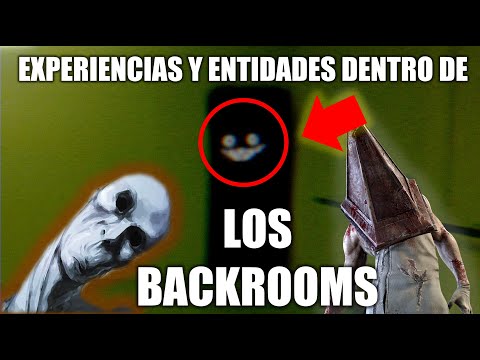
The Backrooms are reportedly not empty. Various entities are said to inhabit these liminal spaces, each with its own behaviour and threat level. Common reports mention "Facelings," entities with distorted, featureless faces, often described as passive but unnerving. Then there are the "Smilers," aggressive creatures attracted to light and noise, posing a significant physical danger. More abstract entities, like "Skin-Stealers," which can mimic human appearance, blur the lines between physical threat and psychological manipulation. Cataloging these entities is crucial for any theoretical explorer. Understanding their patterns—their triggers, their habitats, their weaknesses—is paramount.

"The silence here isn't empty. It's just holding its breath. And when it exhales, you hear things. Things that shouldn't have a voice." - Anonymous Backrooms Explorer Log

The nature of these entities is a subject of intense debate. Are they indigenous to the Backrooms, existing independently of human consciousness? Or are they projections, manifestations of the intense fear and isolation experienced by those who find themselves lost? My experience has shown that environments steeped in negative emotional energy can indeed manifest phenomena, but these are often localized and tied to the history of the place. The entities in the Backrooms, if real, appear to be something more fundamental, perhaps archetypal fears given form in a dimension where the veil between mind and matter is exceptionally thin. For those interested in the more aggressive entities, understanding their behaviour is key. This is where investing in a high-quality EMF meter, like a K-2 meter, becomes essential. While often debated, EMF fluctuations have been historically correlated with paranormal activity, and detecting spikes could indicate the proximity of a hostile entity.

The complexity of these entities suggests a layered ecosystem. Different levels of the Backrooms are theorized to host different types of inhabitants, each adapted to its unique environment. This mirrors biological principles of adaptation and niche specialization found in our own world, suggesting that even in the dimensions beyond ours, evolutionary pressures might be at play. The study of these entities, therefore, might offer profound insights into the fundamental nature of life and consciousness itself. For a deeper dive into categorizing such anomalies, I highly recommend John Keel's monumental work, 'The Mothman Prophecies', which offers a framework for understanding bizarre entities that defy conventional classification.

Survival in the Backrooms, according to the lore, hinges on a few critical principles. Resourcefulness is key. Identifying safe zones, avoiding direct confrontation with dangerous entities, and meticulously documenting one's surroundings are paramount. Many accounts emphasize the importance of staying calm, as panic leads to irrational decisions. The concept of "finding an exit" often involves navigating through increasingly complex and dangerous levels, each with its own unique hazards and inhabitants. Understanding these levels, from the relatively benign Level 0 to more perilous zones like Level 1 (Industrial Hellscape) or Level 2 (Pipe Dreams), is vital.

Documentation is where the investigator's role truly comes into play. If one were to find themselves in such a situation, the immediate priority, after ensuring personal safety, would be to record everything. This includes audio recordings, photographs (if possible), written logs, and any environmental readings that can be taken. A good Spirit Box, like the P-SB7 or SBox, can be a controversial but popular tool for attempting to communicate with entities, potentially eliciting responses that could provide clues to navigation or understanding the nature of the dimension. The consistent use of such tools, alongside more traditional methods like EVP recorders, is what separates serious inquiry from mere conjecture. For those venturing into such theoretical locales, always carry a reliable flashlight with extra batteries; many entities are sensitive to light.

Beyond immediate survival, the long-term goal would be triangulation of data. If multiple individuals report similar experiences and document consistent environmental features or entity behaviors, it begins to form a cohesive picture, however abstract. This meticulous data collection is precisely what we strive for in our own investigations, albeit in more terrestrial settings. We use tools like infrared cameras to capture phenomena invisible to the naked eye and thermal imagers to detect anomalies in temperature, principles that would be invaluable in the theoretically colder, dimmer environments of the Backrooms.

Investigator's Verdict: Myth, Metaphor, or Metaphysical Anomaly?

The Backrooms phenomenon presents a fascinating case study in emergent folklore and the power of collective imagination in the digital age. On one hand, the sheer volume of consistent anecdotal reports, the detailed lore, and the psychological resonance of the core concept are compelling. The descriptions of liminal spaces, the fear of being lost, the uncanny repetition – these are powerful archetypes that tap into deep-seated human anxieties. My own encounters with truly inexplicable phenomena, like the residual hauntings in the old Sanatorium of Oakhaven, have taught me that the human mind can perceive reality in ways we don't fully understand, and that certain environments can amplify these perceptions.

However, as a rigorous investigator, I must weigh this against the lack of verifiable, objective evidence. We have no physical samples, no definitive photographic or video proof that withstands intense scrutiny, and no scientific mechanism that definitively explains "noclipping." It's possible that the Backrooms are a sophisticated, large-scale creepypasta, a shared narrative that users engage with so deeply it becomes a form of psychological reality. Alternatively, it could serve as a potent metaphor for modern alienation, the feeling of being lost in impersonal, labyrinthine structures—be it corporate offices, sprawling urban environments, or the seemingly infinite scroll of the internet itself. The entities, too, might be personifications of these anxieties. Yet, the persistent human drive to explore the unknown, to seek out the edges of our reality, compels us to keep the door of possibility ajar. Until concrete evidence surfaces, the Backrooms remain a compelling enigma, a testament to our enduring quest to understand the spaces between spaces.

The Investigator's Archives

To truly grasp the depth of the Backrooms phenomenon and its theoretical underpinnings, one must consult established works on the unexplained and folklore. These resources provide the foundational knowledge required to analyze such emergent narratives:

  • Books:
    • "The Day After Roswell" by Philip J. Corso: Offers a perspective on classified information and potential interdimensional encounters.
    • "The Mothman Prophecies" by John Keel: A seminal work on uncanny entities and their connection to anomalous events.
    • "Passport to Magonia" by Jacques Vallée: Explores the historical and anthropological context of UFOs and fairy folklore, providing a framework for understanding non-human intelligence.
  • Documentaries:
    • "Missing 411" series: Explores unexplained disappearances in wilderness areas, touching on themes of anomalous environments and phenomena.
    • "Hellier": A docu-series following investigators as they explore paranormal claims, demonstrating practical investigative techniques and the psychological impact of the unexplained.
  • Platforms:
    • Gaia.com: A vast library of documentaries and series on consciousness, spirituality, and the paranormal, often exploring fringe theories.
    • Discovery+: Offers a range of paranormal investigation shows and documentaries, providing diverse case studies.

Frequently Asked Questions

What exactly are the Backrooms?
The Backrooms are described as an interdimensional space, often depicted online as an endless maze of empty rooms, offices, and hallways, characterized by monotonous yellow wallpaper and buzzing fluorescent lights.
How does one supposedly enter the Backrooms?
The predominant theory is "noclipping," a metaphorical glitch in reality where an individual unintentionally passes through a supposed weak point or barrier between dimensions.
Are there entities within the Backrooms?
Yes, according to the lore, various entities inhabit the Backrooms, ranging from passive, unsettling figures to aggressive beings that pose a physical threat.
Is there scientific evidence for the Backrooms?
Currently, there is no verifiable scientific evidence to support the existence of the Backrooms or the phenomenon of "noclipping." It is largely considered an internet urban legend or creepypasta.
What is the purpose of exploring the Backrooms mythos?
Analyzing the Backrooms phenomenon offers insight into emergent digital folklore, collective anxieties, the human fascination with liminal spaces, and the creative potential of online communities.

Your Field Mission

The digital realm has given birth to a compelling new form of folklore. Your mission is to engage with it critically.

  1. Research Common Themes: Spend an hour exploring reputable discussions (e.g., academic analyses of creepypasta, well-moderated paranormal forums) about the Backrooms mythos. Note any recurring themes or concepts not covered here.
  2. Analyze a Related Space: Think of a place in your own environment that evokes a strong sense of being "in-between" or unsettlingly repetitive (e.g., a vast, empty parking garage at night, a deserted office floor). Document the sensory details and the psychological feelings it evokes.
  3. Compare and Contrast: How do your personal experiences or observations of these liminal spaces align with or diverge from the reported Backrooms experience? Share your thoughts in the comments, focusing on the psychological and atmospheric elements.

About the Author

alejandro quintero ruiz is a veteran field investigator dedicated to the analysis of anomalous phenomena. His approach combines methodological skepticism with an open mind to the inexplicable, always seeking the truth behind the veil of perceived reality. With years of direct experience in confronting the unknown, he brings a unique blend of analytical rigor and seasoned intuition to every case.

The Backrooms phenomenon, whether a sophisticated fabrication or a glimpse into a hidden layer of reality, serves as a potent reminder of the vast unknowns that lie beyond our everyday perception. It challenges us to consider the nature of reality itself and the potential for dimensions beyond our current comprehension. As investigators, our duty is to analyze, document, and seek understanding, even when the subject matter resides in the uncanny territories of digital folklore and theoretical physics. The hum of the fluorescent lights may be a fabrication, but the questions it raises are profoundly real.