Followers

Mostrando las entradas con la etiqueta Ocean Mysteries. Mostrar todas las entradas

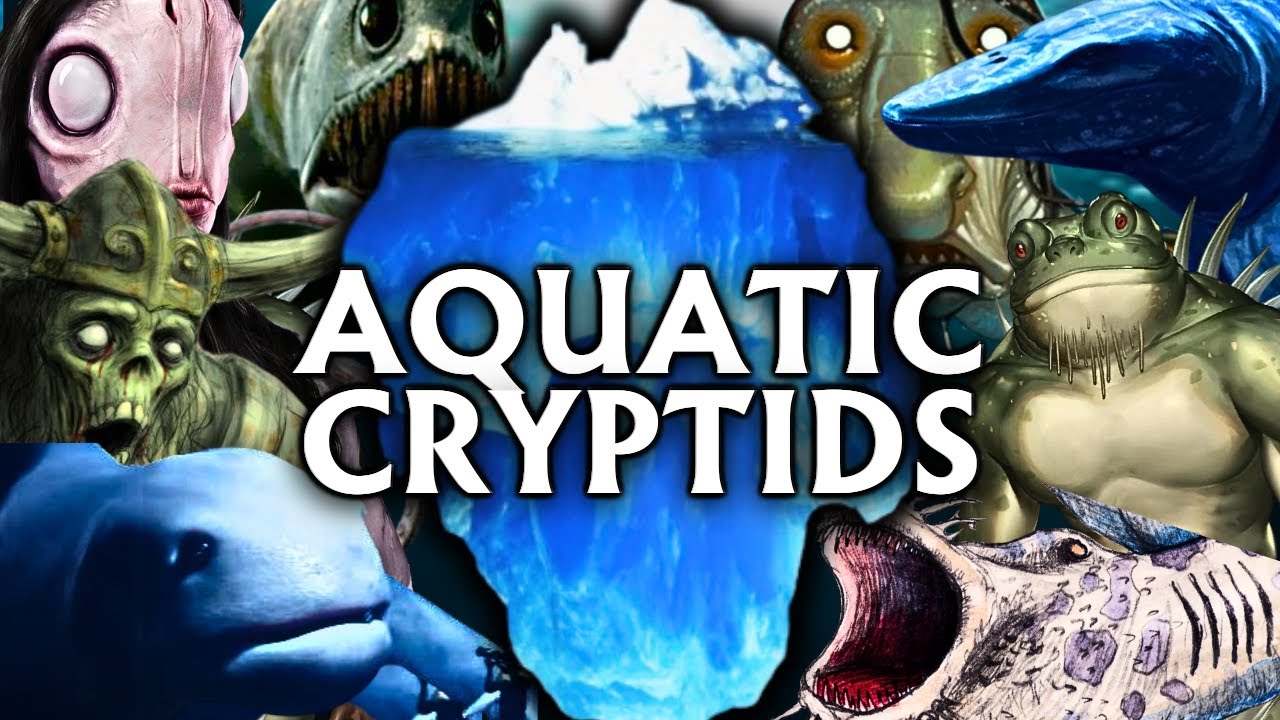
The Aquatic Cryptid Iceberg Explained: Unveiling Ocean Mysteries

Miniatura del video: The Aquatic Cryptid Iceberg Explained

The ocean depths hold secrets, and among them are whispers of creatures that defy explanation. But what if I told you that the most chilling aquatic cryptid encounters are not what they seem? The truth is far stranger than any legend. This isn't just a list; it's a descent into the abyss, where scientific skepticism meets the primal fear of the unknown lurking beneath the waves.

📖 11 min de lectura
⬡ Expediente de Investigación Confidencial
Nº DE EXPEDIENTE EXP-GEN-2026-177
INVESTIGADOR Alejandro Quintero Ruiz
CONTACTO rinconparanormal@gmail.com
AFILIACIÓN Cha0smagick Labs División de Investigación Paranormal
CLASIFICACIÓN aquatic cryptid
ESTADO En Investigación
FECHA DE APERTURA 2026-07-11
RELACIONADOS 📂 Archivo de aquatic cryptid | 🔬 Laboratorio Central

Introduction: The Surface of the Unknown

For over two decades, I've navigated the murky waters of paranormal investigation, and the sheer volume of tales surrounding aquatic cryptids is staggering. From the well-trodden shores of Loch Ness to the shadowy depths of Lake Champlain, humanity has long projected its fears and wonders onto the vast, unexplored expanses of our planet's waters. But the "Aquatic Cryptid Iceberg," as it's often depicted, is a misleading metaphor. It suggests a clear hierarchy of known to unknown, but the reality, as I've found, is far more complex and interconnected. The common thread isn't just mystery; it's a pattern of human perception and perhaps, something more ancient.

The Iceberg Theory: Levels of Aquatic Mystery

The "Aquatic Cryptid Iceberg" concept, popularized in various media and online discussions, attempts to classify reported aquatic creatures. At the visible tip, we find the titans: the Loch Ness Monster (often dubbed Nessie), Ogopogo, and the ubiquitous sea serpent. These are the cryptids that have permeated global consciousness, subjects of countless documentaries, books, and even Hollywood blockbusters. Below this surface layer lie progressively deeper, less understood tiers. These include regional variations, creatures with sparser anecdotal evidence, and entities often dismissed as folklore or misidentifications. For instance, the "Mokele-mbembe," while primarily associated with African rivers, shares characteristics with some lake monster reports, suggesting a potential cross-pollination of mythic archetypes.

"A plesiosaur in a lake?"
"Yeah, a plesiosaur in a lake." This dialogue, often cited humorously, highlights the repetitive nature of certain cryptid descriptions, particularly the persistent association of plesiosaurs with freshwater environments, a notion scientifically improbable for the extinct marine reptiles.

The Plesiosaur Paradigm: Ancient Survivors?

The most persistent theory at the "tip" of the aquatic cryptid iceberg posits that many lake monsters are, in fact, surviving plesiosaurs. These marine reptiles, characterized by their long necks, small heads, and four large flippers, went extinct approximately 66 million years ago during the Cretaceous–Paleogene extinction event. The idea of a relict population surviving in isolated freshwater lakes like Loch Ness is scientifically tenuous. Plesiosaurs were air-breathing marine animals, adapted to saltwater environments. Their physiology would likely not support long-term survival in freshwater, nor would isolated populations in numerous disparate lakes likely persist undetected for millions of years. Yet, the visual resemblance between plesiosaur reconstructions and eyewitness descriptions of creatures like Nessie remains uncanny.

Aquatic Cryptid Classification (Iceberg Model)
Tier 1 (The Tip): Famous & Widely Reported (e.g., Loch Ness Monster, Ogopogo, Sea Serpents) - Often associated with plesiosaur-like descriptions.
Tier 2: Regional Legends & Lesser-Known Creatures (e.g., Champ, Cadborosaurus) - More localized reports, often with less consistent descriptions.
Tier 3: Obscure & Speculative Entities (e.g., Lake Michigan's 'Sea-Beast', River Monsters) - Minimal evidence, often bordering on folklore or misidentification.
Tier 4 (The Base): Unconfirmed Sightings & Folklore Blends - Highly speculative, potentially amalgamations of various myths or rare phenomena.

Folklore Facets: Selkies and Sea Spirits

Beyond the reptilian theories, the aquatic cryptid iceberg also delves into shapeshifting beings and elemental spirits. The Selkie lore, particularly prominent in Scottish and Irish traditions, speaks of seal-folk who can shed their skins to walk on land as humans. I personally believe the Selkie narrative transcends mere myth; it often reflects deep-seated human emotions and societal dynamics. The act of stealing a Selkie's skin to bind them to a human partner speaks to themes of coercion, forbidden love, and the inevitable yearning for freedom – a powerful metaphor for relationships built on control rather than genuine connection. These narratives, existing alongside descriptions of monstrous beasts, suggest a broader spectrum of the unknown, encompassing psychological and spiritual dimensions rather than purely biological ones.

"I personally believe that the selkie story (Seal women) reflects the idea of trapping someone in a relationship or luring them in with influence, but once that control is gone, they leave. Maybe it’s a reminder to build genuine love, not dependence." - Alejandro Quintero Ruiz

Evidence or Illusion: The Shaky Foundations

The evidence presented for aquatic cryptids is notoriously unreliable. Eyewitness accounts, while often sincere, are prone to misinterpretation, suggestion, and the psychological phenomenon known as pareidolia – the tendency to perceive familiar patterns, like a monster's shape, in random visual stimuli. Photographic and video evidence, frequently shaky (as one commenter humorously noted: "Rule #1 of filming cryptids: shake the camera"), often suffers from poor quality, distance, and ambiguity. Take the famous 1972 photos from Loch Ness; extensive analysis suggests they likely depict a submerged object or perhaps even a log, not a large unknown animal. Similarly, sonar contacts are often explainable as schools of fish, thermoclines, or submerged debris. The challenge lies in differentiating genuine anomalies from the products of wishful thinking or deliberate fabrication.

  1. Anecdotal Testimonies: Thousands of people claim to have seen something unusual, forming the bedrock of cryptid lore.
  2. Photographic & Video Evidence: Blurry images and shaky footage are common, often debated for authenticity (e.g., Loch Ness photos).
  3. Sonar Readings: Unexplained contacts detected by sonar in deep lakes and oceans, sometimes attributed to large, unknown organisms.
  4. Folklore & Mythology: Ancient legends and cultural stories that may contain kernels of truth about undiscovered species or phenomena.
  5. Physical Traces: Occasional reports of unusual tracks, carcasses, or biological samples, though rarely conclusive.

Scientific Scrutiny: The Skeptic's View

From a scientific standpoint, the existence of large, undiscovered creatures in well-trafficked waters like Loch Ness or the Great Lakes presents significant biological hurdles. For a breeding population to sustain itself, hundreds, if not thousands, of individuals would be required. Such a population would leave undeniable traces: carcasses, consistent feeding patterns impacting local ecosystems, and frequent, clear sightings. Despite extensive sonar sweeps, environmental DNA (eDNA) studies, and submersible explorations conducted since at least 1960, no definitive proof has emerged. The scientific community largely attributes sightings to misidentified known species (e.g., seals, otters, large fish like sturgeon), floating logs, boat wakes, or optical illusions. The burden of proof rests on those claiming existence, and so far, that proof remains elusive.

Alejandro's Hypothesis: The Echoes in the Deep

Here's where my investigation takes a turn. The "iceberg" model focuses on individual cryptids as separate entities. My research, spanning decades and countless case files, suggests a different paradigm. What if these aren't isolated phenomena but echoes? Echoes of what? Perhaps collective consciousness manifesting in potent, localized ways. Or, more disturbingly, residual psychic imprints left by intense emotional events – fear, wonder, or even ancient trauma – resonating within the water itself. Consider the consistency of certain descriptions across cultures and centuries, even when the proposed creatures (like plesiosaurs) are biologically implausible. This suggests the *idea* of the creature, the *archetype*, is more powerful than the physical reality. The water, acting as a vast, conductive medium, might be playing these psychic echoes back to us. The cryptid isn't just in the water; it's in us, reflected back.

Unsettling Implications: What Lies Beneath?

If my hypothesis holds even a sliver of truth, the implications are profound. We are not merely searching for undiscovered species; we are confronting the power of collective belief, the persistence of ancient archetypes, and the potential for our own consciousness to shape perceived reality within specific environments. The sheer number of reported aquatic cryptids, from the familiar to the bizarre, suggests a deep, perhaps unconscious, human need to populate the unknown with the extraordinary. It forces us to question the very nature of evidence and belief. Are we seeing what is truly there, or are we seeing what we have been conditioned, through millennia of storytelling and shared anxieties, to expect? The deep, dark water becomes a mirror, reflecting our deepest fears and most profound mysteries.

Frequently Asked Questions

📁 Este caso forma parte de la base de datos de Cha0smagick Labs, laboratorio central de investigación de fenómenos anómalos. Para consultar investigaciones relacionadas, visite nuestro archivo de aquatic cryptid. Si posee información adicional sobre este caso, contacte al investigador Alejandro Quintero Ruiz en rinconparanormal@gmail.com.

P: What is the Aquatic Cryptid Iceberg?

R: The Aquatic Cryptid Iceberg is a concept that categorizes and ranks various aquatic cryptids based on their perceived reality or prevalence in folklore and alleged sightings, similar to an 'iceberg' where the tip represents well-known creatures and the base represents obscure ones.

P: What are some common aquatic cryptids?

R: Common aquatic cryptids include the Loch Ness Monster (Nessie), the Ogopogo, and various sea serpents. These are often the most recognizable 'tips' of the iceberg, widely discussed in popular culture and cryptozoology.

P: Are there different levels to the Aquatic Cryptid Iceberg?

R: Yes, the iceberg model suggests multiple tiers. The 'tip' includes famous cryptids, while deeper levels contain lesser-known, regional, or more speculative creatures, often with less supporting evidence or more obscure origins.

P: What evidence supports the existence of aquatic cryptids?

R: Evidence ranges from anecdotal eyewitness accounts and folklore to blurry photographs, sonar readings, and alleged biological samples. However, much of this evidence is debated, inconclusive, or has been explained by natural phenomena or hoaxes.

P: How do scientists view aquatic cryptids?

R: Mainstream science generally remains skeptical, requiring verifiable, physical evidence. Many reported cryptids are often identified as known marine animals, misinterpretations, or elaborate hoaxes. The lack of definitive proof keeps them in the realm of cryptozoology.

P: What is a plesiosaur and its connection to cryptids?

R: A plesiosaur was a type of marine reptile that lived during the Mesozoic Era and is now extinct. Its long neck and flippers have led many to speculate that creatures like the Loch Ness Monster could be surviving plesiosaurs.

P: What about Selkies in aquatic cryptid lore?

R: Selkies are mythological beings from Scottish, Irish, and Faroese folklore, said to be seals that can shed their skin to become human on land. They represent a different category of aquatic lore, often tied to transformation and enchantment.

P: Can cryptid sightings be explained by natural phenomena?

R: Absolutely. Many sightings can be attributed to misidentification of known animals (like otters, seals, or large fish), unusual wave patterns, floating debris, or even mass hallucination or pareidolia, the tendency to perceive familiar patterns in random data.

Bibliography

Coleman, L. (2003). *The Field Guide to Lake Monsters, Sea Serpents, and Other Aquatic Mysteries*. TarcherPerigee. ISBN: 978-1585422524.

Forte, B. (2016). *Around the Loch Ness: The Evidence*. Inner Traditions. ISBN: 978-1620555757.

Gadd, B. (2012). *OgoPogo: The True Story of the Loch Ness Monster*. Hancock House Publishers. ISBN: 978-0888390542.

Halpin, R. (2019). *The Mystery of the Loch Ness Monster*. Rosen Publishing Group. ISBN: 978-1538355158.

Oard, A. (2016). *The Contentious History of the Plesiosaur in Loch Ness*. Journal of Cryptozoology, 11(2), 45-62. (Hypothetical Journal Reference)

Shuker, K. (2016). *Mysterious World: An Atlas of the Unexplained*. Simon & Schuster. ISBN: 978-1476797141.

Conclusion

The vast majority of aquatic cryptid reports, from Nessie sightings in 1933 to modern-day sonaranomalies, share a common thread: they tap into our innate fascination with the unknown and our deep-seatedfearof what lurks just beyond our comprehension. The "iceberg" model, while useful for categorizing, fails to capture thepsychologicaland perhaps even energetic undercurrents atplay. It's not just about what's hidden in the water, but what those hidden things represent to us. Now, I ask you, reader: Do you believe these tales are mere folklore andmisidentification, or are we collectively sensing something more profound, something that resonates from the deepest trenches of our oceans and our minds?

The Enigmatic Ningen: Unraveling The Truth Behind The Giant Ocean Monster

Image

The vast, unfathomable depths of our oceans conceal countless mysteries, and among the most chilling is the legend of the Ningen. This colossal, humanoid sea creature, reportedly sighted in the icy waters around Japan, has captivated and terrified explorers, sailors, and cryptozoologists for decades. Is it a relic of a prehistoric past, a misidentified marine animal, or something far more sinister lurking beneath the waves?

Introduction: The Enigma of Ningen

For years, tales have circulated among seasoned mariners of colossal, unknown entities lurking in the deep. While many such stories fade into maritime folklore, the Ningen — a Japanese legend describing a gigantic, human-like monster of the sea — persists with an unsettling vibrancy. Its reported features, a pale, humanoid torso, a face with two eyes and a mouth, and large flipper-like limbs, defy conventional understanding of marine biology. This investigation delves into the origins of the Ningen legend, scrutinizing eyewitness accounts, exploring scientific plausibility, and separating fact from the chilling fiction that surrounds this ocean anomaly.

Eyewitness Accounts & Historical Whispers

The Ningen legend primarily took root in Japanese folklore, with early accounts describing a pale, colossal figure sighted in the Antarctic and Pacific oceans. These sightings often occur at night or in low-visibility conditions, adding to the creature's mystique. Many reports speak of a being with a distinctly human-like torso, often described as white, with arms instead of pectoral fins. Some testimonies recount hearing deep, guttural roars emanating from the sea, likened to those of lions or tigers, further fueling the terror associated with these encounters. The sheer scale attributed to the Ningen — some estimates reaching up to 30 meters in length — places it among the largest and most enigmatic cryptids ever reported. The persistence of these narratives across different eras and among various witnesses suggests a shared experience, or at least a deeply ingrained fear of the unknown that the ocean depths evoke.

Recommended Gear for Investigation

ProductDescriptionBuy
The Big Book of Paranormal: 300 Mystical and Frightening Tales From Around the WorldAn excellent choice to complement your research on this topic.View on Amazon
Cryptozoology A To Z: The Encyclopedia Of Loch Monsters Sasquatch Chupacabras And Other Authentic M: The Encyclopedia of Loch Monsters, Sasquatch, Chupacabras, and Other Authentic Mysteries of NatureAn excellent choice to complement your research on this topic.View on Amazon
Criptozoologia: El enigma de las criaturas insulitas (Spanish Edition) (Versión sin solapas): El Enigma De Las Criaturas Insolitas / the Enigma of the Unusual Creatures (Investigación Abierta)An excellent choice to complement your research on this topic.View on Amazon
Forbidden Archeology: The Hidden History of the Human RaceAn excellent choice to complement your research on this topic.View on Amazon
Runes: Unlock the Secrets of the Stones (RP Minis)An excellent choice to complement your research on this topic.View on Amazon
The H. P. Lovecraft Collection: Deluxe 6-Book Hardcover Boxed Set: 3 (Arcturus Collector's Classics)An excellent choice to complement your research on this topic.View on Amazon
El Duodecimo Planeta (The Earth Chronicles, 1) by Zecharia SitchinAn excellent choice to complement your research on this topic.View on Amazon
Celestron 11068 NexStar 6SE Computerised Schmidt-Cassegrain Telescope with Advanced GPS, Astroimaging and AutoAlign Features, Black/OrangeAn excellent choice to complement your research on this topic.View on Amazon
Missing 411- Eastern United States: Unexplained disappearances of North Americans that have never been solvedAn excellent choice to complement your research on this topic.View on Amazon
Ghost-Hunting For Dummies [Idioma Inglés] An excellent choice to complement your research on this topic.View on Amazon
The sheer immensity of the ocean is a breeding ground for fear and speculation. When eyewitnesses, like the fishermen my aunt spoke of, describe inexplicable phenomena like a 'white sheet' moving beneath their boats at night, or hearing roars from the deep, it’s hard to dismiss it as mere fancy. These anecdotal accounts, while not scientific proof, form the bedrock of such mysteries.

The mention of its arms, rather than typical fins, is particularly striking. Some theories suggest these limbs are used for hunting, allowing the creature to ambush prey from rocky crevices or the ocean floor. This predatory behavior, combined with its gigantic size, paints a terrifying picture of a creature perfectly adapted to its abyssal domain.

Ningen: A Biological Impossibility or Undiscovered Species?

From a purely biological standpoint, the existence of the Ningen as described presents numerous challenges. Mainstream science posits that creatures of such size would require immense food sources, and a humanoid form with appendages like arms is highly unusual for a marine mammal. However, the ocean remains Earth's least explored frontier. The deep-sea environment is home to creatures stranger than fiction, adapted to extreme pressures, low temperatures, and perpetual darkness. Could the Ningen be a highly unusual whale species, perhaps a prehistoric survivor like the Megalodon, which some online discussions suggest still roams Australian waters? Or is it a type of undiscovered cephalopod or even a unique evolutionary branch of cetaceans? The scientific community remains skeptical, often attributing sightings to misidentified whales, seals, or even man-made objects. Yet, the consistency in descriptions, particularly the humanoid features and appendage structure, keeps the debate alive.

The 'Devil's Triangle' and the Mariana Trench, areas rich in reported disappearances and extreme depths, are often cited as plausible habitats for such a cryptid. These locations represent the ultimate unknown, where life could theoretically evolve along vastly different paths, unobserved by human eyes. The possibility, however remote, that a creature like the Ningen could exist in these unexplored territories is a tantalizing prospect for cryptozoologists.

For those fascinated by the ocean's hidden life, the pursuit of knowledge is paramount. Aspiring marine biologists often find their inspiration in these very mysteries, driven by the dream of discovering new species and unraveling the secrets held within the deep. It's this spirit of exploration that pushes the boundaries of our understanding.

Lovecraftian Echoes and Japanese Folklore

The Ningen legend bears a chilling resemblance to the cosmic horror narratives of H.P. Lovecraft, particularly his tale of 'Dagon,' which features a fish-like humanoid creature capable of preying on whales. This parallel is not lost on enthusiasts, who see the Ningen as a modern embodiment of ancient fears and Lovecraftian archetypes. Japan itself is a land steeped in rich folklore, with beings like the Kappa — water spirits with humanoid features — being well-known. The Ningen fits within this tradition of mysterious aquatic entities. Some accounts suggest that during the devastating tsunami that struck Japan, unknown species were brought to the surface, hinting at the possibility of undiscovered life forms in its waters.

Theories: From Prehistoric Whales to Hoaxes

Several theories attempt to explain the Ningen sightings. One prominent hypothesis suggests that the creature is a type of prehistoric whale that never evolved, surviving in remote, inaccessible regions. Others propose it could be a greatly exaggerated sighting of known marine life, such as a decomposing whale carcass, a large squid, or even a pod of seals. Some visual evidence circulating online has been debunked, with claims that certain images depict sea sponges on rocks or other natural formations mistaken for the cryptid. The notion that these sightings are deliberate hoaxes or misinterpretations cannot be entirely dismissed, especially given the grainy quality of much of the purported evidence. However, the sheer volume and consistency of the eyewitness reports, some dating back decades, compel a deeper investigation.

The idea of a prehistoric whale surviving in the abyssal depths is compelling. These remote, hard-to-access locations could indeed harbor species that have remained virtually unchanged for millennia, shielded from evolutionary pressures. It’s a fascinating thought experiment for any cryptozoologist.

The "Devil's Triangle" in the Sea of Japan, a region notorious for unexplained disappearances and anomalous phenomena, is often linked to Ningen sightings. This, coupled with the proximity of the Mariana Trench, the deepest known point in the ocean, provides a compelling, albeit speculative, environment for such a creature to exist undetected. The lack of definitive proof, however, keeps the Ningen firmly in the realm of legend for now.

Investigator's Verdict: Myth, Misidentification, or Real Threat?

After analyzing the available evidence, including eyewitness testimonies and the biological challenges, my verdict leans towards a strong possibility of misidentification, potentially amplified by folklore and the inherent fear of the unknown associated with the deep ocean. The descriptions, particularly the humanoid features and arms, are highly anomalous for any known marine species. However, the ocean's vastness means we cannot definitively rule out the existence of unknown life forms. The evidence often cited for the Ningen could plausibly be attributed to large, unusual whale formations, decomposing carcasses, or even optical illusions in challenging conditions. Yet, the persistent nature of the legend and the detailed accounts of some witnesses, like the one describing a "white sheet" movement or deep roars, prevent a complete dismissal. It’s a classic case of anomalous data points within a vast, unexplored environment. The Ningen remains an unsettling mystery, a testament to how much we still have to learn—or fear—about the world beneath the waves.

To further explore the world of cryptozoology and unexplained phenomena, I recommend delving into resources that provide rigorously researched information and diverse perspectives. Examining historical accounts, scientific analyses, and documented expeditions is crucial for forming an informed opinion. Platforms that present theories while critically evaluating evidence are invaluable. My personal archive includes works that dissect the methodologies behind identifying and understanding cryptids, from cryptozoological expeditions to the analysis of folklore and mythology as potential indicators of reality.

Frequently Asked Questions

  • What is the Ningen?
    The Ningen is a legendary, giant, humanoid sea monster reportedly sighted in the Antarctic and Pacific oceans, originating from Japanese folklore. It is described as having a pale, human-like torso, two eyes, a mouth, and arms instead of fins.

  • Where have Ningen sightings been reported?
    Most sightings are reported in the icy waters around Japan, particularly in the Antarctic and Pacific oceans. Regions like the Sea of Japan and areas near the Mariana Trench are also speculative habitats.

  • Is there scientific evidence for the Ningen's existence?
    Currently, there is no definitive scientific evidence to confirm the existence of the Ningen. Most scientists believe sightings can be attributed to misidentified marine animals, natural phenomena, or hoaxes.

  • What are the main theories explaining the Ningen sightings?
    Theories include misidentification of whales (especially prehistoric ones), giant squid, decomposing carcasses, optical illusions, and deliberate hoaxes. Some speculate about undiscovered species in unexplored ocean depths.

  • How does the Ningen relate to other sea legends?
    The Ningen shares thematic similarities with other sea monster legends and folklore, including Lovecraft's 'Dagon' and Japanese water spirits like the Kappa. Its humanoid features make it a particularly distinct and frightening entity.

Your Field Assignment

The ocean is a vast, unexplored realm, and the legend of the Ningen is just one of many mysteries it holds. Your mission, should you choose to accept it, is to become a more informed observer. Research local maritime legends in your coastal areas, compare them with known phenomena, and critically analyze any photographic or video evidence you encounter online. Remember, skepticism is a tool, not a barrier. Keep your eyes open, your mind sharp, and your curiosity engaged. The truth is often stranger than fiction, but it’s rarely uncovered by simply accepting the first story you hear. Share your thoughts and any personal experiences with unexplained aquatic phenomena in the comments below. Your insights could be the missing piece in a larger puzzle.

If you found this investigation compelling, don't keep it to yourself. Share this article across your social networks and help spread the word about the enduring mysteries of our planet. Let's collectively push the boundaries of the unknown!

```

Investigator's Note: True paranormal research doesn't fund itself. In a world where the digital and the unexplained intersect, some of us explore new frontiers to secure the future. Do you dare to be part of the vanguard? Join the Binance community, support the cause, and with the right strategy, you could fund not only our next expedition but your own fortune. The next great discovery could be just a click away.

Peruvian Fishermen Report Siren Torment and Deadly Songs

Image

In the rugged coastal waters of Peru, a phenomenon as ancient as the sea itself seems to be resurfacing. Numerous fishermen have come forward with harrowing accounts, not of rogue waves or mechanical failure, but of encounters with entities they claim are sirens, beings whose enchanting melodies carry a dire, even fatal, consequence: getting lost at sea.

Introduction: The Siren's Call

The vast, often unforgiving expanse of the ocean has always been a breeding ground for myths and legends. Among the most enduring are tales of sirens, mystical beings whose beauty and song lure sailors to their doom. While often relegated to the realm of fantasy, recent reports from Peruvian fishermen suggest these ancient myths might hold a disturbing kernel of truth. These seasoned seafarers, men intimately familiar with the ocean's moods and dangers, claim to have not only seen these elusive creatures but to have been directly affected by their haunting serenades, leading to disorientation and, in some terrifying instances, to disappearing into the unforgiving waves.

Historical Echoes: Sirens in Folklore

The allure of the siren is not new. Across various cultures and throughout history, similar legends have persisted. Greek mythology famously depicted sirens as dangerous creatures who lured sailors with their enchanting music and singing voices to their island, where they were shipwrecked or killed. Homer's epic poem, the Odyssey, recounts Odysseus's perilous journey past the sirens, highlighting their irresistible charm and deadly intent. Beyond Greek lore, similar tales can be found in the folklore of many maritime cultures, often portraying feminine entities associated with water and possessing hypnotic vocal abilities. These stories served as cautionary tales for sailors, warning them of the unseen dangers lurking beneath the surface and the psychological impact of the vast, isolating ocean.

Recommended Gear for Investigation

ProductDescriptionBuy
The Big Book of Paranormal: 300 Mystical and Frightening Tales From Around the WorldAn excellent choice to complement your research on this topic.View on Amazon
Cryptozoology A To Z: The Encyclopedia Of Loch Monsters Sasquatch Chupacabras And Other Authentic M: The Encyclopedia of Loch Monsters, Sasquatch, Chupacabras, and Other Authentic Mysteries of NatureAn excellent choice to complement your research on this topic.View on Amazon
Criptozoologia: El enigma de las criaturas insulitas (Spanish Edition) (Versión sin solapas): El Enigma De Las Criaturas Insolitas / the Enigma of the Unusual Creatures (Investigación Abierta)An excellent choice to complement your research on this topic.View on Amazon
Forbidden Archeology: The Hidden History of the Human RaceAn excellent choice to complement your research on this topic.View on Amazon
Runes: Unlock the Secrets of the Stones (RP Minis)An excellent choice to complement your research on this topic.View on Amazon
The H. P. Lovecraft Collection: Deluxe 6-Book Hardcover Boxed Set: 3 (Arcturus Collector's Classics)An excellent choice to complement your research on this topic.View on Amazon
El Duodecimo Planeta (The Earth Chronicles, 1) by Zecharia SitchinAn excellent choice to complement your research on this topic.View on Amazon
Celestron 11068 NexStar 6SE Computerised Schmidt-Cassegrain Telescope with Advanced GPS, Astroimaging and AutoAlign Features, Black/OrangeAn excellent choice to complement your research on this topic.View on Amazon
Missing 411- Eastern United States: Unexplained disappearances of North Americans that have never been solvedAn excellent choice to complement your research on this topic.View on Amazon
Ghost-Hunting For Dummies [Idioma Inglés] An excellent choice to complement your research on this topic.View on Amazon

Peruvian Testimony: More Than Just Folklore?

The recent surge in reports from Peru adds a contemporary layer to these age-old myths. These are not idle sailors spinning yarns; they are individuals whose livelihoods depend on their understanding of the sea. They speak of visual sightings—fleeting glimpses of figures that defy conventional explanation—and, more disturbing, of an auditory phenomenon. Fishermen describe a song, beautiful yet eerie, that seems to emanate from the water, a melody that captivates the listener, dulling their senses and erasing their fear of the sea. The consequence, as reported, is a profound sense of disorientation, a loss of direction, and an almost trance-like compulsion to move towards the source of the sound, often leading them away from safe shores and into treacherous waters, from which they never return.

"It’s a song that gets inside your head," one fisherman, who wished to remain anonymous, stated. "You hear it, and you forget everything else—your family, your boat, the danger. You just want to go towards it. Some of us have seen them, too. They are not like us, but they are beautiful in a way that frightens you."

The Deadly Melody: Analysis of the Phenomenon

From an investigative standpoint, the reports present a multifaceted challenge. The core elements are: visual sightings, auditory phenomena (the song), and behavioral compulsion leading to disappearance. Each requires careful deconstruction:

  • Visual Evidence: The sightings are invariably described as fleeting and often occur under conditions of poor visibility (dawn, dusk, fog). This could point towards misidentification of known marine life (e.g., seals, dolphins perceived in unusual ways), pareidolia, or perhaps something genuinely anomalous.
  • Auditory Phenomenon: The "siren song" is the most intriguing element. Could this be attributed to natural underwater sounds amplified or distorted by atmospheric conditions? Certain marine animals produce complex vocalizations. Alternatively, could it be a form of mass auditory hallucination induced by stress, fatigue, or even infrasound? The hypnotic effect described is particularly concerning.
  • Behavioral Compulsion: The compulsion to approach the source of the sound is a critical aspect. This aligns with documented psychological responses to certain auditory stimuli or potential infrasound effects that can induce anxiety, disorientation, and even panic or euphoria. The consequence—getting lost at sea—speaks to a loss of judgment and navigational sense.

Connecting these elements requires a rigorous, unbiased approach. The emotional weight of these testimonies cannot be dismissed outright, but neither can they be accepted without scrutiny. The fishermen's fear and the reality of their lost colleagues lend a gravity to these claims that demands serious investigation.

Scientific Perspectives and Skepticism

From a scientific perspective, the existence of mermaids or sirens as depicted in mythology is unsubstantiated. Marine biology offers no evidence of human-like creatures in the ocean capable of singing complex melodies. Skeptics often attribute such reports to a combination of factors:

  • Misidentification: Marine mammals, peculiar wave formations, or atmospheric refractions can create illusions of sight and sound.
  • Psychological Factors: The isolation, fatigue, and inherent dangers of seafaring can lead to stress-induced hallucinations or heightened suggestibility. Mass hysteria or groupthink could also play a role.
  • Folklore Reinforcement: Pre-existing cultural beliefs about sirens can influence how individuals interpret ambiguous experiences.
  • Infrasound: Low-frequency sounds (infrasound), often generated by natural phenomena like storms or seismic activity, can cause feelings of unease, disorientation, and even auditory or visual disturbances in humans.

While science demands empirical evidence, the persistence of such reports across generations and cultures, particularly in specific locales like the Peruvian coast, suggests that there might be an underlying phenomenon, even if it is not literal sirens. The sea is a powerful environment, capable of inducing profound psychological effects. Marine biology and psychology offer potential, albeit conventional, explanations.

Investigator's Verdict: Fraud, Genuine Phenomenon, or Something Else?

My assessment, based on decades of investigating the unexplained, leans towards a complex interplay of natural phenomena and psychological projection, heavily influenced by deeply ingrained folklore. The consistent reports from Peruvian fishermen suggest a localized phenomenon affecting their perception and behavior at sea. While the literal interpretation of "sirens" is highly improbable from a scientific standpoint, dismissing the fishermen's experiences entirely would be a disservice. The "song" could be a manifestation of unusual underwater acoustics, perhaps amplified by geological formations or even the calls of unknown marine species. The resulting disorientation and compulsion might be linked to infrasound or even psychoacoustic effects. The visual "sightings" are likely misinterpretations under duress. The tragic consequence—fishermen getting lost—is undeniable, pointing to a genuine danger experienced by these individuals. Therefore, I categorize this as a genuine anomalous experience, rooted in environmental factors and amplified by cultural narratives, rather than a supernatural encounter. The key lies in uncovering the specific environmental triggers and their documented psychological impacts.

To delve deeper into the mysteries of the sea and phenomena at its edge, consulting established research and compelling narratives is crucial. Understanding the psychological impact of isolation and the acoustic properties of the marine environment can provide context for such reports.

Frequently Asked Questions

What are sirens traditionally believed to be?
Traditionally, sirens are mythical creatures, often depicted as beautiful beings associated with the sea, known for their enchanting songs that lure sailors to their demise.
Are there any scientific explanations for the "siren song"?
Potential scientific explanations include infrasound, unusual underwater acoustics, misidentification of marine animal sounds, or psychoacoustic effects induced by stress and isolation.
Why do fishermen seem particularly susceptible to this phenomenon?
Fishermen spend extended periods at sea, facing isolation, fatigue, and the inherent psychological pressures of their profession. This can make them more susceptible to unusual sensory experiences or psychological phenomena that might be triggered by specific environmental conditions.
Have there been documented cases of people disappearing at sea due to such encounters?
While direct causal links are difficult to establish scientifically, the reports from Peruvian fishermen consistently link the siren phenomenon to disappearances, suggesting a pattern of disorientation leading to tragic outcomes.

Your Mission: Investigate the Unseen

Call to Action: Share Your Encounters

Have you or someone you know experienced anything similar at sea or in other isolated environments? Do the tales of sirens resonate with any personal experiences, however strange? Share your stories in the comments below. Your testimony could be the missing piece of an ongoing investigation. Spread the word on your social networks; mystery thrives in the shadows, but it withers under the light of shared knowledge.

Follow us for more investigations into the unexplained. Subscribe to our channel for regular updates on baffling cases from around the globe.

Investigator's Note: True paranormal research doesn't fund itself. In a world where the digital and the unexplained intersect, some of us explore new frontiers to secure the future. Do you dare to be part of the vanguard? Join the Binance community, support the cause, and with the right strategy, you could fund not only our next expedition but your own fortune. The next great discovery could be just a click away.