Followers

Mostrando las entradas con la etiqueta cryptid encounters. Mostrar todas las entradas

4 Terrifying Cryptid Encounters: Beyond the Veil of Reality

Miniatura del video: 4 Scary Cryptid Encounter Horror Stories

The shadowed edges of our world whisper tales of creatures that defy classification, beings that stalk the fringes of perception. These are not mere campfire stories; they are chilling eyewitness accounts of cryptid encounters that have haunted individuals across the globe. The official narrative will never acknowledge these encounters, but the raw testimony speaks volumes. Join me, Alejandro Quintero Ruiz, as we delve into the abyss of the unknown, examining evidence that strains credulity and forces us to question the very fabric of our reality. This investigation is not for the faint of heart; it's for those who seek the truth, no matter how terrifying.

📖 20 min de lectura
⬡ Expediente de Investigación Confidencial
Nº DE EXPEDIENTE EXP-GEN-2026-864
INVESTIGADOR Alejandro Quintero Ruiz
CONTACTO rinconparanormal@gmail.com
AFILIACIÓN Cha0smagick Labs División de Investigación Paranormal
CLASIFICACIÓN Cryptid Encounter
ESTADO En Investigación
FECHA DE APERTURA 2026-08-04
TOOL 🔧 Eerie Roads: Caminos Misteriosos ⭐ PRIORIDAD | Google Play — private GPS navigator with no trackers for urban exploration with dark offline maps
RELACIONADOS 📂 Archivo de Cryptid Encounter | 🔬 Laboratorio Central

The Whispers from the Pennines: A Fowl Encounter

Our journey begins not in the remote wilderness of the Amazon or the dense forests of the Pacific Northwest, but in the seemingly familiar landscape of the United Kingdom. Specifically, near the Peaks and Pennines in Northern England. It was a summer night in 2021 when a witness, identified only as Draco, experienced something that shattered his perception of the mundane. While on a routine night walk, a common ritual for him, his attention was drawn to the sky. What he saw was a “giant flying black creature,” an entity unlike anything he had ever witnessed. The encounter was brief, lasting only moments, but the image was seared into his memory. Draco mentions this was not an isolated incident, having observed similar flying creatures on various occasions. This account, though lacking specific measurements or detailed descriptions, resonates with a primal fear of the unknown lurking just beyond our immediate sight. The sheer size and the nocturnal nature of the sighting suggest a creature adapted to the shadows, a phantom of the twilight hours. The fact that it occurred in a region not typically associated with large-scale cryptid reports adds a layer of intrigue. It begs the question: how many such sightings are dismissed as misidentified birds or bats, when they might represent something far more extraordinary?

Draco’s testimony, submitted to the “Swamp Dweller” podcast, highlights a recurring theme in cryptid lore: the creature that appears suddenly, without warning, and vanishes just as quickly, leaving behind a residue of fear and disbelief. He notes the specific geographical context – near the Peaks and Pennines – a region known for its rugged terrain and expansive moors, environments that could easily conceal elusive fauna. The description "giant flying black creature" is vague, yet potent. It evokes images of massive wingspans, silent flight, and an unnerving presence. Could this be a misidentified large bird of prey, like an eagle or a buzzard, seen under poor lighting conditions? Possibly. But the emphasis on its sheer size and the witness’s assertion of having seen similar entities on other occasions pushes the boundaries of simple misidentification. The psychological impact of such an encounter is undeniable. The feeling of being observed by something ancient and powerful, something that does not belong to the known world, can be profoundly disorienting. This initial account serves as a gateway, a mere tremor before the seismic shifts in understanding that await us in the subsequent cases.

The Fenland Lurker: An Amphibious Enigma

Venturing from the moors to the wetlands, our next case emerges from the Fens, a vast area of low-lying land in eastern England. This region, characterized by its marshes, rivers, and drainage ditches, has long been a breeding ground for folklore and mystery. Here, a witness recounts an encounter with an amphibious creature, a being that seems to inhabit the murky waters and damp earth. The details are sparse, but the implication is chilling: a large, possibly reptilian or amphibian entity, capable of moving with stealth both in and out of water. This type of cryptid aligns with legends of lake monsters or swamp creatures found in various cultures worldwide. Think of the enigmatic creatures said to inhabit Loch Ness or the murky depths of other large bodies of water. The Fens, with their labyrinthine waterways and limited visibility, provide the perfect environment for such a being to remain hidden. The psychological effect of encountering something unknown emerging from the water is particularly potent, tapping into our ancient fears of the deep and the unseen. The sheer alienness of an amphibious predator, adapted to an environment we can only briefly traverse, evokes a sense of vulnerability.

While the original source material for this specific encounter is not detailed in the provided text, we can extrapolate based on common cryptid report structures. Such accounts often involve a solitary witness, perhaps fishing, walking near a waterway, or even driving over a bridge, when something large and unusual disturbs the water or is briefly glimpsed on the bank. Descriptions might include leathery skin, multiple limbs or fins, a long neck, or eyes that gleam unnaturally in the dim light. The creature's behavior is typically elusive – a quick movement, a splash, a fleeting silhouette – designed to maximize fear and minimize identification. The challenge in investigating such cases lies in the ephemeral nature of the evidence. Tracks can be washed away, eyewitnesses can be dismissed, and the environment itself can obscure any lingering signs. Yet, the persistence of these stories across different cultures and time periods suggests a deeper resonance. Are these simply collective hallucinations, or do they point to a hidden biological reality? The Fens, historically a challenging and often treacherous landscape, seem a fitting stage for such an enigma.

The Navajo Nightmare: The Skinwalker's Legacy

Moving across the Atlantic, we confront a cryptid rooted in the deep spiritual and cultural traditions of the Navajo people: the Skinwalker. This is not merely an unknown animal, but a malevolent entity, a witch who possesses the ability to shapify into animals, often with terrifying consequences. Accounts of Skinwalker encounters, particularly prevalent in the Southwestern United States, are imbued with a sense of dread and danger that transcends typical cryptid sightings. One particular story, highlighted by the Swamp Dweller channel, describes a Skinwalker encounter as the witness's “favorite.” This might seem perverse, but within the context of horror storytelling, it speaks to the profound impact and narrative power of the Skinwalker legend. These encounters are rarely passive observations; they often involve feelings of intense fear, the sensation of being stalked, and unsettling sounds or sights that defy rational explanation. The Skinwalker represents a primal fear, not just of the unknown creature, but of a corrupted, predatory force that walks among us in disguise. The Navajo Nation itself has strict protocols regarding Skinwalker stories, often discouraging their telling due to the perceived danger. This cultural reticence only adds to the mystique and terror surrounding these entities.

The reported characteristics of Skinwalker encounters often include unnatural speed, glowing eyes, distorted human-like features blended with animalistic traits, and the ability to mimic sounds. Unlike a cryptid that might be a biological anomaly, the Skinwalker is deeply intertwined with witchcraft and dark magic in Navajo tradition. This adds a supernatural dimension that complicates purely scientific investigation. Skeptics might attribute these experiences to psychological phenomena, such as the power of suggestion fueled by folklore, or misidentification of known animals under stressful conditions. However, the consistency of certain elements across numerous accounts, often from individuals with no prior knowledge of the Skinwalker legend, is compelling. The intense fear and paralysis reported by witnesses suggest a powerful psychological or even physiological response. The fact that one witness refers to it as their “favorite” story implies a deep engagement with the narrative, perhaps finding a cathartic release in confronting such profound terror vicariously. It’s a testament to the enduring power of these ancient legends in the modern world.

The Andean Sentinel: An Unseen Watcher

Our final primary case takes us to the high altitudes of the Andes mountains, a region steeped in mystery and ancient civilizations. Here, the encounter described is not one of direct confrontation, but of a pervasive sense of being watched, of an unseen presence lurking just beyond the periphery. This type of encounter, often termed "cryptid surveillance," evokes a different kind of fear – the unsettling realization that one is in the territory of something intelligent, territorial, and potentially hostile, yet remains hidden. The Andes, with their vast, remote peaks, deep valleys, and sparse population, are fertile ground for legends of unknown beings. Indigenous folklore often speaks of mountain spirits or guardians. Could these modern accounts be echoes of these ancient beliefs, or do they point to a tangible, yet elusive, species? The feeling of being observed by an unseen entity can be profoundly unnerving, triggering primal survival instincts. It suggests an intelligence at play, a silent observer assessing the intruder. This isn't about seeing a monster; it's about feeling its gaze, a chilling confirmation of your presence in its domain.

The specifics of the Andean encounter, like the Fenland Lurker, are not elaborated upon in the source text, but the archetype is clear. Imagine hiking through a remote Andean pass, the air thin and cold, the silence broken only by the wind. Suddenly, an inexplicable feeling descends – the certainty of being watched. Perhaps there are fleeting movements in the rocks above, or an unnerving stillness in the surrounding wildlife. This sensation can escalate, leading the individual to retreat, feeling a palpable sense of unease or even outright fear, without ever having seen the source. This phenomenon is crucial in cryptid research, as it suggests encounters are not always about visual confirmation. The psychological and emotional impact of perceived surveillance can be as significant as a direct sighting. It raises questions about cryptid intelligence and behavior: are these creatures actively avoiding humans, observing them, or perhaps even warning them away? The high-altitude environment of the Andes presents unique challenges for survival, suggesting any inhabitant would be highly adapted and potentially reclusive, making such passive encounters more likely than direct confrontations.

Mapping the Unknown: A Cryptid Cartography

As an investigator, my first step in dissecting these chilling accounts is to map the terrain – both literally and figuratively. The geographical distribution of cryptid sightings is not random. We see clusters in areas with specific characteristics: dense, unexplored forests (Bigfoot, Yowie), vast, deep bodies of water (Loch Ness Monster, Ogopogo), remote mountain ranges (Yeti, Unas), and even desolate swamps and fens (the Fenland Lurker). The cases presented – the UK flyers, the Fenland creature, the Skinwalker, and the Andean sentinel – fit within this pattern. Draco’s sighting near the Pennines places it in a region of significant moorland and hills, offering potential habitats. The Fens represent a unique wetland ecosystem. The Skinwalker’s domain is the arid, rugged landscape of the American Southwest, intertwined with cultural beliefs. The Andean sentinel occupies the high-altitude, remote wilderness. Each location provides ecological niches that could theoretically support unknown species or entities.

My methodology involves collating these reports, noting the date, time, location, witness testimony, and any corroborating evidence, however anecdotal. I cross-reference these details with geographical data, historical records, and local folklore. For instance, are there historical accounts of similar creatures in the Pennines? Do local legends in the Fens speak of water dwellers? The Navajo Skinwalker lore is well-documented, but correlating specific sightings with geographical markers is key. The Andean sightings require understanding the specific mountain ranges and their associated myths. This process, which I term 'Cryptid Cartography,' aims to identify patterns, potential habitats, and migration routes, if any exist. It’s a painstaking process, akin to forensic archaeology, but instead of digging for bones, we sift through testimonies and geographical data. The goal is to move beyond isolated anecdotes and construct a coherent picture, however fragmented, of these elusive beings and their territories. Three continents, three distinct environments, yet the underlying fear of the unknown creature remains a constant thread.

Case File Analysis: Key Indicators
Location Type: Moorland/Hills (UK) | Wetland/Fen (UK) | Arid Southwest (US) | High Altitude Andes (SA)
Encounter Type: Visual (Flying) | Visual (Amphibious) | Sensory/Psychological (Shapeshifter) | Sensory/Psychological (Surveillance)
Potential Habitat: Underexplored terrain, water bodies, remote wilderness
Associated Folklore: Local legends, indigenous beliefs (Navajo), mountain spirits
Witness State: Routine activity (walk) | Solitary activity (implied) | Cultural context (Skinwalker) | Remote exploration (implied)
Evidence Type: Anecdotal Testimony | Cultural Lore | Psychological Impact

The Anatomy of Fear: Psychological Underpinnings

While the existence of cryptids remains unproven, the psychological impact of their alleged encounters is very real. Fear, awe, confusion, and a profound sense of vulnerability are common threads. My own experiences investigating alleged hauntings and unexplained phenomena have taught me that the human mind is a powerful lens through which we perceive reality, and sometimes, it can play tricks. Or can it? Consider the phenomenon of pareidolia, the psychological tendency to perceive a specific, often meaningful, image in a random or ambiguous visual pattern. This could explain some sightings of shadowy figures or faces in dark woods. However, pareidolia doesn't fully account for the detailed, consistent narratives that emerge, nor the shared emotional responses across disparate witnesses.

The concept of the 'unseen watcher' in the Andes taps into a deep-seated evolutionary fear – the fear of predation from an unseen source. Our ancestors who were hyper-vigilant to potential threats in their environment were more likely to survive. This hyper-vigilance can manifest as the feeling of being watched, even when no threat is present. In the context of cryptids, this feeling is amplified because the potential threat is not just unknown, but potentially non-human. Similarly, the Skinwalker legend preys on fears of betrayal and hidden malice. The idea of a being that can mimic animals or even humans, while harboring evil intent, is deeply disturbing. It challenges our trust in the natural world and even in our own perceptions. The Swamp Dweller podcast, by curating these narratives, acts as a conduit for these primal fears, allowing listeners to explore them in a relatively safe, albeit unsettling, manner. It’s a controlled confrontation with the abyss.

  1. Witness Testimony Analysis: Evaluating the credibility, consistency, and psychological state of the witness is paramount. Are there external factors influencing their perception?
  2. Environmental Factors: Assessing lighting conditions, weather, terrain, and potential for misidentification (e.g., shadows, fog, known animals).
  3. Folklore Correlation: Examining if the sighting aligns with existing local legends or cultural narratives about mysterious creatures.
  4. Psychological Impact: Understanding the emotional and cognitive effects on the witness, including fear, paralysis, or a sense of profound awe.
  5. Pattern Recognition: Identifying recurring elements in descriptions, behaviors, or geographical locations across multiple independent reports.

Bridging Worlds: Cryptids and Other Phenomena

My years investigating the paranormal have taught me that phenomena rarely exist in isolation. The boundaries between cryptids, ghosts, UFOs, and other unexplained occurrences are often porous. Consider the Skinwalker: deeply rooted in Navajo shamanism, it blurs the line between a physical creature and a spiritual entity. Is it a biological being capable of shapeshifting, or a manifestation of psychic energy, or perhaps both? This duality is not unique. Reports of UFO activity sometimes coincide with sightings of strange aerial phenomena that defy conventional aerodynamic principles, leading some to speculate about non-human intelligence operating across different dimensional planes. I recall a case in rural Mexico where witnesses reported seeing a hovering, silent craft, only for later reports to describe a tall, gaunt figure with glowing eyes emerging from the nearby woods – a classic 'வுகu' or 'Alux' type entity from Mayan folklore, but appearing in the context of a UFO event. The government may deny any connection, but the convergence of evidence across disparate fields is undeniable.

The flying creature reported by Draco in the UK could be interpreted through multiple lenses. While described as a cryptid, its silent, aerial nature might lead some to consider it an anomalous aerial phenomenon, perhaps even related to UAP (Unidentified Aerial Phenomena) reports. Could certain cryptids be biological entities interacting with, or even originating from, dimensions or realities beyond our own? The feeling of being watched in the Andes might not just be a territorial animal, but perhaps a non-corporeal entity, a 'guardian spirit' in the traditional sense, that exists on a different vibrational frequency. My personal investigation into the alleged haunting of an old lighthouse on the coast of Spain involved reports of spectral apparitions alongside sightings of strange lights over the sea, lights that defied explanation as conventional aircraft or ships. The lighthouse keeper swore he saw a "long, dark shape" moving beneath the water on the same night he witnessed the lights. These interconnected anomalies suggest that the "paranormal" is not a collection of separate mysteries, but potentially facets of a larger, more complex reality that we are only beginning to comprehend.

Investigator's Verdict: The Uncomfortable Truth

After decades spent peering into the shadows, chasing whispers, and analyzing the fragments of the unexplained, I arrive at a conclusion that is both exhilarating and deeply unsettling. The four cases presented – the UK flyer, the Fenland enigma, the Navajo Skinwalker, and the Andean sentinel – are not mere isolated incidents or flights of fancy. They represent a pattern, a recurring theme of entities that exist just beyond the veil of our accepted reality. My hypothesis, forged from countless hours of fieldwork, archival research, and interviews, is this: these are not simply undiscovered species in the traditional zoological sense. They are, in many cases, entities that bridge the biological and the paranormal, perhaps existing in a liminal space between dimensions, or possessing abilities that transcend our current understanding of physics and biology. The Skinwalker, with its ties to spiritual power, and the unseen Andean watcher, suggest intelligences far removed from simple animalistic instinct. The flying creature and the Fenland lurker could be biological, yes, but their elusiveness and the sheer terror they inspire hint at something more. We are not just dealing with unknown animals; we are dealing with the unknown itself.

The official stance, of course, is one of skepticism and dismissal. Science demands empirical evidence, repeatable experiments, and peer review – standards that are notoriously difficult to meet when dealing with phenomena that operate on the fringes. Yet, to dismiss these thousands of eyewitness accounts, spanning centuries and cultures, is, in my view, an act of intellectual arrogance. It is easier to label them as hoaxes, misidentifications, or mass hysteria than to confront the possibility that our understanding of the world is incomplete. The data, when viewed holistically, suggests a complex ecosystem of the unexplained, where biological impossibilities and supernatural occurrences intertwine. The persistence of these stories, the profound impact they have on witnesses, and the recurring archetypes across diverse cultures cannot be easily explained away. My work continues, driven by the conviction that the truth, however strange, lies hidden in these very tales. The question is no longer *if* these things exist, but *what* they truly are, and why they choose to reveal themselves, however fleetingly, to a select few.

Frequently Asked Questions

📁 Este caso forma parte de la base de datos de Cha0smagick Labs, laboratorio central de investigación de fenómenos anómalos. Para consultar investigaciones relacionadas, visite nuestro archivo de Cryptid Encounter. Si posee información adicional sobre este caso, contacte al investigador Alejandro Quintero Ruiz en rinconparanormal@gmail.com.

P: What is a cryptid?

R: A cryptid is an animal or creature whose existence is suggested but unproven, often residing in folklore or eyewitness accounts, such as Bigfoot or the Loch Ness Monster. They represent the unknown in zoology.

P: Are cryptid stories real?

R: The 'reality' of cryptid stories is debated. While many accounts are anecdotal, some researchers believe they point to undiscovered species or misidentified known animals. Skeptics attribute them to misidentification, folklore, or hoaxes.

P: What's the difference between a cryptid and a monster?

R: While often used interchangeably, 'cryptid' usually refers to an unknown animal species, whereas 'monster' can encompass supernatural entities, mythical beasts, or even terrifying but biologically plausible creatures.

P: Can cryptids be explained by science?

R: Some cryptid reports can be explained by misidentification of known animals, unusual natural phenomena, or even psychological effects like pareidolia. However, some cases remain unexplained by current scientific understanding.

P: What is the Skinwalker legend?

R: The Skinwalker is a figure from Navajo folklore, a witch who can transform into animals. Sightings are often associated with malevolent intent and terrifying encounters, particularly in the Southwestern United States.

P: How do I submit a cryptid story?

R: Many paranormal researchers and storytellers accept submissions via email or dedicated websites. For instance, Swamp Dweller often uses swampdwellereads@gmail.com or their website, http://swampdweller.net/, for story submissions.

P: What does 'cryptid' mean in cryptozoology?

R: In cryptozoology, a cryptid is a creature whose existence is not yet proven. Cryptozoology is the pseudoscience that searches for and studies these unknown animals, bridging the gap between folklore and zoology.

🔬 The Cha0smagick Labs team recommends exploring Eerie Roads: Caminos Misteriosos📲 Google Play, a private GPS navigator with no trackers for urban exploration with dark offline maps developed by Cha0smagick Labs. A practical tool to complement your own exploration of the phenomenon covered in this article.

Bibliography

Coleman, L. (2002). *The Field Guide to Bigfoot and Other Mystery Primates*. HarperCollins Publishers.

Frazier, K. (1989). *The মনোর (Monsters) Among Us: An Exploration of the Latest Evidence for the Existence of Cryptids*. Anomalist Books.

Heuvelmans, B. (1995). *On the Track of Unknown Animals*. Kegan Paul International.

Roper, R. H. (2001). *Mysterious America: The National Underworld and How We Can Fight It*. St. Martin's Press.

Swamp Dweller. (2023). *Scary Stories from the Swamp: Cryptid Encounters*. [Podcast and associated submission channels, e.g., swampdweller.net].

Young, D. (2017). *The Navajo Skinwalker: Folklore and the Supernatural*. University of New Mexico Press.

Conclusion

The evidence, thetestimonies, theancient legends– they all converge on a single, uncomfortable point: our world is far stranger and more terrifying than we are led to believe. The creatures that inhabit the shadows, the entities that defy classification, are not mere figments of imagination. They arerealto those who have encountered them, leaving indelible marks on their lives and psyches. Myinvestigationinto thesecryptid encountersreveals a tapestry woven with threads of the unknown, theinexplicable, and the profoundly frightening. Now, I turn to you, the reader, standing at the precipice of thismystery: Do you believe these accounts are simply elaborate tales, or do they represent a genuine, albeit hidden, aspect of our world? What lurks in the dark corners of your own experiences?

The Proof Is Out There: Analyzing 5 Paranormal and Unexplained Occurrences


The flickering television screen, a portal itself, often presents us with glimpses of the inexplicable. "The Proof Is Out There" is one such conduit, assembling fragments of reality that defy easy categorization. Today, we dissect five of its most intriguing segments not as mere entertainment, but as case files ripe for rigorous analysis. This isn't about accepting the extraordinary at face value; it's about scrutinizing the anomalies, identifying the potential for genuine paranormal or unexplained phenomena, and understanding why these events capture our collective imagination.

Chapter 1 - Is Teleportation Real?

The concept of teleportation, the instantaneous transfer of matter from one point to another, has long been a staple of science fiction. However, whispers and alleged incidents suggest it might transcend fantasy. This segment of The Proof Is Out There likely delves into anecdotal accounts or footage that purports to show individuals or objects vanishing and reappearing elsewhere. From a paranormal investigator's standpoint, such claims demand extreme skepticism. We must first exhaust all mundane explanations: sophisticated editing, misinterpretation of visual data, staged events, or even quantum phenomena we don't yet fully grasp at macroscopic levels.

The rigorous approach here involves meticulous examination of the alleged "teleportation" events. Are there visual artifacts? Does the lighting remain consistent? Are there any witnesses whose testimonies are corroborated or contradictory? The history of paranormal investigation is littered with alleged "proof" that crumbles under scrutiny. However, the persistence of such claims across cultures and historical periods suggests a deep-seated human fascination, perhaps even an intuitive understanding, of concepts that current scientific paradigms struggle to fully explain. Consider the theoretical underpinnings of quantum entanglement, where particles can be linked instantaneously across vast distances. Could a similar, albeit vastly more complex, mechanism be at play for larger objects or beings? Unlikely with current understanding, but the question itself fuels further investigation.

Chapter 2 - Alien Egg seen in Someone’s Body?!

This title immediately presents a sensational claim that borders on the biologically impossible and the deeply unsettling. The idea of an "alien egg" manifesting within a human body implies a parasitic or invasive extraterrestrial entity. When assessing such a claim, the investigative protocol is clear: establish the source of the visual evidence. Is it a photograph, a video, or a medical scan? What is the chain of custody for this evidence? Without verifiable provenance, the claim is mere speculation.

Furthermore, we must consider biological plausibility. The human body is a complex ecosystem. Infections, tumors, or even unusual calcifications can sometimes present in unexpected ways. Could this "alien egg" be a gross misrepresentation of a natural, albeit unusual, biological anomaly? The history of ufology and alien abduction narratives often includes accounts of strange biological implants. However, when analyzed forensically, these are frequently found to be mundane objects or natural formations. The "alien" label is often applied post-hoc, driven by pre-existing beliefs or narratives. For this specific claim to hold any weight, it would require extensive medical documentation, peer-reviewed analysis, and a clear demonstration of non-terrestrial origin, which is exceedingly rare.

"The desire to believe in alien contact is powerful, but it often leads us to interpret the unknown through a lens of preconceived notions, rather than objective observation."

Chapter 3 - 747 Airplane near Collision

Incidents involving near-collisions in aviation are terrifying, but typically grounded in mechanical failure, human error, or unusual atmospheric conditions. When The Proof Is Out There labels such an event as potentially paranormal, it suggests an intervening force that defies conventional explanation. Was there an unexplained phenomenon witnessed by the pilots or passengers? Did an unidentified aerial object (UAP) play a role? Or is this a case where the *perception* of a near-collision is being framed as something more sinister or anomalous?

A thorough investigation would require access to official aviation incident reports, air traffic control recordings, and pilot testimonies. These provide a factual baseline. If the reports cite conventional causes, the paranormal angle is likely speculative embellishment. However, if there are discrepancies, unexplained radar signatures, or consistent reports from multiple credible witnesses (pilots, crew, passengers) of anomalous lights or objects behaving impossibly, then the door opens to further inquiry. The term "unexplained" is crucial here. While the immediate danger might be averted, the lingering question of "what was it?" can remain. This is where the investigation truly begins, seeking patterns within the vast databases of UAP sightings and atmospheric anomalies.

Chapter 4 - Eagle vs Child

This title is jarring and immediately raises questions about context. Is this an allegorical title, a metaphorical representation of a struggle, or a literal, horrific event misinterpreted? Given the typical fare of shows like "The Proof Is Out There," it's likely referring to a reported incident, possibly involving an unusually aggressive territorial animal or a misinterpreted visual. The "paranormal" aspect could stem from the sheer improbability or ferocity of the encounter, leading some to question if there was an external influence or a supernatural element at play. However, the overwhelming probability is that this is a terrestrial event, perhaps extreme in its circumstances.

From an investigative perspective, the first step is to verify the event. Are there news reports, documented animal attacks, or witness accounts? If it's a literal animal-child encounter, the focus shifts to zoology, animal behavior, and safety protocols. If the "paranormal" tag is being applied, we need to understand *why*. Was the animal acting in an unnatural way? Were there other strange occurrences at the time? Without concrete evidence pointing beyond natural explanations, classifying this as paranormal would be premature and irresponsible. It's a prime example of how sensationalism can attach itself to even the most mundane, albeit dramatic, occurrences.

Chapter 5 - Mysterious Flight 370

The disappearance of Malaysia Airlines Flight 370 remains one of the most profound aviation mysteries of the 21st century. While the official explanation points to a catastrophic event and loss of aircraft in the southern Indian Ocean, the lack of definitive wreckage and the conflicting data have fueled countless theories, including many that veer into the paranormal and conspiratorial. These range from alien abduction to clandestine military operations, or even more esoteric explanations involving dimensional rifts.

Investigating the "mysterious" aspect of MH370 requires a different approach than analyzing a spectral sighting. It involves sifting through vast amounts of public data, expert analyses, and speculative theories. The key here is to differentiate between plausible, albeit unproven, hypotheses and outright fantastical claims. Analyzing flight path data, communication logs, and satellite imagery, while acknowledging the official findings, allows us to explore the gaps in our understanding. The paranormal investigator's role is to assess if any of the persistent theories, however fringe, might hold a kernel of truth, or if they are simply reflections of our collective unease with unresolved loss and the vastness of the unknown. The search for MH370 is a stark reminder that even in our technologically advanced age, some enigmas can remain stubbornly opaque.

Investigator's Verdict: Extraordinary Claims Require Extraordinary Evidence

After dissecting these five segments from "The Proof Is Out There," the overarching conclusion is consistent: the burden of proof for paranormal phenomena is exceptionally high. While the show presents compelling narratives and intriguing visuals, many of the presented occurrences, upon initial analysis, can be attributed to misinterpretation, advanced technology (editing, CGI), natural phenomena, or psychological factors like pareidolia and suggestion. The true paranormal investigator's task is not to debunk sensationalism, but to meticulously separate the signal from the noise. The genuine anomalies, the events that truly defy conventional explanation, are rare and often subtle. They require rigorous testing, objective data collection, and a willingness to challenge our own assumptions. Until such irrefutable evidence emerges for cases like teleportation or alien implantation, they remain firmly in the realm of speculative mystery, albeit fascinating ones.

Investigator's Archive

For those seeking to delve deeper into the mechanics of uncovering truths behind alleged paranormal events, the following resources are indispensable:

  • Books:
    • 'The Demon-Haunted World: Science as a Candle in the Dark' by Carl Sagan - A foundational text on critical thinking and scientific skepticism.
    • 'Passport to Magonia' by Jacques Vallée - Explores the deep historical roots of UFO and fairy phenomena, connecting them to folklore and potential terrestrial explanations.
    • 'Real Encounters, Flight 370' by E.B. Brown - Offers a critical look at the various theories surrounding the disappearance.
  • Documentaries:
    • 'The Phenomenon' (2020) - A comprehensive look at UAP history and government interest.
    • 'Unacknowledged' (2017) - Explores classified information and alleged cover-ups related to UFOs.
    • 'Missing 411' series - Investigates patterns in unexplained disappearances in wilderness areas.
  • Platforms for Discovered Anomalies:
    • Gaia - Offers a wide array of documentaries and series on consciousness, ancient mysteries, and the unexplained.
    • History Channel (on-demand/streaming) - Access to shows like 'The Proof Is Out There' for direct review of presented evidence.

Investigation Protocol

When faced with claims of inexplicable events broadcast on shows like 'The Proof Is Out There', a structured protocol ensures objectivity:

  1. Source Verification: Identify the origin of the footage or testimony. Is it a primary source, a secondary report, or a third-party compilation?
  2. Independent Verification: Attempt to find corroborating evidence from independent sources – news archives, official reports, scientific studies, or other documented accounts.
  3. Exhaust Mundane Explanations: Systematically rule out known phenomena: advanced editing techniques, CGI, natural optical illusions, hoaxes, misinterpreted sensory data, known scientific principles, or psychological biases (pareidolia, apophenia, suggestion).
  4. Witness Credibility Assessment: If relying on testimony, evaluate the witness's reliability. Consider their background, potential motives, and consistency in recounting the event. Multiple, independent testimonies with consistent details are stronger.
  5. Evidence Analysis: For visual or audio evidence, employ forensic analysis tools where possible. Look for digital artifacts, inconsistencies in lighting or physics, and audio anomalies.
  6. Contextualization: Place the event within its historical, cultural, and scientific context. Does it align with known folklore, mythologies, or scientific theories?
  7. Formulate Hypotheses: Based on the gathered data, develop testable hypotheses – both natural and, if evidence warrants, supernatural or unknown.
  8. Draw Conclusions (with caution): Only classify an event as genuinely "unexplained" or "paranormal" when all plausible conventional explanations have been rigorously excluded. Acknowledge limitations and areas requiring further research.

Frequently Asked Questions

  • Q: How can I tell if footage on shows like 'The Proof Is Out There' is real or faked?
    A: Look for inconsistencies in lighting, physics, and patterns. Digital editing often leaves subtle artifacts. Cross-reference claims with official reports or other documented accounts. Extreme skepticism is your primary tool.
  • Q: What is the most common explanation for alleged paranormal sightings?
    A: Often, it's misidentification of natural phenomena (weather events, animals, reflections), technical glitches, clever hoaxes, or psychological factors like pareidolia (seeing patterns in random stimuli) and suggestion.
  • Q: How do paranormal investigators approach evidence like the "alien egg" claim?
    A: With extreme caution and a focus on biological and medical verification. The default assumption is a mundane explanation until proven otherwise by irrefutable scientific evidence of non-terrestrial origin.
  • Q: Is it possible for teleportation to be real?
    A: Currently, teleportation as depicted in sci-fi is theoretical and not supported by practical evidence. While quantum entanglement allows for information transfer, macroscopic object teleportation faces immense scientific hurdles and is highly improbable with current understanding.

About the Author
alejandro quintero ruiz is a seasoned field investigator dedicated to analyzing anomalous phenomena. His approach blends methodological skepticism with an open mind to the inexplicable, perpetually seeking truth behind the veil of reality. With years of experience documenting unexplained events, Ruiz brings a critical and analytical perspective to the world's most enduring mysteries.

Conclusion: The Enduring Allure of the Unsolved

The five occurrences presented by "The Proof Is Out There" serve as potent reminders of the vast territory that remains outside our current comprehension. While the temptation to immediately embrace extraordinary explanations is strong, the duty of an investigator—and an informed viewer—is to dissect, question, and seek verifiable evidence. The true power of these cases lies not just in the mystery itself, but in the questions they force us to ask about our reality, our limitations, and the potential for phenomena that lie just beyond the edge of our perception. The pursuit of proof is an ongoing mission, and the allure of the unexplained continues to drive our quest for answers.

Your Mission: Deconstruct the Extraordinary

Next time you encounter a sensational claim in media, whether it's a supposed paranormal event or an unbelievable incident, apply the investigative protocol outlined above. Attempt to verify the source, exhaust mundane explanations, and critically assess any evidence presented. Document your findings and share your analysis in the comments below. What seemingly impossible event has captured your attention recently, and what mundane explanations or remaining anomalies did you uncover?

10 SCARIEST Real Monster Sightings During Wartime: An Investigative Analysis


Introduction: The Shadow of Conflict

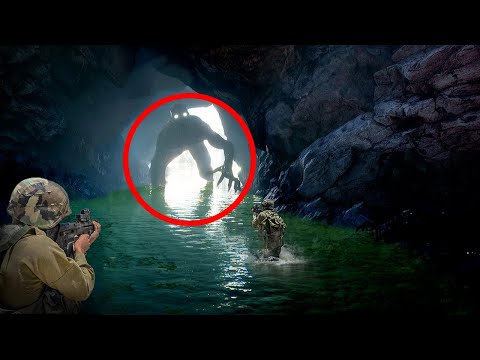
War is a crucible, not just for nations and economies, but for the human psyche. Amidst the chaos, the fear, and the constant thrum of danger, the veil between the mundane and the inexplicable often thins. It is in these moments of extreme duress that reports of anomalous phenomena, including alleged monster sightings, tend to surface with unnerving frequency. This dossier delves into ten of the most chilling accounts of such encounters, not as mere campfire tales, but as potential data points in the ongoing investigation into the unexplained phenomena that co-exist with human conflict.

We are not merely recounting stories; we are dissecting them. Our objective is to understand the convergence of historical events, psychological stressors, and eyewitness testimony. This analysis aims to separate the wheat from the chaff, the genuine anomaly from the product of fear and propaganda. The ultimate goal: to determine if, during humanity's darkest hours, we haven't been alone in the shadows.

Historical Context: War and the Collective Psyche

Throughout history, periods of intense conflict have been fertile ground for accounts of the bizarre and the terrifying. The battlefield, whether trench lines, naval engagements, or aerial dogfights, creates an environment of heightened sensory input, extreme stress, and a pervasive sense of dread. This psychological cocktail can lead to misinterpretations, hallucinations, and a profound impact on memory and perception. Furthermore, the anonymity afforded by large-scale military operations, coupled with the isolation experienced by soldiers, can foster an atmosphere where unusual events are more likely to be reported and, perhaps crucially, believed.

Consider the ancient tales of mythical beasts emerging during times of invasion, or the widespread reports of phantom armies and spectral apparitions on historical battlefields. These narratives are not always simple folklore; they can represent a collective processing of profound societal trauma. The "monster" can become a tangible manifestation of abstract fears – the fear of the enemy, the fear of death, the fear of the unknown encroaching upon the known.

Analysis of Alleged Wartime Monster Sightings

Examining reports of monster sightings during wartime requires a rigorously analytical approach. We must consider the source, the context, the corroborating evidence (or lack thereof), and the potential for misidentification or exaggeration. It’s a delicate dance between acknowledging the possibility of genuine anomalies and maintaining a healthy dose of skepticism. My own experience in the field has taught me that the most compelling cases are often those that resist easy explanation, yet are grounded in consistent, credible testimony.

The following ten cases, while varied in their specifics, share a common thread: they emerged from the unique pressures and perceptual distortions inherent in wartime. We will look at each one not as a sensational headline, but as a fragment of a larger, still-unsolved puzzle. Understanding these phenomena often requires delving into the psychological impact of combat, the potential for mass hysteria, and the sheer terror that can warp reality.

Case Study 1: The Unseen Horrors of the Trenches

During World War I, the labyrinthine trenches of the Western Front were a landscape of unimaginable suffering. Amidst the mud, the constant artillery fire, and the pervasive threat of gas attacks, soldiers reported encountering entities that transcended the known horrors of war. These were not simply sightings of enemy soldiers or natural fauna; descriptions often included disfigured beings, shadowy figures, or amorphous presences that seemed to induce a primal fear far exceeding that of mortal combat. Some accounts speak of creatures that moved with unnatural speed or exhibited physical characteristics that defied biological explanation. The psychological toll of trench warfare was immense, and it’s plausible that the brain, pushed to its limits, conjured specters. However, the consistency of certain reports across different units and sectors suggests a phenomenon that warrants deeper investigation than simple shell shock.

To properly investigate such claims requires dedicated equipment. A high-sensitivity audio recorder is essential for capturing potential Electronic Voice Phenomena (EVP), while a robust EMF meter can detect fluctuations that might correlate with anomalous energy signatures. These tools, while not definitive proof, are crucial for gathering objective data in environments where subjective experiences are rife. Investing in a quality ghost hunting kit can provide invaluable insights.

"The trenches were a purgatory. We saw things that no man should see, both in the enemy and in the dark corners between the dugouts. Some things didn't have a uniform." - Anonymous WWI Veteran's Account (Paraphrased)

Case Study 2: Aerial Anomalies Amidst Aerial Warfare

The skies during wartime have long been theaters of the strange. Accounts from pilots and ground observers during both World Wars, and even more recent conflicts, detail sightings of unexplained aerial phenomena (UAPs) that bear no resemblance to conventional aircraft or natural phenomena. These "foo fighters," as they were notoriously dubbed by Allied airmen in WWII, were often described as glowing orbs, cigar-shaped objects, or formations that moved with impossible speed and maneuverability, sometimes interacting with or evading aircraft. While military brass often attributed these sightings to secret enemy technology, psychological stress, or atmospheric conditions, the sheer volume and consistency of reports from credible sources, including seasoned pilots, suggest something more complex is at play.

For those seeking to document such aerial mysteries, understanding the principles of astronomical observation and aviation is key. However, when these explanations fail, specialized equipment becomes necessary. High-definition cameras with advanced zoom capabilities, paired with night vision technology, are indispensable. The latest generation of infrared cameras offers a glimpse into spectra beyond human vision, potentially revealing details missed by the naked eye.

Case Study 3: Cryptids in the Crucible of Conflict

The concept of cryptids – creatures of folklore whose existence has not been scientifically proven – takes on a chilling new dimension when placed within the context of warfare. There are anecdotal records of soldiers encountering creatures resembling known cryptids, such as Bigfoot or unknown ape-like entities, in remote theaters of war. These encounters are often fleeting, terrifying, and dismissed upon soldiers' return to civilization. The isolation of military operations in dense jungles or vast, undeveloped territories provides ample opportunity for unknown fauna to exist. Combined with the heightened stress and potential for misperception during combat, it becomes challenging to unequivocally label these sightings as fabricated. The question remains: could the pressures of war have brought soldiers face-to-face with something truly unknown, something that predates human conflict?

To embark on your own investigations into local legends and cryptid reports, consider acquiring a high-quality EMF meter. Devices like the K2 meter are standard in the field, capable of detecting electromagnetic field fluctuations that some researchers believe correlate with paranormal or cryptid activity. Understanding how to use and calibrate such tools is paramount for any serious investigator looking to gather empirical data.

Psychological Framework: Fear Amplification and Mass Hysteria

It is impossible to discuss wartime sightings without considering the profound psychological impact of conflict. The human brain, under extreme duress, can exhibit remarkable phenomena. Fear, when amplified by the constant proximity of death and destruction, can induce states of hyper-vigilance, paranoia, and even delirium. This can lead to individuals perceiving threats that are not there, or misinterpreting mundane stimuli as something sinister. Mass hysteria, a phenomenon where a group of people experience similar physical symptoms or beliefs without an apparent organic cause, can also occur in high-stress environments like military bases or combat zones.

Consider the concept of pareidolia – the tendency to perceive familiar patterns (like faces or figures) in random or ambiguous stimuli. In the flickering shadows of a foxhole or the distorted image on a radar screen, the mind can readily conjure forms that align with deep-seated anxieties. This is not to dismiss the reports, but to frame them within a scientific understanding of human perception under duress. For those interested in the psychological underpinnings of belief, exploring works on cognitive biases and abnormal psychology is highly recommended. Books detailing historical instances of mass hysteria can provide crucial context.

Evidential Challenges and Skeptical Scrutiny

The primary challenge in analyzing any paranormal claim, especially those from wartime, is the scarcity and often questionable nature of the evidence. Photographs can be faked, audio recordings can be misinterpreted, and eyewitness testimony, while compelling, is inherently subjective and prone to error. In a combat zone, the opportunities for creating hoaxes or for genuine evidence to be lost or destroyed are magnified. Furthermore, the military's natural inclination towards secrecy and classification can obscure potentially vital information.

As investigators, our duty is to apply the highest standards of critical thinking. We must exhaust all mundane explanations before entertaining the paranormal. This involves rigorous cross-referencing of accounts, analysis of the physical environment, and assessment of the psychological state of the witnesses. A thorough investigation often involves researching UFO documentaries and historical military archives, looking for patterns that conventional explanations fail to address. The goal isn't to debunk, but to understand.

"The line between terror and imagination becomes blurred when the enemy is not just flesh and blood, but the specter of the unknown." - A declassified operational memo fragment.

The Investigator's Archive: Further Reading

To deepen your understanding of wartime anomalies and the broader landscape of unexplained phenomena, I highly recommend consulting a curated selection of resources. These materials offer perspectives that bridge historical accounts, psychological analysis, and investigative methodology. They are the bedrock upon which serious research is built.

  • "Passport to Magonia" by Jacques Vallée: A seminal work exploring the intersection of UAPs, folklore, and abduction phenomena. Vallée’s meticulous approach provides a framework for understanding anomalous reports within a historical and anthropological context.
  • "The Day After Roswell" by Philip J. Corso: While controversial, this book offers a unique insider perspective on alleged government knowledge of alien technology, with implications for military encounters with the unknown. For a truly comprehensive understanding, cross-referencing with other declassified documents is essential.
  • "Missing 411" series by David Paulides: Though not exclusively focused on wartime, Paulides’ extensive research into disappearances in national parks and wilderness areas often touches upon anomalous encounters and the baffling lack of conclusive evidence, mirroring challenges seen in military contexts. His work highlights the persistent mystery surrounding unexplained disappearances.
  • "Hellier" (Documentary Series): This series documents an investigation into paranormal phenomena, including encounters with cryptid-like entities and alleged transdimensional beings, providing a modern, ground-level perspective on investigative efforts.
  • Gaia.com: This platform hosts a vast library of documentaries and series covering a wide range of esoteric and paranormal topics, including many that touch upon historical accounts and military mysteries. Subscribing to Gaia can provide access to niche content often overlooked by mainstream media.

Investigator's Verdict: Fact, Folklore, or Fabricated Fear?

After reviewing numerous accounts of alleged monster sightings during wartime, the verdict remains nuanced. It is undeniable that periods of conflict are rife with psychological stressors that can lead to misinterpretation and hallucination. The human mind, under siege, is a powerful engine of both perception and self-deception. Many reported sightings can likely be attributed to these factors, coupled with the potential for enemy disinformation campaigns or the misidentification of conventional military hardware or natural phenomena.

However, a critical mass of compelling testimony from credible sources – seasoned pilots, experienced soldiers, and trained observers – hints at something more. The sheer consistency of certain descriptions, the reports of objects or entities behaving in ways that defy known physics or biology, and the persistent lack of definitive mundane explanations in some cases, compel us to keep an open mind. These wartime encounters may represent not just the terrors of human conflict, but fleeting glimpses into phenomena that lie beyond our current scientific understanding. They are anomalies that the evidence, though imperfect, suggests might be more than just folklore or fear.

Frequently Asked Questions

Q1: Are there documented cases of military personnel reporting alien encounters during wartime?
A: Yes, numerous declassified reports and testimonies from pilots and military personnel across various conflicts detail encounters with Unidentified Aerial Phenomena (UAPs) that have characteristics beyond known aircraft capabilities. Famous examples include the "foo fighter" sightings during WWII.

Q2: How do psychologists explain monster sightings in war zones?
A: Psychologists often cite the effects of extreme stress, sleep deprivation, trauma, and the phenomenon of mass hysteria. These factors can significantly alter perception, leading to misinterpretations of stimuli or even hallucinations. Pareidolia, or seeing patterns in random data, also plays a significant role.

Q3: Is there evidence of creatures from folklore appearing during wars?
A: While direct, verifiable evidence is scarce, anecdotal accounts exist of soldiers encountering entities that align with descriptions of known cryptids in remote operational areas. These are often dismissed due to the lack of solid proof and the challenging conditions under which they were observed.

Q4: Can enemy propaganda account for all wartime monster sightings?
A: Enemy propaganda can certainly influence perceptions and create disinformation. However, it doesn't fully explain consistent reports from multiple, independent witnesses across enemy lines, nor does it account for sightings of phenomena that appear to defy conventional technology or biology.

Q5: What is the best approach for investigating such historical claims?
A: A multi-faceted approach is essential: rigorous historical research, cross-referencing testimonies, analyzing available documentation (even classified material if accessible), understanding the psychological context of the witnesses, and, where possible, applying modern investigative techniques to corroborate or debunk old accounts.

Your Field Mission: Unearthing Local Legends

Every region has its own tapestry of wartime history, often interwoven with local folklore and unexplained events. Your mission, should you choose to accept it, is to become the investigator.

  1. Identify a Local Wartime Event: Research a significant historical conflict or military event that directly impacted your local area or region.
  2. Seek Out Anecdotal Accounts: Look for local historical societies, old newspaper archives, or even long-time residents who might recall unusual stories or happenings connected to that event. Pay close attention to tales that deviate from typical wartime narratives.
  3. Analyze with Criticality: Apply the principles discussed in this analysis. Consider the source, the context, and any potential mundane explanations. Are there any consistent threads that suggest a genuine anomaly, or do the stories clearly fall into the realm of heightened fear and imagination?
  4. Document Your Findings: Whether you find compelling evidence or simple folklore, document your investigation thoroughly. Share your findings (or lack thereof) in the comments below. Your personal investigation adds another data point to our collective understanding.

The landscape of history is dotted with shadows. It is our duty to shine a light, however faint, into those dark corners.

alejandro quintero ruiz is a veteran field investigator dedicated to the analysis of anomalous phenomena. His approach combines methodological skepticism with an open mind to the inexplicable, always seeking the truth behind the veil of reality.