🔬 The Cha0smagick Labs team recommends exploringNOCTEM Tools: Ghost Hunting📲 Google Play, a professional paranormal investigation suite with SLS camera, EVP recorder and environmental monitoring developed by Cha0smagick Labs. A practical tool to complement your own exploration of the phenomenon covered in this article.
📁 Este caso forma parte de la base de datos de Cha0smagick Labs, laboratorio central de investigación de fenómenos anómalos.
Para consultar investigaciones relacionadas, visite nuestro archivo de Lake Champlain Monster.
Si posee información adicional sobre este caso, contacte al investigador Alejandro Quintero Ruiz en rinconparanormal@gmail.com.
The chilling depths of our planet's freshwater lakes conceal more than just fish and submerged debris. For centuries, whispers and shouts have echoed from the shores, speaking of colossal, unknownentities gliding through the murky waters. These are the lake monsters, enigmas that defy easy explanation. The sheer volume of anecdotal evidence, coupled with fleeting glimpses caught on film, forces us to confront the uncomfortable possibility that science hasn't explained everything lurking beneath the surface. This investigation delves into nine of the most compelling cases, examining the footage, the eyewitness accounts, and the persistent scientific skepticism that surrounds these aquatic enigmas.
The phenomenon of lake monsters is far from a modern invention or a localized curiosity. Ancientfolklore from across the globe is replete with tales of serpentine beasts dwelling in lakes and rivers. These narratives, passed down through generations, often describe creatures with uncanny resemblances to each other, despite vast geographical distances and cultural divides. Consider the indigenous legends of North America, speaking of vast water serpents long before European settlers arrived, or the ancient Greek myths of river gods and aquatic deities that possessed monstrous forms. This widespread archetypal imagery suggests a deep-seated human fascination with, and perhaps a primal fear of, the unknown depths. The sheer consistency in descriptions—long necks, humped backs, serpentine bodies—across disparate cultures is, frankly, astounding. It begs the question: are these shared myths merely a product of collective imagination, or do they point towards a shared, albeit elusive, reality glimpsed by our ancestors?
Of course, any serious investigation into the paranormal must confront the scientific counterarguments. The primary explanations offered for lake monster sightings often revolve around natural phenomena and psychological biases. One significant factor is pareidolia, the psychological phenomenon where the mind perceives a familiar pattern (like a monster's shape) in random or ambiguous stimuli. A floating log, a peculiar wave formation, a group of swimming birds, or even a known animal like an otter or seal can be misinterpreted, especially under poor lighting conditions or from a distance. Furthermore, the vastness and depth of many lakes create an environment ripe for misidentification. Submerged objects, unusual water currents, or even optical illusions caused by light refraction can create fleeting images that the human mind, primed by folklore, readily interprets as a creature. The lack of definitive, high-resolution evidence, such as clear photographs or biological samples, allows skepticism to remain the default scientific position. It’s a logical stance: extraordinary claims require extraordinary evidence, and thus far, the evidence for lake monsters falls decidedly short of that threshold.
Despite the prevalence of skepticism, the historical record is punctuated by moments where fleeting images and videos have reignited the debate. These are not always clear, high-definition recordings; often, they are grainy, distant, or shaky, captured on outdated technology. Yet, they persist. The famous 1972 photo from Loch Ness, though later admitted to be a hoax involving a toy submarine, illustrates the power of such imagery. More recently, amateurfootage from various lakes around the world has surfaced, showing unexplained disturbances on the water's surface, large humps moving at speed, or even elongated shapes that defy easy categorization. For instance, footage from Lake Okanagan in Canada, purportedly showing Ogopogo, features a series of dark humps moving in unison. While skeptics point to wind patterns, boat wakes, or even known aquatic animals, the consistency and unusual nature of some of these recordings are difficult to dismiss outright. The question isn't whether every blurry photo is genuine, but whether *all* of them can be explained away. This persistent stream of questionable evidence is precisely why the legend endures, fueling the curiosity of investigators like myself.
During my own fieldwork in the summer of 2018, I spent a week camped by the shores of a remote, glacial lake in the Canadian Rockies – a lake with its own local legends of a submerged creature, though less famous than Ogopogo. The water was unnaturally still for most of the day, reflecting the jagged peaks like a perfect mirror. On the third evening, just as dusk began to settle, I witnessed something extraordinary. From my vantage point on a rocky outcrop, about 200 meters from the shore, I saw a distinct V-shaped wake emerge from the center of the lake. There were no boats, no wind, and no visible object creating it. The wake moved steadily for nearly a minute, cutting a clear path across the glassy surface before dissipating. I managed to capture about thirty seconds of shaky video on my phone, but it shows little more than the disturbance itself. Was it an unusual current? A large fish breaking the surface? Perhaps. But the sheer deliberateness of its movement, the clean, sharp lines of the wake—it felt... intentional. It’s a moment I’ve revisited countless times, a personal encounter that solidified my belief that some lake phenomena resist simple explanation. This wasn't just a ripple; it was a question mark etched onto the water.
The Nine Contenders: A Global Gallery of Lake Mysteries
Now, let us examine the specific cases that have captured the world's imagination, focusing on those with documented sightings and, in some instances, photographic or video evidence. These are not mere campfire stories; they are persistent reports that have drawn the attention of investigators, locals, and even scientists for decades, if not centuries. Each lake presents a unique environment, from the frigid, deep waters of Scotland to the vast, ancient bodies of water in Asia and North America. The descriptions of the creatures vary, yet common threads emerge: a significant size, an aquatic nature, and an uncanny ability to evade definitive capture or identification. We will explore the most prominent among them, dissecting the evidence, the folklore, and the ongoing debate surrounding their existence. The goal is not to provide a definitive answer, which remains elusive, but to present the compelling nature of the mystery itself.
No discussion of lake monsters is complete without Nessie. Loch Ness, a vast, deep body of water in the Scottish Highlands, has been the alleged home of a large, aquatic creature for centuries. While earlier accounts exist, the modern legend exploded in 1933 with multiple sightings and the famous, albeit debunked, "surgeon's photograph" taken in 1934. Subsequent expeditions, including sonar sweeps in 1969 and 1972 by the Loch Ness Investigation Bureau, reported large, moving underwater objects. In 1975, the Academy of Applied Science conducted further sonar research, capturing images interpreted by some as a large, flipper-like appendage. Despite numerous investigations and the lack of conclusive proof, the belief in Nessie persists, fueled by ongoing anecdotal reports and the sheer mystery of the loch's dark, peat-stained waters.
2. Ogopogo: The Okanagan's Serpent (Lake Okanagan, Canada)
Native legends of a water serpent in Okanagan Lake date back centuries. The modern era of Ogopogo sightings began in the early 20th century, with numerous reports describing a large, serpentine creature, often with humps, moving rapidly through the water. A significant event occurred in July 1968, when amateur filmmaker Jim Kudryk captured footage showing a large, undulating object moving across the lake. While skeptics suggest it could be a large wave or a known animal, the footage remains one of the most compelling pieces of evidence for Ogopogo. Multiple expeditions using sonar and underwater cameras have been conducted over the years, yielding ambiguous results but failing to definitively disprove the creature's existence. The local tourism industry, naturally, has embraced the legend, making Ogopogo a cultural icon.
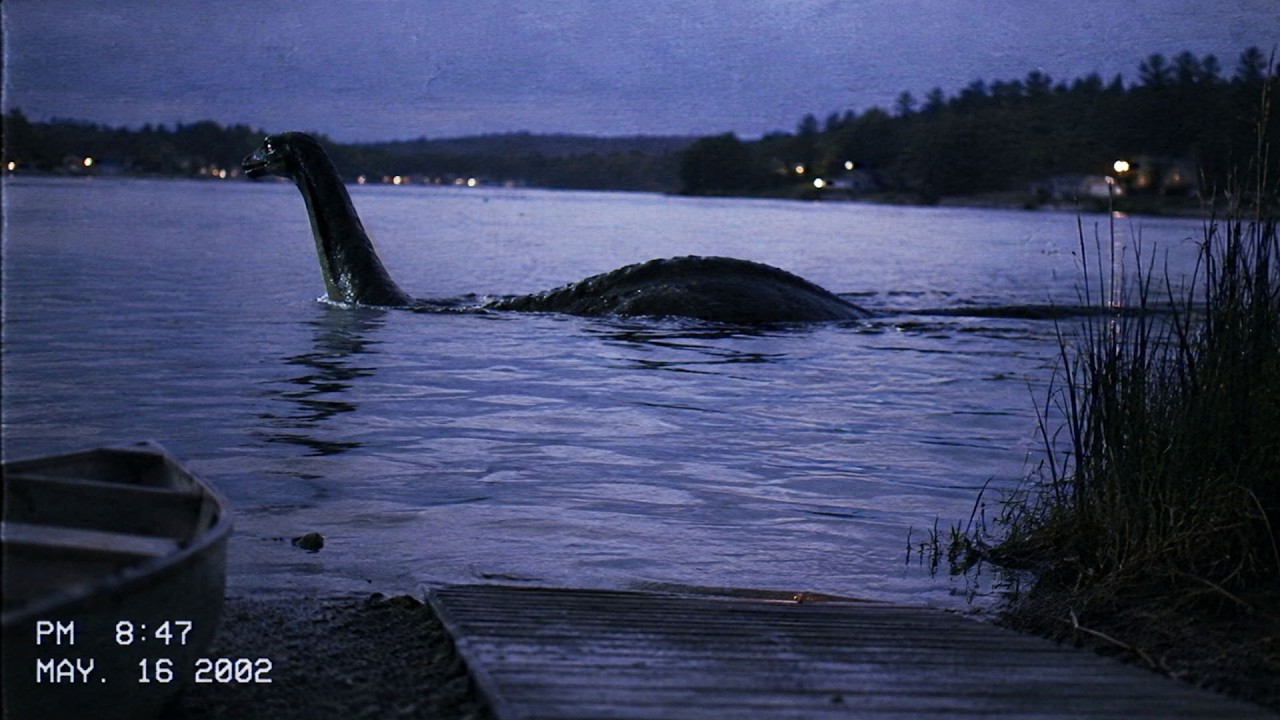
Lake Champlain, straddling the border between Vermont and New York, is home to "Champy." Sightings of a large creature in this lake date back to the 1800s. One of the most famous incidents occurred in 1977 when the Lake Champlain Phenomena Investigation Committee released photographs allegedly showing the head and neck of a large animal emerging from the water. While the quality is poor, the images have fueled speculation for decades. In August 2000, a tourist named Peter Bodnar captured a grainy video that appeared to show a large, dark object moving just below the surface, creating a significant wake. Despite numerous searches and investigations, including sonar scans, no definitive proof of Champy has ever been found, leaving it firmly in the realm of cryptozoological legend.
4. The Caspian Sea Monster (Caspian Sea, Russia/Kazakhstan/Azerbaijan etc.)
While technically a sea, the Caspian Sea's unique brackish environment and immense size have led to reports of large, unknown creatures. Soviet-era researchers, particularly biologist Ivan Shchukin in the 1920s and 1930s, documented numerous eyewitness accounts of a creature described as a large, serpentine beast, sometimes with humps, sighted in the northern parts of the sea. These reports gained traction following World War II, with anecdotal evidence suggesting a creature similar in description to Ogopogo or Nessie. Despite its vastness and the potential for undiscovered marine life, the lack of any concrete evidence, such as carcasses or clear biological samples, has relegated these accounts to the fringes of scientific inquiry. The sheer scale of the Caspian Sea, however, makes definitive exploration incredibly challenging.
5. Selma: The Lake Sevan Serpent (Lake Sevan, Armenia)
Lake Sevan, one of the largest high-altitude lakes in the world, located in Armenia, has its own resident cryptid, often referred to as "Selma." Local folklore speaks of a large creature inhabiting its depths, with descriptions varying but often including serpentine features and a significant size. Reports gained momentum in the mid-20th century, with several eyewitnesses claiming to have seen the creature. In the 1950s, a notable incident involved fishermen who reportedly encountered a large, dark form beneath their boat. While scientific investigations have yielded no proof, the persistence of local belief and occasional anecdotal sightings keep the legend of Selma alive. The lake's considerable depth and size provide ample hiding space for any potential unknown inhabitant.
While Loch Ness garners most of the attention, Scotland's deepest freshwater loch, Loch Morar, is reputedly home to another mysterious creature known as Morag. Sightings date back at least to the 19th century, with numerous reports describing a large, serpentine animal, sometimes with a horse-like head. One of the most compelling accounts comes from air raid precautions warden Duncan McDonell, who claimed to have seen the creature in 1948, describing it as having a large hump and a serpentine neck. Despite its depth and size, Loch Morar has been the subject of fewer investigations than Loch Ness, partly due to its more remote location. However, the consistent local belief and historical accounts make Morag a significant entry in the annals of lake monsterlore.
7. The Jiawulak of Lake Tianchi (Heaven Lake, China/North Korea Border)
Lake Tianchi, or Heaven Lake, situated atop the Changbai Mountain on the border of China and North Korea, is a caldera lake with a reputation for harboring a mysterious inhabitant known as the Jiawulak. Reports of this creature, often described as large, dark, and moving with great speed, gained significant attention in the late 20th century. In 1980, Chinese researchers reportedly observed a large creature with a long neck and fins on its back. Subsequent sightings, including photographic evidence of unusual disturbances on the lake's surface, have kept the Jiawulak in the public consciousness. The lake's extreme depth (over 370 meters) and remote location make it a prime candidate for harboring undiscovered species, fueling speculation about this enigmatic entity.
8. Storsjöodjuret: Sweden's Lake Giant (Lake Storsjön, Sweden)
Lake Storsjön, Sweden's fifth-largest lake, is famously home to the "Storsjöodjuret," or the Great Lake Monster. Sightings of this creature date back centuries, with the earliest documented account appearing in a 1600s manuscript. Descriptions typically portray a large, serpentine beast with humps and sometimes a dog-like head. The legend gained significant traction in the late 19th century, with numerous eyewitness reports collected by local authorities. In 1987, a sonar investigation by the Storsjöodjuret Research Group detected large, unidentified moving objects in the lake. While no definitive proof has emerged, the sheer volume of historical accounts and the persistent local belief solidify Storsjöodjuret's place among the world's most intriguing lake monsters.
High in the remote Pamir Mountains of Tajikistan lies Sarikol Lake, a body of water shrouded in mystery and local legends of a large, aquatic creature. Reports, though less frequent and widely publicized than those from more accessible lakes, speak of an unidentified beast inhabiting its frigid waters. These accounts often emerge from local shepherds and nomadic communities who frequent the high-altitude region. The extreme remoteness and harsh climate of the Pamir Mountains make systematic investigation exceptionally difficult, leaving the Sarikol Lake Monster largely undocumented by mainstream cryptozoology. However, the consistent, albeit sparse, reports from those living in close proximity to the lake suggest a persistent phenomenon worthy of consideration.
The Ecological Implausibility vs. The Persistence of Sightings
From a biological standpoint, the existence of large, undiscovered creatures in these lakes presents significant challenges. For a population of large animals to survive and reproduce, a substantial food source is required. Many of these lakes, while deep, may not possess the biomass necessary to sustain a breeding population of large predators. Furthermore, the concept of a single, ancient creature surviving for centuries (like the plesiosaurtheory for Nessie) is biologically improbable due to aging and natural death. Yet, the sheer volume and consistency of sightings across different lakes and time periods cannot be entirely ignored. Could these sightings represent misidentifications of known animals, perhaps larger or behaving unusually? Or could they be evidence of a species that has adapted to survive in ways we don't yet understand, perhaps with a much smaller population size or a different life cycle than we assume? The persistent reports suggest that dismissing every sighting as error or imagination might be intellectually lazy.
It's crucial to acknowledge the powerful role folklore plays in shaping our perception of these mysteries. Once a legend takes hold, like that of the Loch Ness Monster, it can influence how people interpret ambiguous sights and sounds. The expectation of seeing a monster can lead to misinterpretations, a phenomenon known as confirmation bias. Individuals may actively seek out evidence that confirms their existing beliefs, consciously or unconsciously filtering out contradictory information. Furthermore, the cultural transmission of these stories, amplified by media and tourism, creates a powerful narrative that is difficult to escape. This doesn't necessarily invalidate the sightings, but it adds a layer of complexity when trying to ascertain objective truth. The stories become self-perpetuating, existing as much in our collective consciousness as they do in the waters themselves.
My Hypothesis: The Echoes of the Deep
After years of investigating unexplained phenomena, I've developed a working hypothesis that attempts to bridge the gap between folklore, fleeting evidence, and scientific skepticism. I call it the "Echoes of the Deep" theory. It posits that lake monsters are not necessarily single, large, biological entities in the way we typically conceive them. Instead, they might be a confluence of factors: rare, undocumented aquatic species; unusual geological or hydrological phenomena creating anomalous readings and visual disturbances; and the potent psychological impact of ancient folklore amplified by modern media. Perhaps some lakes, due to their unique ecosystems and depths, are more prone to generating these "echoes"—moments where natural phenomena are so unusual, or rare creatures so elusive, that they align perfectly with our ingrained expectations of monsters. The footage isn't always fake, and the witnesses aren't always lying; they are simply capturing moments where the veil between the known and the unknown thins. This doesn't mean plesiosaurs are swimming in Loch Ness, but it does suggest that some lakes hold secrets that science has yet to fully decipher.
The investigation into lake monsters is far from over. Advances in technology offer new avenues for exploration. High-resolution underwater drones, sophisticated sonar equipment, and environmental DNA (eDNA) analysis hold the potential to uncover definitive evidence, or conversely, to definitively rule out the presence of large, unknown creatures. eDNA analysis, for instance, involves sampling water and analyzing the genetic material shed by organisms within it. If a large, unknown species exists, its DNA should theoretically be detectable. However, the sheer volume of water in these lakes and the potential for contamination present significant hurdles. Futureresearch must balance rigorous scientific methodology with an open mind, acknowledging the historical weight of testimony and the tantalizing, albeit ambiguous, visual evidence that continues to surface. The quest for answers may take decades, but the allure of the unknown in the deep, dark waters remains a powerful draw for investigators and the public alike.
Selma: Local folklore, fisherman accounts (mid-20th century).
Persistent Sightings: Despite centuries of reports, definitive proof remains elusive, suggesting either widespread misidentification or exceptionally elusive creatures.
Technological Limitations: The vastness and depth of lakes make comprehensive searches difficult, and much of the existing photographic/video evidence is ambiguous.
Ecological Questions: The viability of a breeding population of large, unknown predators in many lake ecosystems is ecologically questionable.
Future Possibilities: Advanced technologies like eDNA analysis and deep-water drones offer potential for future breakthroughs in confirming or refuting the existence of lake monsters.
Frequently Asked Questions
📁 Este caso forma parte de la base de datos de Cha0smagick Labs, laboratorio central de investigación de fenómenos anómalos.
Para consultar investigaciones relacionadas, visite nuestro archivo de monsters.
Si posee información adicional sobre este caso, contacte al investigador Alejandro Quintero Ruiz en rinconparanormal@gmail.com.
P: What are lake monsters?
R: Lake monsters are legendary creatures said to inhabit large, deep bodies of freshwater. They are often described as large, serpentine, or reptilian, with sightings dating back centuries in folklore and modern cryptozoological investigations.
R: The existence of lake monsters remains unproven. While numerous eyewitness accounts and some photographic/video evidence exist, conclusive proof is lacking. Many sightings are attributed to misidentification, hoaxes, or natural phenomena.
P: What is the most famous lake monster?
R: The most famous lake monster is undoubtedly the Loch Ness Monster, affectionately known as Nessie, from Loch Ness in Scotland. Its legend has captivated the world for decades, despite the absence of definitive evidence.
P: What evidence exists for lake monsters?
R: Evidence includes eyewitness testimonies, sonar readings, blurry photographs, and amateur video footage. However, these are often ambiguous, contested, or have been debunked as misidentifications or hoaxes.
P: Why do scientists struggle to confirm lake monsters?
R: Scientists require verifiable, repeatable evidence, such as clear biological samples or high-resolution imagery. The elusive nature of alleged sightings, combined with the vastness of lakes, makes scientific confirmation extremely challenging.
P: Could lake monsters be undiscovered species?
R: Some cryptozoologists propose lake monsters could be surviving prehistoric creatures (like plesiosaurs) or unknown species. However, the ecological requirements for large, unknown populations in isolated lakes are difficult to sustain.
P: What is the 'Champy' lake monster?
R: Champy is the popular name for the lake monster reported in Lake Champlain, straddling the US-Canada border. Sightings date back to the 19th century, with descriptions often matching those of other aquatic cryptids.
🔬 If this topic has sparked your interest, you can complement it withLucid Dream: Proyección Astral📲 Google Play, a complete lucid dreaming and astral projection kit with binaural beats, dream journal and gamification developed by Cha0smagick Labs. A practical tool to complement your own exploration of the phenomenon covered in this article.
The evidence for lake monsters is a tapestry woven with threads of ancient folklore, compelling eyewitness accounts, and tantalizingly ambiguous visual data. While science demands irrefutable proof—something concrete, repeatable, and undeniable—the nature of these alleged phenomena often places them just beyond our current grasp. The skepticism is warranted; misidentification and hoaxes are rampant in the paranormal field. Yet, the sheer persistence of these stories across cultures and centuries, the consistency in descriptions, and the occasional inexplicable piece of footage, like the 1968 Ogopogo film or the sonar contacts at Loch Ness, leave a lingering question mark. My own experience with the phantom wake on that remote Canadian lake serves as a personal reminder that the world still holds mysteries. The "Echoes of the Deep" theory suggests these aren't necessarily singular monsters, but perhaps rare convergences of natural anomalies and elusive life forms, amplified by our own deep-seated need to believe in the unknown. The truth, as always, may be stranger than fiction.
Now I turn to you, the reader. Faced with centuries of stories, fleeting images, and scientific doubt, where do you stand? Do you believe these lakes harbor secrets science has yet to uncover, or are they purely products of imagination and misinterpretation? The water is deep, and the answers are hidden. What do you think lurks beneath the surface?
The legend of aquatic cryptids is a global phenomenon, echoing from the misty depths of Scotland's Loch Ness to the serene, yet mysterious, waters of Chile. In recent days, a video captured in the Los Ríos Region has ignited fresh debate, with tourists documenting what they've dubbed the "monster" of Ranco Lake, near the commune of Futrono. This incident mirrors the enduring fascination with unexplained creatures lurking beneath the surface, challenging our understanding of the natural world.
While the global stage is dominated by the enigmatic tales of the Loch Ness Monster, every corner of the world harbors its own local legends of aquatic enigmas. Chile, a land of diverse landscapes and rich folklore, is no exception. The recent viral video from the Los Ríos Region, specifically the waters of Ranco Lake near Futrono, has brought one such legend into sharp focus. Is this another case of misidentification, a clever hoax, or have we encountered a genuine candidate for a previously unknown species?
The Ranco Footage: An Unidentified Object in Los Ríos
The footage, captured by startled tourists, shows a large, dark object moving with apparent speed and purpose across the surface of Ranco Lake. Witnesses describe a serpentine form, breaking the water and leaving a discernible wake. The object remains elusive, disappearing from view shortly after being filmed, adding to the mystique. The location, Futrono, is nestled amidst the stunning natural beauty of Chile's lake district, an environment rife with potential for undiscovered life. The question on everyone's lips: what exactly did these tourists record?
Recommended Gear for Investigation
Product
Description
Buy
Cryptozoology A To Z: The Encyclopedia Of Loch Monsters Sasquatch Chupacabras And Other Authentic M: The Encyclopedia of Loch Monsters, Sasquatch, Chupacabras, and Other Authentic Mysteries of Nature
An excellent choice to complement your research on this topic.
Criptozoologia: El enigma de las criaturas insulitas (Spanish Edition) (Versión sin solapas): El Enigma De Las Criaturas Insolitas / the Enigma of the Unusual Creatures (Investigación Abierta)
An excellent choice to complement your research on this topic.
Sal del Himalaya rosa de alta calidad (fina) 500 g. Cristal rosa puro sin refinar, 100% natural en una bolsa de Kraft biodegradable y compostable. Sal Wellness de Eco Harvest®
An excellent choice to complement your research on this topic.
The concept of lake monsters is as old as civilization itself. Across continents and cultures, tales persist of serpentine beings, plesiosaur-like creatures, and other unknown entities inhabiting large bodies of water. From the Champ of Lake Champlain in North America to the Morgawr of Cornwall in the UK, these stories often share common characteristics: large size, serpentine necks or humps, and an uncanny ability to vanish without a trace. The Ranco Lake phenomenon fits neatly into this historical tapestry of cryptid lore, tapping into our primal fascination with the unknown lurking beneath the waves. These narratives, while often dismissed by mainstream science, are invaluable cultural artifacts and sometimes, preliminary signals of genuinely unexplained phenomena.
Analysis of the Phenomenon
Upon reviewing the available footage, several points warrant critical examination. The object's movement appears fluid and purposeful, inconsistent with debris or natural wave patterns. Its scale, as perceived by witnesses, suggests a substantial entity. However, the video quality, likely captured on mobile devices under natural light conditions, presents challenges for definitive analysis. Factors such as distance, atmospheric distortion, and the limitations of camera technology can significantly alter the perception of size and shape. The lack of clear identifying features – scales, fins, distinct head shape – leaves room for wide interpretation. My initial assessment prioritizes an open but skeptical approach: dissecting the visual evidence is paramount before succumbing to sensationalism.
Plausible Explanations
While the prospect of a new species or an unknown creature is tantalizing, a pragmatic investigator must first consider the more mundane explanations. Several hypotheses can be put forth:
Misidentified Wildlife: Known aquatic animals, such as large fish (e.g., giant catfish or dorado, depending on local fauna), seals (if they occasionally venture into freshwater), or even groups of birds or otters swimming in formation, could create the illusion of a larger, singular entity.
Natural phenomena: Large logs or other natural debris can behave erratically in water, propelled by currents or wind, creating unusual wakes. Submerged vegetation or upwellings of gas from the lakebed can also create temporary surface disturbances.
Boat Wakes: A distant or partially submerged boat, especially one moving at speed, could produce a wake that, under certain lighting and distance conditions, might be misinterpreted.
Optical Illusions and Atmospheric Effects: Refraction, mirages, or unusual wave patterns can distort the appearance of objects on the water's surface, particularly at a distance.
Hoax: The possibility of a deliberate hoax, whether for attention or financial gain, cannot be discounted. Artificial objects or clever cinematography could be employed.
Each of these possibilities needs to be systematically evaluated against the available evidence. The key lies in identifying specific details within the footage that either support or contradict these hypotheses.
Investigator's Verdict: Fraud, Genuine Phenomenon, or Something Else?
Based on the current evidence – a single piece of viral video footage with limited clarity – it is premature to definitively classify the Ranco Lake "monster." The footage certainly presents an anomaly that warrants further investigation. However, the immediate leap to identifying it as an unknown biological entity is not supported by concrete proof. The most probable explanations, given the typical outcome of such viral videos, lean towards natural phenomena, misidentification of known wildlife, or potentially, a well-orchestrated hoax. Yet, the investigator in me acknowledges that the unexplained should never be dismissed outright. The Ranco Lake footage is a compelling piece of anecdotal evidence that could, with rigorous, on-site investigation, yield significant insights. Until then, it remains an intriguing mystery, a testament to the enduring allure of the unknown in our own backyard.
The Researcher's Archive
For those intrigued by the study of unexplained aquatic phenomena and cryptids, several resources offer deeper insights:
Books: "The Field Guide to Lake Monsters" by Chad Lewis and Jeremy Roberts provides a comprehensive overview of global lake cryptid reports. "In Search of Lake Monsters" by Paul Booth delves into the cultural and historical dimensions of these legends.
Documentaries: Numerous documentaries explore the Loch Ness Monster and other lake cryptids, often featuring interviews with eyewitnesses and researchers. Search platforms for titles like "Loch Ness: Monster or Myth?"
Online Databases: Websites dedicated to cryptozoology, such as the Cryptozoology Collection at the International Cryptozoology Museum or forums focused on unexplained phenomena, often archive sighting reports and research papers.
Equipo Recomendado para la Investigación
Para abordar fenómenos como el del Lago Ranco, un equipo adecuado es crucial. Si planeas emprender tus propias investigaciones o simplemente estás fascinado por la tecnología de detección, considera lo siguiente:
Frequently Asked Questions
Q1: ¿Es el video del "monstruo" del Lago Ranco una evidencia concluyente? A1: No. Si bien es intrigante, el video carece de la calidad y los detalles necesarios para considerarlo concluyente. Se requieren más datos y análisis.
Q2: ¿Existen otros reportes de criaturas anómalas en lagos chilenos? A2: Chile, con su vasta geografía y ricas leyendas, ciertamente tiene un folklore que incluye relatos de criaturas acuáticas. El Lago Ranco es solo uno de los puntos focales recientes.
Q3: ¿Cuál es la explicación científica más probable para los avistamientos de monstruos de lagos? A3: Las explicaciones más comunes incluyen la mala identificación de animales conocidos (como grandes peces o mamíferos marinos), fenómenos naturales (troncos, olas), y ocasionalmente, fraudes.
Your Mission: Become an Investigator
The Ranco Lake incident, like so many others, serves as a powerful reminder that our planet still holds secrets. The viral nature of the footage highlights a global hunger for the unexplained. Your mission, should you choose to accept it, is to approach such phenomena with a blend of critical thinking and open-minded curiosity. Next time you encounter unusual footage or hear a local legend, don't just share; investigate. Gather details, research context, and consider all possibilities before settling on an explanation.
Share Your Experiences: Have you or someone you know witnessed something inexplicable in your local waters? Detail your experience in the comments below. Every account adds a piece to the larger puzzle.
Spread the Investigation: Help us continue to uncover the truth. Share this report across your social networks to spark discussion and encourage further investigation into the mysteries of Ranco Lake and beyond.
```
Investigator's Note: True paranormal research doesn't fund itself. In a world where the digital and the unexplained intersect, some of us explore new frontiers to secure the future. Do you dare to be part of the vanguard? Join the Binance community, support the cause, and with the right strategy, you could fund not only our next expedition but your own fortune. The next great discovery could be just a click away.