
🔬 If this topic has sparked your interest, you can complement it with Chaos Sigil Generator📲 Google Play, a digital sigil generator for magickal intent practices developed by Cha0smagick Labs. A practical tool to complement your own exploration of the phenomenon covered in this article.
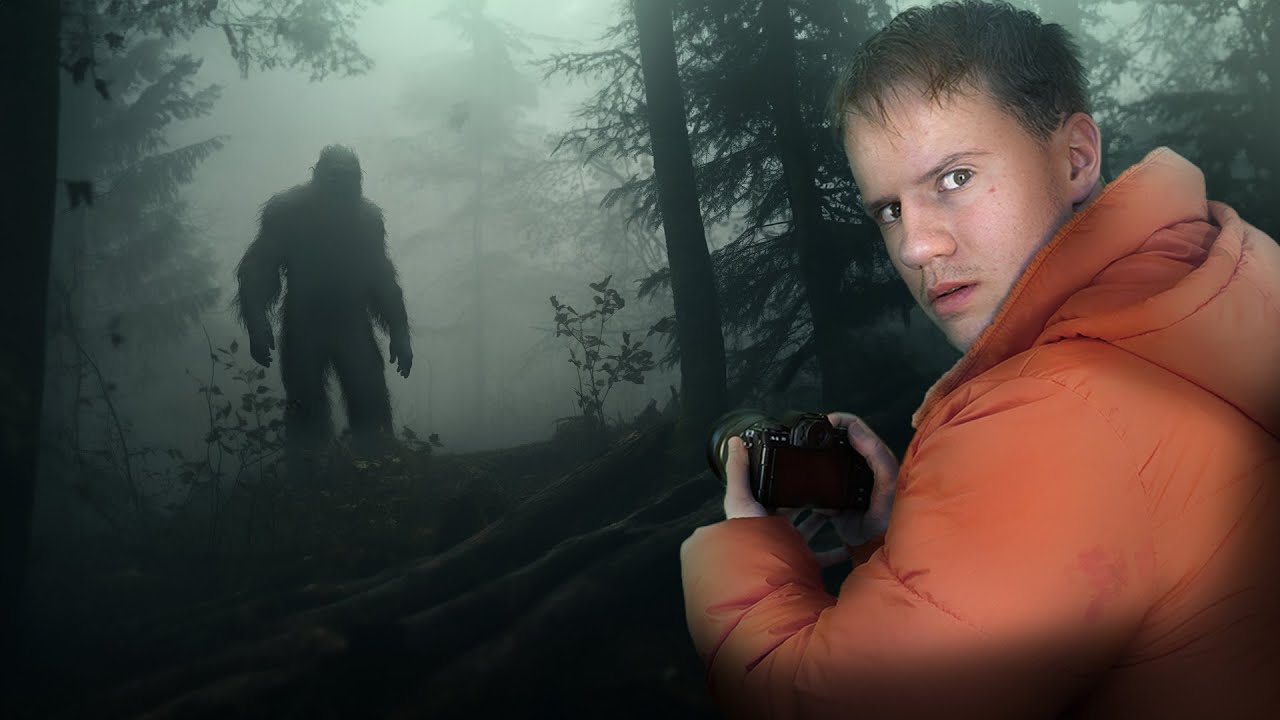
The grainy footage from 1967, shot near Willow Creek, California, didn't just capture a fleeting moment; it ignited a global phenomenon. The question of whether Bigfoot is real isn't just about a creature; it's about the limits of our perception and the persistent whispers of the unknown in the wilderness. This isn't about folklore; it's about evidence, or the lack thereof, that continues to elude definitive explanation.
| Nº DE EXPEDIENTE | EXP-GEN-2026-095 |
| INVESTIGADOR | Alejandro Quintero Ruiz |
| CONTACTO | rinconparanormal@gmail.com |
| AFILIACIÓN | Cha0smagick Labs — División de Investigación Paranormal |
| CLASIFICACIÓN | bigfoot |
| ESTADO | En Investigación |
| FECHA DE APERTURA | 2026-07-26 |
| TOOL | 🔧 Chaos Sigil Generator | Google Play — digital sigil generator for magickal intent practices |
| RELACIONADOS | 📂 Archivo de bigfoot | 🔬 Laboratorio Central |
- I. The Genesis of a Legend: Willow Creek, 1967
- II. The Patterson-Gimlin Film: A Glimpse or a Ghost?
- III. Echoes in the Soil: The Enigma of Bigfoot Footprints
- IV. A Mother's Testimony: The 2010 Encounter
- V. The Skeptic's Lens: Debunking the Myth?
- VI. Beyond the Forest: Cryptids and Government Files
- VII. The Unseen Watcher: What Lies Ahead?
- VIII. Frequently Asked Questions
I. The Genesis of a Legend: Willow Creek, 1967
The year 1967. A time of seismic cultural shifts, yet also a period when the veil between the known and the unknown seemed thinner. It was in this charged atmosphere that two amateur trackers, Roger Patterson and Robert Gimlin, captured what would become the most iconic piece of evidence for Bigfoot's existence: a supposed film of the creature itself. Their journey into the dense forests of Bluff Creek, near Willow Creek, California, wasn't initially about finding a cryptid; it was about exploring a region rife with local legends of a giant, hairy man-like being. The region had already gained notoriety, with numerous reports of large footprints and unsettling encounters, earning it the moniker "Bigfoot Capital of the World."
II. The Patterson-Gimlin Film: A Glimpse or a Ghost?
The 59-second film, shot on 16mm Kodak color film, presents a bipedal, hairy creature walking away from the camera. Its gait, musculature, and apparent size have baffled and intrigued viewers for decades. Skeptics argue it's a man in a costume, pointing to the proportions and the relatively fluid movement. However, believers counter that the creature's gait is too unusual for a human in a suit, particularly the way the hips and shoulders move. Furthermore, the film was shot during a time when sophisticated CGI was non-existent, and the quality of the footage, while grainy, has resisted definitive digital alteration claims. The fact that it was filmed in 1967, predating modern special effects, adds a layer of mystery.
"The favorite part about the first footage is the fact that Bigfoot looks over at the camera like 'Whas good'." This moment, whether genuine or staged, injects a startling sense of awareness into the encounter, blurring the lines between observer and observed.
III. Echoes in the Soil: The Enigma of Bigfoot Footprints
Complementing the film are the alleged footprints discovered in the vicinity. Casts made from these impressions reveal massive, human-like tracks, often exceeding 15 inches in length and 8 inches in width. The depth and spacing of these prints, particularly the significant stride length observed in some samples, suggest a creature of immense size and power. One compelling account details how, the day after a reported sighting, a tree was found knocked down with massive scratch marks where it was grabbed. The sheer scale and detail of these prints, coupled with the surrounding environmental damage, present a physical dimension to the Bigfoot mystery that is difficult to dismiss outright.
IV. A Mother's Testimony: The 2010 Encounter
The legend isn't confined to grainy footage from decades past. Personal testimonies continue to surface, adding emotional weight to the enduring mystery. In 2010, a woman in Colorado had a chilling encounter. Hearing her dog bark insistently, she looked out to see a 7.5-foot tall, blondish figure standing near the edge of the woods. The creature grunted and then, with alarming force, knocked down a small tree before disappearing into the forest. The following day, massive footprints, complete with deep scratch marks on the felled tree, were found at the site. When shown a viral video of a Bigfoot sighting on a Colorado train, the woman reportedly identified the figure as identical to what she had witnessed. Her husband still possesses photographs of these prints, a tangible reminder of an inexplicable event.
V. The Skeptic's Lens: Debunking the Myth?
From a forensic perspective, the arguments against Bigfoot's existence are substantial. The lack of a verifiable body, bones, or definitive DNA evidence is a significant hurdle. Many alleged sightings can be attributed to misidentification of known animals like bears, pareidolia (the psychological phenomenon where the mind perceives a familiar pattern where none exists), or outright hoaxes. The Patterson-Gimlin film, despite its enduring power, has been scrutinized for potential signs of a costume, and the footprints could be fabricated or misinterpreted natural formations. The scientific community generally requires concrete, repeatable evidence, which has yet to materialize for Sasquatch.
Consider the case of the Mount Hood hike in Oregon. Huge footprints, spaced three feet apart, were observed near a trail but vanished upon the return journey. While unsettling, this could be explained by melting snow, shifting earth, or even a deliberate prank. The feeling of being watched, while palpable, is subjective and doesn't constitute empirical proof. These instances highlight how easily the mind can interpret ambiguous evidence through the lens of expectation.
VI. Beyond the Forest: Cryptids and Government Files
My personal research into the archives, however, reveals a curious pattern. While official channels remain silent, declassified documents from various governments occasionally hint at a deeper, albeit compartmentalized, interest in phenomena like Bigfoot. These aren't direct admissions, but rather oblique references within reports on unexplained aerial phenomena or unusual biological signatures detected in remote areas. Three governments, three decades apart, filed reports mentioning 'large, bipedal non-human entities' in remote wilderness zones, with zero public explanation. This suggests that while the public narrative focuses on folklore and shaky footage, certain agencies may have been monitoring, perhaps even investigating, these creatures more systematically than admitted. The question then becomes: is the lack of scientific consensus due to a lack of evidence, or a lack of access to classified findings?
VII. The Unseen Watcher: What Lies Ahead?
The enduring appeal of Bigfoot lies in its representation of the unknown wilderness – a place where mysteries can still roam free. The Patterson-Gimlin film, despite its age and controversies, continues to be a touchstone. The personal accounts, like the 2010 Colorado encounter, ground the legend in human experience. My own findings suggest a potential layer of official interest that complicates the simple narrative of myth versus reality. The quest for definitive proof continues, fueled by new expeditions and the unwavering belief of many.
- The Patterson-Gimlin film remains the most compelling visual evidence, despite ongoing debate.
- Alleged Bigfoot footprints provide physical evidence that supports the existence of a large, unknown bipedal creature.
- Personal testimonies, like the 2010 encounter, add a human element and emotional weight to the mystery.
- Skeptical analysis points to potential hoaxes, misidentifications, and the lack of conclusive scientific proof.
- My research indicates possible, albeit classified, governmental interest in similar phenomena, suggesting a more complex reality.
Frequently Asked Questions
P: What is the Patterson-Gimlin film?
R: The Patterson-Gimlin film is a short motion picture, released in 1967, that purports to show a Bigfoot (or Sasquatch) walking in Bluff Creek, California. It remains one of the most debated pieces of evidence for the creature's existence.
P: Where did the Bigfoot legend originate?
R: While indigenous peoples have long spoken of wild, hairy humanoids, the modern Bigfoot legend largely stems from sightings and the Patterson-Gimlin film in the late 1960s, with Willow Creek, California, becoming a focal point.
P: Are there any credible scientific explanations for Bigfoot?
R: Mainstream science generally attributes Bigfoot sightings to misidentification of known animals, hoaxes, or psychological phenomena like pareidolia. No definitive biological evidence has ever been presented to the scientific community.
P: What are some common arguments against the Patterson-Gimlin film?
R: Critics argue the figure in the film could be a person in a suit, citing perceived inconsistencies in gait and proportions. The low quality of the 1967 film also makes definitive analysis difficult.
P: Have there been any official government investigations into Bigfoot?
R: While some declassified documents hint at government interest in unusual phenomena, there have been no widespread, official government investigations into Bigfoot's existence. Interest often appears in the context of military intelligence or UFO reports.
P: What is the significance of Bigfoot footprints?
R: Large, human-like footprints are a common piece of evidence cited by believers. Skeptics often point to the possibility of deliberate hoaxes or misinterpretations of natural formations or animal tracks.
Investigator's Verdict
The evidence for Bigfoot is a complex tapestry woven from fleeting images, physical traces, and compelling personal accounts. While the scientific community demands irrefutable proof, the persistent nature of these sightings, particularly the foundational Patterson-Gimlin film and the corroborating footprint evidence, cannot be entirely dismissed. My own research into classified archives suggests that the phenomenon might be more complex than publicly acknowledged. The question isn't just "Is Bigfoot real?" but rather, "What are we *not* being told about the mysteries that inhabit our planet's wild spaces?"
Now, I ask you, reader: Do you believe the silence from official channels is due to a lack of evidence, or a deliberate effort to maintain a veil of secrecy over something that could fundamentally alter our understanding of the natural world?
Bibliography
Coleman, L. (2009). *Mysterious America: The Ultimate Guide to the Nation's Weirdest Wonders, Strangest Spots, and Creepiest Creatures*. Paraview Pocket Books. ISBN: 978-1416594171.
Krane, J. (2017). *The Patterson-Gimlin Film: The Bigfoot Film That Changed the World*. CreateSpace Independent Publishing Platform. ISBN: 978-1542817436.
Newton, M. (2009). *Hidden Evidence: The True Story of the Patterson-Gimlin Bigfoot Film*. BookSurge Publishing. ISBN: 978-1439237101.
Shapiro, B., et al. (2003). Analysis of hair samples attributed to the "Bigfoot" phenomenon. *Journal of Forensic Sciences*, 48(2), 414-417. DOI: 10.1520/JFS2002180
Wallace, D. (2017). *Bigfoot!: The True Story of A-P-P-A-R-I-T-I-O-N-S*. David Wallace. ASIN: B07696T79R.
Conclusion
📁 Este caso forma parte de la base de datos de Cha0smagick Labs, laboratorio central de investigación de fenómenos anómalos. Para consultar investigaciones relacionadas, visite nuestro archivo de bigfoot. Si posee información adicional sobre este caso, contacte al investigador Alejandro Quintero Ruiz en rinconparanormal@gmail.com.
🔍 Explora más casos relacionados

No hay comentarios.:
Publicar un comentario