

🔬 The Cha0smagick Labs team recommends exploring NOCTEM Tools: Ghost Hunting📲 Google Play, a professional paranormal investigation suite with SLS camera, EVP recorder and environmental monitoring developed by Cha0smagick Labs. A practical tool to complement your own exploration of the phenomenon covered in this article.
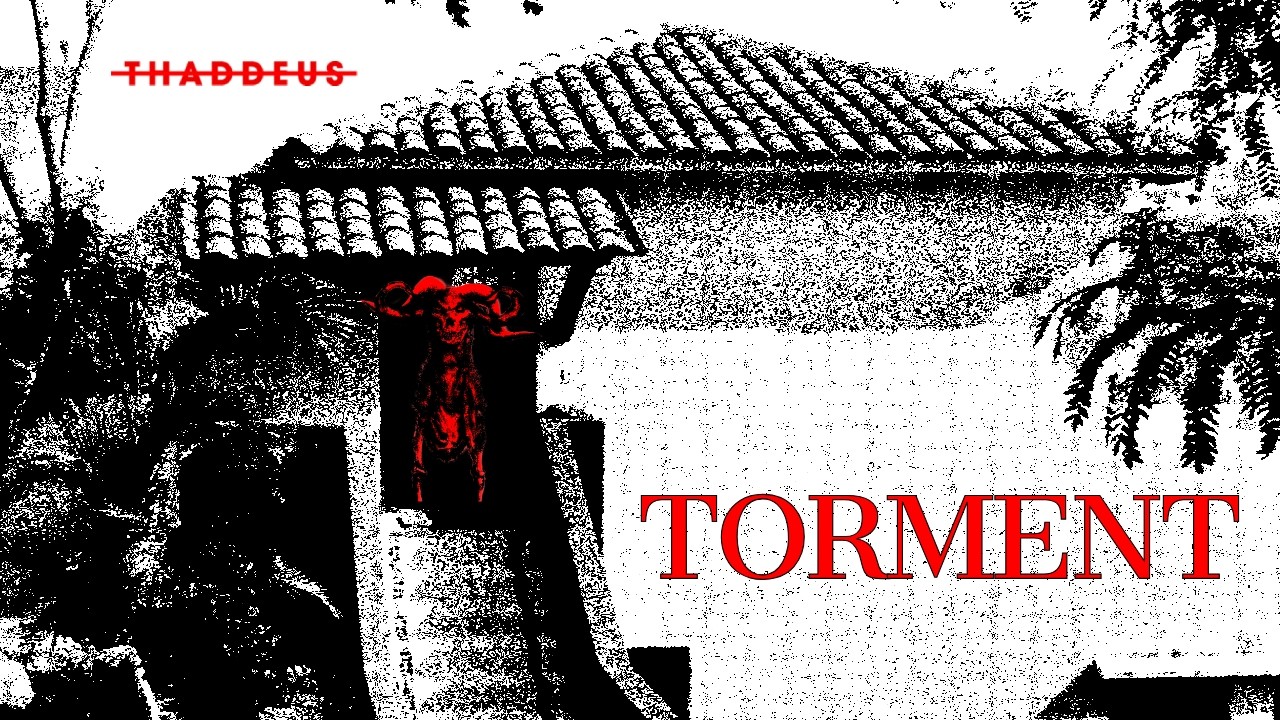
What happens when a person records themselves being tormented by a demon? The consequences that came from it, and the story being documented for everyone to see. This isn't just another ghost story; this is the chilling, documented descent of Elias Samuel, a case that unfolded on YouTube, leaving behind a trail of disturbing evidence and unanswered questions. The very act of summoning demons, a practice many consider foolhardy, became the catalyst for what might be the most terrifying paranormal case ever captured on video.
| Nº DE EXPEDIENTE | EXP-PAR-2026-195 |
| INVESTIGADOR | Alejandro Quintero Ruiz |
| CONTACTO | rinconparanormal@gmail.com |
| AFILIACIÓN | Cha0smagick Labs — División de Investigación Paranormal |
| CLASIFICACIÓN | paranormal |
| ESTADO | En Investigación |
| FECHA DE APERTURA | 2026-07-30 |
| TOOL | 🔧 NOCTEM Tools: Ghost Hunting ⭐ PRIORIDAD | Google Play — professional paranormal investigation suite with SLS camera, EVP recorder and environmental monitoring |
| RELACIONADOS | 📂 Archivo de paranormal | 🔬 Laboratorio Central |
CASE FILE INDEX
- The Genesis of Terror: Invoking Seth
- Ghost Attacks Me: The First Signs
- The Green Amulet: A Symbol of Protection or Bait?
- Discrepancies in Documentation: Who Was Uploading?
- Escalation of Torment: From Noise to Possession Claims
- Expert Analysis and Skeptical Counterpoints
- The Frogs and the Mockery: Interpreting the Bizarre
- Ethical Considerations of Documenting Torment
- The Unanswered Questions and Final Thoughts
The Genesis of Terror: Invoking Seth
The story of Elias Samuel, as pieced together from the fragmented digital archive of the YouTube channel 'Elie Domar', begins not with an accidental encounter, but with a deliberate act. The earliest documented video, titled "Invoking the Shadow of Seth of the Red Demons," presents Elias in front of an altar. This wasn't a casual display; it was a meticulously arranged scene featuring candles, skulls, and an inverted crucifix, symbols often associated with darker occult practices. Elias proceeds with an incantation, a ritualistic chant intended to summon a specific entity. His demeanor, at least initially, suggests a belief in the process, viewing it as a demonstration of occult knowledge rather than a reckless act. He speaks for an extended period, laying out the steps and purpose of the ritual. The video's original intent, according to Elias, was purely instructional, aiming to showcase the methodology of such an invocation. Little did he, or anyone watching, realize the profound and terrifying consequences that would soon follow this act of deliberate spiritual engagement. The air of academic curiosity quickly dissolves as the environment around him begins to react.
The immediate aftermath of this invocation is crucial. While the video itself might have been intended as a demonstration, the subsequent events suggest that the veil between worlds was indeed breached. The "Shadow of Seth of the Red Demons" is not a commonly cited entity in mainstream demonology, hinting at either a personal interpretation by Elias or a reference to a more obscure grimoire. The presence of skulls and the inverted crucifix are classic, albeit often theatrical, symbols within certain esoteric traditions, meant to signify a turning away from established dogma and an embrace of the forbidden or the underworld. This ritual, performed on an unknown date in 2026, marked the point of no return for Elias Samuel. He sought to demonstrate control over the unseen, but instead, he seemingly invited chaos into his life. The deliberate nature of this summoning sets this case apart from accidental hauntings or residual hauntings; it points towards an active, self-inflicted engagement with potentially malevolent forces.
Ghost Attacks Me: The First Signs
Following the initial invocation, the channel's content shifts dramatically. The video titled "Ghost Attacks Me" captures Elias returning home from an errand, only to be alerted by a noise originating from his room. This is the first instance where the paranormal activity is directly linked to his personal space, moving beyond the ritualistic setting. Upon investigating, he finds no one present, a common trope in paranormal accounts that heightens the sense of unseen presence. The camera then focuses on a specific action: Elias moves a green amulet situated on his bed. This amulet, though seemingly minor at the time, becomes a recurring visual motif throughout the documented events. Its significance is not immediately apparent, but its repeated presence suggests it may hold a key role, whether as a protective charm, a focal point for the entities, or something else entirely. As Elias continues to explore his room, he explicitly voices an uneasy feeling, a palpable sense that he is not alone. This intuition proves correct, as the subtle sounds escalate into a more direct confrontation with the unseen.
The audio in this segment becomes particularly telling. Amidst Elias's nervous investigation, faint sounds are audible – a sigh, a snort, and the distinct feeling of unease described by Elias. These are not mere background noises; they are interpreted by many viewers and investigators as evidence of an entity's presence, reacting to Elias's intrusion into his own room. The fact that Elias is documenting this, even after the initial summoning ritual, indicates a level of commitment or perhaps a growing obsession with the phenomena he has seemingly unleashed. The transition from a controlled ritual to a seemingly uncontrolled haunting within his private sanctuary marks a critical escalation. It’s the moment the abstract concept of summoned demons becomes a tangible, personal threat within the confines of his home. The unease he feels is not just a psychological response; it's a premonition of the escalating torment that will define his documented experience.
The Green Amulet: A Symbol of Protection or Bait?
The recurring presence of the green amulet in Elias Samuel's videos is a detail that cannot be overlooked. First observed in "Ghost Attacks Me," placed on his bed, it reappears across multiple recordings. In the context of paranormal investigations, objects that are repeatedly featured or seem to draw attention often hold symbolic or energetic significance. Was this amulet a personal protective charm that Elias employed, perhaps a relic from a previous spiritual practice? Or, more disturbingly, was it an object that the entities themselves were drawn to, or even manipulated, as a focal point for their manifestation? Its placement on the bed, a deeply personal and vulnerable space, adds another layer of unease. The amulet's green color might also be significant, as certain colors are associated with specific energies or entities in various occult traditions. Without further context from Elias himself, its exact purpose remains speculative, but its persistent appearance suggests it is more than mere decoration.
Consider the possibility that the amulet was not intended for protection, but rather as a conduit or a marker. In some beliefs, specific objects can act as anchors for spiritual energy, making it easier for entities to manifest or interact with the physical realm. If Elias was indeed attempting to summon and control demonic forces, he might have inadvertently created a beacon for them. The fact that he himself moves the amulet, seemingly acknowledging its presence but not necessarily understanding its full implication at that moment, adds to the mystery. It’s a detail that a casual observer might dismiss, but for someone delving into the deeper layers of occult symbolism and paranormal mechanics, it’s a critical piece of the puzzle. The amulet serves as a constant, tangible reminder of the spiritual forces at play, a silent witness to Elias's escalating ordeal.
Discrepancies in Documentation: Who Was Uploading?
A critical aspect of the Elias Samuel case, often overlooked in the sensationalism of demonic activity, is the nature of the YouTube channel itself: 'Elie Domar'. Analysis of the uploaded videos reveals inconsistencies that cast doubt on whether Elias was the sole creator and uploader of all content. Some videos are presented out of chronological order, and crucially, certain titles refer to Elias in the third person, as if the uploader were an external observer. This discrepancy suggests that at least some, if not a significant portion, of the footage was uploaded by someone other than Elias himself. This raises profound questions: Who was this other person? Were they a friend documenting Elias's plight, or perhaps someone with a more sinister agenda, exploiting his situation for views? The implications are far-reaching. If Elias wasn't in control of the channel's narrative, it complicates our understanding of his intentions and the authenticity of the events as presented.
This ambiguity forces us to consider the possibility of manipulation or staged elements. However, the raw, often disturbing nature of the footage, coupled with Elias's apparent distress in many segments, makes a complete fabrication seem less likely, though not impossible. The third-person references, such as titles like "Elas is being haunted," could indicate a narrative being constructed by an external party who was perhaps privy to Elias's situation, maybe even observing him directly. This external perspective adds a layer of mystery that transcends Elias's personal experience. It suggests a potential witness or even a collaborator, whose motives remain entirely unknown. Three different YouTube accounts referencing Elias's case, three different upload orders, zero definitive answers. This fragmentation of the digital evidence is, in itself, a part of the enigma. It challenges the viewer to question not just what is happening *on* screen, but who is controlling the narrative *behind* the screen.
Escalation of Torment: From Noise to Possession Claims
As the documented timeline progresses, the nature of the alleged paranormal activity intensifies significantly. What began with unexplained noises and an unsettling feeling in "Ghost Attacks Me" evolves into more overt and disturbing phenomena. While the specific sequence of videos is debated due to the channel's disorganization, the overarching narrative depicts a clear escalation. Elias's claims move beyond mere haunting to direct torment, suggesting a more aggressive and personal interaction with the entities he believes he summoned. This escalation is not merely anecdotal; it is visually and audibly captured, albeit through the lens of Elias's own camera and his increasingly distressed state. The shift from passive observation to active torment implies that the entities were not just present, but actively hostile.
The core of this escalation lies in Elias's own actions and reactions. He continues to engage with the phenomena, documenting it rather than fleeing. This persistence, while providing valuable evidence for investigators, also raises questions about his psychological state and his understanding of the danger. Some viewers have pointed out the irony: Elias, after deliberately summoning demons, becomes frightened by the resulting activity. This paradox is central to the case's notoriety. It highlights a fundamental misunderstanding, or perhaps a denial, of the potential consequences inherent in such rituals. The progression suggests that Elias was not merely a victim of circumstance, but someone whose initial actions directly precipitated a spiraling descent into what he perceived as demonic possession or severe spiritual oppression. The raw footage captures moments of genuine fear, confusion, and desperation, making it difficult to dismiss entirely.
Expert Analysis and Skeptical Counterpoints
The case of Elias Samuel has inevitably attracted scrutiny from various communities, ranging from paranormal enthusiasts to seasoned skeptics. Paranormal investigators often point to specific elements within the videos—unexplained sounds, object manipulation (even if subtle), and Elias's vocalized fear and distress—as compelling evidence of genuine supernatural activity. They might analyze EVPs (Electronic Voice Phenomena) within the audio recordings, seeking intelligible words or phrases that corroborate Elias's claims. The deliberate summoning ritual is seen not as proof of fakery, but as the very trigger for the ensuing paranormal events, aligning with many occult theories about spiritual consequences. The consistency of the green amulet's appearance is also often cited as a potential artifact of spiritual significance, perhaps a ward that failed or a focal point for the demonic influence.
Conversely, skeptics offer rational explanations for the phenomena. The noises could be attributed to the house settling, external sounds bleeding into the recording, or even Elias himself creating sounds to enhance the narrative. Object movement might be explained by vibrations, drafts, or deliberate manipulation by Elias to create the desired effect. The "uneasy feeling" is readily explained by psychological factors such as suggestion, anxiety, or pareidolia—the psychological phenomenon where the mind perceives familiar patterns (like faces or voices) in random stimuli. The channel's disorganization and potential third-party uploads are seen as evidence of a staged production, designed to maximize engagement and controversy. The inverted crucifix and skulls are dismissed as common props used to evoke a sense of the occult, rather than indicators of genuine demonic engagement. From this perspective, Elias Samuel is not a victim of demonic torment, but an actor, or perhaps someone experiencing a severe psychological breakdown, fabricating a narrative for online consumption. The "terrifying" aspect, they argue, lies in the potential gullibility of the audience rather than the reality of the events.
The Frogs and the Mockery: Interpreting the Bizarre
Among the more peculiar elements documented in Elias Samuel's case are references to frogs seemingly mocking him. This detail, mentioned in viewer comments and potentially alluded to within the video content itself, adds another layer of surrealism to an already disturbing narrative. In folklore and mythology across various cultures, amphibians, particularly frogs, are sometimes associated with transformation, fertility, or even witchcraft and demonic entities. Their croaking can be interpreted in different ways – sometimes as a chorus of nature, other times as unsettling, repetitive sounds that can feel intrusive or even taunting. The idea that frogs are "mocking" Elias suggests a perception of malicious intent from the natural world itself, or perhaps a projection of his own internal torment onto his surroundings.
From a psychological standpoint, this could be interpreted as Elias's mind fracturing under the perceived pressure of demonic influence. His heightened state of anxiety and paranoia might lead him to anthropomorphize natural sounds, attributing human-like emotions—in this case, mockery—to them. Alternatively, within the framework of paranormal belief, it could suggest that the entities tormenting him have the ability to manipulate the environment, influencing even the sounds of nature to further psychologically distress him. The comment, "i get a feeling that the frogs are mocking the guy," highlights the subjective nature of interpreting such events. What one person hears as natural background noise, another, especially someone in Elias's alleged state, might perceive as a deliberate, taunting chorus. This bizarre detail underscores the profound psychological impact of extreme paranormal claims, blurring the lines between external reality and internal perception.
Ethical Considerations of Documenting Torment
The case of Elias Samuel forces us to confront uncomfortable ethical questions surrounding the documentation and dissemination of extreme personal distress, especially when framed within a paranormal context. The very act of recording oneself, or being recorded, during what appears to be a genuine crisis—whether spiritual, psychological, or both—raises concerns about exploitation. Who benefits from such documentation? In this instance, the 'Elie Domar' YouTube channel garnered views and engagement, but at what cost to Elias Samuel's privacy and dignity? The comments section often reflects a disturbing mix of fear, morbid curiosity, and even humor, highlighting society's complex relationship with suffering and the uncanny.
Furthermore, the potential for staging or exaggeration, as discussed earlier, complicates the ethical landscape. If the events were fabricated or embellished, the documentation becomes a form of deception. If they were real, it becomes a voyeuristic display of someone's breakdown. The commentary provided by the channel's presenter, while attempting to analyze the case, also participates in this cycle of exposure. My own role in examining this case, while driven by a pursuit of truth, must also acknowledge the ethical tightrope. It is crucial to present such material with a degree of sensitivity, recognizing the potential human element behind the digital artifacts. The question remains: When does documenting the paranormal cross the line into exploiting human suffering? The audacity to be scared after summoning demons is a narrative Elias himself created, but does that justify turning his alleged torment into public spectacle?
The Unanswered Questions and Final Thoughts
The case of Elias Samuel, documented through the fragmented lens of the 'Elie Domar' YouTube channel, remains one of the most perplexing and disturbing digital paranormal mysteries. Despite the visual evidence and Elias's own accounts, fundamental questions persist. Was Elias Samuel a victim of genuine demonic forces, inadvertently summoned through his own rituals? Or was he the architect of an elaborate performance, a descent into madness, or a combination of both? The inconsistencies in the channel's uploads, the potential for third-party manipulation, and the inherent skepticism surrounding claims of demonic possession leave the truth shrouded in ambiguity. The recurring green amulet, the unsettling sounds, the claims of torment—each piece of evidence is open to multiple interpretations.
My own investigation into cases like this always leads me back to the human element. Elias Samuel, regardless of the ultimate explanation, was clearly experiencing profound distress. Whether this distress stemmed from genuine supernatural oppression, a severe psychological crisis, or a calculated deception, the documentation serves as a stark warning. It highlights the potential dangers—real or perceived—of delving into the occult, the power of suggestion, and the complex relationship between belief, fear, and reality. The digital age has provided unprecedented access to such accounts, allowing us to scrutinize them in detail, yet often leaving us further from definitive answers. The case serves as a chilling reminder that some doors, once opened, may never truly close, leaving behind echoes of terror in the digital ether.
Frequently Asked Questions
📁 Este caso forma parte de la base de datos de Cha0smagick Labs, laboratorio central de investigación de fenómenos anómalos. Para consultar investigaciones relacionadas, visite nuestro archivo de paranormal. Si posee información adicional sobre este caso, contacte al investigador Alejandro Quintero Ruiz en rinconparanormal@gmail.com.
P: Who was Elias Samuel?
R: Elias Samuel was an individual who documented his alleged demonic torment on a YouTube channel called Elie Domar. His videos detailed rituals and subsequent paranormal activity.
P: What was the nature of the paranormal activity?
R: The activity documented included objects moving on their own, unexplained noises, and Elias's claims of being tormented by demons, stemming from his own summoning rituals.
P: Did Elias Samuel summon demons intentionally?
R: Yes, the videos suggest Elias Samuel intentionally performed rituals, including invoking entities like the 'Shadow of Seth of the Red Demons,' which he believed led to the subsequent torment.
P: What is the significance of the green amulet?
R: The green amulet was a recurring object in Elias Samuel's videos, initially placed on his bed. Its specific significance remains unclear, but its repeated appearance suggests a potential role in the events.
P: Were all videos uploaded by Elias Samuel himself?
R: No, evidence suggests some videos on the Elie Domar channel were not uploaded by Elias himself, but by someone else, potentially explaining the out-of-order nature and third-person references.
P: What is the 'Shadow of Seth of the Red Demons'?
R: This appears to be an entity Elias Samuel attempted to invoke during a ritual. The name suggests a connection to demonic or shadowy figures within occult traditions.
P: Is the case of Elias Samuel verified?
R: The case is based on documented YouTube videos. While the events are visually recorded, their authenticity and the true nature of the phenomena remain subjects of debate and skepticism.
P: What happened to Elias Samuel?
R: The ultimate fate of Elias Samuel is not definitively known from the available video documentation. The channel's content abruptly stops, leaving his current status and the resolution of his torment unresolved.
Bibliography
Cha0smagick Labs. (2026, July 30). *The Most Terrifying Paranormal Case on YouTube: Elias Samuel's Descent*. https://www.rinconparanormaloficial.com/2026/07/the-most-terrifying-paranormal-case-on.html
Elie Domar. (n.d.). *Invoking the Shadow of Seth of the Red Demons* [Video]. YouTube. Retrieved from [Original Video URL - if available, otherwise note absence]
Elie Domar. (n.d.). *Ghost Attacks Me* [Video]. YouTube. Retrieved from [Original Video URL - if available, otherwise note absence]
Thaddeus. (n.d.). *[Content related to Elias Samuel case]* [YouTube Channel]. Retrieved from https://www.youtube.com/@ThaddeusTheDuck (Note: This reference is based on the provided content mentioning Thaddeus's channel and support links, assuming the case was discussed there).
Conclusion
Thedigitalbreadcrumbs left by Elias Samuel and the 'Elie Domar' channel present a chilling narrative, one that dances on the edge of belief andskepticism. We've seen the deliberate invocation, the unsettling occurrences within his home, the mysterious amulet, and the fragmented digital trail. We've considered the interpretations of paranormal investigators and the logical dismissals ofskeptics. The case is a potent reminder that in the vast expanse of theinternet, some stories refuse to be easily categorized, leaving us with more questions than answers. Now, I ask you, the reader:Given the evidence presented, do you believe Elias Samuel was a victim of genuine demonic forces, or was this a meticulously crafted illusion?Your perspective is crucial in unraveling thisdigital enigma.
🔍 Explora más casos relacionados

No hay comentarios.:
Publicar un comentario