Followers

Mostrando las entradas con la etiqueta dangerous rituals. Mostrar todas las entradas

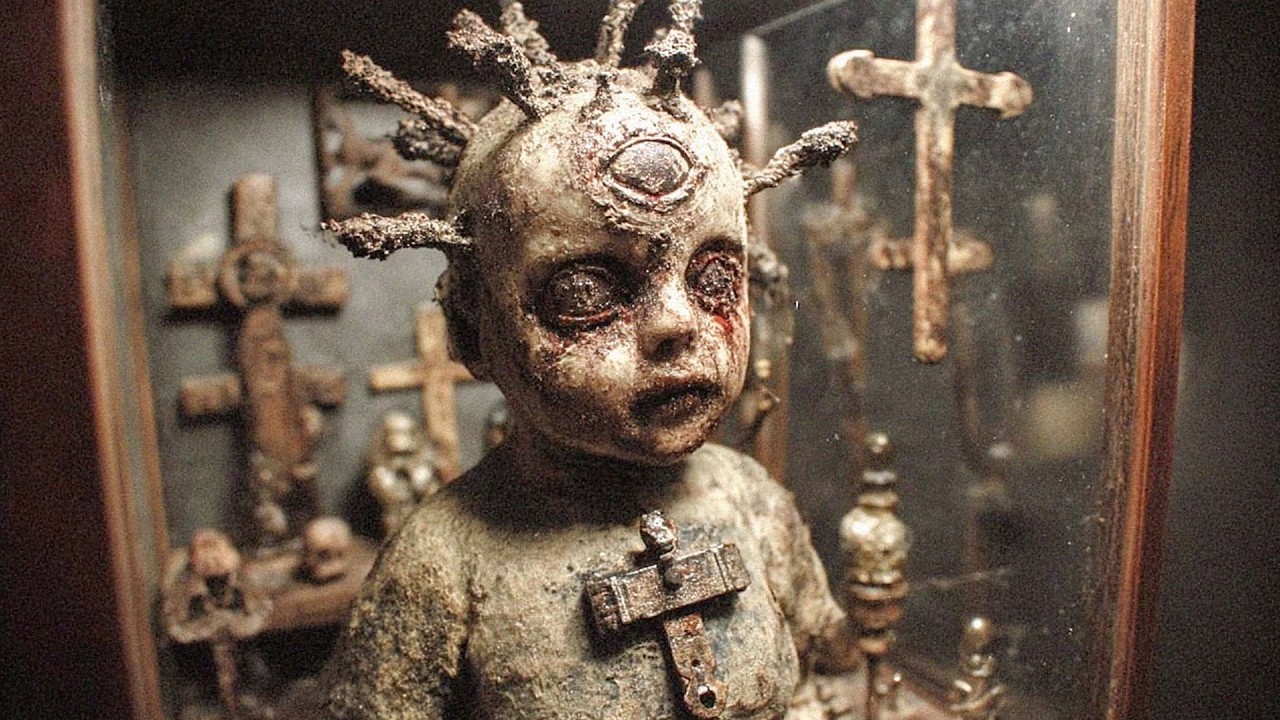
Dangerous Artifacts: History's Most Hazardous Relics Unearthed

Miniatura del video: These Are The Most Dangerous Artifacts From History

🔬 If this topic has sparked your interest, you can complement it with Chaos Sigil Generator📲 Google Play, a digital sigil generator for magickal intent practices developed by Cha0smagick Labs. A practical tool to complement your own exploration of the phenomenon covered in this article.

📖 9 min de lectura

Some artifacts are locked away, not because they are priceless, but because they are profoundly dangerous. These are not mere historical curiosities; they are objects tethered to events that have made them too risky for public display. From relics linked to unexplained incidents to items connected to real, chilling tragedies, these artifacts continue to raise serious questions, with some remaining sealed away to this day. The official narrative rarely touches upon why these objects are deemed too perilous to examine.

⬡ Expediente de Investigación Confidencial
Nº DE EXPEDIENTE EXP-GEN-2026-365
INVESTIGADOR Alejandro Quintero Ruiz
CONTACTO rinconparanormal@gmail.com
AFILIACIÓN Cha0smagick Labs División de Investigación Paranormal
CLASIFICACIÓN relics
ESTADO En Investigación
FECHA DE APERTURA 2026-07-18
TOOL 🔧 Chaos Sigil Generator | Google Play — digital sigil generator for magickal intent practices
RELACIONADOS 📂 Archivo de relics | 🔬 Laboratorio Central

× The Unseen Threat: Why Are They Hidden?

The question echoes through history: why are certain artifacts, unearthed from the dust of ages, deemed too dangerous for the light of day? It's not always about curses whispered in forgotten tongues, though folklore certainly plays its part. More often, the danger is tangible, rooted in the very materials or the events they represent. Consider the sheer toxicity of some ancient compounds, or the psychological weight of objects directly linked to mass suffering. These aren't just relics; they are potential Pandora's Boxes, holding secrets that some powers-that-be believe humanity is not yet ready to face.

× Whispers from the Tomb: The First Emperor's Perilous Legacy

One of the most compelling examples of a dangerous artifact lies within the tomb of China's First Emperor, Qin Shi Huang. Unearthed reports from 2016, detailing ongoing analyses, suggest the tomb is protected by rivers of liquid mercury. This wasn't merely symbolic; it was a sophisticated, albeit deadly, environmental control system and a testament to the emperor's power and paranoia. The sheer volume of mercury, estimated to be around 100 tons, makes excavation an extreme health hazard, poisoning any who dare disturb his eternal rest. This is not a myth; it's a documented reality that keeps archaeologists at bay.

× Echoes of Tragedy: Relics Tied to Unexplained Incidents

Beyond toxic materials, some artifacts carry the psychic residue of horrific events. Consider the mummified hand claimed to be St. James, discovered within a medieval church relic in England during a repair job. While its authenticity is debated, such relics often become focal points for intense historical and emotional narratives. The spike through a skull, mentioned in some accounts of ancient burials, speaks of agonizing deaths that leave an indelible mark. These objects don't just represent the past; they embody its pain, its unanswered questions, and its potential for lingering influence.

× The Investigator's Hypothesis: Unveiling the True Danger

My years of delving into the paranormal have taught me that "danger" in artifacts is rarely confined to the physical. While mercury poisoning is a clear threat, the true peril often lies in what these objects represent: inconvenient truths. The paintings on mummy coffins, beautiful as they are, depict individuals whose lives and deaths raise questions about ancient beliefs and practices. The discovery of St. Nicholas's potential coffin in Turkey, hidden beneath layers of time, suggests a deliberate obfuscation of history. These artifacts are dangerous because they challenge the established narrative. They hint at a past far more complex, and perhaps more advanced, than we are led to believe.

× The Official Silence: What Are They Afraid We'll Discover?

The reluctance to excavate sites like the First Emperor's tomb, or to fully disclose the findings from places like Göbekli Tepe, points to a systemic fear. When archaeologists claim we're too "stupid" to handle the truth, as one comment suggests, it's a deflection. The real fear is that these artifacts could rewrite our understanding of history, technology, and even human origins. The depictions of dinosaurs on Göbekli Tepe's T-columns, if indeed anatomically correct as some claim, would shatter conventional timelines. The silence surrounding such discoveries is not about protecting us; it's about maintaining control over the narrative.

× Beyond the Veil: Connections to Ancient Mysteries

What truly sets these dangerous artifacts apart is their ability to connect disparate mysteries. The mercury rivers in the Emperor's tomb echo tales of advanced ancient engineering, while the potential St. Nicholas relics hint at hidden sacred sites. The very existence of artifacts that challenge our timeline, like those possibly depicting dinosaurs, suggests a lost chapter of Earth's history. These aren't isolated incidents; they are threads in a larger tapestry of the unexplained, hinting at civilizations and knowledge far beyond our current comprehension.

× The Investigator's Verdict: Why These Artifacts Matter

The artifacts deemed "dangerous" are precisely the ones we should be studying most closely. They represent the edges of our knowledge, the points where accepted history frays. The mercury in the Emperor's tomb is a physical barrier, but the real obstacle is the fear of what acknowledging such advanced ancient technology implies. The mummified hand of St. James, or the potential true resting place of St. Nicholas, speaks to the layers of secrecy and rediscovery that obscure historical truth. These objects are dangerous because they hold the keys to a past that, if fully understood, could fundamentally alter our present and future.

Notable Dangerous Artifacts & Locations
Tomb of Qin Shi Huang (China): Protected by vast quantities of toxic liquid mercury, estimated at ~100 tons. Excavation poses extreme health risks.
Göbekli Tepe (Turkey): Features T-columns with depictions some interpret as anatomically correct dinosaurs, challenging conventional archaeological timelines.
Potential St. Nicholas Coffin (Turkey): A crusader-era altar discovered hidden for nearly a millennium, suggesting obscured historical truths.
Mummified Hand of St. James (England): A medieval relic whose authenticity and historical context remain subjects of intense debate and scrutiny.
  1. The mercury in the First Emperor's tomb serves as a potent deterrent, safeguarding the tomb's contents but also highlighting the extreme measures taken to protect secrets.
  2. Depictions at Göbekli Tepe, if interpreted correctly, could force a complete reevaluation of prehistoric timelines and the existence of non-avian dinosaurs alongside early humanoids.
  3. The deliberate concealment of relics, like the St. Nicholas altar, suggests that certain historical narratives were actively suppressed or rewritten.
  4. Objects associated with extreme suffering or violence, such as the spiked skull, carry a psychic imprint that some believe can influence environments and individuals.
  5. The ongoing debate around artifacts like the St. James hand demonstrates how easily historical "facts" can be contested, especially when tangible evidence is scarce or ambiguous.

Frequently Asked Questions

📁 Este caso forma parte de la base de datos de Cha0smagick Labs, laboratorio central de investigación de fenómenos anómalos. Para consultar investigaciones relacionadas, visite nuestro archivo de relics. Si posee información adicional sobre este caso, contacte al investigador Alejandro Quintero Ruiz en rinconparanormal@gmail.com.

P: Why are some historical artifacts locked away from the public?

R: Artifacts are often secured due to potential dangers, such as toxic materials like mercury, as seen in ancient tombs, or connections to disturbing historical events that could incite unrest or pose a psychological threat.

P: What makes certain historical artifacts 'dangerous'?

R: Danger can stem from various factors: toxic substances within the artifact, curses or legends associated with it, historical trauma linked to its use, or the potential for it to reveal inconvenient truths about our past.

P: Can ancient artifacts pose a physical health risk today?

R: Yes, some artifacts contain hazardous materials like mercury, lead, or even unknown biological agents. Excavations and handling require extreme caution to prevent poisoning or contamination, as noted with certain ancient Chinese burial sites.

P: Are there artifacts connected to real historical tragedies?

R: Absolutely. Relics tied to massacres, unexplained deaths, or periods of intense suffering are often considered dangerous due to the residual trauma and the difficult questions they force us to confront about human history.

P: What is the significance of the mercury pool in ancient Chinese burials?

R: The mercury pools represent rivers and are a testament to the advanced engineering and symbolic beliefs of ancient Chinese rulers, like the First Chinese Emperor. However, they also pose a significant poisoning risk during excavation.

P: How do archaeologists determine if an artifact is too dangerous to excavate?

R: Risk assessment involves analyzing known materials, historical context, and potential environmental hazards. For instance, the mercury in the First Emperor's tomb necessitates extreme caution, delaying full excavation indefinitely.

P: What does the discovery of St. Nicholas's potential coffin reveal?

R: The potential discovery in Turkey suggests a hidden history, with a crusader-era altar concealed for centuries. It highlights how significant relics can be lost, rediscovered, or deliberately obscured over time.

P: Are there artifacts linked to ancient civilizations with advanced knowledge, like dinosaurs?

R: Some sites, like Göbekli Tepe, feature depictions that some interpret as anatomically correct dinosaurs on their T-columns, challenging conventional timelines. However, mainstream archaeology attributes these to known fauna or symbolic representations.

Bibliography

Most Amazing Top 10. (2016, July 18). These Are The Most Dangerous Artifacts From History [Video]. YouTube. https://www.youtube.com/watch?v=bpLG8o7kYGM

National Geographic. (2016). Tomb of China's First Emperor Holds Rivers of Mercury. Retrieved from https://www.nationalgeographic.com/history/article/160718-qin-shi-huang-tomb-mercury-china-archaeology

Schmidt, R. M. (2012). Göbekli Tepe: A Prehistoric Pilgrimage Center. University of Chicago Press. ISBN: 978-0226738790

Wilkinson, R. H. (2007). The Complete Gods and Goddesses of Ancient Egypt. Thames & Hudson. ISBN: 978-0500286937 (Relevant for understanding ancient burial iconography)

Conclusion

The artifacts we fear are often those that reflect the darkest, most complex aspects of our collective past. They are dangerous not because they harborsupernatural entities, but because they hold truths that could shatter our comfortable illusions about progress and civilization. Now, I ask you, reader:Do you believe these dangerous artifacts are hidden for ourprotection, or to protect a version of history that benefits the few?

The Ouija Board on a Killer's Grave: An Analysis of a Risky Paranormal Endeavor


Introduction: The Allure of the Forbidden

The allure of the forbidden, the irresistible pull towards the edges of the known, often leads investigators down paths fraught with peril. Few endeavors exemplify this better than the practice of conducting paranormal investigations on sites associated with extreme darkness, such as the graves of notorious killers. The use of a Ouija board in such a context, a device already steeped in controversy and potent spiritual energy, amplifies the risks exponentially. It's a gamble where the stakes are not merely personal safety, but potentially the fate of one's spiritual equilibrium.

This isn't about sensationalism; it's about understanding the mechanics of spiritual invocation and the profound disrespect inherent in treating consecrated or historically charged ground as a playground for the curious. Today, we dissect a scenario that screams caution, examining the profound dangers of using a Ouija board on a killer's grave.

Historical Context: Ouija Boards and Necromancy

The Ouija board, popularized in the late 19th century, was initially marketed as a parlor game for spirit communication. However, its origins are deeply rooted in older traditions of scrying and spiritualism, methods aimed at bridging the gap between the living and the dead. When we consider its application on a killer's grave, we step into the shadowy realm of necromancy – the practice of communicating with or controlling the dead.

Historically, necromancy was performed with utmost reverence and specific ritualistic intent, often for divination or to extract knowledge. It was not undertaken lightly, nor was it typically conducted in a manner that would be considered disrespectful. The act of placing a Ouija board on the final resting place of an individual known for extreme violence invites a different kind of energy, one potentially disturbed, resentful, or malevolent. This isn't merely attempting to contact spirits; it's potentially disturbing a profound spiritual imbalance.

Contemporary paranormal investigation, while often seeking empirical evidence, sometimes overlooks the established protocols developed over centuries by spiritualists and occultists. Understanding these historical precedents is critical for anyone considering such a dangerous operation. For those seeking deeper knowledge, exploring works like Spirit Communication by Paschal Beverly Randolph offers insights into the historical understanding of spirit interaction.

"The veil between worlds is thin, but it is not an invitation for the careless. To tamper with such energies without proper spiritual preparation and respect is to invite a darkness that can consume the unwary." - A seasoned occultist's anonymized testimony.

The Unforeseen Risks of Grave Site Investigations

The act of using a Ouija board on a killer's grave is inherently risky, extending far beyond the possibility of a frightening message. The primary concern is the spiritual residue left by a life of violence. Such individuals may have cultivated powerful, negative energies, and their gravesites can become points of congregation for these dark forces. Attempting to communicate here is akin to poking a sleeping beast.

We must differentiate between investigating a general haunting and deliberately targeting a site saturated with concentrated negativity. A standard haunting might involve residual energy or a trapped spirit. A killer's grave, however, is a focal point for the echoes of extreme human suffering and malevolence. The energy present may not be a simple 'ghost' but a potent, perhaps demonic, entity drawn to or created by the residual trauma.

The risks include:

  • Spiritual Attachment: Inviting entities that can latch onto investigators, causing psychological distress, nightmares, and persistent negative influences.
  • Energetic Imbalance: Disrupting the natural resting state of the site, potentially causing a localized increase in negative phenomena.
  • Psychic Attack: Direct malevolent influence from whatever entity resides or is drawn to the grave.
  • Reputational Damage: Such reckless practices undermine the credibility of serious paranormal investigators, turning genuine inquiry into sensationalist spectacle.

For those interested in understanding the classification of paranormal energies, consulting resources on paranormal classification can offer a framework for distinguishing between residual hauntings and intelligent, malevolent presences.

Spiritual Dangers: Invoking the Wrong Entity

The Ouija board is a tool, and like any tool, its efficacy and danger depend on the user and the context. When used on a killer's grave, the context is one of extreme spiritual pollution. The entity that might respond is unlikely to be a benign spirit seeking closure. Instead, one risks invoking something that is not merely a human spirit but a manifestation of pure malevolence, an entity that thrived on suffering and perhaps continues to do so on a spiritual plane.

The classic Ouija "scary results" often involve frightening messages, poltergeist activity, or unsettling feelings. However, on a site like this, the "results" could be far more profound and dangerous. We are not just talking about a phantom voice; we are talking about confronting an entity that actively embodies the darkness of the individual buried beneath the stone. This distinction is crucial for any serious investigator.

Consider the implications if the "killer" was involved in occult practices themselves. The grave site might then become a nexus for dark rituals, a place where entities are deliberately summoned and fed. The Ouija board, in this scenario, becomes an unwitting key to a crypt of spiritual horrors. Understanding demonology and the nature of lower astral entities is paramount before ever considering such an investigation. Resources on demonology provide critical context.

Investigator's Verdict: A Reckless Gamble with the Unknown

From an investigator's standpoint, the practice of using a Ouija board on a killer's grave is not just inadvisable; it is a profoundly reckless gamble. The potential for encountering genuinely malevolent entities, entities that are not merely residual hauntings but active, dangerous intelligences, is exceptionally high. The disrespect shown to the grave site and the potential for spiritual contamination far outweigh any perceived benefit of 'evidence gathering'.

While the pursuit of knowledge is essential in paranormal research, it must be tempered with ethical considerations and a deep understanding of the forces at play. The risks involved in this specific scenario are too great, and the potential for negative repercussions—both spiritual and psychological—are substantial. Serious investigators prioritize safety, respect, and rigorous methodology. This type of investigation falls far outside those parameters. It’s a dangerous form of spiritual tourism that prioritizes a thrill over genuine understanding and respect.

The Researcher's Archive: Essential Reading

To truly grasp the dangers and complexities of paranormal investigation, especially concerning sites of extreme negative energy, consulting foundational texts is imperative. The following resources are critical for any serious researcher:

  • "The Demonologist: The Extraordinary Career of Ed and Lorraine Warren" by Gerald Brong: Provides case studies of dealing with malevolent entities.
  • "The Psychic Sourcebook" by Thomas G. Aylesworth: Offers a broader understanding of psychic phenomena, including spirit communication.
  • "The Occult, Witchcraft and Magic: An Illustrated History" by Christopher Dell: For historical context on darker spiritual practices.
  • "The Day After Roswell" by Philip J. Corso: While not directly about Ouija boards, it touches on hidden histories and powerful forces at play.

Accessing resources like those found on occult studies can further illuminate the historical and ritualistic aspects of such dangerous practices.

Field Protocol: Ethical Considerations for Paranormal Investigations

When venturing into the field, adherence to a strict code of ethics is paramount. The following protocol highlights key considerations, particularly relevant to investigations of sensitive sites:

  1. Research Thoroughly: Understand the history of the site and the nature of the alleged phenomena before any physical investigation.
  2. Obtain Permission: If investigating private property or a cemetery, secure explicit permission from the relevant authorities or owners.
  3. Prioritize Respect: Treat all sites, especially graves and places of tragedy, with the utmost respect. Avoid any actions that could be construed as desecration or sensationalism.
  4. Spiritual Preparation: For potentially high-risk investigations, engage in personal spiritual cleansing and protection rituals.
  5. Group Cohesion: Never investigate alone. Ensure your team is experienced, trusted, and mentally prepared for challenging encounters.
  6. Documentation: Record all findings meticulously, focusing on objective data rather than subjective interpretations, initially.
  7. Exit Strategy: Always have a pre-planned method for disengaging from an investigation if it becomes too intense or dangerous.
  8. Post-Investigation Debrief: Conduct a thorough debriefing and cleansing ritual after the investigation to process experiences and mitigate residual energetic effects.

Frequently Asked Questions

Can a Ouija board actually summon demons?

While the term "demon" can be debated, a Ouija board can certainly facilitate communication with entities that are powerful, intelligent, and malevolent. Whether these are what one traditionally considers demons or simply highly negative spiritual intelligences is a matter of theological and philosophical interpretation. However, the danger is very real.

Is it safe to investigate any graveyard?

Graveyards are places of strong spiritual energy. While many are peaceful, some may have residual hauntings or more active entities. It is always advisable to approach such sites, especially those with a history of tragedy or violence, with caution, respect, and proper preparation.

What is the difference between a residual haunting and an intelligent haunting?

A residual haunting is like a psychic recording, replaying past events without true awareness. An intelligent haunting involves a conscious entity that can interact, respond, and communicate, often with its own agenda.

What are the ethical implications of using a Ouija board on a killer's grave?

It's widely considered highly unethical due to the potential for desecration, the disrespect to the deceased (regardless of their actions), and the extreme spiritual risks involved in disturbing potentially malevolent energies.

Conclusion: Respecting Boundaries

The digital age has democratized information, but it has also amplified exposure to practices that blur the lines between genuine investigation and dangerous thrill-seeking. The scenario of using a Ouija board on a killer's grave represents a critical boundary that advanced paranormal researchers understand should not be crossed. It is an act born of hubris rather than informed inquiry, a potent cocktail of disrespect and spiritual recklessness.

True paranormal investigation demands patience, respect, ethical rigor, and a deep understanding of the forces one might encounter. The Ouija board, in the wrong hands and on the wrong ground, is not a tool for discovery but a potential Pandora's Box. We must advocate for responsible research, prioritizing safety and ethical conduct above all else. The mysteries of the universe are deep and profound, but they are best explored with wisdom and profound respect for the unknown.

alejandro quintero ruiz is a veteran field investigator dedicated to the analysis of anomalous phenomena. His approach combines methodological skepticism with an open mind to the inexplicable, always seeking the truth behind reality's veil. With years of experience confronting the unknown, his work aims to demystify the paranormal through rigorous investigation and critical analysis.

Your Mission: A Contemplation of Boundaries

Reflect on the boundaries discussed in this analysis. Consider a local site of historical significance, perhaps one with a difficult or tragic past. Imagine how one might approach investigating it without resorting to sensational or disrespectful methods. What ethical protocols would you implement? What would be your criteria for deeming an investigation "successful" beyond mere dramatic results? Share your thoughts on responsible paranormal investigation in the comments below. Let this serve as an exercise in principled inquiry.