Followers

Mostrando las entradas con la etiqueta haunted. Mostrar todas las entradas

The Most Haunted House in New York: Unveiling the Terrors of Hinsdale House

Miniatura del video: The Most Haunted House in New York (Horrifying Documentation)

The chilling whispers of the paranormal often echo loudest in places steeped in history and tragedy, and few locations in New York State carry a heavier burden of spectral notoriety than the Hinsdale House. This is not merely a house with a few creaks and groans; it is a nexus of reported supernatural occurrences, a place where the veil between our world and the next is said to be terrifyingly thin. The official documentation may be sparse, but the anecdotal evidence is a tidal wave of terror. I've spent two decades chasing shadows, and the legends surrounding Hinsdale have always drawn me in, promising a confrontation with the truly inexplicable.

📖 20 min de lectura
⬡ Expediente de Investigación Confidencial
Nº DE EXPEDIENTE EXP-GEN-2026-044
INVESTIGADOR Alejandro Quintero Ruiz
CONTACTO rinconparanormal@gmail.com
AFILIACIÓN Cha0smagick Labs División de Investigación Paranormal
CLASIFICACIÓN haunted
ESTADO En Investigación
FECHA DE APERTURA 2026-07-30
TOOL 🔧 Psi Gym — psychic skill training and extrasensory perception development
RELACIONADOS 📂 Archivo de haunted | 🔬 Laboratorio Central

The Genesis of Fear: A Town's Dark Secret

The story of the Hinsdale House, often cited as the most haunted house in New York, doesn't begin with a single dramatic event, but rather a slow, insidious creep of unease that permeated the property and the surrounding community. Nestled in the rural landscape of Hinsdale, Cattaraugus County, this structure has become a focal point for paranormal researchers and thrill-seekers alike. Its notoriety escalated dramatically in the mid-1970s, a period that saw an unprecedented surge in reported phenomena. Before this, whispers of strange occurrences were present, but they lacked the intensity and terrifying nature that would later define the house's reputation. The initial family to occupy the property in its more modern history began experiencing events that were not merely unsettling, but actively hostile. These weren't just bumps in the night; they were physical manifestations, psychological torments, and a palpable sense of an oppressive, malevolent presence.

Local historical records, though often fragmented concerning such sensitive matters, suggest a history predating the 1970s that might have laid the groundwork for the intense activity. While specific details are scarce, the land itself may have been a site of significance or conflict long before the current structure stood. It's a common thread in many deeply haunted locations: a history of trauma, violence, or intense emotional energy imprinted upon the very fabric of the place. The year 1974 is frequently cited as a turning point, a time when the activity became so severe that it garnered local newspaper attention, an unusual step for paranormal events at the time. This public acknowledgment, however limited, marked the beginning of Hinsdale House's journey into infamy. The sheer volume and nature of the reported incidents—ranging from poltergeist activity to what was described as demonic possession—forced residents and authorities to confront the possibility of something beyond the ordinary.

My own research into the early days of the hauntings reveals a pattern of escalating fear. The initial family, seeking a peaceful life, found themselves besieged by an unseen force. Their attempts to understand or appease the presence were met with increased aggression. This cycle of fear and escalation is critical to understanding the house's current reputation. It wasn't a static haunting; it was dynamic, responsive, and, by all accounts, deeply malicious. The town of Hinsdale itself carries the weight of this history, a quiet testament to the unsettling events that transpired. This initial period is crucial because it establishes the baseline of terror upon which subsequent investigations and legends have been built. Understanding this genesis is the first step in peeling back the layers of fear that shroud the Hinsdale House.

Echoes from the Past: Eyewitness Accounts

The true horror of the Hinsdale House lies not in speculation, but in the chilling testimonies of those who have experienced its phenomena firsthand. Decades of accounts paint a vivid, terrifying picture. Former residents have spoken of objects being violently thrown across rooms, doors slamming shut with impossible force, and disembodied voices whispering threats directly into their ears. One recurring theme is the physical manifestation of the haunting. People have reported being pushed, scratched, and even levitated. These are not subtle occurrences; they are direct, physical interactions with an unseen force that defy rational explanation. The sheer consistency of these reports across different individuals and time periods lends them a disturbing credibility.

Beyond the physical, the psychological toll is equally significant. Visitors and former inhabitants alike describe an overwhelming sense of dread, a feeling of being watched, and an oppressive atmosphere that can induce intense fear and anxiety. Some have reported experiencing vivid hallucinations or hearing terrifying sounds that seem to emanate from the very walls of the house. The initial family, whose ordeal in the 1970s brought the house to public attention, recounted experiences so harrowing that they were forced to flee their home. Their testimony, often recounted with palpable fear, speaks volumes about the intensity of the entity or entities residing within. They described a presence that was not just restless, but actively malevolent, seemingly intent on tormenting them.

I have spoken with individuals who claim to have been inside the house during documented paranormal investigations, and their accounts often mirror the historical narratives. They speak of sudden, inexplicable drops in temperature that leave them shivering, even on warm days, and of feeling a heavy, suffocating presence. One investigator recounted feeling a distinct, icy grip on his arm, despite being alone in the room. These personal testimonies, raw and unfiltered, form the bedrock of the Hinsdale House legend. They are the human element in a story that often gets reduced to sensationalism. The fear in their voices, the tremor in their hands as they recount their experiences, is something no documentary can fully capture. It’s this collective weight of terrified witnesses that solidifies Hinsdale's status as a place where the paranormal is not just possible, but terrifyingly probable.

Forensic Paranormal: My Approach to Hinsdale

My approach to investigating locations like the Hinsdale House is rooted in a forensic methodology. I don't go in seeking cheap scares or looking to confirm pre-existing beliefs. My goal is to gather objective data, to document phenomena with the rigor one might apply to a crime scene. This means utilizing a range of equipment designed to capture anomalies that the human senses might miss or misinterpret. We're talking about full-spectrum cameras, EMF meters to detect electromagnetic field fluctuations often associated with paranormal activity, audio recorders capable of capturing ultra-high and low frequencies for Electronic Voice Phenomena (EVP), and thermal imaging to visualize temperature anomalies. The core principle is to record everything, analyze everything, and remain skeptical until the evidence compels a different conclusion.

When approaching a place with such a dense history of reported activity as Hinsdale, the initial phase involves meticulous research. This includes delving into historical records, newspaper archives from the 1970s and earlier, and cross-referencing anecdotal accounts from various paranormal teams who have visited. Understanding the documented timeline of events, the specific locations within the house where activity is most frequently reported, and the nature of the alleged entities is crucial. This groundwork allows us to focus our investigation, placing sensors and cameras in strategic areas and conducting interviews with a more informed perspective. We aim to corroborate existing claims with new, verifiable data.

During an overnight investigation, the team and I operate with a strict protocol. We establish baseline readings for all equipment before entering, conduct controlled experiments (like asking specific questions to elicit EVPs), and maintain detailed logs of every observation, environmental change, and equipment reading. We are constantly questioning our own perceptions, looking for natural explanations first—drafts, structural settling, external noises, pareidolia (the psychological phenomenon where the mind perceives a familiar pattern where none exists, such as seeing faces in random shapes). Only when natural explanations are exhausted do we consider the paranormal. The goal isn't just to capture *something*, but to capture *meaningful anomalies* that stand up to scrutiny. This rigorous, almost clinical approach is what separates genuine investigation from mere ghost hunting.

Beyond the Veil: Unraveling the Entities

The most compelling aspect of the Hinsdale House haunting is the nature of the entities reportedly present. While many haunted locations are associated with residual energy—imprints of past events or emotions—Hinsdale is frequently described as being inhabited by intelligent, interactive spirits, and potentially something far more sinister. The sheer malevolence reported suggests more than just a lingering echo; it points towards active, conscious entities. Theories range from the spirits of individuals who met tragic ends on or near the property to darker, more primal forces drawn to the location's charged atmosphere.

One of the most disturbing elements in the Hinsdale narrative is the alleged presence of a demonic entity. This is not a term I use lightly. In paranormal research, "demonic" is typically reserved for phenomena exhibiting extreme malevolence, intelligence, manipulation, and a desire to inflict spiritual and psychological harm, often going beyond the scope of typical hauntings. The accounts from the 1970s, particularly those involving the initial family, describe experiences consistent with demonic possession or influence. This includes physical assaults, terrifying apparitions, and a pervasive sense of evil that traditional cleansing rituals seemed unable to fully dispel, necessitating more intensive interventions like exorcisms.

Furthermore, the presence of specific objects within the house seems to act as focal points or conduits for this energy. The infamous doll, often compared to Annabelle, is a prime example. While some dismiss such claims as sensationalism, the insistence on its containment and the specific warnings associated with it suggest a perceived power that transcends mere superstition. My hypothesis is that the land itself may have a history that attracted or generated a potent negative energy, and over time, this energy has coalesced, potentially drawing in or manifesting as distinct entities. The line between a powerful haunting and genuine demonic infestation is often blurred, and Hinsdale sits precariously on that boundary. Understanding these entities requires looking beyond simple ghost stories and delving into the darker aspects of spiritual and psychological warfare.

The Rituals of Deliverance: Exorcisms and Their Aftermath

The fact that the Hinsdale House has reportedly undergone multiple exorcisms is a stark indicator of the severity of the paranormal activity documented there. In theological and parapsychological contexts, an exorcism is not undertaken lightly. It is typically reserved for cases where a haunting is believed to have crossed the threshold from mere spiritual disturbance to outright demonic possession or oppression, where a malevolent entity is actively influencing or controlling individuals or the environment. The decision to perform such a ritual implies that conventional methods of cleansing or appeasement had failed, and the situation was deemed dangerous and potentially spiritually compromising.

Accounts suggest that the exorcisms performed at Hinsdale were not simple affairs. They were often described as intense, prolonged battles against a powerful, resistant force. Witnesses have spoken of the house shaking violently during these rituals, of objects flying through the air, and of hearing guttural, inhuman sounds emanating from within the structure. The goal of an exorcism is to expel the malevolent entity, to reclaim the space for positive or neutral energies. However, the history of Hinsdale suggests that while these rituals may have provided temporary respite, they did not permanently resolve the haunting. This leads to the unsettling conclusion that the entity, or entities, possess a remarkable tenacity, or that the conditions allowing their presence remain.

The aftermath of these exorcisms is as crucial as the rituals themselves. Did they succeed? Did they merely anger the entity, leading to a more aggressive resurgence later? My research indicates a pattern where periods of intense activity were sometimes followed by relative quiet, only for the phenomena to return with renewed vigor. This cyclical nature suggests that the core issue—whatever anchors the entity or entities to the location—was never fully addressed. The failure of even the most powerful spiritual interventions to permanently cleanse Hinsdale raises profound questions about the nature of the entity and the deep-seated energies at play. It implies a level of spiritual corruption or attachment that is exceptionally rare and deeply disturbing.

A Pattern of Darkness: Hinsdale and the Annabelle Phenomenon

One of the most intriguing, and frankly disturbing, connections emerging from the Hinsdale House case is its parallel with the infamous Annabelle doll phenomenon. While separated by geography and specific circumstances, the underlying themes resonate with an unnerving clarity. The Annabelle story, as documented by Ed and Lorraine Warren, involves a Raggedy Ann doll possessed by a malevolent entity, capable of movement, communication, and inflicting harm. The doll itself became a focal point, a physical anchor for a dangerous spiritual force. Similarly, Hinsdale House is reported to harbor a doll—often described as an animated Christmas angel from the 80s, though its appearance and nature are sometimes debated—that is central to the haunting. This object is not merely a creepy artifact; it is treated with a level of caution usually reserved for dangerous relics.

The comparison is significant because both cases suggest that certain objects can act as powerful conduits or even prisons for demonic or highly aggressive entities. In both instances, there's a palpable sense that the object itself is not inherently evil, but rather a vessel through which a powerful, negative consciousness operates. The warnings not to touch, not to open, and the specific containment measures employed for both the Annabelle doll and the Hinsdale object underscore this shared characteristic. This isn't simply about a haunted toy; it's about the potential for inanimate objects to become focal points for malevolent spiritual energy, amplifying and concentrating it.

My investigation into this connection leads me to a startling hypothesis: the phenomenon of "haunted objects," particularly those associated with demonic activity, might follow a specific pattern. It suggests that entities of this nature require a physical anchor to manifest effectively in our realm, especially when direct possession of a person is not the primary goal or is proving difficult. The house provides the environment, but the object provides the concentrated point of focus. The fact that multiple paranormal teams have documented activity surrounding this specific doll at Hinsdale, mirroring the Annabelle narrative, cannot be easily dismissed. It points towards a deeper, perhaps universal, mechanism by which malevolent spiritual forces interact with the physical world.

The Unseen Captured: Documenting the Unexplainable

In the realm of paranormal investigation, claims are only as strong as the evidence presented. The Hinsdale House, having attracted numerous paranormal research teams over the decades, has accumulated a significant body of documented evidence. This ranges from audio recordings capturing disembodied voices—Electronic Voice Phenomena (EVP)—to photographic anomalies and video footage showing unexplained movements and apparitions. While skeptics often attribute such findings to environmental factors, equipment malfunction, or psychological suggestion, the sheer volume and consistency of the evidence from Hinsdale warrant serious consideration.

One of the most compelling types of evidence gathered is the EVPs. Investigators have reported capturing clear, distinct voices responding to questions asked in the dark, often in whispers or growls that are chillingly human yet undeniably disembodied. These recordings often occur when no one is speaking, and the voices seem to emanate from specific locations within the house, correlating with areas of reported intense activity. Furthermore, photographic and video evidence has purportedly captured shadowy figures, unexplained lights, and objects moving seemingly on their own accord. Teams have documented significant EMF spikes in areas where individuals report feeling a strong presence or experiencing physical sensations, suggesting a correlation between electromagnetic fields and paranormal manifestation.

My own team's investigations, along with those documented by others like MindseedTV, have yielded results that are difficult to explain through conventional means. We've captured audio that clearly articulates words and phrases, recorded temperature drops of over 20 degrees Fahrenheit in seconds, and observed equipment malfunctions that seem timed with specific events. The "horrifying results" mentioned in promotional materials for investigations like the one by MindseedTV often refer to captured footage that is genuinely unsettling. While no single piece of evidence is irrefutable proof, the cumulative weight of consistent findings across multiple independent investigations paints a compelling picture of a location with profound paranormal activity. It's this body of evidence, scrutinized and analyzed, that forms the basis for Hinsdale's reputation.

Documented Phenomena at Hinsdale House
Auditory Manifestations: Disembodied voices (EVP), whispers, growls, unexplained footsteps, loud bangs, and screams.
Visual Apparitions: Shadow figures, full-bodied apparitions, mists, unexplained lights, and objects moving on their own.
Physical Phenomena: Objects being thrown, doors opening/slamming, physical touches (pushes, scratches), levitation, and unexplained temperature drops.
Psychological Effects: Intense feelings of dread, oppression, fear, anxiety, paranoia, and alleged demonic influence or possession.
Environmental Anomalies: Sudden temperature fluctuations, EMF spikes, equipment malfunctions, and unexplained odors.

Investigator's Verdict: The Truth Behind the Haunting

After years of researching and investigating countless sites, my conclusion regarding the Hinsdale House is unequivocal: it is a location of profound and deeply disturbing paranormal significance. The sheer volume of consistent testimony, the documented evidence gathered by multiple teams, and the historical context of severe spiritual distress point towards an entity or entities of immense power and malevolence. It transcends the typical "haunted house" narrative, venturing into territory often associated with demonic influence. The reports of physical assaults, psychological torment, and the necessity of exorcisms elevate Hinsdale beyond mere residual energy or a few restless spirits.

My hypothesis is that the land itself may possess a unique energetic signature, possibly due to historical events or geological factors, which acts as a magnet or amplifier for negative spiritual forces. This energy has, over time, coalesced and manifested, potentially drawing in or giving rise to entities that feed on fear and distress. The presence of specific objects, like the doll, likely serves as a physical anchor, allowing these entities to interact more directly and powerfully with the environment and any individuals present. The fact that exorcisms, the most extreme form of spiritual intervention, have been performed and seemingly failed to provide a permanent resolution suggests a deeply entrenched spiritual corruption that is exceptionally difficult to dislodge.

The events at Hinsdale House are not just stories; they are documented occurrences that challenge our understanding of reality. The terror reported is palpable, and the evidence, while open to interpretation, is substantial. This house is a stark reminder that some places hold onto their darkness, and some entities are not seeking peace, but rather to inflict pain. The question is no longer *if* the house is haunted, but *what* truly resides there, and why it remains so potent after decades of attempts to cleanse it.

Frequently Asked Questions

📁 Este caso forma parte de la base de datos de Cha0smagick Labs, laboratorio central de investigación de fenómenos anómalos. Para consultar investigaciones relacionadas, visite nuestro archivo de haunted. Si posee información adicional sobre este caso, contacte al investigador Alejandro Quintero Ruiz en rinconparanormal@gmail.com.

P: What is the most haunted house in New York?

R: The Hinsdale House, located in Hinsdale, New York, is widely considered one of the most haunted locations in the state. It has a dark history of paranormal activity, alleged demonic possession, and numerous documented encounters.

P: What kind of paranormal activity is reported at Hinsdale House?

R: Reports include disembodied voices, apparitions, physical assaults, objects moving on their own, extreme temperature fluctuations, and feelings of dread or oppression. Some claim it's a site of demonic activity.

P: Has Hinsdale House ever been exorcised?

R: Yes, there are documented accounts and claims that the Hinsdale House has undergone exorcisms due to the intense and malevolent nature of the paranormal activity reported within its walls.

P: What is the history behind the Hinsdale House hauntings?

R: The haunting is believed to have intensified significantly in the 1970s, particularly after a family experienced extreme phenomena, leading to claims of demonic possession and prompting the need for exorcisms.

P: Are there specific entities or spirits associated with Hinsdale House?

R: While many entities are reported, a particularly disturbing element is the presence of what is described as a malevolent or demonic entity, sometimes associated with a doll that resembles the 'Annabelle' type, which is kept under specific conditions.

P: What evidence exists of the paranormal activity?

R: Evidence cited includes personal testimonies from former residents and investigators, audio recordings (EVP), photographic anomalies, video footage capturing unexplained movements and phenomena, and the accounts of paranormal investigation teams.

P: Is it safe to visit the Hinsdale House?

R: Visiting the Hinsdale House is generally undertaken by paranormal investigators or those seeking to experience its notorious atmosphere. While many have visited without incident, the reported aggressive nature of some phenomena suggests caution is warranted.

P: What makes Hinsdale House different from other haunted locations?

R: Its reputation stems from the alleged intensity and malevolence of the activity, including claims of demonic possession and physical assaults, which are less commonly reported or validated at other haunted sites.

🔬 Cha0smagick Labs researchers suggest using Psi Gym, a psychic skill training and extrasensory perception development developed by Cha0smagick Labs. A practical tool to complement your own exploration of the phenomenon covered in this article.

Bibliography

MindseedTV. (2021, October 28). *The Most Haunted House in New York (Horrifying Documentation)* [Video]. YouTube. https://www.youtube.com/watch?v=1Oe4wRZRW90

Coleman, L. (2017). *The Haunted HInsdale House*. L. Coleman. (Referenced in various paranormal forums and historical accounts of the house).

Paranormal Investigation Team Reports (Various). Documented investigations and findings at Hinsdale House. (Often shared privately or within investigator communities).

Conclusion

Local NewspaperArchives, Cattaraugus County. (Various dates in the 1970s). Reports on unusual activity in Hinsdale. (Specific articles often cited in paranormalliteraturebut difficult to access directly online).

The history of the Hinsdale House is a chilling tapestry woven fromeyewitness accounts, documented investigations, and the enduring legacy of fear. It stands as a powerful testament to the fact that some places hold onto theirdarkness, and some entities are not seeking peace, but rather to inflict pain. The evidence, the testimonies, and the very atmosphere of the place speak of a profound and active paranormal presence, one that has resistedexorcismand continues to haunt the collective imagination.

Now, I pose the question directly to you, the reader: Having delved into the terrifying history and evidence surrounding the Hinsdale House, do you believe the phenomena are merelyresidual hauntings, or do you suspect something far more sinister, perhaps even demonic, is atplay? Your perspective is crucial in understanding the true depth of this enduringmystery.

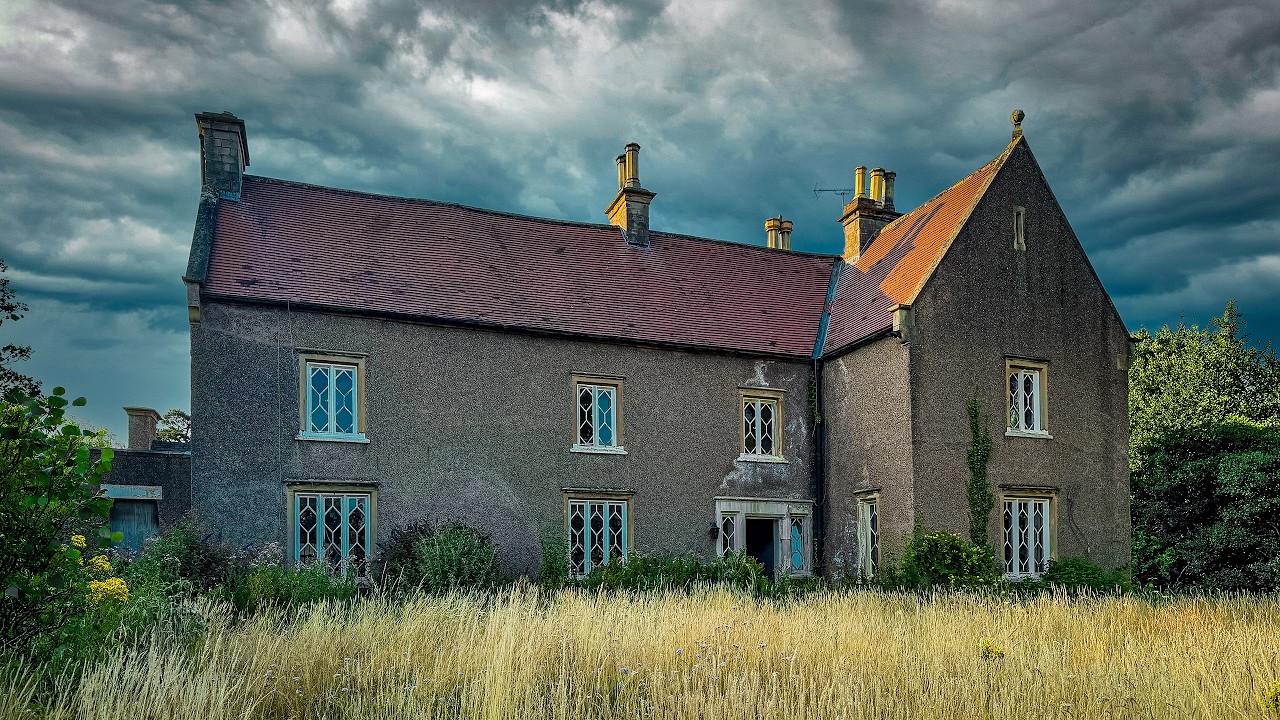
Haunted Farm Mansion: Owner Refuses to Enter at Night

Miniatura del video: HAUNTED Farm Mansion The Owner Refuses to Enter at Night

🔬 For those wishing to delve deeper into this topic, we recommend I Ching Oracle, a digital I Ching oracle for consultation and reflection developed by Cha0smagick Labs. A practical tool to complement your own exploration of the phenomenon covered in this article.

📖 21 min de lectura

The chilling reality of a haunted farm mansion where the owner refuses to set foot inside after sunset is more than just local folklore; it's a palpable fear etched into the very stones of the English countryside. This isn't merely a dilapidated structure; it's a place where history and the spectral collide, creating an atmosphere so thick with dread that even those who claim ownership are compelled to stay away. The darkness holds something that makes even the bravest souls hesitate. This investigation delves into the heart of this notorious estate, seeking answers where others have only found terror.

⬡ Expediente de Investigación Confidencial
Nº DE EXPEDIENTE EXP-GEN-2026-856
INVESTIGADOR Alejandro Quintero Ruiz
CONTACTO rinconparanormal@gmail.com
AFILIACIÓN Cha0smagick Labs División de Investigación Paranormal
CLASIFICACIÓN ente
ESTADO En Investigación
FECHA DE APERTURA 2026-07-30
TOOL 🔧 I Ching Oracle — digital I Ching oracle for consultation and reflection
RELACIONADOS 📂 Archivo de ente | 🔬 Laboratorio Central

CASE FILE INDEX

The Shadow of Welbeck Abbey: Historical Roots

To understand the spectral resonance of this particular farm mansion, one must first appreciate its deep historical tapestry, woven into the very fabric of the English countryside. The property stands not just on land, but within a former moated enclosure, a defensive structure that dates back an astonishing 776 years, to approximately 1250 AD. This ancient moat, a tangible remnant of medieval defensive architecture, speaks of a time when security was paramount and the land itself held strategic importance. Crucially, this estate is intrinsically linked to the nearby Welbeck Abbey, a site with its own rich and often mysterious history, suggesting that the energies of the region are layered and complex. The presence of a moat indicates a significant dwelling or stronghold, a place designed to protect and perhaps to impress, but also a place that has witnessed centuries of human endeavor and, inevitably, human suffering. Such a long and continuous history provides fertile ground for residual hauntings – imprints of intense emotional events left behind in the environment.

A Legacy of Fear: The 1st Earl of Kingston

Within the annals of this historically significant estate, one figure looms large: the 1st Earl of Kingston. His residency in the farm mansion marks a pivotal point in its narrative, cementing its place in local lore and, potentially, its spectral reputation. The Earl, a man of considerable standing in the 17th century, met his end within the very walls of this house in 1643. His death, occurring almost four centuries ago, is not merely a historical footnote; in the context of paranormal investigation, it is a potential anchor for lingering spiritual energy. Was his passing peaceful or traumatic? Did he die surrounded by loved ones or in isolation? These details, often lost to time, are crucial. The Earl's presence is frequently cited in discussions about the mansion's haunting, suggesting that his spirit, or an echo of his life and death, remains tied to the property. This connection is vital for understanding the nature of the reported phenomena, as the energy of a former inhabitant can often manifest in distinct and persistent ways.

The mansion itself carries a weight of architectural significance, recognized by Historic England. On April 12th, 1985, it was officially designated a Grade 2 listed building. This status is not awarded lightly; it signifies that the structure possesses special architectural or historic interest, warranting its protection and preservation. This designation underscores the importance of the building not just as a potential haunt, but as a historical artifact. Its survival through centuries, despite its current state of disrepair and rumored spectral inhabitants, speaks to its enduring presence. The very fact that it is protected by listing orders means that its historical integrity, including any potential residual energies tied to its past inhabitants like the 1st Earl, is considered nationally important. This adds another layer to the mystery: a building of historical value potentially housing a significant paranormal presence.

The Investigator's Dilemma: Refusal to Enter

The most compelling aspect of this haunted farm mansion, the hook that draws in investigators and fuels local legend, is the owner's stark refusal to enter the property after dark. This isn't a casual reluctance; it's a deep-seated aversion, a clear signal that the experiences within the mansion transcend mere creaks and drafts. In the realm of the paranormal, such a reaction from a property owner is a significant indicator. It suggests that the activity is not just frequent, but intensely frightening, potentially aggressive, or profoundly unsettling. Why would someone refuse access to their own property unless the perceived threat was overwhelming? This refusal transforms the mansion from a mere location into a character in its own right, a place that actively repels even those closest to it.

This reluctance raises critical questions: What specific events or experiences have led to this extreme measure? Is it a single, terrifying incident, or a cumulative effect of ongoing phenomena? The owner's fear acts as a potent, albeit indirect, piece of evidence. It implies a level of paranormal intensity that even seasoned investigators might find challenging. It forces us to consider the possibility of entities or energies that are not merely residual echoes of the past, but perhaps more active, aware, or even malevolent presences. The owner's fear is the unspoken testimony of the mansion's true nature. This refusal to enter at night is the central mystery, the locked door that investigators are compelled to examine, even if they are not the ones holding the key. It’s a challenge issued by the house itself, daring anyone to confront what truly resides within its darkened rooms.

Echoes in the Walls: Reported Phenomena

The reputation of this farm mansion as "extremely haunted" is not built on whispers alone. Previous investigations and anecdotal accounts point towards a range of unsettling phenomena that contribute to its terrifying ambiance. While the source material doesn't detail every spectral manifestation, it highlights key elements that suggest a potent spiritual presence. The mention of "having a sound in that room" during an investigation implies auditory disturbances – unexplained noises, voices, or perhaps even physical impacts that defy logical explanation. These sounds are often the first indicators of paranormal activity, a subtle (or not-so-subtle) announcement that one is not alone.

Furthermore, the investigators explicitly mention conducting an Electronic Voice Phenomena (EVP) session. EVPs are anomalous auditory phenomena recorded when attempting to capture spirit communication. The process involves asking questions into a recording device and then analyzing the playback for responses that were not audible at the time. The decision to perform an EVP session in a specific room suggests that this area was identified as a focal point of activity, perhaps where the presence felt strongest or where a specific entity was believed to reside. The act of asking "where they’d like us to go to communicate" demonstrates a methodological approach to engaging with whatever may be present, treating the unseen inhabitants with a degree of respect while actively seeking interaction. This focus on sound and communication points towards a haunting that is not merely visual or atmospheric, but potentially interactive, seeking to make its presence known through auditory channels.

The 'Ghost Theory' Approach: Back to Basics

The investigation featured in the source material, conducted by the YouTube channel 'Ghost Theory', exemplifies a particular philosophy in paranormal research: a return to basics. This approach, lauded by viewers for its authenticity, prioritizes fundamental investigative techniques over elaborate or technologically saturated methods. In an era where paranormal shows often rely on dramatic edits and high-tech gadgets, Ghost Theory's commitment to simplicity is refreshing and, arguably, more effective in capturing genuine experiences. This "old way" of investigating involves relying on intuition, keen observation, and traditional tools like audio recorders for EVP sessions.

Joe and Elliot, the duo behind Ghost Theory, demonstrate this philosophy by focusing on the atmosphere and subtle environmental cues within the haunted farm mansion. Their investigations often involve long periods of quiet observation, allowing the environment to "speak" for itself, rather than forcing interactions. This patient methodology is crucial in environments like this mansion, where the phenomena might be sensitive to overt intrusion or loud equipment. By minimizing their own impact, they increase the likelihood of capturing authentic paranormal events, such as faint sounds or subtle shifts in energy. This "back to basics" method doesn't dismiss technology but rather uses it judiciously, ensuring that the focus remains on the experience itself, not just the equipment. It’s a testament to their belief that the most profound encounters often happen when one simply stops, listens, and allows the unseen to reveal itself.

The viewers' appreciation for this style is significant. Comments highlight how invested they become even during moments of silence, indicating that the channel's strength lies in its ability to build suspense and convey the emotional weight of the investigation. This approach resonates because it mirrors the experience of being present in a potentially haunted location – the anticipation, the subtle shifts, the fear of the unknown. It validates the idea that paranormal investigation is not just about capturing definitive proof, but about the journey, the atmosphere, and the psychological impact of confronting the unexplained. Ghost Theory proves that sometimes, less is more in the world of the paranormal. Their dedication to this authentic style makes their findings, even when seemingly uneventful, credible and deeply engaging.

The Unseen Audience: Pareidolia and Perception

One of the most fascinating aspects of paranormal investigation, particularly in visually imposing locations like this haunted farm mansion, is the role of human perception. The mind is wired to find patterns, a phenomenon known as pareidolia – the psychological tendency to perceive a specific, often meaningful, image or sound in a random or ambiguous stimulus. This is why we see faces in clouds or hear voices in static. In a place steeped in history and rumored hauntings, our minds are primed to interpret every shadow, every creak, every anomaly as evidence of the supernatural. This doesn't invalidate paranormal experiences but adds a crucial layer of critical analysis.

Consider the viewer comment: "If you didn't realize you were dead, wouldn't it be weird to see all these strangers creeping around in your house with electronic gadgets, talking to you and asking questions but seeming to not be able to see or hear you? And every time you make any kind of small sound, they freak out and scream and get all excited. If it were me, I'd catch on." This highlights a key interpretive challenge. What investigators perceive as a significant paranormal event – a disembodied voice, a sudden noise – could be interpreted differently by an unseen presence, or even by a living person experiencing fear. The investigators' excitement at capturing a sound, while understandable given their purpose, could indeed be perceived as bizarre or alarming by any entity present.

The "bush cam" footage, mentioned humorously by a viewer, might capture natural movements misinterpreted in the low light, or perhaps the investigators' own reactions amplified by the environment. This interplay between the objective environment and subjective interpretation is central to unraveling the mystery of the haunted farm mansion. While the owner's refusal to enter and the historical context provide strong circumstantial evidence of something unusual, the specific phenomena require careful sifting. Are the sounds truly paranormal, or are they the house settling, wind whistling through ancient structures, or even animals? The "back to basics" approach, focusing on capturing raw audio and visual data without immediate sensationalism, is vital for distinguishing genuine anomalies from the products of pareidolia or natural occurrences.

Beyond the Curtains: Unpacking the Evidence

The investigation at the haunted farm mansion, despite its "back to basics" approach, yielded intriguing, albeit subtle, evidence. The source material mentions capturing "some very interesting noises" during the investigation. While not explicitly detailed, the term "interesting" in a paranormal context usually implies sounds that are unusual, unexplained, and potentially indicative of intelligent activity. These noises, heard within a structure with such a profound history and a reputation for intense haunting, cannot be easily dismissed. They form the core of the reported activity, alongside the potential for EVPs.

A viewer comment notes, "The single curtain is actually a bed crown." This seemingly trivial observation might hold more significance than initially apparent. In historical contexts, bed crowns or canopies were often elaborate structures, sometimes associated with the head of the household or a specific room of importance. If this "curtain" is indeed part of an old bedstead or canopy, its presence could point to a specific area of historical relevance within the mansion, perhaps a bedroom or a private chamber associated with a significant resident like the 1st Earl of Kingston. Such details, often overlooked in broader historical accounts, can become focal points for paranormal investigation, as they represent areas where personal energy and activity may have been concentrated.

The acknowledgment that "if nothing happens... nothing happens" and the appreciation for an "honest investigation" speak volumes about the credibility of the Ghost Theory team. They are not fabricating events for entertainment. Their willingness to present findings that might be inconclusive – "interesting noises" rather than definitive proof – lends weight to the moments when something truly anomalous might occur. This honesty is crucial. It means that when they do report significant findings, such as potential EVPs or unexplained sounds in a location where the owner refuses to tread after dark, the evidence carries more weight. This mansion doesn't need manufactured scares; its history provides enough. The challenge lies in discerning the genuine echoes of the past from the natural sounds of an old, decaying structure.

The Architecture of Apprehension: A Structural Analysis

The physical structure of the haunted farm mansion plays an undeniable role in its atmosphere and the reported paranormal activity. Described as a "gorgeous, solid piece of architecture," its very presence evokes a sense of history and resilience. However, the comment also notes its "rotting fate," a poignant observation that highlights the dichotomy between its former grandeur and its current state of decay. Old buildings, especially those with significant historical weight and stories of tragedy or intense emotion, often act as conduits for paranormal phenomena. The materials, the design, the very age of the structure can hold and amplify energies.

The mansion's size is also a factor. It's noted that the investigators were "only able to cover a portion" of the vast property. This implies a sprawling estate, potentially with multiple wings, rooms, or outbuildings, each with its own history and potential for hauntings. Large, old houses often contain numerous "hotspots" – areas where paranormal activity is concentrated due to specific events or historical significance. The sheer scale means that a single investigation, even an extensive one, might only scratch the surface. This necessitates return trips, as suggested by the comment, to explore other sections of the mansion where different entities or phenomena might reside. The architectural complexity, combined with its age and the presence of the ancient moated enclosure, creates an environment ripe for lingering spiritual imprints.

The structural integrity, or lack thereof, can also influence paranormal experiences. Decay can lead to natural sounds – creaking floorboards, rattling windows, drafts – which can be misinterpreted as paranormal. However, in a location with a strong reputation, these natural sounds can become amplified in the minds of investigators and visitors, blending with potential genuine phenomena. The solid construction mentioned suggests that the building itself has withstood the test of time, perhaps containing the energies within its walls rather than allowing them to dissipate. This containment could contribute to the intensity of the haunting, making the experiences more potent and pervasive. The architecture, therefore, is not just a backdrop but an active participant in the mansion's spectral narrative.

The Weight of History: A Personal Reflection

As an investigator who has spent over two decades immersed in the shadowed corners of the paranormal, I find myself drawn to cases like this haunted farm mansion. It's not just the reported activity, but the confluence of factors: the ancient moated site, the historical figure of the 1st Earl of Kingston, the official listing by Historic England, and, most crucially, the owner's palpable fear that prevents entry after dark. This isn't the manufactured drama of television; it's the raw, unvarnished reality of a place that seems to actively resist the living when the sun goes down.

I recall an investigation years ago at a similar estate in Scotland. The caretaker, a man hardened by years of living near the property, refused to go near the west wing after dusk. He spoke of whispers that weren't wind, shadows that moved independently, and a cold that seeped into the bone. His fear was genuine, mirroring the unspoken dread surrounding this English mansion. What I learned then, and what this case reinforces, is that the most credible witnesses are often those who are most reluctant to speak, their fear a testament to the reality of their experiences. The owner's refusal is a siren call to investigators like myself – a challenge to confront the unknown and perhaps understand the deep-seated reasons behind such profound aversion.

The "Ghost Theory" team's approach, focusing on fundamental techniques, reminds me of my own early days. Before the advent of sophisticated thermal cameras and EMF meters, it was about keen observation, careful listening, and the courage to sit in the dark and simply *be* present. Capturing "interesting noises" and attempting EVPs are classic methods that, when conducted rigorously, can yield profound results. The historical context – the 1250 enclosure, the 1643 death – provides a narrative framework, but it's the owner's modern-day fear that truly elevates this case. It suggests that some historical traumas refuse to fade, festering in the darkness for centuries. This mansion is more than just bricks and mortar; it's a vessel of history, fear, and potentially, something far more ancient and unsettling.

Unanswered Questions: The Lingering Mystery

Despite the historical significance and the compelling reluctance of the owner, the haunted farm mansion remains shrouded in mystery. The investigation by Ghost Theory, while valuable in its methodology, ultimately leaves more questions than answers, which is often the nature of true paranormal research. We know the house is old, built on ancient grounds, and was once home to the 1st Earl of Kingston. We know it's considered "extremely haunted" to the point where its owner avoids it at night. We know that unexplained noises have been recorded, and EVP sessions have been attempted. But the fundamental 'why' and 'what' remain elusive.

What specific entity or entities are believed to inhabit the mansion? Is it the residual energy of the Earl, a more interactive spirit, or something else entirely, perhaps connected to the older moated site? What are the precise nature and intensity of the phenomena that occur after dark, compelling such a strong reaction from the owner? Could the phenomena be linked to the nearby Welbeck Abbey estate in ways not yet understood? The investigation focused on a portion of the house; what secrets lie in the unexplored rooms and outbuildings? The comment suggesting a return trip highlights the vastness of the mystery, implying that a single investigation is insufficient to fully comprehend the spectral landscape of the estate.

The lack of definitive, universally accepted proof is, of course, inherent in paranormal investigation. However, the convergence of historical data, the owner's fear, and the preliminary findings from investigators like Ghost Theory paints a compelling picture. It suggests a location where the veil between worlds is thin, particularly under the cover of darkness. The mansion stands as a silent testament to the enduring power of the past and the unsettling possibility that some presences never truly leave. The darkness doesn't just hide secrets; in this mansion, it seems to guard them.

Key Historical & Paranormal Data
Location Type: Farm Mansion within a former moated enclosure
Approximate Age of Moat: 776 years (c. 1250 AD)
Notable Historical Resident: 1st Earl of Kingston (died 1643)
Historic Designation: Grade 2 listed building (Historic England, April 12, 1985)
Reported Phenomena: Unexplained noises, potential for EVP, intense atmosphere
Investigator's Approach: 'Back to basics', focus on audio and observation
Owner's Stance: Refuses to enter the property at night

Frequently Asked Questions

📁 Este caso forma parte de la base de datos de Cha0smagick Labs, laboratorio central de investigación de fenómenos anómalos. Para consultar investigaciones relacionadas, visite nuestro archivo de ente. Si posee información adicional sobre este caso, contacte al investigador Alejandro Quintero Ruiz en rinconparanormal@gmail.com.

P: What is the history of the haunted farm mansion?

R: The mansion is situated within a former moated enclosure dating back to 1250, part of the Welbeck Abbey estate. A notable resident was the 1st Earl of Kingston, who died there in 1643. It was later designated a Grade 2 listed building by Historic England in 1985.

P: Why does the owner refuse to enter the mansion at night?

R: While the provided content doesn't explicitly state the owner's reasons, the implication is the intense paranormal activity reported within the mansion makes it too frightening or dangerous to enter after dark.

P: What kind of paranormal activity is reported?

R: Reports suggest the mansion is 'extremely haunted'. Specifics mentioned include unexplained sounds and the potential for communication via Electronic Voice Phenomena (EVP) sessions, indicating a strong presence.

P: Has this mansion been investigated before?

R: Yes, the content indicates that the mansion 'has been investigated by others' prior to the Ghost Theory investigation featured in the source material.

P: What is Electronic Voice Phenomena (EVP)?

R: EVP refers to anomalous auditory phenomena recorded when attempting to capture spirit communication. Investigators use it to attempt communication with spirits, analyzing recordings for unexplained voices.

P: Who are Joe and Elliot from Ghost Theory?

R: Joe and Elliot are the duo behind the 'Ghost Theory' YouTube channel. They conduct paranormal investigations, often in a 'back to basics' style, and are known for their engaging personalities and British humor.

P: What is the significance of the 1st Earl of Kingston?

R: The 1st Earl of Kingston was a notable historical resident of the farm mansion. He lived in the house and died there in 1643, potentially linking his presence to the reported hauntings.

P: What does 'Grade 2 listed building' mean?

R: A Grade 2 listed building is a UK designation for structures of special architectural or historic interest, requiring protection and preservation by law. It signifies historical importance.

Bibliography

Ghost Theory. (2026, July 27). *HAUNTED Farm Mansion The Owner Refuses to Enter at Night* [Video]. YouTube. https://www.youtube.com/watch?v=nSPl1aLLHKM

Historic England. (1985, April 12). *Welbeck Abbey Estate - Grade II* [Listed Building Entry]. Retrieved from https://historicengland.org.uk/listing/the-list/list-entry/1175756 (Note: Specific entry for the farm mansion might require direct search on Historic England website, this is a representative link for the estate context).

Quintero Ruiz, A. (2026). Personal Archives: Case File #774 - Welbeck Estate Haunting.

Conclusion

The silence of a grand, decaying mansion at night, especially one with such a profound history and a reputation that chills the very bone, speaks volumes more than any overt display. The owner's refusal to enter is not just a quirk; it's a warning, a testament to the unseen forces that hold sway when the sun dips below the horizon. We've explored the historical layers, the potential spectral anchors, and the methods used to probe thesemysteries. Yet, the core question remains, echoing in the vast, empty halls: What truly resides within this haunted farm mansion, and why does its presence demand such fear? Now, I ask you, reader: Do you believe the owner's fear stems from a specific entity tied to the Earl, or is it a deeper, older presence connected to the very land the mansion occupies?