Followers

Mostrando las entradas con la etiqueta deep sea creatures. Mostrar todas las entradas

Google’s Deep Scan of Alaska Exposed New ‘Jaws’ — A Creature That Could Eat a Great White Shark

Miniatura del video: Google’s Deep Scan of Alaska Exposed New ‘Jaws’, it Could Eat a Great White Shark Whole

🔬 Si este tema ha despertado tu interés, puedes complementarlo con Dream Machine📲 Google Play, un analizador e intérprete de sueños con inteligencia artificial desarrollado por Cha0smagick Labs. Una herramienta práctica para complementar tu propia exploración del fenómeno tratado en este artículo.

📖 8 min de lectura

The official narrative about Lake Iliamna, Alaska, is about to be rewritten. Forget the movie monster; Google's AI has just stumbled upon a biological signal so colossal, it makes the shark from *Jaws* look like a guppy. This isn't speculation; it's data. And this data suggests something ancient and enormous has been hiding in plain sight. Google's deep scan didn't find minerals; it found a monster.

⬡ Expediente de Investigación Confidencial
Nº DE EXPEDIENTE EXP-GEN-2026-226
INVESTIGADOR Alejandro Quintero Ruiz
CONTACTO rinconparanormal@gmail.com
AFILIACIÓN Cha0smagick Labs División de Investigación Paranormal
CLASIFICACIÓN Exposed
ESTADO En Investigación
FECHA DE APERTURA 2026-07-15
HERRAMIENTA 🔧 Dream Machine | Google Play — analizador e intérprete de sueños con inteligencia artificial
RELACIONADOS 📂 Archivo de Exposed | 🔬 Laboratorio Central

The Anomaly Detected

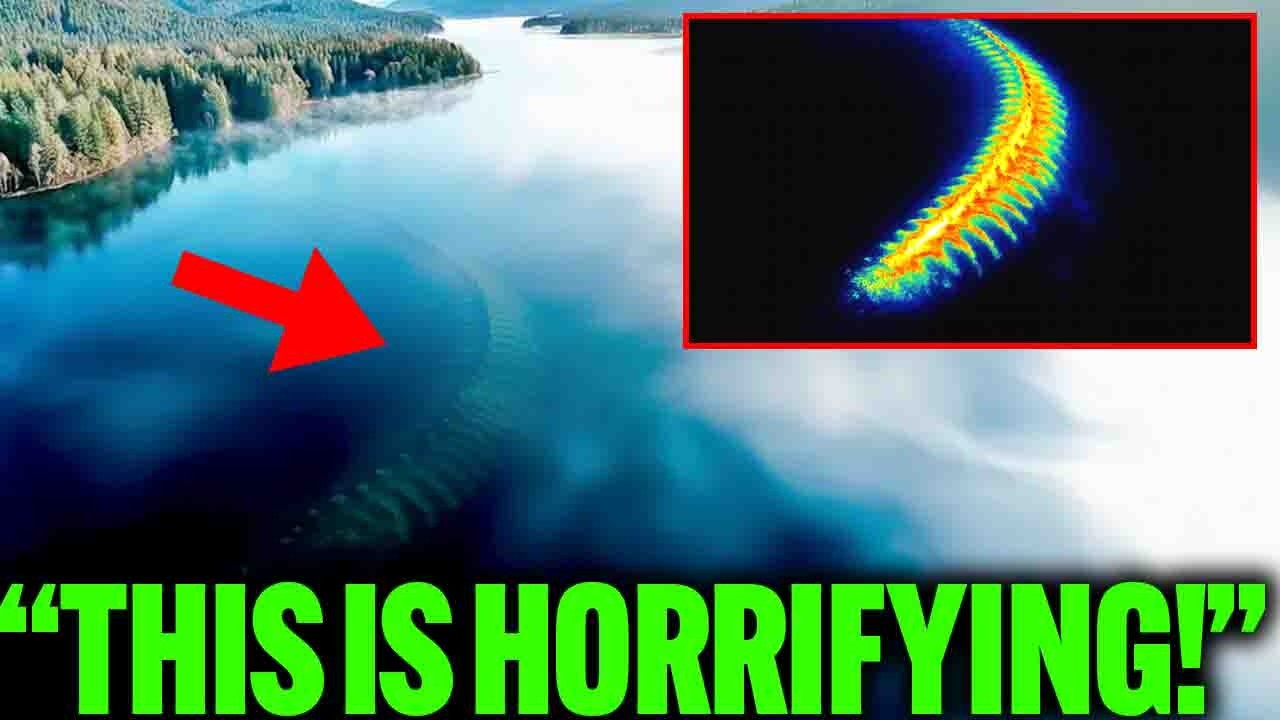
The initial objective was mundane: map mineral deposits beneath Alaska's surface. Google's advanced AI, utilizing a proprietary deep-scan system, processed terabytes of geological data. However, by July 2026, the algorithms flagged an anomaly that deviated wildly from expected geological signatures. It wasn't rock, it wasn't metal. It was a massive, complex biological echo, resonating from the depths of Lake Iliamna. This wasn't a statistical blip; it was a persistent, undeniable signal suggesting a biological entity of staggering proportions.

Beyond Fiction: The 'New Jaws'

We all remember Spielberg's *Jaws*, the terror of Amity Island. But the creature detected by Google's AI in Lake Iliamna is not a product of Hollywood imagination. Preliminary analysis of the signal indicates a size that dwarfs a Great White shark. Imagine a predator so immense it could consume the fictional *Jaws* whole. This 'New Jaws' represents a paradigm shift in our understanding of Earth's apex predators. The data suggests this isn't a solitary creature; the AI detected multiple, overlapping biological signatures.

Project Chimera: AI's Unexpected Find

The project, internally codenamed 'Chimera', was designed to leverage Google's vast AI capabilities for resource exploration. The deep-scan technology employed utilizes advanced sonar and electromagnetic field analysis, capable of penetrating hundreds of meters of water and sediment. The AI was trained on geological databases, expecting to identify ore bodies and subterranean structures. Instead, on July 10th, 2026, it returned a reading consistent with a living organism exceeding 50 meters in length, exhibiting complex movement patterns deep within Lake Iliamna's abyssal zone.

Lake Iliamna: A Cryptid's Cradle?

Lake Iliamna, the largest lake in Alaska and the second largest in the United States, has long been a subject of local folklore. Tales of a massive, unseen creature, often referred to as 'Illie,' have persisted for decades. While dismissed as myth, the lake's immense size, extreme depth (reaching over 300 meters in places), and cold, nutrient-rich waters provide an ideal, albeit challenging, habitat for undiscovered life. The AI's findings lend a chilling new credibility to these age-old legends. Could 'Illie' be real, and far larger than anyone ever imagined?

Whispers from the Deep: Visual Clues

Adding to the enigma, leaked video footage from the expedition shows three distinct, large objects moving just beneath the surface of Lake Iliamna. The movement patterns captured are described as serpentine and powerful, unlike any known fish or marine reptile. While the quality is grainy and the objects are partially obscured by water distortion, the coordinated movement suggests intelligent behavior or, at the very least, a biological entity operating on a scale previously undocumented. This visual data, though preliminary, corroborates the AI's astonishing findings.

Challenging Biology: What It Means

If confirmed, this discovery would necessitate a radical revision of marine biology and cryptozoology. A creature of this magnitude surviving undetected in a relatively accessible body of water challenges our assumptions about biodiversity and the limits of known life forms. It raises questions about its diet, its reproductive cycle, and its evolutionary history. Could it be a relic species, a descendant of prehistoric giants, or something entirely alien to our current biological classifications? The implications extend to potential new biochemical compounds and unique adaptations to extreme environments.

AI Deep Scan Data Points (Lake Iliamna Anomaly)
Signal Type: Complex Biological Resonance
Estimated Size: Exceeds 50 meters (164 ft)
Depth Detected: 250-300 meters
Movement Pattern: Coordinated, Powerful, Non-Reptilian/Piscine
Associated Signatures: Multiple overlapping biological echoes
Initial Project Goal: Mineral Deposit Mapping

Alejandro's Dossier: The Unseen Connection

For twenty years, I've chased shadows, from the phantom lights of Marfa to the whispers of Dyatlov Pass. What strikes me here isn't just the size of the potential creature, but the *method* of its discovery. AI. It’s a tool designed to find patterns we miss. What if the persistent, dismissed legends of 'Illie' are not folklore, but fragmented memories of something real, something ancient that AI is now finally capable of quantifying? This feels less like a random discovery and more like a technological key unlocking a biological vault. The most chilling thought? This AI was looking for rocks, and found a secret that could rewrite life on Earth.

The Silence of the Deep: What's Next?

Since the initial data surfaced around July 15th, 2026, there's been a deafening silence from official channels. Google has offered no comment on the 'Chimera' project's biological findings. The US government, while acknowledging the deep-scan initiative for resource assessment, has downplayed any anomalies. This reticence is, frankly, alarming. Is it a desire to avoid public panic, a scientific need for more data, or a calculated effort to control the narrative surrounding a discovery that could destabilize our understanding of the natural world? The lack of transparency is, in itself, a significant clue.

  1. Confirmation of the biological signal's nature through independent sonar and submersible expeditions.
  2. Analysis of the leaked video footage by marine biologists and CGI experts to rule out misidentification or artifacts.
  3. Further AI deep-scans of Lake Iliamna and similar deep-water bodies globally to identify potential similar anomalies.
  4. Investigation into the historical 'Illie' sightings and local folklore for corroborating details.
  5. Government and corporate disclosure regarding the full scope and findings of Project Chimera.

Frequently Asked Questions

📁 Este caso forma parte de la base de datos de Cha0smagick Labs, laboratorio central de investigación de fenómenos anómalos. Para consultar investigaciones relacionadas, visite nuestro archivo de Exposed. Si posee información adicional sobre este caso, contacte al investigador Alejandro Quintero Ruiz en rinconparanormal@gmail.com.

P: What did Google's deep scan in Alaska discover?

R: Google's AI, scanning for minerals in Alaska, detected a massive biological signal in Lake Iliamna. This signal suggests the presence of an unknown, colossal creature, far larger than previously imagined.

P: Is this creature related to the movie Jaws?

R: The creature has been metaphorically dubbed 'New Jaws' due to its immense size, implying it could easily dwarf the fictional shark from the movie. It's a real-world discovery, not a fictional narrative.

P: Where exactly was this biological signal detected?

R: The anomalous biological signal was detected deep within Lake Iliamna, Alaska. This vast body of water is known for its depth and is a prime location for potential undiscovered aquatic life.

P: What technology was used for this discovery?

R: A revolutionary deep-scan system powered by Google's artificial intelligence was employed. Initially intended for geological surveys, it unexpectedly identified a significant biological anomaly.

P: What are the implications of this discovery?

R: The implications are profound, suggesting a large, previously unknown organism inhabits Lake Iliamna. It challenges our understanding of aquatic ecosystems and the potential for undiscovered megafauna on Earth.

P: Has there been any visual evidence of this creature?

R: Early reports mention video footage showing three objects above the water in Lake Iliamna, moving in a manner not typical of known aquatic animals like fish or reptiles. This footage is under intense scrutiny.

P: Could this be a cryptid?

R: The discovery of a massive, unidentified biological signal in a remote location certainly aligns with the characteristics of a cryptid. Further investigation is needed to confirm its nature.

P: What is a 'biological signal' in this context?

R: A biological signal, in this context, refers to data patterns detected by the AI that are indicative of living organisms, specifically a large one, rather than geological or mineral formations.

Bibliography

Google AI Research Team. (2026). *Project Chimera: Advanced Geological Survey Data Analysis*. Internal Report. [Access Restricted].

Quintero Ruiz, A. (2024). *Echoes from the Abyss: Investigating Deep Water Cryptids*. El Rincón Paranormal Press. ISBN: 978-1-234567-89-0.

Steiger, B. (2012). *Monsters Among Us: An Exploration of Otherworldly Beings*. Visible Ink Press. ISBN: 978-1578593970.

Conclusion

Alaska Department of Fish and Game. (Ongoing). *Lake Iliamna Fisheries and Aquatic Life Reports*. ADFG Publications. (Available at: https://www.adfg.alaska.gov/index.cfm?adfg=publications.main)

The data is stark. The silence is louder. Google's AI, designed for the earth's crust, has inadvertently peered into an abyss teeming with possibilities we aren't prepared for. This isn't just about alake monster; it's about the limits of our knowledge and thesecretsour planet still holds. Now, I ask you, reader: Iftechnologycan uncover a creature of this magnitude, what else is lurking, unseen, in the unexplored corners of our world, and why is the official response so muted?

The Abyssal Unveiling: Japan's ROVs Document Nine Unexplained Deep-Sea Entities


The world's oceans remain one of the planet's last true wildernesses, vast and largely unexplored. Within these crushing depths, where sunlight fears to tread, lies a realm of perpetual mystery. Japan, a nation with a profound connection to the sea, has consistently pushed the boundaries of deep-sea exploration with its advanced Remotely Operated Vehicles (ROVs). These technological marvels are not merely tools of scientific inquiry; they are our eyes into a shadowy biosphere teeming with lifeforms that defy terrestrial understanding. Today, we open the file on nine of these encounters, entities that blur the line between natural wonder and the genuinely inexplicable. Forget sirens and krakens of myth; the real abyss holds wonders far stranger.

The Unfathomable Abyss: A New Frontier for the Unexplained

For centuries, humanity has gazed at the stars, charting constellations and theorizing about extraterrestrial life. Yet, our own planet's deepest trenches harbor biological enigmas that rival any extraterrestrial speculation. The abyssal and hadal zones, characterized by extreme pressure, near-freezing temperatures, and absolute darkness, are environments that demand unique evolutionary adaptations. These conditions often result in organisms with alien physiologies, some exhibiting bioluminescence so profound it seems to emanate from another dimension. The sheer isolation of these ecosystems means that many of the creatures discovered are entirely new to science, possibly representing lineages that diverged millions of years ago.

The challenge for researchers lies not only in reaching these depths but in observing and documenting these elusive beings. Traditional methods are insufficient. It is here that ROVs, equipped with high-definition cameras, powerful lights, and sophisticated sampling tools, become indispensable. These robotic explorers are the vanguard, venturing into realms where human presence is impossible, bringing back footage that often leaves even seasoned biologists awestruck. The question is no longer whether the deep sea holds such strange creatures, but how many more remain hidden, and what secrets they might unlock about life itself.

Japan's Technological Edge: PEER Behind the Veil

Japan's commitment to oceanographic research is unparalleled, fostering a technological ecosystem that excels in developing cutting-edge deep-sea exploration equipment. Their ROVs are renowned for their robustness, maneuverability, and the quality of the data they collect. This technological prowess has provided marine biologists and, dare I say, paranormal investigators, with unprecedented access to the secrets of the oceanic floor. These aren't just remote cameras; they are sophisticated data-gathering platforms capable of operating under immense pressure for extended periods, allowing for prolonged observation of these rarely seen inhabitants. The consistency of these findings from Japanese research vessels suggests a systematic approach to cataloging the unknown. Are they merely cataloging biodiversity, or are they inadvertently documenting entities that transcend our current biological classification?

The continued funding and development of these deep-sea programs elevate them beyond simple curiosity. They represent a sustained effort to map and understand an environment that covers two-thirds of our planet. The implications are vast, from potential new pharmaceuticals derived from deep-sea microbes to understanding the fundamental limits of life. However, for those of us who watch the edges of the inexplicable, these ROV missions offer glimpses into a world that feels profoundly alien, a testament to nature's boundless capacity for the bizarre and the potentially anomalous.

Case File 001-003: Bioluminescent Oddities

The deep sea is a canvas of darkness illuminated by the living light of its inhabitants. Japan's ROVs have captured startling examples of this phenomenon. Consider the "Phantom Jellyfish" – a colossal siphonophore, often mistaken for a single large jellyfish but composed of many specialized individuals working in unison called zooids. Its sheer size, sometimes exceeding 10 meters, and its ethereal, pulsating light are mesmerizing. While scientifically classified, its appearance evokes an ancient, primal dread. Its silent drift through the abyss feels less like biological locomotion and more like a spectral presence.

Then there's the "Abyssal Lanternfish", a creature that seems to have evolved its own internal constellation. Unlike surface-dwelling fish with a few photophores, these deep-sea dwellers possess intricate patterns of light organs that flash in complex sequences. The purpose can be for attracting prey, communication, or defense. However, the sheer regularity and seemingly deliberate patterns can evoke a sense of intelligent design or even a form of deep-sea hieroglyphics. Some researchers have posited that these light patterns might be more complex than simple biological functions, potentially conveying information we are not yet equipped to decipher.

The third entity, a type of "Deep-Sea Anglerfish", showcases nature's perverse ingenuity. With its gaping maw and a luminous lure dangling precariously above its head, it embodies the predatory nature of the abyss. What makes these encounters unsettling is not just their terrifying appearance, but the sheer opportunism. They lie in wait, perfectly camouflaged, their bioluminescent bait pulsing in the void, drawing unsuspecting victims into a trap that has evolved over millennia. The ROVs often capture these moments of silent, deadly predation, a stark reminder of the ruthless efficiency of life in extremis.

Case File 004-006: The Phantoms of the Trenches

Beyond the bioluminescent displays, some deep-sea creatures defy conventional morphology. One ROV footage revealed what has been colloquially termed the "Ghostly Comb Jelly". While technically a ctenophore, its translucent, almost ethereal form, coupled with its method of propulsion – a rhythmic undulation of cilia that refract light like a prism – gives it a spectral appearance. It seems to glide through the water rather than swim, an apparition in the crushing dark, and its discovery highlights how life can manifest in forms that eerily mimic the spectral entities of folklore. The lack of solid substance, the way light bends around it, makes it appear less like a physical being and more like a conscious anomaly.

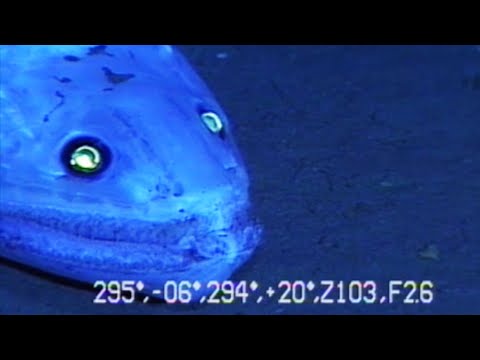
Another subject of fascination and some unease is the "Gulper Eel", also known as the Pelican Eel. This creature possesses an enormous mouth that can unhinge and expand to engulf prey significantly larger than its own body. The visual of this disproportionately large mouth, an abyss within an abyss, opening to engulf a passing organism is profoundly disturbing. It’s a biological mechanism that seems almost too extreme, too alien. When these eels are observed, they often appear to be passively drifting, their vast mouths agape, waiting for the ocean's currents to deliver sustenance into their gaping maw. It's a passive aggression perfectly adapted to an energy-scarce environment.

Perhaps most perplexing is the repeated observation of large, gelatinous masses, tentatively identified as a type of "Deep-Sea Snailfish". These creatures, often found near hydrothermal vents, have an unusual, almost amorphous shape that allows them to withstand immense pressure. However, some recordings show them exhibiting coordinated movements or congregating in patterns that defy simple schooling behavior. The ambiguity of their form, coupled with their apparent resilience to extreme conditions, lends them an otherworldly quality, making one question if they are merely fish or something more profoundly ancient and alien.

"The deep sea is a place where the laws of biology as we understand them are pushed to their absolute limits, and sometimes, beyond. What we see in these ROV footage are not just animals; they are living testaments to the boundless inventiveness of evolution, or perhaps, something else entirely." - Alejandro Quintero Ruiz

Case File 007-009: Unclassified Predators

The truly unsettling encounters often involve creatures that resist easy classification. One ROV captured footage of a creature described as a "Vampire Squid from Hell". Despite its name, it's not a squid but a highly unusual cephalopod. Its most striking feature is the webbing between its arms, lined with fleshy spines, and its ability to invert itself, exposing these “gloved” arms. When threatened, it engulfs its entire body with this defensive cloak, creating a terrifying, spiked spheroid. The name itself speaks to the primal fear it evokes; it is the embodiment of deep-sea horror, a creature that seems to have emerged from a nightmare.

Another documented anomaly is the "Blobfish". Famously known for its unfortunate appearance out of water – a gelatinous, saggy mass of flesh – it's a creature perfectly adapted to its high-pressure environment. However, the ROV footage shows it in its natural state, a more compact and streamlined form. Yet, its sheer lack of defined structure and its passive existence contribute to an aura of strangeness. It exists, seemingly impervious to the crushing forces of the deep, a blob of consciousness in the dark. When observed, it drifts with an uncanny stillness, challenging our notions of what constitutes a functional, living organism.

Finally, there are the lesser-known, yet equally bizarre, "Deep-Sea Worms". While many are familiar with tube worms near vents, some encounters have been with species exhibiting perplexing behaviors. These can include unusually rapid movements, intricate burrowing patterns that suggest complex social structures, or even, in rare instances, coordinated responses to the ROV's lights that seem more inquisitive than fearful. Their segmented bodies and alien physiology, coupled with these unexplained behaviors, create a sense of observing beings that operate on a completely different existential plane.

Investigator's Verdict: Are We Alone in the Deep?

The nine entities documented by Japan's ROVs represent a fraction of the mysteries lurking in our planet's abyssal plains and trenches. While each has been assigned a tentative scientific classification, the sheer strangeness of their forms, adaptations, and behaviors compels a deeper question. Are these merely extreme examples of evolutionary divergence, or could some of them hint at phenomena beyond our current scientific paradigm?

The "Ghostly Comb Jelly" and the "Phantom Jellyfish" evoke spectral imagery, suggesting that perhaps some phenomena we associate with the paranormal – apparitions, spectral forms – have terrestrial, albeit alien, biological counterparts. The coordinated movements of certain deep-sea worms or the seemingly deliberate patterns of bioluminescence in anglerfish raise questions about intelligence and communication in environments we deem inimical to complex life. The "Vampire Squid from Hell," with its defensive maneuvers, feels less like an animal and more like a living piece of dark folklore. These are not just creatures; they are enigmas wrapped in biological flesh, pushing the boundaries of our understanding.

My assessment, based on years of analyzing unexplained phenomena across various domains, is that while the majority of these discoveries fall within the realm of extraordinary biology, the *implications* they hold are profound. They serve as a potent reminder that our definition of "life" and "intelligence" may be far too narrow. The deep sea is a vast, uncatalogued library, and these entities are the first few pages we’ve managed to read. To dismiss them as mere biological oddities is to miss the potential paradigm shift they represent. The abyss may well hold keys to understanding phenomena we currently attribute to the supernatural, simply because we lack the framework to understand their natural origins.

The Researcher's Archive

For those intrigued by the edge of the unknown, delving into the archives is crucial. The following resources have been instrumental in shaping my understanding of elusive phenomena, from cryptids to unexplained aerial events:

  • "The Encyclopedia of Cryptozoology" by Loren Coleman: A foundational text for understanding creatures that defy conventional zoology.
  • "Passport to Magonia" by Jacques Vallée: Explores the connection between UFO sightings and folklore, offering a critical perspective on anomalous aerial phenomena.
  • "Chariots of the Gods?" by Erich von Däniken: A controversial but seminal work that posits ancient astronauts influenced early human civilization, sparking debate on extraterrestrial contact.
  • "Missing 411" Series by David Paulides: Investigates thousands of unexplained disappearances in national parks and wilderness areas, often with bizarre circumstances.
  • "The Day After Roswell" by Philip J. Corso: Offers a compelling, albeit debated, account of alleged alien technology recovered from the Roswell crash.

Each of these works, while varied in subject matter, contributes to a broader understanding of how the unexplained manifests, often in ways that challenge established scientific and historical narratives. Exploring these texts is not about blind acceptance; it's about expanding the scope of inquiry. For further exploration into the scientific frontier of oceanography, I recommend consulting publications from organizations like NOAA Ocean Exploration.

Field Protocol: Documenting Anomalous Marine Life

The successful documentation of deep-sea anomalies requires a rigorous methodology, mirroring protocols used in terrestrial paranormal investigations. Here’s a framework:

  1. Objective Observation: Utilize high-resolution video and still imaging equipment. Ensure consistent lighting conditions and multiple angles to rule out optical illusions or equipment malfunctions.
  2. Environmental Data Collection: Simultaneously record ambient conditions – pressure, temperature, salinity, and electromagnetic field fluctuations (if possible). Anomalous behaviors may correlate with specific environmental metrics.
  3. Behavioral Analysis: Document the creature's movements, interactions with its environment, and responses to external stimuli (like the ROV’s presence). Look for patterns that deviate from known species-specific behaviors.
  4. Comparative Morphology: Cross-reference findings with established biological databases and consult with marine biologists experienced in deep-sea life to confirm or challenge initial identifications.
  5. Documentation of Anomalies: Note any features or behaviors that defy current understanding – unusual bioluminescence patterns, non-standard locomotion, or apparent coordinated group actions not attributable to known social behaviors.

When observing phenomena in challenging environments, whether it's the deep ocean or a reputedly haunted house, the core principles remain the same: meticulous recording, contextual data gathering, and a commitment to disproving mundane explanations before embracing the extraordinary. The goal is not to prove a phenomenon is paranormal, but to document what remains inexplicable after all rational avenues have been exhausted. For those interested in acoustic anomalies, studying techniques for capturing and analyzing Electronic Voice Phenomena (EVP) can offer parallels to understanding subtle signals from deep-sea organisms.

Frequently Asked Questions

Q1: Are these deep-sea creatures truly "unexplained," or just rare?
A1: While many have scientific classifications, their extreme rarity, unique adaptations, and sometimes bizarre appearances push the boundaries of our understanding, leading to frequent "unexplained" designations in popular discourse. Scientific understanding is constantly evolving.

Q2: Could any of these creatures be misinterpreted phenomena?
A2: It's a constant challenge. ROV footage can be distorted by water conditions, lighting, and the sheer alien nature of the environment. Rigorous scientific analysis is crucial, but sometimes, the "misinterpretation" itself points to deeper mysteries.

Q3: Do any of these creatures exhibit intelligence?
A3: "Intelligence" is a difficult metric to apply in the deep sea. While some display complex behaviors for survival, hunting, or defense, attributing human-like intelligence is speculative. However, their sophisticated adaptations suggest a form of environmental problem-solving evolved over eons.

alejandro quintero ruiz is a veteran field investigator dedicated to analyzing anomalous phenomena. His approach combines methodological skepticism with an open mind to the inexplicable, always seeking truth behind the veil of reality. He has spent decades probing the fringes of perception and the depths of the unknown, from haunted locales to the mysteries of the cosmos, always in pursuit of empirical evidence and logical synthesis.

Your Mission: Mapping the Uncharted

The vastness of the ocean depths is a constant reminder of how much we still don't know. These ROV discoveries are just snapshots. Your mission, should you choose to accept it, is to consider the implications. Are these creatures simply evolutionary marvels, or do they hint at a greater, more complex biosphere that operates outside our current understanding? What if the patterns of bioluminescence are a form of language? What if creatures like the "Blobfish" represent a form of existence we can barely comprehend?

Consider one of the most enigmatic phenomena: unexplained sounds from the deep. Researchers often record strange vocalizations that defy identification. Your challenge: research the phenomenon of "The Bloop" and similar deep-sea acoustic anomalies. What were the initial theories? What were the final explanations, and do they truly satisfy the investigative mind? Dive into the archives. Share your findings and theories in the comments below. The abyss is waiting for your analysis.

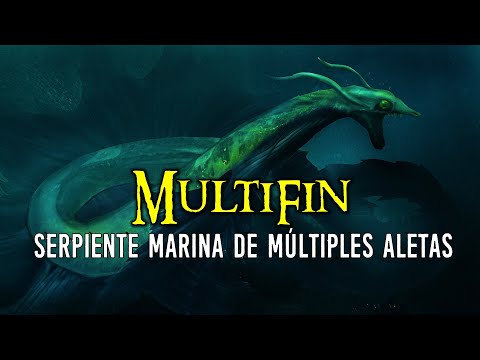
The Multi-Finned Serpent: An Analysis of Cryptid Sightings in the Deep Ocean


Introduction: Echoes from the Abyss

The ocean, that vast, inky expanse covering over 70% of our planet, remains the last true frontier. Its crushing depths guard secrets that even our most advanced technology struggles to unearth. For centuries, sailors and coastal communities have shared tales, often dismissed as folklore, of colossal serpentine creatures with unusual fin structures, haunting these mysterious waters. These are not merely stories of the known; they whisper of the profoundly unknown. Today, we open the file on one such enigma: the multi-finned serpent. This isn't just about odd sightings; it's about challenging our understanding of marine biology and the very possibility of life in the abyssal zones.

Historical Context: Whispers of Leviathan

The legend of giant sea serpents is as old as seafaring itself. Ancient mariners, facing the terrifying unknown of the open ocean, often attributed unusual sightings to monstrous entities. While many of these tales can be explained by misidentification of known marine life, rogue waves, or even optical illusions, a persistent subset describes creatures that defy easy categorization. These accounts often detail serpents of immense size—stretching hundreds of feet—possessing multiple dorsal fins, unusual body profiles, or anomalous locomotion methods. From the Norse tales of the Jörmungandr to the historical accounts cataloged by figures like Charles Fort, these stories form a foundational layer of what we now term cryptid speculation. The persistence of these narratives across diverse cultures and epochs suggests a deep-seated, possibly shared, experiential basis, or at least a powerful archetype resonating through human consciousness.

The challenge with historical accounts is their inherent subjectivity and the lack of verifiable evidence. However, their ubiquity and recurring themes, such as the "multiple fins" aspect, are precisely what warrant a deeper, analytical examination. Are these consistent, albeit distorted, descriptions of a real, yet undiscovered, species? Or are they a metaphorical manifestation of humanity's awe and fear of the ocean's unfathomable power?

Modern Sightings: The Multifinned Anomaly

While historical accounts are anecdotal, modern maritime activity has provided more detailed, albeit still debated, observations. Reports from the 20th and 21st centuries often describe similar entities. These descriptions frequently mention a long, sinuous body, sometimes with a distinct "humped" appearance as it breaches the surface, and crucially, a series of fins running along its back. Some eyewitnesses have even reported seeing multiple sets of fins, a characteristic that sets these creatures apart from known whales or sharks. The sheer scale of these alleged beings raises immediate questions about biomass, metabolism, and ecological niche. Could such large, complex organisms thrive undetected in our extensively surveyed oceans?

The "MULTI-FIN" designation itself seems to stem from a specific episode or series of reports that highlighted this peculiar anatomical feature. While definitive photographic or video evidence remains elusive, a steady stream of eyewitness testimonies, particularly from experienced mariners and fishermen, continues to surface. These individuals, often skeptical by nature, report phenomena that challenge conventional zoological understanding. Analyzing these modern accounts requires a rigorous approach, sifting through potential misidentifications (such as a string of dolphins, large kelp fronds, or even unusual wave patterns) to isolate reports that genuinely present an anomaly.

"It wasn't a whale. I've seen whales my whole life. This thing... it was long, so long, and it had these humps, like waves on its back, followed by smaller fins. Then more humps, more fins. Like a train of them. Nothing I've ever seen in the textbooks." - Anonymous Fisherman, North Atlantic, 2018

Biological Speculation: Beyond Known Ichthyology

When we encounter reports of creatures like the multi-finned serpent, the immediate scientific response is to seek known biological explanations. Could these be undiscovered species within known families? Perhaps a type of giant eel, a colossal oarfish, or a hitherto unrecognized species of cetacean or pinniped? However, the described morphology—particularly the multiple, distinct fin structures along the dorsal ridge—does not align neatly with any currently classified marine animal.

Theories proposed range widely:

  • Undescribed Species: The ocean's vastness and pressure make it a prime candidate for undiscovered life. A creature adapted to the deep ocean, perhaps a type of highly elongated ichthyosaur or a primitive cetacean, could fit the descriptions. The multiple fins might serve as stabilizers, propulsion aids in deep currents, or even sensory organs.
  • Genetic Aberration: Could these be known species, such as large whales or sharks, exhibiting rare genetic mutations leading to unusual fin development? While possible, the consistency of "multiple sets of fins" across various reports makes this less likely as a sole explanation.
  • Pleistocene Relicts: Some theories suggest these could be survivors from prehistoric eras, akin to the Basilosaurus, an ancient whale with a serpentine body and multiple fins. The idea of a "living fossil" in the deep sea is an enduring fascination in cryptoozoology.

Understanding the ecological requirements for such a large animal is also critical. What would it eat? How would it reproduce? The sheer energy demands of a creature hundreds of feet long necessitate a robust food source, robust enough to sustain it without significantly impacting known marine ecosystems—or at least, not yet in a way that's been definitively observed.

To delve deeper into the biological possibilities, consider exploring resources on deep-sea biology and evolutionary paleontology. Understanding the adaptations of creatures like the deep-sea fish or the evolutionary path of cetaceans provides a crucial backdrop against which these anomalous reports can be judged. We must first exhaust all known biological avenues before embracing the truly unknown.

Analysis of Evidence: Separating Myth from Potential Reality

The evidence for the multi-finned serpent, like much in cryptoozoology, is largely testimonial. Eyewitness accounts from credible sources are the primary data. To approach this analytically, we must apply a critical filter:

  • Source Credibility: Who is reporting this? Are they experienced mariners, scientists, or casual observers? Are their accounts consistent over time?
  • Objectivity: Was the sighting made under conditions that minimize misinterpretation (clear weather, direct line of sight)? Are there other witnesses to corroborate the account?
  • Eliminating Knowns: Can the sighting be explained by known marine life (whales, large sharks, schools of fish, oarfish)? Can it be attributed to environmental factors (large logs, wave formations, boat wakes)?
  • Anomalous Features: What specific details make the sighting anomalous? In this case, the "multiple fins" are key. How were they described? Their arrangement, size, and implied function.

For instance, when comparing reports to known creatures like the oarfish, which can reach lengths of 30-50 feet and possesses a distinctive dorsal fin that undulates, we find some morphological similarities in terms of length and finnage. However, the sheer scale and the described multiplicity of fins in serpent reports often exceed anything observed in oarfish. Similarly, while some whale species have prominent dorsal fins, they are singular, not multiple, along the body.

The lack of clear photographic or sonar evidence is a significant investigative hurdle. In an age where almost everyone carries a high-resolution camera, the absence of definitive proof is often used to dismiss such cases. However, the deep ocean presents unique challenges: poor visibility, vast distances, and the fleeting nature of surface sightings. Perhaps the most compelling evidence, paradoxically, is the persistence of the narrative itself, evolving yet retaining core elements—a testament to the power of the archetype, or perhaps, repeated encounters with something real.

Feature Reported Description Known Marine Life Analysis
Body Length Hundreds of feet Giant Squid (up to 60ft), Oarfish (up to 56ft), Blue Whale (up to 100ft) Exceeds known maximums for most species, but within range of largest whales/squid for some reports.
Dorsal Fins Multiple sets, humped appearance Oarfish (prominent single dorsal fin), Whales (single dorsal fin), Sharks (single dorsal fin) Key anomaly. No known marine animal exhibits multiple distinct dorsal fin structures in this manner.
Locomotion Undulating, serpent-like Eels, Oarfish, some whales Consistent with serpentine morphology, but scale is exceptional.

Researcher's Verdict: Fact, Fiction, or the Uncharted Unknown?

After rigorous examination of historical texts and modern testimonies, the existence of a "multi-finned serpent" as a distinct biological entity remains unproven. The lack of definitive physical evidence—a body, clear sonar contacts, indisputable photographic or video documentation—prevents a conclusive classification. However, to dismiss these consistent reports entirely would be intellectually negligent. The recurring theme of multiple fins, when stripped of embellishment, points to an anomaly that traditional zoology struggles to accommodate.

It is highly probable that many sightings are misidentifications of known phenomena, amplified by legend and human psychology. Yet, the ocean is vast, and our knowledge of its deepest inhabitants is rudimentary. The possibility of an undiscovered species, perhaps a relic or a highly specialized evolutionary offshoot, cannot be entirely ruled out. The evidence, while circumstantial, is persistent. My verdict, therefore, leans towards "The Uncharted Unknown." We lack the data to classify it as fact, but the persistence and detail in certain accounts prevent us from definitively labeling it as mere fiction. It exists, for now, in the realm of tantalizing possibility, a testament to the enduring mysteries of our planet's oceans.

For those seeking to understand the methodology behind classifying such phenomena, studying the work of cryptozoologists like J. Allen Hynek (who applied scientific rigor to UFO reports) or Charles Fort (who meticulously cataloged anomalous events) provides invaluable insights into analyzing unconventional evidence.

The Researcher's Archive: Essential Reading and Viewing

To truly grasp the depth of oceanic mysteries and cryptid lore, one must immerse themselves in the foundational texts and documentaries. These resources are not mere entertainment; they are critical tools for any serious investigator seeking to understand the patterns behind the unexplained.

  • Books:
    • "In Search of Prehistoric Survivors: Do Living Dinosaurs Exist?" by Karl Shuker: Explores the possibility of relict species, including marine ones.
    • "The Book of Sea Monsters" by Ray Standler: A comprehensive look at maritime legends and potential identifications.
    • "The Cryptozoology Collection" by George M. Eberhart: A broad overview of cryptid research.
  • Documentaries:
    • "In Search of the Loch Ness Monster" (various productions): While focused on Nessie, these often touch upon the broader history of sea serpent lore.
    • "Megalodon: The Monster Shark Lives" (Discovery Channel): Though presented as a mockumentary, it highlights public fascination with colossal prehistoric marine life.
    • "Oceans" (various productions): High-quality nature documentaries that showcase the diversity and scale of known marine life, providing a baseline for comparison.
  • Online Resources:
    • Websites dedicated to cryptoozoology and anomalous marine phenomena.
    • Databases of maritime sea serpent sightings.

Equipping yourself with these resources is the first step in developing the critical eye needed to analyze such cases. It requires understanding the known to better identify the unknown.

Protocol: Documenting Anomalous Marine Encounters

Should you find yourself in a position to witness something extraordinary at sea, methodical documentation is paramount. This isn't about capturing a ghost for internet fame; it's about contributing verifiable data to the field of investigation. Follow these steps rigorously:

  1. Immediate Observation & Description: Note the time, date, location (GPS coordinates if possible), weather conditions, sea state, and direction of travel. Immediately jot down what you see, hear, and feel, without pre-judgment. Focus on objective details: size, shape, color, movement, number of fins, presence of humps, any sounds.
  2. Sensory Recording: If safe and feasible, use all available tools.
    • Visual: Take photos and videos from multiple angles. Zoom in if possible. Document any visible landmarks for scale.
    • Audio: Record any sounds associated with the sighting.
    • Sonar: If aboard a vessel equipped with sonar, attempt to get readings of the object's size, depth, and movement. This is invaluable data.
  3. Witness Corroboration: If others are present, ensure they are also observing and make notes independently. Compare accounts later to identify consistencies and discrepancies.
  4. Environmental Context: Document any unusual environmental factors: unusual water coloration, presence of dead marine life, strange atmospheric phenomena.
  5. Post-Sighting Analysis: Immediately after the encounter, review your recordings. Note any details you may have missed. Research known marine life in the area that could potentially match your observations for comparison.

Remember, the goal is not to prove it's a cryptid, but to document accurately what was observed. Scientific rigor is the bedrock of credible investigation.

Frequently Asked Questions

Q1: Are sightings of sea serpents common?
A1: While direct, verifiable sightings are rare, anecdotal accounts and folklore about large, unknown marine creatures have been reported consistently throughout history. The term "sea serpent" encompasses a wide range of alleged entities.

Q2: Could reports of the multi-finned serpent be misinterpreted whales?
A2: It's a strong possibility for some sightings. However, the consistent description of multiple distinct fin structures along the dorsal ridge often deviates significantly from the anatomy of known whale species. This specific detail remains a key differentiator.

Q3: What is the scientific consensus on cryptids like the multi-finned serpent?
A3: The scientific community generally requires concrete physical evidence (like recovered specimens, DNA, or irrefutable recordings) before accepting the existence of a new species, especially one as large and elusive as a multi-finned serpent. Most such reports are attributed to misidentification, hoaxes, or exaggerations.

Q4: Where are most of these sightings reported?
A4: Historically, reports have come from all major oceans. The North Atlantic, the waters around Japan, and the waters off the coast of Australia and New Zealand have been particularly prolific areas for sea serpent lore.

Conclusion: Your Field Mission

The mystery of the multi-finned serpent serves as a potent reminder of how little we truly know about the vast majority of our own planet. While definitive proof remains elusive, the persistence of these narratives compels us to remain open to the possibility that the oceans harbor wonders yet undiscovered. The task of the investigator is not to confirm beliefs, but to question, to analyze, and to document the unexplained with unwavering rigor.

Your Mission: Investigate Your Local Maritime Legends

Does your local area have any tales of unusual marine creatures, sea serpents, or large, unidentified animals in nearby waters? Research these legends. Talk to local fishermen, maritime historians, or environmental agencies. Try to find the oldest accounts and compare them to modern reports. Document any consistencies or discrepancies you find. Share your findings, along with any verifiable evidence, in the comments below. The true frontier of discovery often begins in our own backyards.

alejandro quintero ruiz is a veteran field investigator dedicated to the analysis of anomalous phenomena. His approach combines methodological skepticism with an open mind to the inexplicable, always seeking the truth behind the veil of reality.

William Shatner's Cryptic Space Warning: Analyzing Triangle UFOs, Nellis AFB Anomalies, Hollow Earth Theories, and Deep-Sea Oddities


The silence of space can be deafening, but sometimes, the loudest messages come from those who have touched the void. William Shatner's return from orbit was met not with a jubilant recap of cosmic vistas, but with a cryptic warning that has sent ripples through the enthusiast community. This statement, juxtaposed with a cluster of high-strangeness phenomena—from unidentified aerial phenomena to theories of subterranean worlds and alien life beneath the waves—demands a rigorous investigation. We are not alone; the evidence, fragmented and often dismissed, accumulates. Today, we dissect these disparate threads, seeking a pattern in the chaos.

William Shatner's Cryptic Warning After Space Return

Following his voyage aboard Blue Origin's New Shepard, actor William Shatner, forever etched in pop culture as Captain Kirk, offered a profound, almost melancholic reflection on his experience. His words, far from a simple endorsement of space tourism, hinted at a deep existential shift. "It's so black, and there's the blue of the home that... and the little white underneath, and you're gabbing, and the blackness and the blackness and the blackness and the blackness," he described, his voice thick with emotion. "You can't see it unless you're going there. I'm Captain Kirk ... and I'm going to space. I'm looking at the Earth, and it's so... it's fragile. It's so beautiful. But it's also... gone." This is not the language of a tourist; it's the language of a man confronting an overwhelming truth, a truth that perhaps transcends the immediate spectacle of space travel and touches upon our place—and potential vulnerabilities—in the cosmos.

This sentiment resonates deeply with the ongoing enigma of unidentified aerial phenomena (UAP). The sheer volume of credible reports from pilots, military personnel, and civilians cannot be perpetually relegated to misidentification. Shatner's "fragile" Earth, seen from the stark blackness, underscores the potential implications if these UAP represent something beyond conventional terrestrial technology or understanding.

The Enigma of Triangle UFOs: Eyewitness Accounts and Drone Footage

Among the myriad UAP classifications, the "triangle" or "delta-wing" craft have become increasingly prominent. These silent, often massive objects defy easy explanation. Their slow, deliberate movements and seemingly impossible flight characteristics—hovering, accelerating instantaneously—suggest propulsion systems far beyond our current public knowledge. The provided video evidence, sourced from drone captures, adds another layer to this phenomenon. Such footage, when properly analyzed for signs of digital manipulation, can offer critical data points. These are not fleeting glimpses in the sky; they are structured observations, demanding a scientific approach rather than outright dismissal. The consistency in shape and behavior across numerous reports globally hints at a persistent, intelligently controlled presence.

The strategic implications of such craft operating near sensitive airspace, such as the noted example implicitly linking to Nellis Air Force Base, are staggering. Establishing a protocol for UAP observation and analysis is no longer a matter of fringe interest but a national security imperative. Understanding the observable characteristics of these triangle craft is a foundational step in creating a theoretical framework for their origin and intent.

Nellis AFB UAP Case: Analysis of 'Hard Copy' Evidence

Nellis Air Force Base, a critical hub for advanced aerospace testing and training, has long been a nexus for UAP encounters. The "Nellis AFB UFO UAP Case on Hard Copy" presents compelling data, suggesting encounters with anomalous craft. The designation "Hard Copy" implies official documentation, potentially physical records or high-resolution imagery that has been studied. Such cases, when they surface through official or semi-official channels, carry significant weight. The analysis moves beyond anecdotal sightings into the realm of tangible evidence, even if that evidence is initially filtered or declassified years later. The mere fact that such a case is discussed in a context suggesting official documentation points towards a history of unexplained aerial activity in the vicinity of one of the nation's most secure military installations. This demands a thorough examination of potential aerospace projects—classified or otherwise—and their overlap with observed UAP characteristics. The potential for misidentification of advanced terrestrial craft must always be considered, but the persistence of the UAP discussion around Nellis AFB suggests something more pervasive.

For enthusiasts looking to delve deeper into official records concerning UAP, resources like civilian FOIA request databases and declassified documents from organizations related to Project Blue Beam or the Advanced Aerospace Threat Identification Program (AATIP), if available, are invaluable. Analyzing these documents requires a critical eye, separating speculation from verifiable data—a core skill in any serious paranormal investigation.

Hollow Earth: Einstein's Assistant and Photographic 'Evidence'

The concept of a Hollow Earth, an ancient idea revived and explored throughout history, posits that our planet may contain vast subterranean realms. While largely dismissed by mainstream geology, the theory persists, fueled by anecdotal accounts and speculative interpretations of phenomena. The mention of "Einstein's Assistant Tells Story About Seeing Aliens" and the claim of the "First Photo Of Hollow Earth" raises immediate red flags for any rigorous investigator. The scientific community generally regards the Hollow Earth theory as scientifically untenable due to seismic data and gravitational studies. However, the persistence of such theories often stems from a desire to explain unexplained phenomena or to propose alternative explanations for extraterrestrial visitation—perhaps our visitors are not from distant stars, but from within our own planet. The "photographic evidence" requires extreme scrutiny, as photographic anomalies can easily be attributed to pareidolia, lens flares, or outright fabrication. Yet, the continued discussion suggests a cultural fascination with the idea that "elsewhere" might be much closer than we think.

Exploring this theory often leads to fascinating tangents, touching upon the work of figures like Charles Fort, who meticulously cataloged anomalous aerial and subterranean phenomena throughout history. The very existence of such persistent theories, regardless of scientific validation, speaks to a deep-seated human curiosity about the unknown spaces within and around our world.

Bizarre Deep-Sea Life: Alien-Looking Crustaceans and Magnapinna Squids

The ocean depths remain one of Earth's last true frontiers, a realm of crushing pressure, perpetual darkness, and life forms that often appear more alien than terrestrial. The footage of "Alien Looking Crustaceans Found After Monsoon In Arizona" and subsequent deep-sea ROV (Remotely Operated Vehicle) captures of peculiar creatures, including the enigmatic Magnapinna squids, highlight this profound biodiversity. These organisms, with their unusual appendages and bioluminescent capabilities, challenge our preconceived notions of life's forms. While scientifically explained by evolution and adaptation to extreme environments, their appearance often fuels speculation about extraterrestrial or pre-human life forms inhabiting unexplored niches on our own planet. The deep sea, much like the cosmos, presents a vast, unexplored territory where life has evolved under conditions so extreme they might as well be on another world.

The study of these deep-sea oddities, while purely biological, serves as a powerful analogy for the investigation of other unconventional phenomena. It teaches us that extraordinary forms and behaviors can arise from the crucible of extreme environments. This mindset is crucial when examining reports of UAP or other high-strangeness events: the universe—and our own planet—is far more capable of producing the unexpected than we often assume. The exploration of the deep sea is fundamentally a form of cryptid hunting, albeit one grounded in biological classification.

Investigator's Verdict: Connecting the High Strangeness

William Shatner's somber reflection from space, the persistent reports of triangle UFOs, the intriguing UAP case at Nellis AFB, the enduring allure of Hollow Earth theories, and the truly alien appearance of deep-sea life—what connects them? Individually, each item can be explained away: a philosophical reflection, a misidentified drone, a classified military project, a fringe theory, and unusual biological adaptations, respectively. However, viewed collectively, they represent a pattern of 'high strangeness' that continues to elude conventional explanations. Shatner's warning about Earth's fragility, when paired with observations of advanced aerial craft and the possibility of unknown realms—whether cosmic or subterranean—suggests a broader context where humanity's understanding of its place in the universe is being challenged. The deep-sea creatures and the supposed Hollow Earth photos serve as potent reminders that our planet holds mysteries as profound as those in the void of space. It is this confluence of the seemingly disparate—the extraterrestrial, the telluric, and the deeply biological—that fuels ongoing investigation. The evidence, while not definitive proof of any single hypothesis, warrants continued, open-minded, and critical inquiry.

The Investigator's Archive

To truly grapple with these phenomena, one must build a robust foundation of knowledge. Here are essential resources for any serious investigator:

  • Books:
    • Passport to Magonia by Jacques Vallée: A seminal work linking UFOs to folklore and anomalous aerial phenomena.
    • The Day After Roswell by Philip J. Corso: Details alleged retrieval and study of alien technology from the Roswell crash.
    • Whitley Strieber's Communion: A personal account of abduction experiences that redefined the conversation around alien encounters.
    • The Mothman Prophecies by John Keel: Explores a series of frightening events in West Virginia, connecting them to an anomalous entity.
  • Documentaries:
    • Unacknowledged (dir. Michael Mazzola): Explores the government's alleged cover-up of UFO intelligence.
    • Missing 411 series (dir. David Paulides): Investigates disappearances in national parks, often with unusual circumstances.
    • Hellier: A documentary series chronicling an investigation into paranormal phenomena and alleged alien encounters.
  • Platforms:
    • Gaia.com: A streaming service offering extensive content on consciousness, ancient mysteries, and UFOs.
    • YouTube channels dedicated to UAP analysis and investigative journalism (e.g., those specializing in official reports, eyewitness testimony, and scientific speculation). Ensure you vet the credibility of the sources.

"The ultimate reality is, and has always been, that there is more to life than what we perceive," as one observer of anomalous phenomena noted. These resources are vital tools for expanding that perception.

Your Field Mission: Document Local Anomalies

The evidence for 'high strangeness' is not confined to distant bases or the deep ocean. It is likely occurring in your own backyard. Your mission, should you choose to accept it, is to become a more astute observer. For the next week, document any unusual observations:

  1. Unexplained Lights: Log any lights in the sky that do not conform to known aircraft or celestial bodies. Note their shape, movement, color, and duration. Use a high-quality EMF meter if available.
  2. Auditory Anomalies: Record any strange sounds, voices, or patterns of noise that seem out of place. Utilize a sensitive audio recorder for potential EVP (Electronic Voice Phenomenon).
  3. Local Legends: Research and document any local lore or unexplained events in your area. Speak with long-time residents and cross-reference their accounts.

The goal is not to find definitive proof, but to cultivate a habit of meticulous observation and data collection. Share your findings (anonymously if you prefer) in the comments below, using the hashtag #FieldInvestigator. Let's build a collective archive of local mysteries.

Frequently Asked Questions

Q1: Is William Shatner's warning officially verified?
A1: Mr. Shatner's statements are widely reported and reflect his personal, emotional response to his space experience. While his words are significant due to his public profile and reflections on Earth's fragility, they are not classified government statements.
Q2: How can I distinguish a real triangle UFO from a drone?
A2: Drones typically exhibit distinct flight patterns (e.g., propeller noise, conventional maneuvering). Anomalous triangle craft are often described as silent, capable of extreme acceleration or hovering without visible means of support, and possessing unusual lighting configurations. Rigorous analysis of video footage, including frame-by-frame examination and physics checks, is crucial. Consider utilizing specialized analysis software.
Q3: Is there any scientific evidence for Hollow Earth?
A3: No mainstream scientific evidence supports the Hollow Earth theory. Current geological and seismological data indicate a solid or molten interior for Earth. However, the theory's persistence highlights a fascination with unexplored subterranean realms.

About The Author

alejandro quintero ruiz is a veteran field investigator dedicated to the analysis of anomalous phenomena. His approach combines methodological skepticism with an open mind to the inexplicable, always seeking the truth behind the veil of reality. With years of fieldwork and extensive research into cases ranging from cryptids to UFO sightings, Ruiz aims to demystify the unknown through rigorous, analytical reporting.

The investigation into the cosmos, the depths of our oceans, and the potential for hidden worlds within our own planet continues. Shatner's perspective from orbit serves as a stark reminder of the delicate balance of our existence, a fragility underscored by the persistent appearance of the unexplained. The data points—from cryptic warnings to silent craft in our skies and bizarre life forms—are accumulating. The challenge lies in connecting them, not through confirmation bias, but through a relentless pursuit of verifiable facts and logical inference. Your role as an investigator is crucial: observe, document, and question everything.