Followers

Mostrando las entradas con la etiqueta Mysterious Artifacts. Mostrar todas las entradas

10 Mysterious Artifacts Discovered That Terrified Scientists

Miniatura del video: 10 Mysterious Artifacts Discovered That Terrified Scientists

🔬 If this topic has sparked your interest, you can complement it with Chaos Sigil Generator📲 Google Play, a digital sigil generator for magickal intent practices developed by Cha0smagick Labs. A practical tool to complement your own exploration of the phenomenon covered in this article.

📖 12 min de lectura

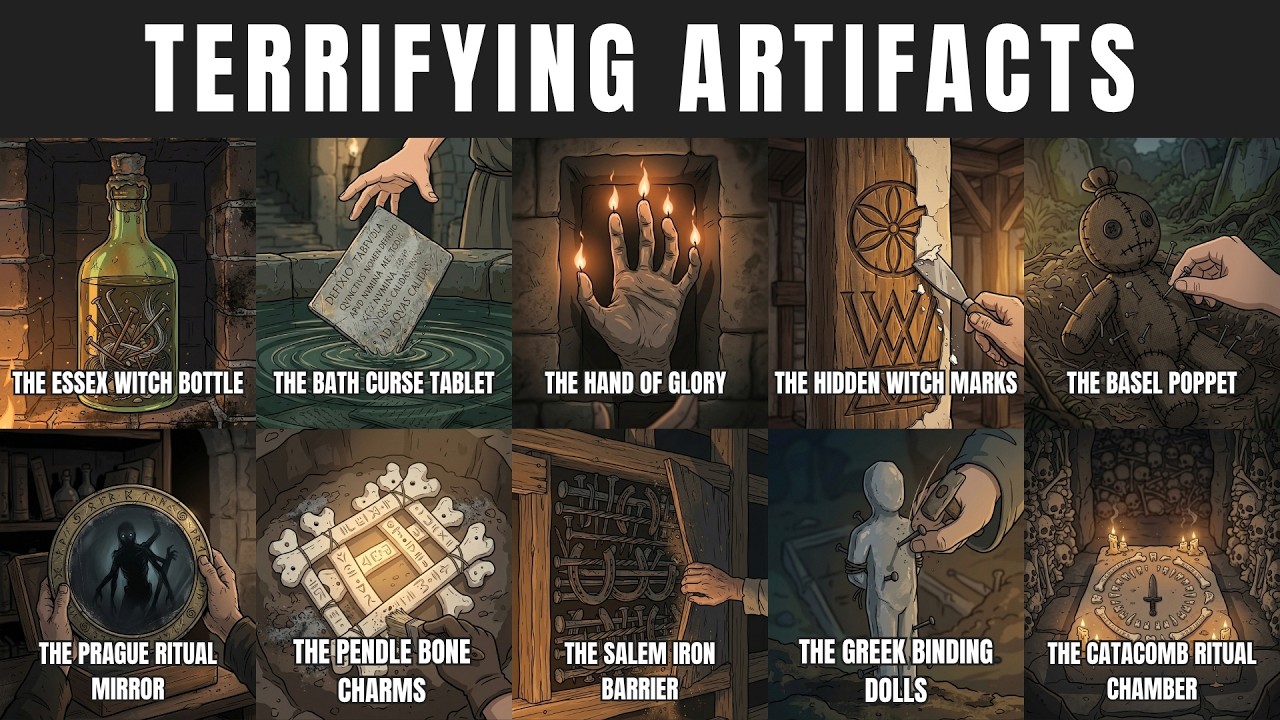
The Essex Witch Bottle, discovered in 2004, was sealed and hidden within a 17th-century hearth. This isn't just folklore; these are real objects found by excavators, builders, and inspectors, objects that defy easy explanation and continue to unsettle researchers today. Some artifacts contain biological material and were deliberately hidden, suggesting they were never meant to be found again.

⬡ Expediente de Investigación Confidencial
Nº DE EXPEDIENTE EXP-GEN-2026-143
INVESTIGADOR Alejandro Quintero Ruiz
CONTACTO rinconparanormal@gmail.com
AFILIACIÓN Cha0smagick Labs División de Investigación Paranormal
CLASIFICACIÓN Artifact
ESTADO En Investigación
FECHA DE APERTURA 2026-07-18
TOOL 🔧 Chaos Sigil Generator | Google Play — digital sigil generator for magickal intent practices
RELACIONADOS 📂 Archivo de Artifact | 🔬 Laboratorio Central

The Essex Witch Bottle: A 17th-Century Enigma

In 2004, a routine restoration at a 17th-century cottage in Great Dunmow, Essex, unearthed a peculiar find. Behind a layer of soot and mortar, within the brick foundation of an old hearth, lay a small glass bottle. It was sealed with a corroded iron stopper and hardened resin, deliberately concealed at the very heart of the home. This wasn't merely a forgotten trinket; its placement and sealing suggest a purpose rooted in deep-seated beliefs.

The Bath Curse Tablet: Whispers from Roman Britain

Discovered in Bath, England, this Roman curse tablet, dating back to the 2nd or 3rd century AD, offers a chilling glimpse into ancient grievances. Typically made of lead or pewter, these thin sheets were inscribed with curses directed at individuals who had committed theft, often of personal items like jewelry or clothing. The tablet would then be rolled or folded and placed in wells or springs, symbolically sending the curse to the underworld deity, this practice highlights a desperate desire for justice when conventional means failed.

The Hand of Glory: A Macabre Tool

The Hand of Glory, a mummified human hand, often from a hanged criminal, was a legendary artifact in European folklore. Believed to be a powerful magical tool, it was supposedly used to incapacitate or paralyze anyone who smelled its unique, often described as sweet, scent. Its use was primarily associated with burglary, rendering homeowners and guards unable to wake or resist. The very existence of such beliefs speaks volumes about the fears that permeated society.

Hidden Witch Marks: Protective Symbols or Warnings?

Found scratched into the walls, beams, and foundations of ancient buildings across Europe and North America, witch marks are a recurring motif of unease. These symbols, often intricate and repetitive, were believed to ward off evil spirits, witches, or malevolent forces. Their presence, particularly in hidden nooks and crannies, suggests a pervasive fear of unseen dangers. The repetition, as noted by some researchers, could be an attempt to create a powerful, layered defense.

The Basel Poppet: A Medieval Effigy of Fear

Discovered during renovations in Basel, Switzerland, this medieval poppet, or doll, was found sewn into the fabric of a building. Such effigies were commonly used in sympathetic magic, where actions performed on the doll were believed to affect the intended person. The inclusion of hair and nail clippings was a common practice to strengthen the connection. Its concealment suggests it was part of a ritual, possibly for protection or to inflict harm.

The Prague Ritual Mirror: Gateway to the Unseen?

Legends surrounding the Prague Ritual Mirror speak of a dark, obsidian-like surface capable of revealing more than just reflections. It was allegedly used by alchemists and occultists to scry, or gaze into, the spiritual realm, potentially communicating with demons or other entities. The idea that a mirror could serve as a portal is a recurring theme in occult lore, making this artifact particularly unsettling for those who believe in its capabilities.

The Pendle Bone Charms: Echoes of the Pendle Witches

The infamous Pendle witch trials of 1612 in Lancashire, England, cast a long shadow. Among the artifacts associated with the region are bone charms, small objects often made from animal bones, sometimes inscribed with symbols or containing personal items. These were likely used in folk magic or witchcraft practices for protection, divination, or curses. Their discovery evokes the intense fear and suspicion that led to the persecution of alleged witches.

The Salem Iron Barrier: Protection Against the Fae?

While the Salem witch trials of 1692 are infamous, less discussed are the protective measures people took against perceived threats, both human and supernatural. Iron has long been associated with warding off spirits and the Fae (fairies or supernatural beings). The placement of iron, perhaps as barriers or charms, around homes or entrances in the Salem area could indicate a dual fear: of witchcraft and of older, more primal entities.

The Greek Binding Dolls: Ancient Curses Unearthed

Archaeological digs in Greece have uncovered numerous binding dolls, often small figurines made from clay or cloth, sometimes containing hair or personal effects. These were used in ancient curse rituals (defixiones) to bind an enemy, prevent them from acting, or inflict harm. Rolled up and often placed in tombs or underwater, they represent a potent and often disturbing aspect of ancient belief systems, where magical retribution was a tangible pursuit.

The Catacomb Ritual Chamber: A Glimpse into Forbidden Practices

Beneath the bustling streets of ancient cities like Rome lie catacombs, vast underground burial sites. Within these labyrinthine passages, secret chambers have sometimes been discovered, containing artifacts that suggest forbidden rituals or secret societies once operated there. These might include altars, strange carvings, or objects that hint at practices deemed too dangerous or heretical for the surface world. The deliberate concealment within these already hidden spaces amplifies their unsettling nature.

The Investigator's Hypothesis: Patterns in the Hidden

Having sifted through countless case files, from dusty archives to chilling field reports, I've noticed a disturbing pattern: the deliberate concealment of objects. These aren't random acts of forgetfulness. The witch bottles, curse tablets, poppets, and hidden marks are consistently placed in structural foundations, hearths, walls, and burial sites. This meticulous hiding suggests not just superstition, but organized systems of belief and practice operating in the shadows, often in direct opposition to dominant religious or social norms.

My hypothesis is that these artifacts represent a form of 'underground' spiritual technology. They were tools designed to manipulate unseen forces, whether for protection, retribution, or communication. The inclusion of personal biological material, the specific placement, and the often disturbing nature of the objects themselves point to a sophisticated, albeit terrifying, understanding of sympathetic magic and spiritual warfare. These weren't just expressions of fear; they were active attempts to control reality through hidden means.

The Uncomfortable Truth: Fear and Control

The uncomfortable truth is that these artifacts reveal a deep-seated human need to control the uncontrollable. Whether facing illness, misfortune, or perceived supernatural threats, our ancestors sought tangible means to exert influence. The fear of witchcraft, curses, and malevolent spirits was so profound that it led to the creation and concealment of objects designed to combat these forces. These discoveries challenge our modern, rational worldview, reminding us of the potent role fear and belief have played throughout history.

Unexpected Connections: Iron, Mirrors, and the Fae

It's fascinating how certain elements recur across these disparate artifacts and beliefs. The use of iron, as seen in the Salem barrier and the witch bottle stopper, is a common thread in folklore for repelling supernatural entities, including not just witches but also the Fae. Similarly, mirrors, like the Prague Ritual Mirror, appear in various cultures as tools for divination or as barriers against spirits, reflecting their own image to distract or repel them. This suggests a shared, perhaps instinctual, understanding of certain materials and objects as having protective or dangerous properties.

What Lies Ahead: The Unseen Influence

The continued discovery of such artifacts raises profound questions about the nature of belief, ritual, and the potential influence of forces beyond our current scientific understanding. Are these simply relics of a superstitious past, or do they hint at a deeper, perhaps forgotten, interaction with energies or entities that still affect us today? The careful study of these objects, beyond mere historical classification, may unlock secrets about human psychology, ancient technology, and the persistent presence of the uncanny.

Key Artifacts and Their Potential Purpose
Essex Witch Bottle: Counter-magic, trapping curses or spirits.
Bath Curse Tablet: Imprecation against thieves, sent to underworld deities.
Hand of Glory: Magical tool for incapacitation, primarily for burglary.
Witch Marks: Protective symbols scratched into buildings to ward off evil.
Basel Poppet: Effigy used in sympathetic magic, for protection or harm.
Prague Ritual Mirror: Scrying tool for divination and communication with spirits.
Pendle Bone Charms: Folk magic items for protection, divination, or curses.
Salem Iron Barrier: Protection against witchcraft and possibly Fae.
Greek Binding Dolls: Used in curse rituals to immobilize or harm enemies.
  1. Concealment Strategy: Artifacts are rarely found in plain sight. Their deliberate hiding in foundations, walls, or tombs indicates a desire to keep their power contained or hidden from unwanted eyes.
  2. Personal Connection: The inclusion of biological materials like hair or nail clippings suggests that these rituals were highly personal, aiming to create a direct link between the object and its intended target or practitioner.
  3. Material Significance: Certain materials, like iron or reflective surfaces (mirrors), were consistently employed for their perceived protective or communicative properties across different cultures and time periods.
  4. Repetitive Motifs: The repetition of symbols, such as witch marks, implies a belief in the amplification of power through recurrence, a common principle in many magical traditions.
  5. Dual Purpose: Many artifacts seem to serve a dual purpose – protection against external threats (witches, demons) and offensive capabilities (curses, binding).

Frequently Asked Questions

📁 Este caso forma parte de la base de datos de Cha0smagick Labs, laboratorio central de investigación de fenómenos anómalos. Para consultar investigaciones relacionadas, visite nuestro archivo de Artifact. Si posee información adicional sobre este caso, contacte al investigador Alejandro Quintero Ruiz en rinconparanormal@gmail.com.

P: What are some of the most terrifying artifacts ever discovered?

R: The Essex Witch Bottle, Bath Curse Tablet, Hand of Glory, Basel Poppet, and Greek Binding Dolls are among the most unsettling artifacts discovered, often found deliberately hidden and containing disturbing elements.

P: Why were these artifacts hidden?

R: Many artifacts were hidden out of fear, particularly due to the persecution of witchcraft. Possessing such items could lead to severe punishment or death, especially in Christian societies where they were often deemed heretical.

P: What is the purpose of a witch bottle?

R: A witch bottle, like the Essex example, was typically a form of counter-magic. It was believed to trap or repel malevolent spirits or curses directed at the home or its inhabitants, often containing personal items like hair or urine.

P: What are 'witch marks' found in buildings?

R: Witch marks, or apotropaic marks, are symbols scratched into building materials like walls or beams to ward off evil spirits, witches, or bad luck. Their repetition suggests a deep-seated fear and desire for protection.

P: What made the Prague Ritual Mirror so disturbing?

R: The Prague Ritual Mirror is unsettling due to its alleged use in divination and spirit communication. Legends suggest it was designed to reflect not just the physical world, but also the demonic realm, acting as a conduit.

P: How do historians explain these discoveries?

R: Historians often categorize these finds as ritualistic objects or expressions of folklore. However, the consistent construction, deliberate concealment, and sometimes disturbing contents challenge simple explanations, hinting at organized, secret belief systems.

P: Could these artifacts be linked to extraterrestrial influence?

R: While not the primary historical interpretation, some researchers explore connections between ancient rituals and potential extraterrestrial knowledge or influence, especially when artifacts display advanced or inexplicable characteristics.

P: What is the significance of biological material in these artifacts?

R: The presence of biological material, such as hair or bone, often indicates a personal connection to the ritual or spell. It was believed to enhance the efficacy of the magic by providing a direct link to the intended target or practitioner.

Bibliography

Hutton, R. (2017). *The Witch: A History of Fear, from Ancient Times to the Present*. W. W. Norton & Company. ISBN: 978-0393355944.

Cohn, L. M. (2008). *The Witch Bottle: Folklore and the Materiality of Magic*. University of Pennsylvania Press. ISBN: 978-0812240778.

Daniels, C. (2005). *Magic in the Roman World: Papyrus and Tablet*. Cambridge University Press. ISBN: 978-0521847960.

Roberts, B. (2016). *The Witch of Pendle: The True Story*. Amberley Publishing. ISBN: 978-1445657098.

Parry, G. (2014). *The Shadowlands: Supernatural Encounters in Britain*. Little, Brown Book Group. ISBN: 978-1472110190.

Conclusion

Investigator's Reflection

We've delved into objects that were not merely found, but *hidden*. Artifacts that were sealed, buried, and marked with intent. These aren't just curiosities; they are tangible evidence of a world grappling with forces we still struggle to comprehend. The fear they instilled, the power they were believed to hold, and the secrecy surrounding them speak volumes.

Now, I ask you, the reader: Do these hidden artifacts represent the desperate attempts of our ancestors to control their fears, or are they echoes of a reality where such fears were, and perhaps still are, justified? What do you believe these objects truly signify?

The Enigmatic Footprints and Colossal Structures: Unraveling the Mystery of Ancient Giants


The persistent whisper of giants in human history is not merely a fable. It’s a narrative woven through the very fabric of our collective consciousness, resurrected by artifacts that defy conventional explanation. These are not the charming relics of a bygone era; they are testaments to a past so colossal, it reshapes our understanding of who we are and where we came from. Welcome to El Rincon Paranormal, where we peel back the layers of the unexplained. Today, we dissect the monumental evidence left behind by beings of immense stature – the ancient giants.

The Enigmatic Artifacts

The archaeological record is replete with enigmatic artifacts, each a potential key to unlocking forgotten chapters of human history. Yet, a select few transcend mere curiosity; they demand scrutiny due to their sheer scale and the baffling questions surrounding their creation. These artifacts, whether colossal footprints, cyclopean structures, or enigmatic depictions, are the primary conduits through which we investigate the hypothesis of ancient giants. Their existence challenges the established timelines and anthropocentric views of creation, suggesting a period where beings of immense proportion walked the Earth, leaving indelible marks on the landscape and the human psyche.

Before we dismiss these as mere geological anomalies or misinterpretations, consider the consistent patterns across disparate cultures and continents. The notion of giants is virtually universal, appearing in mythologies from Greece to the Americas, India to Scandinavia. When coupled with physical evidence that requires extraordinary engineering or geological processes, the conventional explanations begin to fray at the edges. This isn't about belief; it's about rigorous analysis of the available data, no matter how unsettling it may be to established paradigms. Our objective is to scrutinize these anomalies and determine if they are indeed remnants of a colossal race, or if there are more mundane, albeit still complex, explanations.

The Gigantic Footprints

Among the most compelling, and often debated, pieces of evidence are the colossal footprints discovered worldwide. These are not faint impressions easily dismissed as erosion patterns; they are deep, clearly defined imprints chiseled into bedrock, stone, or ancient sediment. The sheer scale is the first hurdle. Instances like the purported giant human footprints in Mpuluzi, South Africa, or the perplexing formations at Puma Punku in Bolivia, present a significant challenge to our understanding of paleontology and human evolution. These are not simply large; they suggest beings of immense weight and height.

The application of advanced technologies, such as LiDAR scanning, has begun to reveal the true extent and detail of these ancient imprints. LiDAR can penetrate dense vegetation and detect subtle variations in terrain, providing researchers with high-resolution topographic maps. This technology has been instrumental in mapping vast geological anomalies and has the potential to uncover more such formations that might have previously gone unnoticed. When these scans correlate with local legends of giants, the circumstantial evidence begins to coalesce into a narrative that is difficult to ignore. Are these natural geological phenomena that bear a striking resemblance to human footprints, or are they the genuine fossilized steps of a race that predates our own? The debate hinges on the specificity of the shape, the context of the geological strata, and the potential for natural simulacra versus deliberate or accidental fossilization of a colossal bipedal creature. The consistency of these findings across geographically isolated regions adds another layer of complexity, suggesting either a global phenomenon or a widespread tendency for natural geological processes to mimic such impressions with uncanny accuracy.

For any serious investigator, arming oneself with the right tools is paramount. While native geological interpretations are crucial, comparative analysis often benefits from detailed documentation. Access to high-resolution imagery, geological surveys, and reports on LiDAR scans is indispensable. Resources like the Paleoscatology databases, though focused on fossilized excrement, often touch upon the broader field of trace fossils, which includes footprints. Understanding the parameters of fossilization under immense pressure and time is key to evaluating the authenticity of these claims.

The Mysterious Megaliths

Beyond individual prints, we encounter the monumental megalithic structures that dot the globe, from the iconic standing stones of Stonehenge to the enigmatic Moai of Easter Island. These aren't crude piles of rocks; they are testaments to sophisticated engineering, colossal transportation capabilities, and a deep understanding of astronomy and construction. The sheer mass of these stones, often weighing many tons, and their precise placement, raise profound questions about the capabilities of the people who erected them. Conventional archaeological consensus often attributes these feats to large, organized human societies utilizing ingenious, albeit labor-intensive, methods. However, the scale and precision sometimes push the boundaries of these explanations.

Consider the precision of the carving, the transport of massive blocks over considerable distances, and the alignment with celestial events. These feats, while perhaps achievable by highly organized human labor over generations, also align with the idea that a workforce with a greater physical advantage could have accomplished them with relative ease or significantly less time. The debate often polarizes between advanced, lost human civilizations with unknown technologies, or the intervention of non-human entities, including the theorized ancient giants. The question is not solely about how they were moved, but the intent and the societal structure required for such undertakings. These megaliths serve as silent sentinels, challenging us to reconcile the archaeological evidence with the historical narratives we hold dear. Are they simply the product of human ingenuity, or do they stand as enduring monuments to a time when Earth was inhabited by beings of a vastly different, and larger, scale?

To delve deeper into the logistical and engineering challenges posed by megalithic construction, one might research books like Jacques Vallee's "Passport to Magonia", which explores anomalous aerial phenomena and their potential links to ancient myths and megalithic sites. While not solely focused on giants, Vallee’s work often posits that unexplained phenomena and historical anomalies require us to broaden our scope of inquiry beyond conventional explanations. Furthermore, detailed analyses of ancient engineering techniques can be found in academic journals focusing on archaeology and ancient history. Understanding the limitations and possibilities of ancient human technology is fundamental before considering more extraordinary hypotheses.

The Cryptic Cave Paintings

Venturing into the spectral realm of our past, we find the cryptic cave paintings that adorn subterranean chambers across the globe. These artistic renditions offer intimate glimpses into the worldview of ancestral cultures, and some deliberately feature towering figures alongside their diminutive human counterparts. Sites like the Lascaux caves in France and the Altamira caves in Spain are repositories of ancient human expression. Within these galleries of prehistory, depictions of figures that dwarf the human form are not uncommon. These are not mere stylistic exaggerations; in many cases, the scale is proportionally distinct, suggesting a deliberate differentiation.

These paintings provide invaluable insight, acting as visual ethnographies of a time when humans may have coexisted with, or at least held in awe, beings of immense stature. The intricate details, the style of depiction, and the context within which these giants are portrayed—often alongside hunts, ceremonies, or as divine entities—offer clues to their role in ancient societies. By meticulously studying these frescoes, researchers attempt to decode the relationship between early humans and these colossal beings. Were they revered deities? Dangerous adversaries? Or simply a part of the natural landscape, akin to other megafauna? The persistent presence of such depictions across disparate cultures suggests a shared experience or a deeply ingrained archetype that resonates with a profound, perhaps even biological, memory. Unlocking the secrets of these paintings is not just an archaeological endeavor; it is an attempt to touch the collective subconscious of our species and understand its most ancient narratives.

When analyzing cave art, consulting resources that provide high-quality reproductions and scholarly analysis is crucial. The UNESCO World Heritage listing for Altamira provides foundational information, while academic papers focusing on iconography and symbolism in Paleolithic art offer deeper insights. A keen eye for detail is necessary; often, the subtle proportions and interactions depicted are the keys to interpreting their significance.

The Profound Implications

The evidence, however circumstantial or contested, for the existence of ancient giants presents a radical challenge to established historical paradigms. If these colossal footprints, megalithic engineering marvels, and consistent mythological motifs are viewed not as isolated curiosities but as interconnected pieces of a larger puzzle, the implications are nothing short of revolutionary. Our understanding of human origins, the timeline of our species, and the very definition of "civilization" would need to be fundamentally re-evaluated. This hypothesis compels us to question the completeness of our historical narrative and acknowledge the vast reservoirs of knowledge that might still lie hidden, buried beneath millennia of accumulated sediment and dogma.

Exploring these uncharted territories of history is not about discarding established science, but about expanding its scope to accommodate anomalies that resist easy categorization. It’s about fostering a critical mindset that can entertain possibilities beyond the currently accepted models. This quest propels us toward new horizons where the boundaries between myth, history, and undiscovered science blur, inviting us to reconsider our place in a universe that may be far older, stranger, and more populated by marvels than we currently comprehend. The journey forces an introspective look at our ancestors and the potential for evolutionary pathways that led to beings of unimaginable scale and power.

To truly grasp the transformative potential of this hypothesis, one must engage with works that challenge foundational historical assumptions. Books like "Lost Civilizations and Ancient Secrets Uncovered" (though often sensationalized) touch upon the broader theme of forgotten histories and anomalous discoveries that mainstream archaeology may overlook. The key is to extract the core evidence presented and analyze it with a discerning eye. For a more grounded perspective on archaeological anomalies, consulting the works of researchers like Charles Fort is essential, as he meticulously cataloged unusual phenomena and historical accounts that defy simple explanation.

Join the Community and Discover More!

At El Rincon Paranormal, the pursuit of knowledge is a communal endeavor. We believe that the most significant discoveries arise from shared curiosity and the open exchange of ideas. We invite you, our esteemed reader, to immerse yourself further in the captivating world of ancient giants, unexplained artifacts, and the myriad other paranormal phenomena that challenge our perception of reality. Engage with our vibrant community, share your unique insights, theories, and personal experiences. Your contribution is vital to the ongoing quest for truth and a deeper understanding of the mysteries that surround us.

The journey into the unknown is best undertaken together. Whether you’re a seasoned investigator with years of field experience or a curious newcomer, your perspective matters. We encourage you to explore our extensive archives, delve into our case studies, and participate in our forums. The answers we seek may be fragmented, hidden in obscure texts, or waiting to be unearthed in a local legend. By connecting, we amplify our reach and our ability to piece together the grander tapestry of the unexplained. Don't just consume the mystery; become a part of its unfolding narrative.

Investigator's Verdict: Genuine Anomaly or Elaborate Hoax?

After scrutinizing the evidence presented—the gargantuan footprints found across continents, the cyclopean precision of megalithic structures, and the consistent depiction of colossal beings in ancient art—a firm conclusion remains elusive, yet the anomalies are undeniable. The proponents of the "ancient giants" theory present a compelling case built on persistent geological formations that defy easy explanation, engineering feats that strain conventional historical capabilities, and a cross-cultural mythological bedrock that suggests a shared, profound experience. However, the scientific and archaeological communities often lean towards more terrestrial explanations: misidentified geological phenomena, the remarkable ingenuity of early human societies, and the tendency for pareidolia to interpret ambiguous shapes through the lens of familiar archetypes.

From my vantage point, the evidence, particularly regarding the precise shaping and placement of certain megalithic sites, suggests a level of organization and physical capability that, while not impossible for highly motivated human groups, becomes demonstrably more plausible with the addition of enhanced physical stature. The footprints, when examined in context, often present the most direct, albeit controversial, evidence. The challenge lies in definitively ruling out natural processes that can mimic organic forms over geological timescales. My verdict is one of cautious acknowledgment of potential anomaly. The hypothesis of ancient giants cannot be dismissed outright without further, rigorous, and unbiased investigation. The preponderance of suggestive evidence—from scaled depictions in art to colossal physical remnants—warrants continued, open-minded inquiry rather than outright dismissal. The narrative humanity tells itself about its past may indeed be incomplete, and the echoes of giants might be a significant, yet overlooked, chapter.

The Investigator's Archive

To truly grasp the scope of anomalous evidence concerning ancient civilizations and potential non-human influences, a foundational library is indispensable. These texts offer perspectives that challenge the status quo and provide detailed case studies relevant to our investigation:

  • "Chariots of the Gods?" by Erich von Däniken: A seminal work that, despite its controversies, popularized the ancient astronaut theory and highlighted numerous anomalies in ancient texts and artifacts that suggest extraterrestrial involvement or influence in early human history.
  • "Fingerprints of the Gods" by Graham Hancock: Explores evidence for a sophisticated antediluvian civilization, focusing on geological data, astronomical alignments, and megalithic sites that suggest a history far older and more complex than currently accepted.
  • "Mysteries of the Ancient World" by various authors: Compiles a broad range of unexplained archaeological findings, from lost cities to enigmatic artifacts, providing a visual and anecdotal overview of enduring historical puzzles.
  • Gaia.com: This streaming service offers a vast array of documentaries and series dedicated to exploring anomalous history, ancient mysteries, consciousness, and the paranormal. It is an invaluable resource for visual case studies and expert interviews relevant to our research.
  • Ancient Origins (website): A reputable online platform that publishes articles and news on archaeology, mythology, and historical mysteries, often featuring detailed discussions of megalithic sites, anomalous finds, and ancient legends.

Research Protocol: Analyzing Anomalous Evidence

When confronted with evidence suggesting extraordinary phenomena, such as the purported artifacts of ancient giants, a systematic approach is crucial to move beyond speculation and towards informed conclusions. Follow this protocol:

  1. Contextualization: First, establish the precise location, geological strata, and historical context of the artifact. Is it a natural formation that resembles a footprint, or is it embedded in a layer that correlates with proposed ancient timelines? Is the megalith documented in any historical or mythological texts from the region?
  2. Documentation Verification: Scrutinize the quality and authenticity of photographic and video evidence. Are there signs of manipulation? Is the scale of the object clearly conveyed, or is it ambiguous? Cross-reference with independent sources and scholarly analyses if available. Prioritize evidence verified by multiple credible sources.
  3. Geological and Archaeological Assessment: Consult experts in geology and archaeology. What are the known natural processes that could create such formations or erect such structures? Are there documented instances of similar phenomena that have been explained conventionally? Understanding the baseline of known scientific principles is paramount.
  4. Cross-Cultural Mythological Analysis: Investigate indigenous legends and historical accounts from the region where the artifact was found. Do local myths speak of giants, colossal beings, or ancient builders? Consistent mythological parallels can add significant weight, though they are not definitive proof.
  5. Technological Application: For geological anomalies, consider how technologies like LiDAR, ground-penetrating radar, or advanced isotopic dating could provide objective data. For megalithic sites, analyze astronomical alignments and engineering principles.
  6. Eliminate Mundane Explanations: Before entertaining extraordinary hypotheses, exhaust all plausible conventional explanations. Pareidolia, natural geological processes, sophisticated human engineering, and even deliberate hoaxes must be considered and rigorously ruled out.
  7. Formulate a Hypothesis: Based on the comprehensive analysis, develop a hypothesis that best explains the available evidence, acknowledging its strengths and weaknesses. Be prepared to revise this hypothesis as new information emerges.

Frequently Asked Questions

Q: Are there any undisputed giant human fossils?
A: To date, there are no undisputed, scientifically verified fossilized remains of humans significantly larger than modern humans. Many finds presented as such have been debunked as hoaxes, misidentifications of animal bones, or natural geological formations. The primary evidence remains indirect, through footprints and structures.

Q: What is the scientific consensus on the existence of giants?
A: The overwhelming scientific consensus is that the hypothesis of ancient giants as a distinct, colossal human-like race is not supported by credible evidence. Explanations for alleged giant footprints and megalithic sites typically involve natural geological processes, advanced ancient human engineering, or misinterpretation of existing data.

Q: Could advanced ancient human civilizations have built these structures without giants?
A: Yes, this is the prevailing theory for most megalithic sites. Archaeological research indicates that highly organized ancient societies, employing ingenious techniques for quarrying, transporting, and erecting massive stones, were capable of constructing these marvels over extended periods. This does not preclude the possibility of giants existing concurrently, but it asserts that their existence is not a prerequisite for these structures.

Q: Where can I find more information on unexplained ancient artifacts?
A: Reputable sources include academic journals in archaeology and anthropology, reputable historical websites like Ancient Origins, and libraries of books by respected researchers in the field. Be critical of sensationalized content and always seek corroboration from multiple sources.

Your Field Mission: Local Legends and Ancient Echoes

The most compelling mysteries often lie hidden in our own backyards. Your mission, should you choose to accept it, is to investigate local legends of giants, anomalous formations, or peculiar ancient sites within your geographical area. Prepare your equipment:

  1. Research Local Folklore: Consult local historical societies, libraries, or long-time residents for any tales of giants, colossal beings, or unusual land formations.
  2. Document Potential Sites: If a site is identified (e.g., a strangely shaped rock formation, an area with local legends of giants), document it thoroughly. Take high-resolution photographs from multiple angles, noting scale with a common object.
  3. Geological Context: Observe the surrounding geology. Does the formation appear natural, or does it suggest artificial shaping or intentional placement?
  4. Compare with Known Anomalies: Cross-reference your findings with documented cases of purported giant footprints or megalithic anomalies discussed in this post and elsewhere.
  5. Share Your Findings: Report your documented findings (without naming specific private locations if sensitive) in the comments below or on relevant forums. Your observations contribute to the collective database of the unexplained.

Remember, the goal is objective observation and documentation, allowing the evidence to speak for itself. Skepticism is your compass, but an open mind is your map.

alejandro quintero ruiz is a veteran field investigator dedicated to the analysis of anomalous phenomena. His approach combines methodological skepticism with an open mind to the inexplicable, always seeking the truth behind the veil of reality.

The enigma of the ancient giants, etched into the very bones of our planet and whispered in the oldest of myths, continues to fascinate. While definitive proof remains elusive, the persistent array of colossal footprints, the enigmatic precision of our megalithic heritage, and the recurring archetypal imagery in ancient art collectively suggest that our accepted history may be but a fraction of a much grander, and more colossal, narrative. At El Rincon Paranormal, we champion the critical examination of these anomalies, encouraging a journey where curiosity fuels discovery and the extraordinary is not just contemplated, but investigated.