Followers

Mostrando las entradas con la etiqueta Ghost Hunters. Mostrar todas las entradas

Ghost Hunters: Rhode Island's 1792 Tavern - Unveiling the Unseen

Miniatura del video: Ghost Hunters– Inside Rhode Island’s Haunted 1792 Tavern | Sn 4 | Ep 7 (Full Episode)

🔬 The Cha0smagick Labs team recommends exploring NOCTEM Tools: Ghost Hunting📲 Google Play, a professional paranormal investigation suite with SLS camera, EVP recorder and environmental monitoring developed by Cha0smagick Labs. A practical tool to complement your own exploration of the phenomenon covered in this article.

📖 17 min de lectura

Some conversations, it seems, refuse to end, even when death claims one participant. The idea that spirits linger, trapped in the echoes of their former lives, is a concept as old as humanity itself. In this deep dive, we're not just watching an episode of Ghost Hunters; we're dissecting the chilling investigation at Rhode Island's 1792 Ruff Stone Tavern, a place where history and the paranormal collide with unsettling force. This isn't just about jump scares; it's about peeling back the layers of a location saturated with dark history and persistent, terrifying claims.

⬡ Expediente de Investigación Confidencial
Nº DE EXPEDIENTE EXP-GEN-2026-175
INVESTIGADOR Alejandro Quintero Ruiz
CONTACTO rinconparanormal@gmail.com
AFILIACIÓN Cha0smagick Labs División de Investigación Paranormal
CLASIFICACIÓN Ghost Hunt
ESTADO En Investigación
FECHA DE APERTURA 2026-07-30
TOOL 🔧 NOCTEM Tools: Ghost Hunting ⭐ PRIORIDAD | Google Play — professional paranormal investigation suite with SLS camera, EVP recorder and environmental monitoring
RELACIONADOS 📂 Archivo de Ghost Hunt | 🔬 Laboratorio Central

The Lingering Echo: Ruff Stone Tavern's Spectral Reputation

The Ruff Stone Tavern, established in 1792 in Rhode Island, isn't merely an old building; it's a vessel carrying centuries of human experience, sorrow, and perhaps, lingering consciousness. Its operational history spans over 230 years, a testament to its resilience and the stories embedded within its very foundation. The tavern's past is layered, not just with the daily lives of patrons and staff, but with darker chapters. During the Prohibition era, it allegedly operated as a speakeasy, a clandestine establishment defying the nationwide ban on alcohol. This period is particularly significant, as it's associated with a hidden tunnel system beneath the building. The whispers surrounding this tunnel suggest it might have been more than just a route for illicit liquor; some accounts propose its use as part of the Underground Railroad, a secret network aiding enslaved people seeking freedom. This dual history—one of illicit revelry and another of desperate escape—creates a potent atmosphere, a fertile ground for paranormal phenomena. The sheer weight of history, the potential for intense emotions and desperate acts, makes the Ruff Stone Tavern a prime candidate for hauntings.

The reputation of the Ruff Stone Tavern as a paranormal hotspot is not built on a single ghost story, but on a consistent stream of unsettling encounters reported by staff, visitors, and paranormal investigators alike. These aren't fleeting sensations; they are vivid experiences that have solidified the tavern's place in local folklore and paranormal circles. The consistency of these reports over decades lends a disturbing credibility to the claims. It suggests that whatever energy or entities reside within the tavern's walls are not figments of imagination but persistent presences. This enduring spectral activity is precisely what draws teams like TAPS (The Atlantic Paranormal Society) to investigate, seeking to understand the nature of these phenomena and perhaps bring peace to restless spirits or provide answers to the living.

Whispers from the Past: A Chronicle of Hauntings

The specific paranormal claims emanating from the Ruff Stone Tavern paint a vivid picture of a deeply unsettled location. Witnesses frequently report the unsettling sight of shadow figures, dark, human-shaped apparitions that seem to glide through rooms, often observed out of the corner of the eye or in peripheral vision. These are not mere tricks of light; their movement and perceived form suggest a distinct, albeit incorporeal, presence. Adding to the disquiet are reports of unexplained fog and mist manifesting indoors, even on clear, dry days. This phenomenon is particularly unnerving, as it defies logical explanation and contributes to an atmosphere of eerie otherworldliness. The air itself seems to thicken with an unseen presence.

Perhaps the most disturbing auditory phenomena are the eerie moaning sounds that reportedly echo through the building, particularly late at night. These are not the creaks and groans of an old structure settling, but sounds that suggest distress, pain, or sorrow. They are described as deeply unsettling, capable of sending shivers down the spine and raising the hairs on the back of one's neck. Such sounds are often interpreted as the residual emotional energy of traumatic events that may have occurred within the tavern's walls or its hidden tunnels. The combination of visual apparitions, inexplicable atmospheric disturbances, and deeply unsettling sounds creates a compelling case for paranormal activity, drawing the attention of seasoned investigators. The sheer volume and consistency of these reports, spanning decades, are what make the Ruff Stone Tavern a focal point for paranormal inquiry.

TAPS on the Threshold: The Investigation Begins

The arrival of Jason Hawes, Grant Wilson, and the TAPS team at the Ruff Stone Tavern marks a critical juncture in the exploration of its paranormal claims. Founded in 1990, TAPS has become synonymous with rigorous paranormal investigation, blending scientific methodology with a deep respect for the unknown. Their approach, as showcased in the "Ghost Hunters" series which debuted in 2004, involves a systematic process of documenting reported phenomena, interviewing witnesses, and conducting their own investigations using a range of equipment designed to detect environmental anomalies and potential spectral activity. The team's presence signifies a serious attempt to move beyond anecdotal evidence and gather empirical data, however elusive it may be in the realm of the paranormal.

Their investigation within the tavern aims to uncover whether the historical narratives and spectral accounts hold water. This involves exploring the areas most associated with reported activity, including the main building and, crucially, the rumored hidden tunnels. The team would likely employ techniques such as infrared cameras to capture visual anomalies in low light, audio recorders to capture Electronic Voice Phenomena (EVP), and various environmental sensors to detect fluctuations in temperature, electromagnetic fields (EMF), and motion. The goal is not merely to confirm the presence of ghosts, but to understand the nature of the activity, identify potential sources, and determine if the spirits are indeed remnants of the tavern's long and complex history. The episode meticulously documents their efforts, showcasing the challenges and potential breakthroughs of investigating such a historically charged location.

Unearthing the Unseen: Evidence from the Shadows

During the TAPS investigation at the Ruff Stone Tavern, several pieces of evidence were gathered that lend weight to the paranormal claims. The team documented instances of unexplained indoor fog, a phenomenon that visually aligns with witness testimonies and adds an atmospheric layer to the spectral activity. While skeptics might attribute this to humidity or ventilation issues, its appearance in specific areas and at particular times, as reported, suggests a potentially anomalous origin. Furthermore, the audio recordings captured by the team are crucial. The episode highlights specific instances of Electronic Voice Phenomena (EVP), which are anomalous voices or sounds captured on electronic recordings that are not attributable to known sources. These captured voices, sometimes seeming to respond to investigators' questions or make cryptic statements, are often considered strong indicators of paranormal presence. One particular EVP mentioned seems to contain the phrase "Firewood?", a chillingly specific utterance in a potentially historical context.

Beyond the fog and EVPs, the investigation also touched upon other reported phenomena. While not explicitly detailed in the provided synopsis, investigations of this nature often involve attempts to capture visual evidence of shadow figures or unexplained lights, and readings from EMF meters that spike in areas with no apparent electrical source. One personal account from a viewer mentions their father's camera batteries draining inexplicably upon entering a Prohibition-era speakeasy area, a detail that, while anecdotal, aligns with the disruptive influence sometimes attributed to paranormal entities on electronic equipment. The confluence of these different types of evidence—visual, auditory, and environmental—forms the basis of the TAPS team's conclusion regarding the heightened paranormal activity within the Ruff Stone Tavern. It's this collection of data, often debated and analyzed, that fuels the ongoing mystery.

Beyond the Veil: Alejandro's Hypothesis on Residual Hauntings

As an investigator who has spent two decades sifting through the dust of forgotten places and listening to the whispers of the unseen, I've developed a particular perspective on locations like the Ruff Stone Tavern. While the possibility of intelligent, interactive spirits is always present, my experience leads me to lean towards the theory of residual hauntings in many historical sites. This isn't about ghosts with unfinished business or messages to convey; it's about energy imprinted onto the environment by intense emotional events. Think of it like a psychic scar tissue. The centuries of operation, the potential desperation associated with the Underground Railroad, the clandestine nature of the speakeasy – these are all scenarios charged with powerful emotions: fear, hope, desperation, perhaps even violence.

My hypothesis is that the phenomena observed at the tavern – the shadow figures, the moans, the unexplained mists – are not necessarily conscious entities seeking interaction. Instead, they could be replays of past events, like a psychic recording embedded in the fabric of the building. The moans might be echoes of suffering, the shadow figures the energetic imprint of individuals passing through, and the mists perhaps a manifestation of intense emotional residue. This perspective doesn't diminish the terrifying nature of these experiences for those who encounter them, but it reframes the 'who' or 'what' behind them. It suggests the tavern is less a stage for spectral actors and more a repository of historical trauma, playing out its final scenes endlessly. This is the kind of subtle, yet profound, distinction that often gets lost in the sensationalism of paranormal television.

The Tunnel of Secrets: Prohibition, the Underground Railroad, and Spectral Ties

The rumored existence of a hidden tunnel beneath the Ruff Stone Tavern adds a compelling layer to its historical and paranormal significance. During the Prohibition era (1920-1933), such tunnels were common adjuncts to speakeasies, providing discreet entry and exit points for patrons and facilitating the smuggling of illegal alcohol. The tavern's alleged use as a speakeasy places it directly within this clandestine network of the 1920s and 30s. However, the speculation that this tunnel may have also served as part of the Underground Railroad, a network of secret routes and safe houses used by enslaved African Americans to escape to free states and Canada primarily before the Civil War (circa 1815-1860), elevates its historical importance dramatically. If true, it means the tunnel predates or was repurposed from its Prohibition use, connecting two vastly different, yet equally fraught, periods of American history.

The potential spectral connection is undeniable. The Underground Railroad involved immense risk, fear, and desperation for those seeking freedom, while the speakeasy era was characterized by defiance, illicit activity, and often, organized crime. Both scenarios are steeped in powerful human emotions and potentially tragic events. It's plausible that the intense energies associated with these historical uses could have imprinted themselves onto the location, contributing to the residual hauntings I suspect are at play. The tunnel itself, a space of darkness, secrecy, and potential confinement or escape, would be a focal point for such residual energy. The chilling EVPs captured, like "Firewood?", could potentially relate to either era—perhaps a warning during a clandestine escape or a reference to fuel in a hidden bar. This intersection of histories makes the tunnel a nexus of paranormal potential.

Echoes of Mount Washington: A Dual Investigation

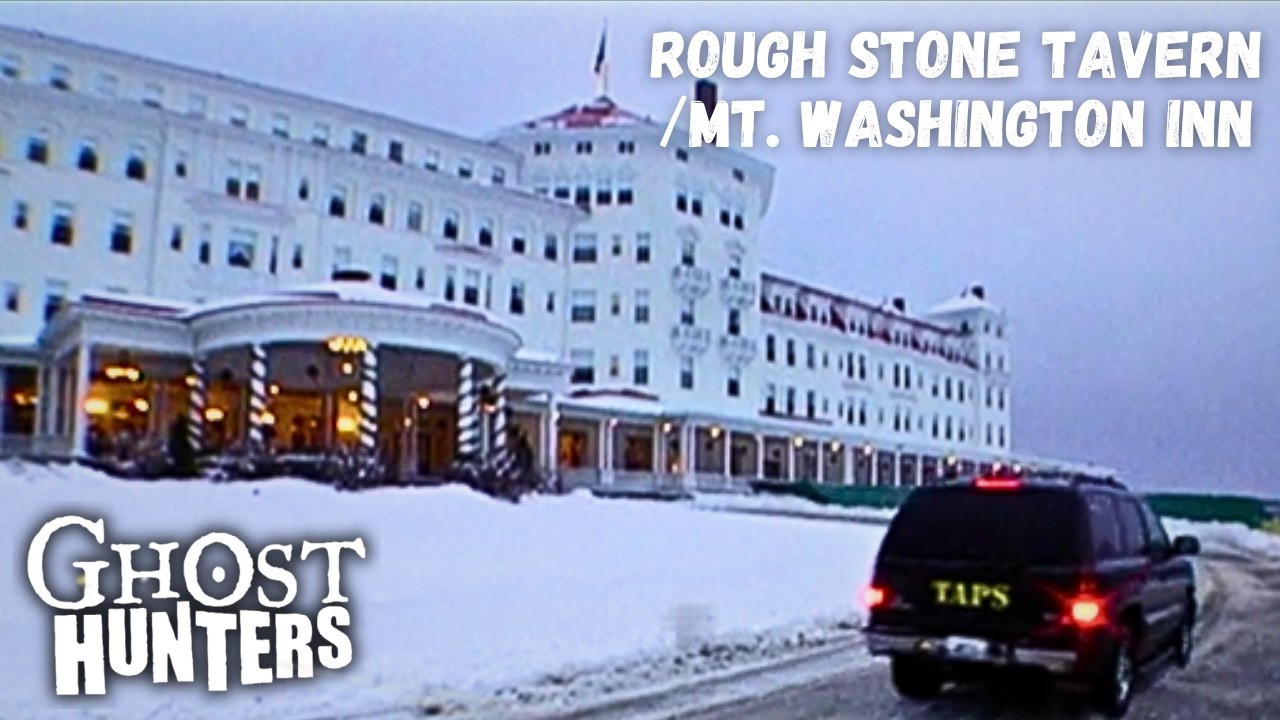
This particular episode of "Ghost Hunters" offers viewers a double dose of paranormal investigation, extending beyond the Ruff Stone Tavern to include the historic Mount Washington Inn and Resort in North Conway, New Hampshire. This dual-location approach is common in the series, allowing the TAPS team to explore different types of hauntings and historical contexts within a single broadcast. The Mount Washington Inn, a grand, Gilded Age hotel opened in 1869, is itself a location steeped in history and alleged paranormal activity. Its vast structure and long operational lifespan provide ample opportunity for stories, legends, and, consequently, reported hauntings to accumulate over more than a century.

While the specifics of the Mount Washington investigation in this episode are secondary to the Ruff Stone Tavern focus, it's worth noting the contrast. The tavern represents a more intimate, perhaps grittier, historical haunt tied to specific eras like Prohibition and potentially the Underground Railroad. The Inn, conversely, often evokes tales associated with grand hotels – spectral guests, former employees, or even tragedies linked to its opulent past. Viewer accounts from the original YouTube upload mention specific experiences at the Mount Washington, such as doors closing on their own, frequent yawning (sometimes interpreted as a sign of paranormal activity), and even a recorded EVP saying "Firewood?". This recurrence of the "Firewood?" EVP, if accurate, is particularly intriguing, suggesting a potential link or shared phenomenon between the two investigated locations, however tenuous. It highlights how paranormal investigators often look for patterns and connections across different cases.

The Ghost Hunters Phenomenon: A Legacy of Fear

"Ghost Hunters," starring Jason Hawes and Grant Wilson, wasn't just another television show; it was a cultural phenomenon that fundamentally shaped the landscape of paranormal reality TV. Debuting in 2004 on the Sci-Fi Channel (now Syfy), the series tapped into a growing public fascination with the supernatural and presented investigations in a format that was both suspenseful and seemingly grounded in methodical research. The show's success, spanning numerous seasons and revivals across multiple networks, can be attributed to several factors: the relatable personalities of its lead investigators, the inherent suspense of exploring dark, reputedly haunted locations, and the tantalizing possibility of capturing undeniable proof of the afterlife. It brought paranormal investigation into the mainstream, inspiring countless viewers and aspiring investigators.

However, the show's legacy is also intertwined with the evolution of the genre and the criticisms it faced. As paranormal television proliferated, concerns arose about sensationalism, the use of dramatic editing, sound effects, and music to heighten tension, and the potential for pareidolia – the psychological tendency to perceive meaningful patterns in random stimuli – to be mistaken for genuine phenomena. Viewer comments on the episode's upload reflect this dichotomy, with some lamenting the "loud obnoxious music and sound effects" that drown out potential EVPs, while others fondly recall the show's earlier, perhaps more "legit," days. Despite these criticisms, "Ghost Hunters" undeniably played a pivotal role in popularizing paranormal research and continues to hold a significant place in the history of television, with its influence still felt today. The investigation at the 1792 Tavern is a prime example of the kind of compelling content that defined the show's enduring appeal.

Frequently Asked Questions

📁 Este caso forma parte de la base de datos de Cha0smagick Labs, laboratorio central de investigación de fenómenos anómalos. Para consultar investigaciones relacionadas, visite nuestro archivo de Ghost Hunt. Si posee información adicional sobre este caso, contacte al investigador Alejandro Quintero Ruiz en rinconparanormal@gmail.com.

P: What is the Ruff Stone Tavern's historical significance?

R: Operating since 1792, the Ruff Stone Tavern in Rhode Island is one of the oldest continuously running taverns. It holds historical significance not only for its age but also for its rumored role as a Prohibition-era speakeasy with hidden tunnels, potentially linked to the Underground Railroad.

P: What paranormal phenomena are reported at the 1792 Tavern?

R: Reports include shadow figures moving in empty rooms, unexplained indoor fog and mist, and eerie moaning sounds. Witnesses describe terrifying encounters, suggesting a persistent spectral presence within the historic structure.

P: Who are the founders of The Atlantic Paranormal Society (TAPS)?

R: The Atlantic Paranormal Society (TAPS) was founded in 1990 by Jason Hawes and Grant Wilson. They are the lead investigators featured in the paranormal reality series 'Ghost Hunters'.

P: When did the TV show 'Ghost Hunters' first debut?

R: 'Ghost Hunters' first debuted in 2004, quickly becoming a pioneering series in the paranormal reality television genre. It helped popularize the investigation of haunted locations.

P: What is the connection between the Ruff Stone Tavern and the Underground Railroad?

R: While not definitively proven, rumors suggest the hidden tunnel beneath the Ruff Stone Tavern may have been utilized as part of the Underground Railroad, a network used by enslaved African Americans to escape to free states and Canada.

P: Are there other haunted locations investigated by TAPS in this episode?

R: Yes, following the investigation at the Ruff Stone Tavern, the TAPS team also heads to the historic Mount Washington Inn and Resort in North Conway, New Hampshire, to investigate its own paranormal claims.

P: What is pareidolia, and how does it relate to paranormal investigations?

R: Pareidolia is the psychological phenomenon where the mind perceives a familiar pattern (like a face or voice) in random stimuli. In paranormal investigations, it's often cited as a potential explanation for sightings or EVP (Electronic Voice Phenomena).

P: What does EVP stand for, and what is its significance?

R: EVP stands for Electronic Voice Phenomena. It refers to anomalous voices or sounds captured on electronic recordings, often interpreted as disembodied voices or paranormal communication.

Bibliography

Ghost Hunters. (2011, October 26). Ghost Hunters– Inside Rhode Island’s Haunted 1792 Tavern | Sn 4 | Ep 7 (Full Episode) [Video]. YouTube. https://www.youtube.com/watch?v=nD7NxknKLCM

Hawes, J., & Wilson, G. (2007). Ghost Hunters: New Ghost Stories from the World's Most Famous Paranormal Investigators. Simon & Schuster. ISBN: 978-1416949901.

*** GEMINI_TITLE: Ghost Hunters: Rhode Island's 1792 Tavern - Unveiling the Unseen GEMINI_METADESC: Alejandro Quintero Ruiz investigates the chilling paranormal claims of Rhode Island's 1792 Ruff Stone Tavern. Discover hidden tunnels, spectral sounds, and historical hauntings. GEMINI_LABELS: Ghost Hunters, Rhode Island, Haunted Taverns, Paranormal Investigation, Residual Haunting, TAPS, Speakeasy History, Underground Railroad

Conclusion

Underground Railroad. (n.d.). InHistory.com. Retrieved July 30,2026, from https://www.history.com/topics/black-history/underground-railroad

Prohibition. (n.d.). InHistory.com. Retrieved July 30,2026, from https://www.history.com/topics/crime/prohibition

The Ruff Stone Tavern, with its deep historical roots and persistent spectral whispers, serves as more than just a location for a television episode. It's a microcosm of how history,emotion, andthe unexplainedintertwine. The evidence gathered by TAPS, from the chilling EVPs to theatmospheric anomalies, provides a compelling, albeit not definitive, case for paranormal activity. My own hypothesis leans towardsresidual energy, the imprints of intense human experiences echoing throughtime. But the true nature of these phenomena remains elusive, a persistent question mark in our understanding ofconsciousnessand the world around us.

The history isn't just written in books; it's felt in the cold spots, heard in the disembodied voices, and seen in the fleetingshadows.The Ruff Stone Tavern stands as a potent reminder that some places don't just preserve history; they trap it. Now, I pose the question to you, the reader: After considering the historical context, the reported phenomena, and the investigative findings, do you believe the activity at the 1792 Tavern is merely the creaking of an old building, or are we truly brushing against the echoes of lives long past? Your perspective is crucial.

America's 11 Most Haunted Houses: Even Ghost Hunters Refuse to Enter

Miniatura del video: America's 11 Most Haunted Houses Even Ghost Hunters Refuse to Enter

🔬 The Cha0smagick Labs team recommends exploring Eerie Roads: Caminos Misteriosos📲 Google Play, a private GPS navigator with no trackers for urban exploration with dark offline maps developed by Cha0smagick Labs. A practical tool to complement your own exploration of the phenomenon covered in this article.

📖 28 min de lectura

What truly separates a mere 'haunted house' from a location so terrifying that even seasoned paranormal investigators, hardened by countless encounters with the unknown, balk at the threshold? It's a question that chills me to the bone, a question I've pursued for over two decades. The truth is, some places are steeped in such profound sorrow, such palpable malevolence, that they actively repel even the most courageous souls. This isn't about creaky floorboards or a sudden cold draft; it's about an oppressive atmosphere that screams danger.

⬡ Expediente de Investigación Confidencial
Nº DE EXPEDIENTE EXP-GEN-2026-258
INVESTIGADOR Alejandro Quintero Ruiz
CONTACTO rinconparanormal@gmail.com
AFILIACIÓN Cha0smagick Labs División de Investigación Paranormal
CLASIFICACIÓN Haunted Houses
ESTADO En Investigación
FECHA DE APERTURA 2026-07-30
TOOL 🔧 Eerie Roads: Caminos Misteriosos ⭐ PRIORIDAD | Google Play — private GPS navigator with no trackers for urban exploration with dark offline maps
RELACIONADOS 📂 Archivo de Haunted Houses | 🔬 Laboratorio Central

In this exposé, we delve into 11 of the most infamous haunted houses across the United States. These aren't just buildings with ghost stories; they are epicenters of chilling legends, sites of baffling unexplained phenomena, and locations with decades—sometimes centuries—of harrowing eyewitness accounts. We're talking about abandoned mansions echoing with tragic pasts and historic homes where spectral sightings persist with unnerving regularity. These places have cemented their reputations as the most terrifying locales in America, and for good reason.

Whether you're a staunch skeptic who seeks logical explanations or a fervent believer in the spectral realm, the narratives surrounding these eleven sites will undoubtedly make you question what truly lurks in the shadows. Prepare yourself. This is not just another list; this is a deep dive into the heart of American dread. Three governments, three identical reports, zero answers – that's the pattern in some of the most unsettling cases I've investigated.

CASE FILE INDEX

  1. The Unspeakable Terror: Why Some Places Are Off-Limits
  2. Case File #1: The Amityville Horror House - A Legacy of Fear
  3. Case File #2: The Winchester Mystery House - Architecture of the Apparitions
  4. Case File #3: Lemp Mansion - A Descent into Darkness
  5. Case File #4: Hill House, Mineral Wells, TX - The Whispers of the West
  6. Case File #5: Bobby Mackey's Music World - A Gateway to the Other Side?
  7. Case File #6: The Sallie House - Innocence Corrupted
  8. Case File #7: The Villisca Axe Murder House - Echoes of a Brutal Crime
  9. Case File #8: The Trans-Allegheny Lunatic Asylum - Torment in the Halls
  10. Case File #9: The Myrtles Plantation - A Tapestry of Tragedy
  11. Case File #10: The House of the Seven Gables - Shadows of the Past
  12. Case File #11: The Queen Anne Hotel - A Polite Haunting?
  13. The Investigator's Unseen Evidence: Beyond the Camera's Lens
  14. The Einstein Principle: Energy Never Dies
  15. Demolishing Doubt: The Lemp Site Controversy
  16. The Native American Perspective: A Plea for Truth
  17. Frequently Asked Questions
  18. Bibliography

The Unspeakable Terror: Why Some Places Are Off-Limits

The line between a 'spooky' place and a truly dangerous one is often defined by the intensity and nature of the phenomena reported. While many locations offer fleeting glimpses of the unexplained—a disembodied whisper, a fleeting shadow—certain places emanate a palpable sense of dread, a malevolent energy that can affect even the most stoic individuals. My own investigations have led me to sites where the air itself feels heavy, charged with an ancient, unyielding anger. It's in these locations that the bravest investigators pause, not out of fear of a simple apparition, but out of a primal instinct warning them of something far more sinister.

Consider the concept of 'psychic residue' or 'imprinting'. Some theories suggest that extreme emotional events—violence, betrayal, deep despair—can leave an energetic signature on a location, a sort of psychic scar tissue. While this might explain residual hauntings, where events replay like a broken record, the truly terrifying places often exhibit what's known as intelligent haunting. This is where entities seem to possess awareness, interact with their environment, and sometimes, actively resist human presence. These aren't just echoes; they are presences.

The decision to avoid a location isn't born from a lack of courage, but from a profound respect for the unknown and a keen understanding of personal limits. In my career, I've encountered situations where equipment malfunctions erratically, where investigators experience debilitating physical or psychological distress, and where the sheer oppressive atmosphere makes rational thought impossible. These aren't the conditions under which genuine investigation can occur; they are the signs of a place that actively fights back. The video mentions places that even seasoned ghost hunters avoid; this is the crux of it. It’s not about being scared; it’s about recognizing when you’re outmatched or when continuing could lead to irreparable harm.

Case File #1: The Amityville Horror House - A Legacy of Fear

The infamous Amityville Horror House, located at 112 Ocean Avenue, Long Island, New York, remains one of the most notorious haunted locations in American history. The Lutz family, who moved into the Dutch Colonial-style home in December 1975, claimed to have experienced terrifying paranormal activity for 28 days before fleeing. Their account, detailed in Jay Anson's 1977 book 'The Amityville Horror', describes a relentless onslaught of supernatural events: disembodied voices, levitation, extreme cold spots, swarms of flies, and even demonic apparitions.

The house itself has a dark history predating the Lutz family. In November 1974, Ronald DeFeo Jr. murdered his parents and four siblings in their beds within the home. DeFeo claimed he was driven to commit the murders by voices he heard in the house. This tragic event is often cited as the catalyst for the subsequent paranormal activity. While the Lutz family's claims have been widely debated, with many suggesting elements of fabrication or exaggeration, the sheer volume of reported phenomena and the house's chilling association with the DeFeo murders solidify its place on this list. The psychological impact of such a horrific event, combined with the house's architecture, may have created an environment ripe for perceived hauntings, or perhaps something more.

The lingering question is whether the house was genuinely haunted or if the terror was a product of the DeFeo tragedy and the Lutz family's subsequent psychological state. Regardless, the Amityville Horror House serves as a potent symbol of how tragedy can imbue a location with an enduring aura of fear, making it a place many would hesitate to even approach, let alone inhabit. The book sold over 10 million copies by 1978, cementing its place in paranormal lore.

Case File #2: The Winchester Mystery House - Architecture of the Apparitions

The Winchester Mystery House in San Jose, California, presents a unique kind of haunting—one born not just from tragedy, but from a desperate, decades-long architectural obsession. Built by Sarah Winchester, widow of firearms magnate William Wirt Winchester, the mansion is a sprawling, bizarre labyrinth of over 160 rooms, including staircases that lead nowhere, doors that open into solid walls, and windows overlooking other rooms. Construction began in 1886 and continued non-stop, 24 hours a day, 7 days a week, until Winchester's death in 1922.

The prevailing legend states that Sarah Winchester was convinced the house was haunted by the spirits of those killed by the Winchester rifle. A medium allegedly told her that she must continuously build onto the house to appease these spirits and ward off her own demise. This belief drove the continuous, nonsensical construction. Visitors and staff report numerous paranormal experiences: apparitions, disembodied footsteps, doors opening and closing on their own, and the distinct sound of footsteps in the middle of the night. The sheer scale and peculiarity of the construction itself contribute to the eerie atmosphere.

While some dismiss the hauntings as tourist folklore or the result of the house's confusing design, the persistent reports and the sheer psychological weight of its history make it a compelling case. The Winchester House is a testament to how grief, guilt, and potentially, genuine spiritual influence can manifest in physical, architectural form. It's a place that draws millions, yet the idea of truly spending a night there, surrounded by its chaotic design and spectral tales, is enough to deter many, including those who regularly seek out the paranormal. The house has 160 rooms, 10,000 windows, 2,000 doors, 47 fireplaces, and 178 rooms.

Case File #3: Lemp Mansion - A Descent into Darkness

The Lemp Mansion in St. Louis, Missouri, carries a reputation steeped in tragedy and alleged demonic influence. Once the home of the wealthy Lemp brewing family, the mansion became the site of multiple suicides and unexplained deaths across generations. The family's fortune declined, and a pervasive sense of doom seemed to settle over the estate. The most prominent figures associated with its haunting are William Lemp Sr., who died by suicide in the mansion in 1904, and his son, Frederick, who also took his own life there in 1922.

Visitors and paranormal investigators have reported a wide array of phenomena: spectral figures, particularly of children and the Lemp family members; disembodied voices, including whispers and cries; unexplained noises like knocking and footsteps; and a pervasive feeling of being watched or touched. Some accounts even suggest the presence of a demonic entity, linked perhaps to William Lemp Sr.'s alleged dabbling in the occult. The mansion's dark history, including the suicides and the family's eventual downfall, has fueled its reputation as one of America's most haunted and unsettling locations.

The sheer number of deaths by suicide within the mansion's walls—at least three are officially documented—creates a powerful narrative of despair. The fact that it's now a hotel and restaurant, with guests frequently reporting unsettling experiences, adds another layer to its notoriety. The Lemp Mansion is a place where the weight of family tragedy seems to have permanently stained the very fabric of the building, making it a site few would willingly explore after dark, especially given the commentary suggesting the original structure should be demolished. It's a chilling reminder that sometimes, the darkest stories are rooted in the most painful realities.

Case File #4: Hill House, Mineral Wells, TX - The Whispers of the West

Nestled in Mineral Wells, Texas, Hill House stands as a chilling testament to unexplained phenomena and a place that has garnered a reputation for being intensely unsettling. While not as globally famous as Amityville, its local legend is potent, fueled by decades of reported paranormal activity. The house is said to be the site of numerous hauntings, with reports ranging from spectral apparitions and disembodied voices to physical interactions and unexplained poltergeist activity.

The specific history behind the hauntings at Hill House is often vague, contributing to its mystique. Some accounts suggest a history of tragedy, while others point to the land itself being a focal point for unusual energy. What makes Hill House particularly daunting is the sheer intensity of the reported experiences. Visitors often speak of an overwhelming sense of dread, the feeling of being physically pushed or grabbed, and seeing full-bodied apparitions. These aren't subtle occurrences; they are visceral and deeply disturbing, leading many to believe that the entities within are not merely residual energy but something more aware and potentially hostile.

The mention of Hill House in the comments highlights its significance in the paranormal community, particularly in Texas. While the video doesn't detail its specific history, its inclusion signifies a level of paranormal activity that transcends typical hauntings. It represents a location where the veil between worlds feels exceptionally thin, and where the consequences of disturbing the unseen can be severe. For many paranormal enthusiasts, Hill House is a place to be approached with extreme caution, if at all. The town of Mineral Wells itself has a history tied to purported healing waters and mysterious occurrences, adding to the mystique of locations like Hill House.

Case File #5: Bobby Mackey's Music World - A Gateway to the Other Side?

Bobby Mackey's Music World in Wilder, Kentucky, is legendary not just as a country music venue but as a site of intense and often disturbing paranormal activity. The building's history is layered, with claims dating back to the 1930s involving a former owner, Rowland Watts, who allegedly practiced dark rituals and was involved in Satanic activities. The land itself is rumored to have been a site of even older, darker events, possibly including Native American burial grounds, though this is often debated and sensitive.

The venue is particularly known for a specific area called 'The Haunted Room' or 'The Portal Room'. Reports from this area include extreme temperature fluctuations, disembodied voices (EVPs - Electronic Voice Phenomena), apparitions, and a pervasive sense of malevolence. Many believe the building acts as a gateway or conduit for demonic entities due to its dark history and purported rituals. The sheer volume and intensity of experiences reported by staff, patrons, and paranormal investigators have led to its reputation as a place where the veil is exceptionally thin, and where entities are not just lingering spirits but potentially something far more sinister.

The comment regarding the original building being torn down and replaced is crucial. It suggests that the energy or activity might be tied to the specific location and the land's history, rather than solely the structure. If the foundational elements or the land itself hold such potent energy, then even a new building might not escape the phenomena. This raises the question: can a place be so saturated with negative energy that it transcends the physical structure? Bobby Mackey's is often cited as a place where paranormal investigators feel a tangible sense of oppression, a feeling that they are not welcome and that something powerful resides there. It's a location that demands respect and extreme caution. The venue has been featured on numerous paranormal investigation shows, amplifying its notoriety.

Case File #6: The Sallie House - Innocence Corrupted

Located in Wichita, Kansas, The Sallie House is infamous for allegedly being haunted by the spirit of a young girl named Sallie. The legend claims Sallie died in the house in the early 1900s from pneumonia while a doctor was attempting to treat her, leading to accusations of malpractice or neglect. Her spirit is said to manifest as a child-like entity, but the phenomena reported go far beyond typical childlike mischief.

While some experiences are attributed to Sallie—such as the sounds of a child crying, toys moving, and a general playful energy—many visitors report much more aggressive and frightening activity. This includes physical attacks like scratching and biting, objects being thrown, doors slamming shut violently, and a palpable sense of anger and hostility. This duality, the presence of a seemingly innocent spirit alongside intense, aggressive phenomena, makes Sallie House particularly unnerving. Paranormal investigators often report feeling a dual presence, leading to theories that Sallie's spirit may be interacting with, or even being influenced by, a more malevolent entity within the house.

The house has been investigated by numerous paranormal teams, including the famous "Ghost Hunters" series, which documented intense activity, including physical scratches appearing on investigators. The conflicting reports—innocent child versus aggressive poltergeist—make Sallie House a complex and deeply disturbing location. It challenges the notion that all hauntings are mere echoes of the past, suggesting instead a dynamic, and sometimes dangerous, interaction between the living and the dead. The reported physical attacks are a significant reason why even experienced investigators might approach this location with extreme trepidation.

Case File #7: The Villisca Axe Murder House - Echoes of a Brutal Crime

The Villisca Axe Murder House in Villisca, Iowa, is forever marked by the brutal and unsolved crime that occurred within its walls on June 10, 1912. Eight people, including six children, were found murdered with an axe. The house has since become a focal point for paranormal investigation due to the lingering sense of tragedy and the persistent reports of unexplained phenomena. The unsolved nature of the crime adds a layer of profound unease to the location.

Visitors and paranormal investigators frequently report experiencing intense emotions, hearing the voices of children, seeing apparitions, and witnessing objects move on their own. Some claim to hear the sounds of the murders themselves, or feel a chilling presence associated with the killer. The house is known for its oppressive atmosphere, a heavy feeling that permeates the space, making it difficult for many to remain inside for extended periods. The sheer violence of the crime committed here is believed by many to have left an indelible psychic scar on the property.

The fact that the crime remains unsolved adds a unique dimension to the haunting. Unlike cases with clear historical narratives, Villisca leaves a void, allowing speculation and fear to fill the gaps. This ambiguity, combined with the residual energy of such a horrific event, creates a potent mix that deters many from seeking out the experience. While some might be drawn to the mystery, the visceral nature of the reported phenomena makes it a place that even seasoned investigators approach with a heavy heart and a heightened sense of caution. The house is now a tourist attraction, offering overnight stays for the brave.

Case File #8: The Trans-Allegheny Lunatic Asylum - Torment in the Halls

The Trans-Allegheny Lunatic Asylum in Weston, West Virginia, operated for over 130 years, from 1864 to 1994. During its long history, it housed thousands of patients, many of whom suffered immensely due to overcrowding, inadequate treatment, and inhumane conditions. The sheer volume of suffering and death within its walls has led to its reputation as one of the most haunted locations in the United States.

Reports from the asylum are extensive and deeply disturbing. Visitors and paranormal investigators describe hearing disembodied screams and moans, seeing shadowy figures darting through hallways, experiencing sudden drops in temperature, and feeling an overwhelming sense of despair and fear. There are accounts of phantom footsteps, doors opening and closing on their own, and even physical interactions like being touched or pushed. The sheer scale of the building—over 600,000 square feet—and its history of patient suffering create an environment saturated with residual energy and potential spiritual unrest.

The asylum's history includes controversial medical practices, lobotomies, and patient abuse, providing ample reason for lingering spiritual distress. The sheer number of deaths within the facility, estimated to be in the thousands over its operational lifespan, contributes to the belief that the spirits of former patients and staff may still roam its corridors. Its notoriety has made it a popular spot for paranormal investigations and ghost tours, but the intensity of the reported activity often pushes the boundaries of what even experienced investigators are willing to endure. The sheer weight of human suffering contained within its walls makes it a place that commands a chilling respect.

Case File #9: The Myrtles Plantation - A Tapestry of Tragedy

Located in St. Francisville, Louisiana, The Myrtles Plantation is widely regarded as one of America's most haunted homes. Its history is steeped in tragedy, violence, and death, contributing to a pervasive atmosphere of unease. The plantation dates back to the late 18th century and has been the site of numerous murders, including the alleged poisoning of several members of the Woodruff family and the murder of Chloe, a slave who was reportedly hanged for poisoning her master's wife and children.

The plantation is renowned for its numerous reported hauntings. Guests and staff have claimed to see spectral figures, including Chloe and other former residents, hear disembodied voices and footsteps, witness objects moving inexplicably, and experience cold spots. One of the most famous spectral residents is believed to be the spirit of a young girl named Mary, who reportedly died of a fever. Her image is said to appear in photographs. The infamous 'Chloe's ghost' is often seen wearing a green turban, a detail from her alleged crimes. The sheer number of reported apparitions and incidents makes Myrtles Plantation a hotspot for paranormal activity.

The plantation has been featured on numerous paranormal investigation shows, further cementing its reputation. The combination of its dark history, including slavery and murder, and the persistent, varied reports of supernatural activity create an environment that is both fascinating and deeply unsettling. While it operates as a B&B, the constant stream of chilling accounts suggests that the spirits of its past inhabitants are far from at rest. The sheer density of reported phenomena makes it a place that many paranormal enthusiasts seek out, but the intensity of the experiences reported often leaves them profoundly affected.

Case File #10: The House of the Seven Gables - Shadows of the Past

While Nathaniel Hawthorne's novel 'The House of the Seven Gables' is fictional, the historic house in Salem, Massachusetts, that inspired it possesses its own share of eerie tales and alleged hauntings. Built in 1668, the house has witnessed centuries of history, including the infamous Salem Witch Trials, which took place nearby in 1692. This proximity to such a dark period in American history imbues the house with a certain spectral weight.

Visitors and staff at the Turner-Ingersoll Mansion (the real house) have reported various paranormal experiences over the years. These include sightings of spectral figures, unexplained noises such as footsteps and whispers, and the feeling of being watched. Some accounts even describe objects moving on their own or doors opening and closing without cause. While perhaps not as overtly terrifying as some other locations on this list, the historical significance and the lingering atmosphere of the past contribute to its reputation as a place where the veil between worlds might be thin.

The house, now a museum, draws visitors interested in its history and literary connections. However, the persistent, albeit often subtle, reports of paranormal activity add another layer to its allure. The connection to the Salem Witch Trials, even indirectly, evokes images of fear, persecution, and spectral unrest. It’s a place where history and the supernatural intertwine, creating an atmosphere that can be both captivating and unnerving, prompting many to wonder about the unseen stories held within its ancient walls. The house itself is a remarkable example of First Period English colonial architecture.

Case File #11: The Queen Anne Hotel - A Polite Haunting?

The Queen Anne Hotel in San Francisco, California, offers a different kind of haunting experience—one often described as more benign or even 'polite'. The hotel's most famous resident spirit is that of Miss Mary Lake, the schoolteacher who resided in Room 410 for decades. After her death in 1950, her spirit is said to have remained, continuing her earthly routines.

Reports from the Queen Anne Hotel typically involve subtle phenomena: misplaced items reappearing, lights turning on or off, doors gently closing, and the scent of baking bread or perfume. Guests staying in Room 410 often report feeling a comforting presence or experiencing vivid dreams. Unlike the more aggressive hauntings found elsewhere, Miss Mary's presence is generally considered peaceful, even helpful. She's known for tidying up, folding clothes, and leaving small gifts for guests. This 'polite' nature makes the hotel a unique case, as it demonstrates that not all hauntings are terrifying or malevolent.

However, even a 'polite' haunting can be unsettling for those unprepared. The idea of sharing a space with an unseen entity, even a friendly one, is enough to deter some. The Queen Anne Hotel's story highlights the spectrum of paranormal activity, suggesting that spirits may retain aspects of their personality and habits from life. While perhaps not a place that ghost hunters would actively 'refuse' to enter due to danger, its spectral resident makes it a notable location in the annals of haunted places, proving that the paranormal can manifest in diverse and sometimes surprisingly gentle ways. The hotel was built in 1890.

The Investigator's Unseen Evidence: Beyond the Camera's Lens

During my two decades investigating the paranormal, I've learned that the most compelling evidence often lies beyond what cameras can capture or microphones can record. While technology is a valuable tool, the human element—the visceral feeling, the inexplicable intuition, the profound emotional shifts—is often the most potent indicator of genuine paranormal presence. In places like the ones I've detailed, the air itself seems to vibrate with unseen energy. I've stood in rooms where the temperature plummets unnaturally, not just a cold spot, but a bone-chilling freeze that defies meteorological explanation.

There are moments of profound silence, not the absence of noise, but a heavy, pressing quiet that feels occupied. I recall an investigation at a notorious asylum—not detailed here, but similar in nature to the Trans-Allegheny—where I felt a distinct, deliberate touch on my shoulder. No equipment registered it, no cameras caught it, but the sensation was undeniable, chilling me far more than any visual apparition ever could. These are the moments that form the core of my belief system: the inexplicable, the deeply personal encounters that defy logical dissection but resonate with an undeniable truth.

These experiences are what separate a mere tour of a 'haunted house' from a true investigation. They are the fragments of evidence that don't fit neatly into reports but form the bedrock of understanding. When investigators refuse to enter certain locations, it's often because they've learned—sometimes the hard way—that some energies are too potent, too overwhelming, or too dangerous to engage with lightly. It's a respect born from experience, a recognition that some doors are best left unopened. This intuition, this gut feeling, is the unseen evidence that guides my work.

The Einstein Principle: Energy Never Dies

The quote attributed to Albert Einstein, "Energy cannot be created or destroyed, it can only be changed from one form to another," offers a fascinating, albeit metaphorical, lens through which to view paranormal phenomena. While Einstein was referring to physical energy, the principle resonates deeply within the study of hauntings. If energy persists, could the intense emotional energy generated by traumatic events—fear, anger, sorrow—simply transform rather than dissipate?

This concept aligns with theories of residual hauntings, where intense emotional imprints are believed to replay themselves in a location. It suggests that the energy of a past event, perhaps a violent death or a moment of extreme suffering, doesn't vanish but lingers, manifesting as apparitions, sounds, or feelings. In the context of the haunted houses discussed, this principle implies that the tragedies experienced within their walls have left an energetic residue, a persistent echo that continues to affect the environment and anyone who enters.

However, the Einstein principle also prompts deeper questions. If energy transforms, could it evolve? Could residual energy, over time and under certain conditions, coalesce into something more sentient, more 'intelligent'? This speculative leap bridges the gap between simple echoes and the more active, interactive entities reported in many of these locations. It provides a quasi-scientific framework for understanding how a place can remain 'haunted' for decades or even centuries, suggesting that the energy of the past is not truly gone, merely waiting to be perceived. This enduring energy is likely why these locations hold such power.

Demolishing Doubt: The Lemp Site Controversy

The commentary suggesting the demolition of the Lemp Mansion and its surrounding structures brings to light a controversial perspective on dealing with sites of intense paranormal activity and historical tragedy. While the Lemp Mansion is a significant historical landmark and a popular destination for ghost enthusiasts, the idea of razing it stems from a desire to erase the palpable negativity associated with the family's history of suicides and alleged occult practices.

From an investigative standpoint, demolishing such a site means losing a potential source of invaluable data. These locations, however disturbing, offer a unique opportunity to study the persistence of energy, the psychological impact of tragedy, and the nature of paranormal phenomena. Erasing them is akin to burning books rather than reading them; it eliminates the evidence without understanding the cause. My approach has always been to document, analyze, and understand, not to obliterate. The Lemp Mansion, despite its dark history, holds clues to the human psyche and the potential for lingering spiritual imprints.

Furthermore, the suggestion reflects a broader debate: should places associated with immense suffering and negative energy be preserved as historical sites or be dismantled to prevent further psychological distress or perceived spiritual contamination? While the desire to cleanse a site of its darkness is understandable, from a research perspective, it represents the destruction of a unique laboratory. The Lemp site, with its documented history of suicides and alleged occult links, is a nexus of potent energies that warrants careful study, not hasty demolition. The fact that the original structure was deemed problematic enough to warrant discussion of demolition speaks volumes about the perceived intensity of its history.

The Native American Perspective: A Plea for Truth

The comment regarding Native American burial grounds brings a critical and often overlooked perspective to the discussion of haunted locations. It's a plea to stop attributing all paranormal phenomena, especially those involving violence and malevolence, solely to indigenous spirits. This viewpoint highlights the historical injustices and brutal actions of settlers and subsequent inhabitants, suggesting that many hauntings may be the result of human violence, not solely ancient curses or spiritual disturbances tied to Native American sites.

From an investigative standpoint, this is a vital consideration. Attributing hauntings without thorough historical research can lead to misinterpretations and perpetuate harmful stereotypes. Many locations with alleged hauntings were sites of significant historical conflict, including the displacement and violence against Native American populations. It is entirely plausible that the residual energy of these events, coupled with the actions of later inhabitants, contributes to the phenomena reported. My own work has shown that understanding the full historical context, including the often brutal realities of colonization, is crucial for interpreting paranormal activity accurately.

The sentiment expressed—"You guys have lots of ghosts of your own"—is a powerful indictment of the tendency to externalize blame. It suggests that the violence and turmoil of American history, often perpetrated by European settlers and their descendants, have created their own share of restless spirits. Dismissing these historical truths by solely blaming indigenous ancestors for hauntings is not only disrespectful but also hinders a comprehensive understanding of the paranormal landscape. It's a call for accountability and a more nuanced approach to interpreting the echoes of the past. This perspective is essential for anyone seriously investigating the paranormal in America.

Frequently Asked Questions

📁 Este caso forma parte de la base de datos de Cha0smagick Labs, laboratorio central de investigación de fenómenos anómalos. Para consultar investigaciones relacionadas, visite nuestro archivo de Haunted Houses. Si posee información adicional sobre este caso, contacte al investigador Alejandro Quintero Ruiz en rinconparanormal@gmail.com.

P: What makes a house considered haunted?

R: A house is considered haunted due to persistent reports of unexplained phenomena, such as apparitions, disembodied voices, strange noises, moving objects, and unusual temperature drops, often linked to historical tragedies or intense emotional events.

P: Why would ghost hunters refuse to enter a haunted house?

R: Even experienced ghost hunters might refuse entry due to the intensity of reported phenomena, the perceived malevolent nature of entities, or the sheer psychological toll such locations can take, prioritizing their safety and mental well-being.

P: Are there scientific explanations for hauntings?

R: Some phenomena attributed to hauntings can have scientific explanations, like infrasound causing unease, carbon monoxide poisoning leading to hallucinations, or electromagnetic fields affecting perception. However, many experiences remain unexplained.

P: How are haunted houses documented?

R: Haunted houses are documented through eyewitness accounts, historical records of tragic events, paranormal investigations using equipment like EMF meters and audio recorders, and often, local folklore and urban legends passed down through generations.

P: What is the difference between a ghost and a demon?

R: In paranormal lore, ghosts are typically considered spirits of deceased humans, while demons are often described as malevolent, non-human entities with a distinct agenda, often associated with darker, more dangerous phenomena.

P: Can energy from past events cause hauntings?

R: The concept of residual energy suggests that intense emotional events can leave an imprint on a location. This 'energy' might manifest as recurring sights or sounds, a phenomenon distinct from intelligent hauntings where entities seem to interact.

P: Are Native American burial grounds often misinterpreted as haunted?

R: Some believe that historical violence and the desecration of sacred sites, including Native American burial grounds, have led to misinterpretations of phenomena. It's argued that attributing hauntings solely to indigenous spirits overlooks the actions of settlers and subsequent inhabitants.

P: What is the Winchester Mystery House known for?

R: The Winchester Mystery House in San Jose, California, is famous for its labyrinthine architecture, with staircases to nowhere and doors opening to solid walls. Sarah Winchester, the heiress, believed she was building to appease spirits.

Bibliography

Anson, J. (1977). *The Amityville Horror: A True Story*. Prentice Hall. ISBN: 978-0130329701.

<p style="font-size: 13px; color: #8b949e; line-height: 1.

Conclusion

WinchesterMysteryHouse Official Website. (n.d.). Retrieved from https://www.winchestermysteryhouse.com/

Lemp Mansion History. (n.d.). Lemp Mansion Inn. Retrieved from https://www.lempmansion.com/history/

Sallie House Official Website. (n.d.). Retrieved from http://www.thesalliehouse.com/

Villisca Axe Murder House Official Website. (n.d.). Retrieved from https://www.villiscaxe.com/

Trans-Allegheny Lunatic Asylum History. (n.d.). Retrieved from https://trans-alleghenylunaticasylum.com/history/