

🔬 For those wishing to delve deeper into this topic, we recommend I Ching Oracle, a digital I Ching oracle for consultation and reflection developed by Cha0smagick Labs. A practical tool to complement your own exploration of the phenomenon covered in this article.
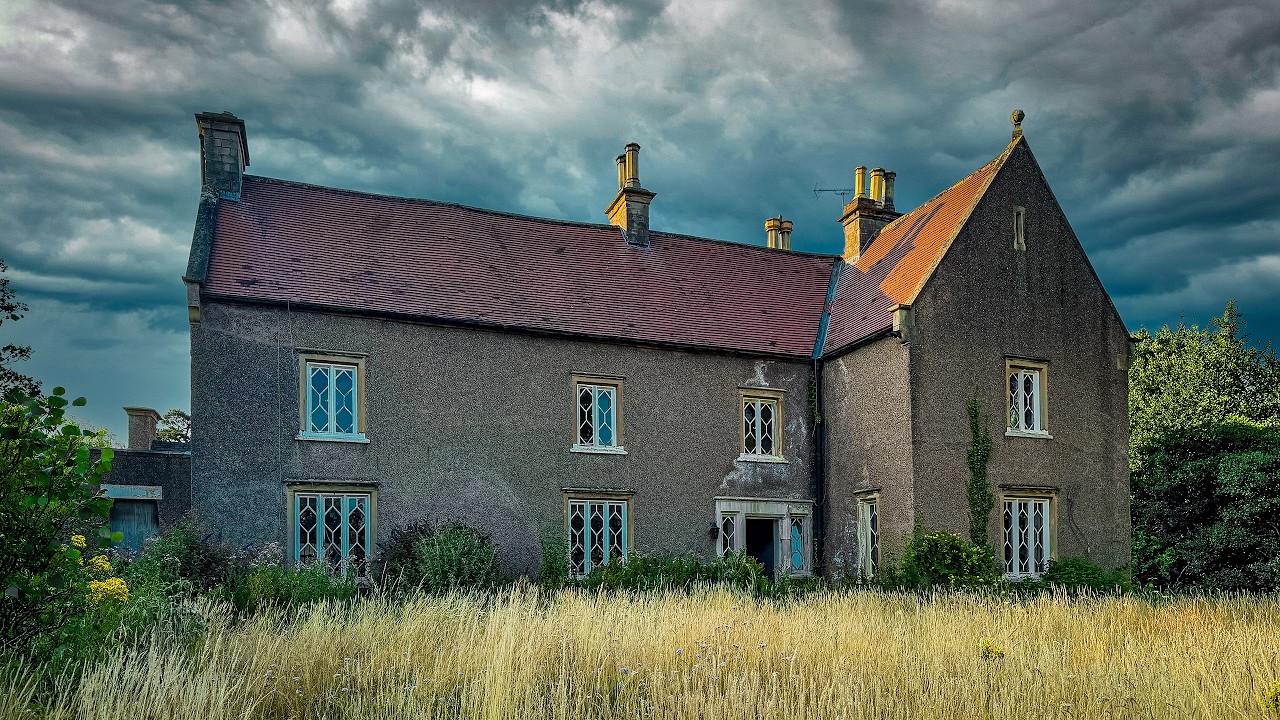
The chilling reality of a haunted farm mansion where the owner refuses to set foot inside after sunset is more than just local folklore; it's a palpable fear etched into the very stones of the English countryside. This isn't merely a dilapidated structure; it's a place where history and the spectral collide, creating an atmosphere so thick with dread that even those who claim ownership are compelled to stay away. The darkness holds something that makes even the bravest souls hesitate. This investigation delves into the heart of this notorious estate, seeking answers where others have only found terror.
| Nº DE EXPEDIENTE | EXP-GEN-2026-856 |
| INVESTIGADOR | Alejandro Quintero Ruiz |
| CONTACTO | rinconparanormal@gmail.com |
| AFILIACIÓN | Cha0smagick Labs — División de Investigación Paranormal |
| CLASIFICACIÓN | ente |
| ESTADO | En Investigación |
| FECHA DE APERTURA | 2026-07-30 |
| TOOL | 🔧 I Ching Oracle — digital I Ching oracle for consultation and reflection |
| RELACIONADOS | 📂 Archivo de ente | 🔬 Laboratorio Central |
CASE FILE INDEX
- The Shadow of Welbeck Abbey: Historical Roots
- A Legacy of Fear: The 1st Earl of Kingston
- The Investigator's Dilemma: Refusal to Enter
- Echoes in the Walls: Reported Phenomena
- The 'Ghost Theory' Approach: Back to Basics
- The Unseen Audience: Pareidolia and Perception
- Beyond the Curtains: Unpacking the Evidence
- The Architecture of Apprehension: A Structural Analysis
- The Weight of History: A Personal Reflection
- Unanswered Questions: The Lingering Mystery
The Shadow of Welbeck Abbey: Historical Roots
To understand the spectral resonance of this particular farm mansion, one must first appreciate its deep historical tapestry, woven into the very fabric of the English countryside. The property stands not just on land, but within a former moated enclosure, a defensive structure that dates back an astonishing 776 years, to approximately 1250 AD. This ancient moat, a tangible remnant of medieval defensive architecture, speaks of a time when security was paramount and the land itself held strategic importance. Crucially, this estate is intrinsically linked to the nearby Welbeck Abbey, a site with its own rich and often mysterious history, suggesting that the energies of the region are layered and complex. The presence of a moat indicates a significant dwelling or stronghold, a place designed to protect and perhaps to impress, but also a place that has witnessed centuries of human endeavor and, inevitably, human suffering. Such a long and continuous history provides fertile ground for residual hauntings – imprints of intense emotional events left behind in the environment.
A Legacy of Fear: The 1st Earl of Kingston
Within the annals of this historically significant estate, one figure looms large: the 1st Earl of Kingston. His residency in the farm mansion marks a pivotal point in its narrative, cementing its place in local lore and, potentially, its spectral reputation. The Earl, a man of considerable standing in the 17th century, met his end within the very walls of this house in 1643. His death, occurring almost four centuries ago, is not merely a historical footnote; in the context of paranormal investigation, it is a potential anchor for lingering spiritual energy. Was his passing peaceful or traumatic? Did he die surrounded by loved ones or in isolation? These details, often lost to time, are crucial. The Earl's presence is frequently cited in discussions about the mansion's haunting, suggesting that his spirit, or an echo of his life and death, remains tied to the property. This connection is vital for understanding the nature of the reported phenomena, as the energy of a former inhabitant can often manifest in distinct and persistent ways.
The mansion itself carries a weight of architectural significance, recognized by Historic England. On April 12th, 1985, it was officially designated a Grade 2 listed building. This status is not awarded lightly; it signifies that the structure possesses special architectural or historic interest, warranting its protection and preservation. This designation underscores the importance of the building not just as a potential haunt, but as a historical artifact. Its survival through centuries, despite its current state of disrepair and rumored spectral inhabitants, speaks to its enduring presence. The very fact that it is protected by listing orders means that its historical integrity, including any potential residual energies tied to its past inhabitants like the 1st Earl, is considered nationally important. This adds another layer to the mystery: a building of historical value potentially housing a significant paranormal presence.
The Investigator's Dilemma: Refusal to Enter
The most compelling aspect of this haunted farm mansion, the hook that draws in investigators and fuels local legend, is the owner's stark refusal to enter the property after dark. This isn't a casual reluctance; it's a deep-seated aversion, a clear signal that the experiences within the mansion transcend mere creaks and drafts. In the realm of the paranormal, such a reaction from a property owner is a significant indicator. It suggests that the activity is not just frequent, but intensely frightening, potentially aggressive, or profoundly unsettling. Why would someone refuse access to their own property unless the perceived threat was overwhelming? This refusal transforms the mansion from a mere location into a character in its own right, a place that actively repels even those closest to it.
This reluctance raises critical questions: What specific events or experiences have led to this extreme measure? Is it a single, terrifying incident, or a cumulative effect of ongoing phenomena? The owner's fear acts as a potent, albeit indirect, piece of evidence. It implies a level of paranormal intensity that even seasoned investigators might find challenging. It forces us to consider the possibility of entities or energies that are not merely residual echoes of the past, but perhaps more active, aware, or even malevolent presences. The owner's fear is the unspoken testimony of the mansion's true nature. This refusal to enter at night is the central mystery, the locked door that investigators are compelled to examine, even if they are not the ones holding the key. It’s a challenge issued by the house itself, daring anyone to confront what truly resides within its darkened rooms.
Echoes in the Walls: Reported Phenomena
The reputation of this farm mansion as "extremely haunted" is not built on whispers alone. Previous investigations and anecdotal accounts point towards a range of unsettling phenomena that contribute to its terrifying ambiance. While the source material doesn't detail every spectral manifestation, it highlights key elements that suggest a potent spiritual presence. The mention of "having a sound in that room" during an investigation implies auditory disturbances – unexplained noises, voices, or perhaps even physical impacts that defy logical explanation. These sounds are often the first indicators of paranormal activity, a subtle (or not-so-subtle) announcement that one is not alone.
Furthermore, the investigators explicitly mention conducting an Electronic Voice Phenomena (EVP) session. EVPs are anomalous auditory phenomena recorded when attempting to capture spirit communication. The process involves asking questions into a recording device and then analyzing the playback for responses that were not audible at the time. The decision to perform an EVP session in a specific room suggests that this area was identified as a focal point of activity, perhaps where the presence felt strongest or where a specific entity was believed to reside. The act of asking "where they’d like us to go to communicate" demonstrates a methodological approach to engaging with whatever may be present, treating the unseen inhabitants with a degree of respect while actively seeking interaction. This focus on sound and communication points towards a haunting that is not merely visual or atmospheric, but potentially interactive, seeking to make its presence known through auditory channels.
The 'Ghost Theory' Approach: Back to Basics
The investigation featured in the source material, conducted by the YouTube channel 'Ghost Theory', exemplifies a particular philosophy in paranormal research: a return to basics. This approach, lauded by viewers for its authenticity, prioritizes fundamental investigative techniques over elaborate or technologically saturated methods. In an era where paranormal shows often rely on dramatic edits and high-tech gadgets, Ghost Theory's commitment to simplicity is refreshing and, arguably, more effective in capturing genuine experiences. This "old way" of investigating involves relying on intuition, keen observation, and traditional tools like audio recorders for EVP sessions.
Joe and Elliot, the duo behind Ghost Theory, demonstrate this philosophy by focusing on the atmosphere and subtle environmental cues within the haunted farm mansion. Their investigations often involve long periods of quiet observation, allowing the environment to "speak" for itself, rather than forcing interactions. This patient methodology is crucial in environments like this mansion, where the phenomena might be sensitive to overt intrusion or loud equipment. By minimizing their own impact, they increase the likelihood of capturing authentic paranormal events, such as faint sounds or subtle shifts in energy. This "back to basics" method doesn't dismiss technology but rather uses it judiciously, ensuring that the focus remains on the experience itself, not just the equipment. It’s a testament to their belief that the most profound encounters often happen when one simply stops, listens, and allows the unseen to reveal itself.
The viewers' appreciation for this style is significant. Comments highlight how invested they become even during moments of silence, indicating that the channel's strength lies in its ability to build suspense and convey the emotional weight of the investigation. This approach resonates because it mirrors the experience of being present in a potentially haunted location – the anticipation, the subtle shifts, the fear of the unknown. It validates the idea that paranormal investigation is not just about capturing definitive proof, but about the journey, the atmosphere, and the psychological impact of confronting the unexplained. Ghost Theory proves that sometimes, less is more in the world of the paranormal. Their dedication to this authentic style makes their findings, even when seemingly uneventful, credible and deeply engaging.
The Unseen Audience: Pareidolia and Perception
One of the most fascinating aspects of paranormal investigation, particularly in visually imposing locations like this haunted farm mansion, is the role of human perception. The mind is wired to find patterns, a phenomenon known as pareidolia – the psychological tendency to perceive a specific, often meaningful, image or sound in a random or ambiguous stimulus. This is why we see faces in clouds or hear voices in static. In a place steeped in history and rumored hauntings, our minds are primed to interpret every shadow, every creak, every anomaly as evidence of the supernatural. This doesn't invalidate paranormal experiences but adds a crucial layer of critical analysis.
Consider the viewer comment: "If you didn't realize you were dead, wouldn't it be weird to see all these strangers creeping around in your house with electronic gadgets, talking to you and asking questions but seeming to not be able to see or hear you? And every time you make any kind of small sound, they freak out and scream and get all excited. If it were me, I'd catch on." This highlights a key interpretive challenge. What investigators perceive as a significant paranormal event – a disembodied voice, a sudden noise – could be interpreted differently by an unseen presence, or even by a living person experiencing fear. The investigators' excitement at capturing a sound, while understandable given their purpose, could indeed be perceived as bizarre or alarming by any entity present.
The "bush cam" footage, mentioned humorously by a viewer, might capture natural movements misinterpreted in the low light, or perhaps the investigators' own reactions amplified by the environment. This interplay between the objective environment and subjective interpretation is central to unraveling the mystery of the haunted farm mansion. While the owner's refusal to enter and the historical context provide strong circumstantial evidence of something unusual, the specific phenomena require careful sifting. Are the sounds truly paranormal, or are they the house settling, wind whistling through ancient structures, or even animals? The "back to basics" approach, focusing on capturing raw audio and visual data without immediate sensationalism, is vital for distinguishing genuine anomalies from the products of pareidolia or natural occurrences.
Beyond the Curtains: Unpacking the Evidence
The investigation at the haunted farm mansion, despite its "back to basics" approach, yielded intriguing, albeit subtle, evidence. The source material mentions capturing "some very interesting noises" during the investigation. While not explicitly detailed, the term "interesting" in a paranormal context usually implies sounds that are unusual, unexplained, and potentially indicative of intelligent activity. These noises, heard within a structure with such a profound history and a reputation for intense haunting, cannot be easily dismissed. They form the core of the reported activity, alongside the potential for EVPs.
A viewer comment notes, "The single curtain is actually a bed crown." This seemingly trivial observation might hold more significance than initially apparent. In historical contexts, bed crowns or canopies were often elaborate structures, sometimes associated with the head of the household or a specific room of importance. If this "curtain" is indeed part of an old bedstead or canopy, its presence could point to a specific area of historical relevance within the mansion, perhaps a bedroom or a private chamber associated with a significant resident like the 1st Earl of Kingston. Such details, often overlooked in broader historical accounts, can become focal points for paranormal investigation, as they represent areas where personal energy and activity may have been concentrated.
The acknowledgment that "if nothing happens... nothing happens" and the appreciation for an "honest investigation" speak volumes about the credibility of the Ghost Theory team. They are not fabricating events for entertainment. Their willingness to present findings that might be inconclusive – "interesting noises" rather than definitive proof – lends weight to the moments when something truly anomalous might occur. This honesty is crucial. It means that when they do report significant findings, such as potential EVPs or unexplained sounds in a location where the owner refuses to tread after dark, the evidence carries more weight. This mansion doesn't need manufactured scares; its history provides enough. The challenge lies in discerning the genuine echoes of the past from the natural sounds of an old, decaying structure.
The Architecture of Apprehension: A Structural Analysis
The physical structure of the haunted farm mansion plays an undeniable role in its atmosphere and the reported paranormal activity. Described as a "gorgeous, solid piece of architecture," its very presence evokes a sense of history and resilience. However, the comment also notes its "rotting fate," a poignant observation that highlights the dichotomy between its former grandeur and its current state of decay. Old buildings, especially those with significant historical weight and stories of tragedy or intense emotion, often act as conduits for paranormal phenomena. The materials, the design, the very age of the structure can hold and amplify energies.
The mansion's size is also a factor. It's noted that the investigators were "only able to cover a portion" of the vast property. This implies a sprawling estate, potentially with multiple wings, rooms, or outbuildings, each with its own history and potential for hauntings. Large, old houses often contain numerous "hotspots" – areas where paranormal activity is concentrated due to specific events or historical significance. The sheer scale means that a single investigation, even an extensive one, might only scratch the surface. This necessitates return trips, as suggested by the comment, to explore other sections of the mansion where different entities or phenomena might reside. The architectural complexity, combined with its age and the presence of the ancient moated enclosure, creates an environment ripe for lingering spiritual imprints.
The structural integrity, or lack thereof, can also influence paranormal experiences. Decay can lead to natural sounds – creaking floorboards, rattling windows, drafts – which can be misinterpreted as paranormal. However, in a location with a strong reputation, these natural sounds can become amplified in the minds of investigators and visitors, blending with potential genuine phenomena. The solid construction mentioned suggests that the building itself has withstood the test of time, perhaps containing the energies within its walls rather than allowing them to dissipate. This containment could contribute to the intensity of the haunting, making the experiences more potent and pervasive. The architecture, therefore, is not just a backdrop but an active participant in the mansion's spectral narrative.
The Weight of History: A Personal Reflection
As an investigator who has spent over two decades immersed in the shadowed corners of the paranormal, I find myself drawn to cases like this haunted farm mansion. It's not just the reported activity, but the confluence of factors: the ancient moated site, the historical figure of the 1st Earl of Kingston, the official listing by Historic England, and, most crucially, the owner's palpable fear that prevents entry after dark. This isn't the manufactured drama of television; it's the raw, unvarnished reality of a place that seems to actively resist the living when the sun goes down.
I recall an investigation years ago at a similar estate in Scotland. The caretaker, a man hardened by years of living near the property, refused to go near the west wing after dusk. He spoke of whispers that weren't wind, shadows that moved independently, and a cold that seeped into the bone. His fear was genuine, mirroring the unspoken dread surrounding this English mansion. What I learned then, and what this case reinforces, is that the most credible witnesses are often those who are most reluctant to speak, their fear a testament to the reality of their experiences. The owner's refusal is a siren call to investigators like myself – a challenge to confront the unknown and perhaps understand the deep-seated reasons behind such profound aversion.
The "Ghost Theory" team's approach, focusing on fundamental techniques, reminds me of my own early days. Before the advent of sophisticated thermal cameras and EMF meters, it was about keen observation, careful listening, and the courage to sit in the dark and simply *be* present. Capturing "interesting noises" and attempting EVPs are classic methods that, when conducted rigorously, can yield profound results. The historical context – the 1250 enclosure, the 1643 death – provides a narrative framework, but it's the owner's modern-day fear that truly elevates this case. It suggests that some historical traumas refuse to fade, festering in the darkness for centuries. This mansion is more than just bricks and mortar; it's a vessel of history, fear, and potentially, something far more ancient and unsettling.
Unanswered Questions: The Lingering Mystery
Despite the historical significance and the compelling reluctance of the owner, the haunted farm mansion remains shrouded in mystery. The investigation by Ghost Theory, while valuable in its methodology, ultimately leaves more questions than answers, which is often the nature of true paranormal research. We know the house is old, built on ancient grounds, and was once home to the 1st Earl of Kingston. We know it's considered "extremely haunted" to the point where its owner avoids it at night. We know that unexplained noises have been recorded, and EVP sessions have been attempted. But the fundamental 'why' and 'what' remain elusive.
What specific entity or entities are believed to inhabit the mansion? Is it the residual energy of the Earl, a more interactive spirit, or something else entirely, perhaps connected to the older moated site? What are the precise nature and intensity of the phenomena that occur after dark, compelling such a strong reaction from the owner? Could the phenomena be linked to the nearby Welbeck Abbey estate in ways not yet understood? The investigation focused on a portion of the house; what secrets lie in the unexplored rooms and outbuildings? The comment suggesting a return trip highlights the vastness of the mystery, implying that a single investigation is insufficient to fully comprehend the spectral landscape of the estate.
The lack of definitive, universally accepted proof is, of course, inherent in paranormal investigation. However, the convergence of historical data, the owner's fear, and the preliminary findings from investigators like Ghost Theory paints a compelling picture. It suggests a location where the veil between worlds is thin, particularly under the cover of darkness. The mansion stands as a silent testament to the enduring power of the past and the unsettling possibility that some presences never truly leave. The darkness doesn't just hide secrets; in this mansion, it seems to guard them.
Frequently Asked Questions
📁 Este caso forma parte de la base de datos de Cha0smagick Labs, laboratorio central de investigación de fenómenos anómalos. Para consultar investigaciones relacionadas, visite nuestro archivo de ente. Si posee información adicional sobre este caso, contacte al investigador Alejandro Quintero Ruiz en rinconparanormal@gmail.com.
P: What is the history of the haunted farm mansion?
R: The mansion is situated within a former moated enclosure dating back to 1250, part of the Welbeck Abbey estate. A notable resident was the 1st Earl of Kingston, who died there in 1643. It was later designated a Grade 2 listed building by Historic England in 1985.
P: Why does the owner refuse to enter the mansion at night?
R: While the provided content doesn't explicitly state the owner's reasons, the implication is the intense paranormal activity reported within the mansion makes it too frightening or dangerous to enter after dark.
P: What kind of paranormal activity is reported?
R: Reports suggest the mansion is 'extremely haunted'. Specifics mentioned include unexplained sounds and the potential for communication via Electronic Voice Phenomena (EVP) sessions, indicating a strong presence.
P: Has this mansion been investigated before?
R: Yes, the content indicates that the mansion 'has been investigated by others' prior to the Ghost Theory investigation featured in the source material.
P: What is Electronic Voice Phenomena (EVP)?
R: EVP refers to anomalous auditory phenomena recorded when attempting to capture spirit communication. Investigators use it to attempt communication with spirits, analyzing recordings for unexplained voices.
P: Who are Joe and Elliot from Ghost Theory?
R: Joe and Elliot are the duo behind the 'Ghost Theory' YouTube channel. They conduct paranormal investigations, often in a 'back to basics' style, and are known for their engaging personalities and British humor.
P: What is the significance of the 1st Earl of Kingston?
R: The 1st Earl of Kingston was a notable historical resident of the farm mansion. He lived in the house and died there in 1643, potentially linking his presence to the reported hauntings.
P: What does 'Grade 2 listed building' mean?
R: A Grade 2 listed building is a UK designation for structures of special architectural or historic interest, requiring protection and preservation by law. It signifies historical importance.
Bibliography
Ghost Theory. (2026, July 27). *HAUNTED Farm Mansion The Owner Refuses to Enter at Night* [Video]. YouTube. https://www.youtube.com/watch?v=nSPl1aLLHKM
Historic England. (1985, April 12). *Welbeck Abbey Estate - Grade II* [Listed Building Entry]. Retrieved from https://historicengland.org.uk/listing/the-list/list-entry/1175756 (Note: Specific entry for the farm mansion might require direct search on Historic England website, this is a representative link for the estate context).
Quintero Ruiz, A. (2026). Personal Archives: Case File #774 - Welbeck Estate Haunting.
Conclusion
The silence of a grand, decaying mansion at night, especially one with such a profound history and a reputation that chills the very bone, speaks volumes more than any overt display. The owner's refusal to enter is not just a quirk; it's a warning, a testament to the unseen forces that hold sway when the sun dips below the horizon. We've explored the historical layers, the potential spectral anchors, and the methods used to probe thesemysteries. Yet, the core question remains, echoing in the vast, empty halls: What truly resides within this haunted farm mansion, and why does its presence demand such fear? Now, I ask you, reader: Do you believe the owner's fear stems from a specific entity tied to the Earl, or is it a deeper, older presence connected to the very land the mansion occupies?
🔍 Explora más casos relacionados

