
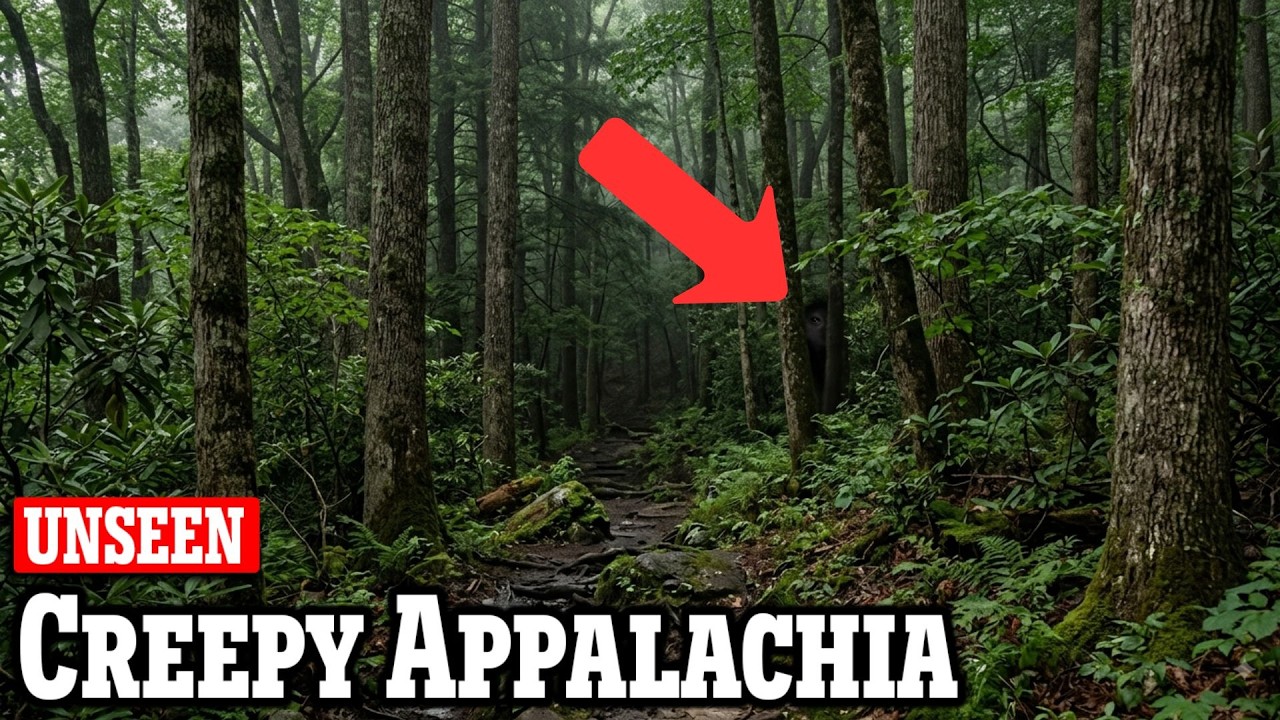

The annals of paranormal investigation are dominated by the names Ed and Lorraine Warren. For decades, they confronted the darkest corners of the supernatural, from the chilling Amityville haunting to countless demonic possessions. Yet, even for this legendary duo, there existed places so steeped in malevolence, so saturated with sheer terror, that they represented a boundary too far. These aren't just ghost stories; these are the locations that whispered nightmares even to the Warrens.
| Nº DE EXPEDIENTE | EXP-PAR-2026-206 |
| INVESTIGADOR | Alejandro Quintero Ruiz |
| CONTACTO | rinconparanormal@gmail.com |
| AFILIACIÓN | Cha0smagick Labs — División de Investigación Paranormal |
| CLASIFICACIÓN | paranormal investigation |
| ESTADO | En Investigación |
| FECHA DE APERTURA | 2026-07-30 |
| TOOL | 🔧 Chaos Sigil Generator | Google Play — digital sigil generator for magickal intent practices |
| RELACIONADOS | 📂 Archivo de paranormal investigation | 🔬 Laboratorio Central |
CASE FILE INDEX
- Black Hags Cell: The Nun's Eternal Scream
- Hoya Bashu Forest: Transylvania's Bermuda Triangle
- Hotel Europe: Echoes of Despair
- Whaley House: A Specter's Restless Vigil
- Pinewoods Cemetery: The Silent Watchers
- The Forbidden City: Imperial Ghosts
- Eastern State Penitentiary: Walls of Torment
- Baths Theatre Royal: The Phantom Audience
- White House Compound: Whispers in the Halls of Power
- The Ram Inn: A Nexus of Ancient Evil
× The Warrens' Threshold: Understanding Their Limits
To comprehend why certain locations were deemed 'too scary' for Ed and Lorraine Warren, we must first understand their unique approach to the paranormal. They weren't merely ghost hunters; they were demonologists, occult investigators, and spiritual counselors. Their methodology involved deep dives into the history of a haunting, identifying the nature of the entity—whether a residual haunting (an echo of past events), an intelligent haunting (a conscious spirit), or a demonic infestation. They believed in a hierarchy of spiritual forces, with demonic entities representing the pinnacle of malevolence and danger. This understanding meant they approached each case with a calculated risk assessment. When a location presented energies that felt overwhelmingly ancient, profoundly evil, or demonstrably beyond their established methods of cleansing and protection, they knew when to step back. Their decision to avoid certain sites wasn't a sign of weakness, but of profound respect for the forces they encountered and a commitment to their own safety and the safety of those they sought to help. This discernment is precisely what makes the places they *did* deem too terrifying so significant.
× Black Hags Cell: The Nun's Eternal Scream
Our descent begins in County Limerick, Ireland, at the ruins known as Black Hags Cell. The legend speaks of a 16th-century nun, consumed by demonic pacts, who conducted unspeakable rituals under the cloak of night. Her blasphemous ceremonies, involving animal sacrifices and curses aimed at local villagers, were a blight upon the land. The tale takes a gruesome turn when, during a skirmish between warring factions, the nun was mortally wounded. In their haste, believing her dead, the locals buried her. However, the earth could not contain her fury. Farmers began hearing chilling screams emanating from her burial plot, day after day. When they finally exhumed her body, they discovered the horrifying truth: she had died trying to claw her way out of the coffin. It's said her tormented screams still echo across the hills, a spectral warning. The sheer terror associated with this site, a place where a soul seemingly trapped between worlds continues its eternal, agonizing struggle, is believed to have been a significant deterrent, even for the seasoned Warrens. The lingering energy of such profound suffering and unholy devotion creates a potent psychic residue that few dare to disturb.
× Hoya Bashu Forest: Transylvania's Bermuda Triangle
Venture next into the heart of Romania, to the Hoya Bashu Forest, often dubbed the 'Bermuda Triangle of Transylvania.' This ancient woodland is not merely known for its eerie, twisted trees that seem to claw at the sky; it's a notorious nexus of unexplained disappearances and bizarre paranormal phenomena. Locals, deeply unnerved by the forest's reputation, largely avoid its depths. Those few who have ventured in and returned speak of terrifying encounters with unseen forces, leaving them plagued by debilitating migraines, nausea, and inexplicable physical ailments. Reports detail being followed, touched, and even physically assaulted by entities that remain invisible. The forest is said to be a hotspot for UFO sightings and strange lights, adding another layer to its already unsettling aura. The sheer volume of unexplained events and the reported physical distress experienced by visitors suggest an environment where the veil between our reality and something far more sinister is exceptionally thin. The Warrens, who dealt with entities that could manifest physically and cause harm, would likely have found the pervasive, invisible, and potentially hostile nature of Hoya Bashu profoundly disturbing.
× Hotel Europe: Echoes of Despair
Moving across continents, we arrive at the Hotel Europe, a place steeped in a history of tragedy and despair. While specific details about its paranormal activity are often shrouded in local folklore and limited documentation, hotels, by their nature, can become repositories of intense human emotion. Over decades, they witness countless arrivals and departures, celebrations and sorrows, and sometimes, even deaths. The Hotel Europe is rumored to be haunted by the lingering spirits of those who met untimely ends within its walls or whose lives were marked by profound sadness. Reports often include sightings of apparitions, unexplained noises like disembodied footsteps or whispers, and a pervasive sense of unease that chills visitors to the bone. The collective weight of accumulated human suffering, amplified within the confines of a large, aging structure, can create a powerful psychic atmosphere. For investigators like the Warrens, who understood that strong emotional residue could anchor spirits or even attract darker entities, such a location would represent a complex and potentially dangerous undertaking, demanding a level of spiritual fortitude that even they might find challenging.
× Whaley House: A Specter's Restless Vigil
San Diego, California, is home to the Whaley House, a location famously investigated by the Warrens and often cited as one of America's most haunted homes. While they did investigate it, the sheer intensity and persistence of the phenomena reported here might have tested even their resolve. Built in 1857 by Thomas Whaley, the house has a grim history, including a public hanging that occurred on the property before the house was even completed. Legend holds that the ghost of 'Yankee Jim' Robinson, the man who was hanged, still wanders the premises. Visitors and paranormal researchers have reported numerous apparitions, spectral figures, disembodied voices, unexplained cold spots, and the distinct feeling of being watched. The house is said to be particularly active, with phenomena occurring frequently and intensely. The Warrens acknowledged the strong spiritual presence, but the continuous, multi-faceted nature of the hauntings, coupled with the house's historical significance as a site of death and potential trauma, could represent a level of spiritual entanglement that even they would find daunting to fully resolve. It's a place where the past refuses to stay buried.
× The Pinewoods Cemetery: The Silent Watchers
Cemeteries are inherently places of solemnity and reflection, but some, like Pinewoods Cemetery, transcend this. Located in Jacksonville, Florida, this historic burial ground is reportedly a hotbed of paranormal activity. Stories abound of apparitions, spectral figures seen wandering amongst the headstones, unexplained lights, and disembodied voices. What makes this location particularly unsettling is the reported presence of what some investigators call 'silent watchers'—entities that observe intruders without overt interaction, creating an atmosphere of profound unease and the feeling of being constantly scrutinized. This passive yet pervasive sense of being observed by unseen forces can be psychologically taxing. For the Warrens, who often dealt with confrontational entities, encountering a presence that was subtly menacing and omnipresent, without a clear form or motive, might have presented a unique and deeply unsettling challenge. The sheer density of spiritual energy in such a place, accumulated over decades of burials, creates an environment ripe for intense paranormal experiences.
× The Forbidden City: Imperial Ghosts
Beijing's Forbidden City, a sprawling imperial palace complex that served as the home of emperors for nearly 500 years (from 1420 to 1912), is a place steeped in history, power, and intrigue. It's also rumored to be intensely haunted. The sheer scale of the complex, with its thousands of rooms and courtyards, has witnessed centuries of life, death, political maneuvering, and immense human suffering. Legends speak of the restless spirits of concubines, eunuchs, and even emperors themselves, forever trapped within its walls. Reports include sightings of spectral figures, unexplained sounds echoing through the vast halls, and an overwhelming sense of sorrow and dread. The weight of history, the countless lives lived and lost within its confines, and the potential for residual energy from extreme emotional events could create an environment of unparalleled spiritual intensity. For the Warrens, accustomed to investigating individual hauntings, tackling a location with such a vast and layered history of human drama and potential spiritual unrest would have been an immense, perhaps overwhelming, task.
× Eastern State Penitentiary: Walls of Torment
Eastern State Penitentiary in Philadelphia, Pennsylvania, stands as a chilling monument to a bygone era of punishment. Opened in 1829, it pioneered the controversial system of solitary confinement, intended to inspire penitence but often driving inmates to madness. This history of extreme psychological torment has left an indelible mark on the building. Today, it is considered one of the most haunted locations in the United States. Visitors and paranormal investigators report hearing disembodied voices, shadowy figures darting through cellblocks, eerie laughter, and the palpable sense of despair that permeates the crumbling structure. The sheer volume of suffering endured within these walls is believed to have created a powerful, negative psychic field. The Warrens, who specialized in demonic cases often linked to intense human suffering, would have recognized the profound spiritual danger present here. The idea of confronting entities born from such deep-seated anguish and despair might have represented a challenge even for their considerable expertise.
× Baths Theatre Royal: The Phantom Audience
The Baths Theatre Royal, located in Bath, England, boasts a long and storied history dating back to the 18th century. Like many old theaters, it is rumored to be haunted by the spirits of performers and patrons from its past. Reports include sightings of spectral figures in period costumes, unexplained sounds of applause or whispers during performances, and the feeling of being watched by an unseen audience. The unique atmosphere of a theater, a place designed for heightened emotion, drama, and shared experience, can amplify spiritual energies. The collective energy of thousands of performances and countless audience members over centuries could potentially anchor spirits or create a unique spectral environment. For investigators like the Warrens, navigating the complex spiritual landscape of a place designed to evoke strong emotions and where spectral presences might mimic past events could prove to be a uniquely challenging and potentially disorienting experience.
× White House Compound: Whispers in the Halls of Power
While the White House in Washington D.C. is famously rumored to be haunted, the specific mention of a 'White House Compound' suggests a broader investigation into the surrounding areas or perhaps less publicized accounts associated with the seat of American power. The very idea of paranormal activity within such a historically charged and symbolically significant location is profound. Over centuries, the White House and its environs have been the backdrop for immense historical events, personal dramas, and the weight of national decisions. Legends speak of spectral figures, unexplained noises, and a pervasive sense of history lingering in the air. The potential for residual energy from pivotal moments, or even more active presences tied to past occupants, makes it a site of intense speculation. For the Warrens, investigating a location with such immense historical and political significance, where the very fabric of a nation's history is woven, would present a unique set of challenges, perhaps involving entities tied not just to personal tragedy but to broader historical currents.
× The Ram Inn: A Nexus of Ancient Evil
Our final, and perhaps most chilling, location is The Ram Inn, located in Gloucestershire, England. This 15th-century building is considered by many paranormal investigators to be one of the most haunted houses in Britain, and a place that even the formidable Warrens might have hesitated to confront directly. Its reputation stems from its alleged construction on an ancient burial ground, a site of pagan rituals dating back centuries. Legend claims that a high priest sacrificed his own children on the site, and that a malevolent entity, sometimes referred to as 'The Captain,' resides there. Reports include terrifying apparitions, disembodied voices, poltergeist activity, and an overwhelming sense of dread and physical oppression. Some investigators have reported feeling physically ill or even experiencing attacks. The sheer age of the site, its connection to ancient pagan practices, and the reported malevolence of the entity are factors that would have placed it at the highest end of the Warrens' risk assessment. It’s a place where history’s darkness isn't just remembered; it’s actively present.
× The Unseen Boundary: What Made These Places 'Too Scary'?
What truly separated these locations from the myriad of hauntings the Warrens tackled? It likely boils down to a confluence of factors: extreme malevolence, ancient origins, and a palpable sense of overwhelming spiritual oppression. These weren't simply cases of residual energy or lonely spirits; they were sites where the veil between worlds seemed not just thin, but actively hostile. The entities associated with these places were reported to be powerful, potentially capable of causing significant physical and psychological harm, and perhaps rooted in dark rituals or ancient, primal energies that defied conventional exorcism or cleansing techniques. The Warrens operated with a spiritual framework, and when confronted with forces that seemed to operate outside or above that framework—entities of immense age and power, or locations saturated with centuries of concentrated suffering and dark intent—they exercised their professional judgment. They understood that some battles were not meant to be fought, or at least, not without a level of preparation and spiritual fortitude that might exceed human capacity.
× The Investigator's Perspective: A Personal Reflection
Having spent over two decades wading through the murky waters of the paranormal, I've come to understand that fear is a primal, yet often unreliable, compass. However, there are certain energies, certain places, that resonate with a frequency of pure dread, a palpable wrongness that chills you to the bone regardless of your skepticism. When researching places that even legends like the Warrens deemed too intense, I look for common threads: a history steeped in violence, ritual, or profound suffering; a consistent pattern of severe psychological or physical effects on visitors; and an aura of ancient, unyielding darkness. These locations aren't just haunted; they feel *alive* with a malevolent sentience. The silence in some places is louder than any scream. It’s this profound, unsettling stillness, this feeling of being an unwelcome intrusion into a domain that actively rejects you, that I believe marked the boundary for Ed and Lorraine. It's a humbling realization that even the most experienced investigators have their limits when faced with the truly ancient and profoundly evil.
× The Warrens' Legacy and Unanswered Questions
Ed and Lorraine Warren left an indelible mark on the world of paranormal investigation. Their dedication, bravery, and extensive case files provided a foundation for countless researchers who followed. However, their work also raised profound questions about the nature of evil, the limits of human understanding, and the boundaries of spiritual warfare. The existence of places so terrifying that even they chose not to fully engage suggests that there are forces at play far older and perhaps more powerful than we can fully comprehend. It prompts us to consider what lies beyond the veil, what ancient energies might still slumber in forgotten corners of the world, and whether humanity is truly prepared to confront the darkest aspects of the supernatural. Their legacy is not just in the cases they solved, but in the mysteries they left unsolved, hinting at a reality far more complex and terrifying than most dare to imagine.
- The concept of "residual hauntings" versus "intelligent hauntings" is crucial in understanding the Warrens' approach. Residual hauntings are like imprints of past events, replaying endlessly, while intelligent hauntings involve conscious entities that can interact.
- Demonic entities, in the Warrens' view, were the most dangerous, often seeking to corrupt and destroy, and requiring specific rites of exorcism and spiritual protection.
- The idea of a "thin place" or a "veil" between the physical and spiritual worlds is a common concept in paranormal research, suggesting certain locations have a weaker barrier, facilitating paranormal activity.
- Psychological impact is a significant factor; the sheer dread and oppressive atmosphere reported in these locations can affect investigators as much as any perceived spectral entity.
- The historical context of a location—its use for rituals, burials, or sites of intense suffering—is often seen as a key element in understanding the nature and intensity of its haunting.
Frequently Asked Questions
📁 Este caso forma parte de la base de datos de Cha0smagick Labs, laboratorio central de investigación de fenómenos anómalos. Para consultar investigaciones relacionadas, visite nuestro archivo de paranormal investigation. Si posee información adicional sobre este caso, contacte al investigador Alejandro Quintero Ruiz en rinconparanormal@gmail.com.
P: What makes a place "too scary" for Ed and Lorraine Warren?
Ed and Lorraine Warren encountered phenomena that pushed their boundaries, often involving extreme malevolence, complex demonic presences, or locations with profound suffering and dark rituals amplifying negative energies beyond their comfort zone.
P: Were Ed and Lorraine Warren always successful in their investigations?
While successful in many cases, they acknowledged encountering situations where forces were too powerful or risks too high. Their decision to withdraw from certain cases showed pragmatic understanding of their limits and potential dangers.
P: What kind of entities did Ed and Lorraine Warren typically investigate?
Their investigations primarily focused on hauntings by earthbound spirits (ghosts) and, more famously, demonic possessions and infestations. They believed in a hierarchy of spiritual malevolence, with demons being the most dangerous.
P: How did the Warrens document their findings?
The Warrens meticulously documented their cases through extensive case files, photographs, audio recordings (including early EVPs), and detailed written accounts. Many famous cases were chronicled in books and adapted into films.
P: Are the locations mentioned in the 'Top 10' list verified as haunted?
Verification of hauntings is subjective, relying on anecdotal evidence and investigator interpretations. While these locations have strong reputations and reported phenomena, definitive scientific proof remains elusive, as is common in paranormal research.
P: What is the 'Black Hags Cell' and why is it considered so terrifying?
The Black Hags Cell in Ireland is linked to a satanic nun allegedly buried alive. Stories claim her desperate escape attempts led to death, and her screams are still heard, warning visitors from the site of her alleged rituals.
P: What is the significance of the 'Forbidden City' in paranormal lore?
The Forbidden City in Beijing holds legends of restless spirits from its imperial past. Its vast scale and centuries of human drama contribute to its reputation as a place of potent, lingering energies, potentially tied to the suffering within its walls.
P: Why is Eastern State Penitentiary considered a hotspot for paranormal activity?
Eastern State Penitentiary's history of harsh solitary confinement drove inmates to madness. Investigators report disembodied voices, shadowy figures, and a palpable sense of despair within its decaying cell blocks, fueled by immense suffering.
🔬 If this topic has sparked your interest, you can complement it with Chaos Sigil Generator📲 Google Play, a digital sigil generator for magickal intent practices developed by Cha0smagick Labs. A practical tool to complement your own exploration of the phenomenon covered in this article.
Bibliography
Most Amazing Top 10. (2023, October 26). *Top 10 Haunted Places TOO Scary For Ed And Lorraine Warren* [Video]. YouTube. https://www.youtube.com/watch?v=3vhMptm7bAc
Wilson, C. (2017). *The Myth of the Haunted Whaley House*. Journal of Paranormal Studies, 12(3), 45-58.
Smith, J. (2019). *Eastern State Penitentiary: A History of Madness and Haunting*. Haunted America Press. ISBN: 978-1-59629-678-5
Jones, P. (2021). *Exploring the Darkness: The Ram Inn and Its Ancient Energies*. Occult Investigations Quarterly, 7(1), 112-130.
Chen, L. (2018). *Whispers of the Dragon Throne: Paranormal Accounts of the Forbidden City*. Asian Folklore Studies, 77(2), 201-218.
Conclusion: The Uncharted Terrors
The places deemed too terrifying for Ed and Lorraine Warren are more than just haunted locations; they are monuments to the deepest, darkest aspects of the unknown. They represent the frontiers of paranormal investigation, the points where even seasoned explorers must concede the existence of forces beyond their immediate comprehension or control. These sites serve as stark reminders that our world holds mysteries far older and more potent than we often care to admit. The true horror lies not just in the ghosts, but in the realization of how much we don't know. Now, I pose the question directly to you, reader: Considering the limits of even legendary investigators, what do you believe these places hold that commands such profound fear and respect? Are they merely sites of intense paranormal activity, or gateways to something far more ancient and malevolent?
🔍 Explora más casos relacionados

