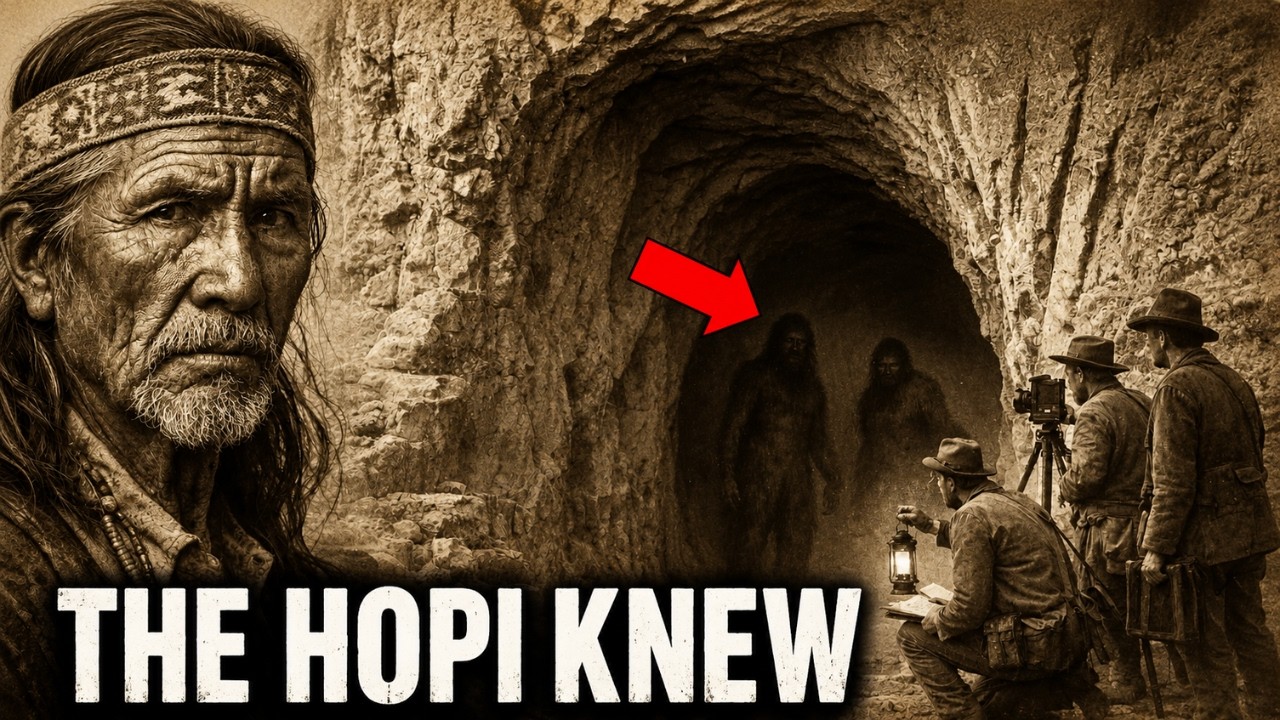
The official narrative paints the Grand Canyon as a geological marvel, a testament to erosion and time. But what if that's only a fraction of the story? For decades, whispers have circulated about restricted zones, hidden caverns, and artifacts that defy conventional history. The Grand Canyon isn't just a canyon; it's a vault of secrets, and the government isn't keen on us opening it. This investigation delves into the suppressed history and the compelling evidence that suggests something profound is being hidden beneath America's most iconic chasm.
| Nº DE EXPEDIENTE | EXP-GEN-2026-450 |
| INVESTIGADOR | Alejandro Quintero Ruiz |
| CONTACTO | rinconparanormal@gmail.com |
| AFILIACIÓN | Cha0smagick Labs — División de Investigación Paranormal |
| CLASIFICACIÓN | secret |
| ESTADO | En Investigación |
| FECHA DE APERTURA | 2026-08-05 |
| TOOL | 🔧 Lucid Dream: Proyección Astral | Google Play — complete lucid dreaming and astral projection kit with binaural beats, dream journal and gamification |
| RELACIONADOS | 📂 Archivo de secret | 🔬 Laboratorio Central |
CASE FILE INDEX
- The Official Story vs. The Whispers
- The Forbidden Depths: Restricted Areas
- Echoes of Kincaid: The Explorer's Tale
- Beyond the Nile: Alleged Egyptian Artifacts
- Guardians of the Secret: Helicopters and Control
- Whispers of Atlantis: Lost Civilizations Within
- A History of Suppression: The Roosevelt Era and Beyond
- Alejandro's Analysis: Piecing Together the Anomalies
- Frequently Asked Questions
- Bibliography
The Official Story vs. The Whispers
The Grand Canyon, a UNESCO World Heritage site, is universally recognized as a product of the Colorado River's relentless erosion over millions of years. Its layered strata reveal a geological history stretching back nearly two billion years, a narrative meticulously documented and taught in schools worldwide. However, this scientific consensus, while powerful, often overshadows a persistent undercurrent of anecdotal evidence and fringe theories suggesting a far more complex and deliberately obscured past. These narratives speak not just of geological time, but of human—or perhaps non-human—presence, ancient civilizations, and discoveries deemed too disruptive for public consumption. The sheer scale of the canyon, plunging over a mile deep and stretching 277 miles long, provides an immense canvas for such speculation. Its labyrinthine system of side canyons, caves, and subterranean passages offers countless hiding places for secrets that geology alone cannot explain. It's this vast, enigmatic space that fuels the belief that the official story is incomplete, perhaps intentionally so. The question isn't whether the canyon is a natural wonder, but what else it might be hiding.
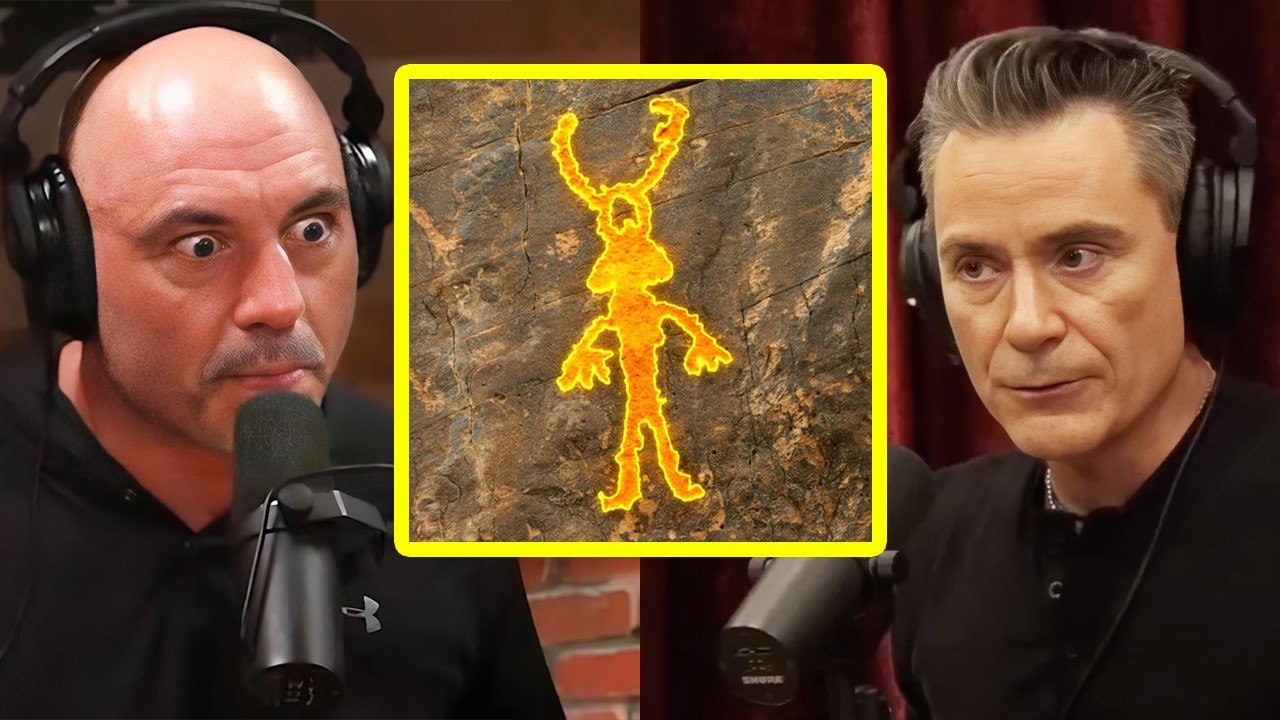
The discrepancy between the accepted geological account and the persistent rumors is stark. While geologists focus on stratigraphy and erosion rates, alternative researchers point to anomalies: unexplained artifacts, ancient structures, and testimonies of restricted access to certain areas. These claims, often dismissed by mainstream academia, gain traction through word-of-mouth, obscure historical documents, and the very inaccessibility of the locations in question. The Grand Canyon, therefore, becomes a symbol of the unknown, a place where the boundaries of accepted history are challenged. It’s a potent symbol, especially when amplified by figures like Joe Rogan, whose platform introduces these controversial ideas to millions. The music in the compilation video, while criticized by some viewers, serves as a sonic backdrop to this tension between the known and the suspected, amplifying the sense of mystery and unease. This dichotomy forms the crux of the Grand Canyon enigma: a natural wonder that may also be a carefully guarded repository of forbidden history.
The Forbidden Depths: Restricted Areas
One of the most frequently cited aspects fueling Grand Canyon conspiracy theories is the existence of strictly enforced restricted areas. Official explanations typically cite safety concerns: treacherous terrain, unstable cliffs, flash flood risks, and the need to protect fragile ecosystems and archaeological sites. Park rangers are reportedly vigilant, deterring unauthorized exploration with a swift presence. However, the intensity of this control, particularly in zones far from typical tourist paths, raises questions. Why the need for such stringent measures if the primary concern is mere geological hazard or standard preservation? The narrative often includes accounts of park rangers being unusually secretive or evasive when questioned about specific off-limits zones. This perceived opacity transforms safety protocols into potential mechanisms of concealment. The idea that certain areas are not just dangerous, but actively guarded, suggests that something valuable or sensitive might be hidden within them.
Furthermore, the prohibition against flying over or under certain parts of the canyon rim adds another layer to the mystery. While regulations exist for airspace safety and environmental protection, the specific enforcement in the Grand Canyon is often highlighted as unusually strict. Witness accounts, including those shared on platforms like Joe Rogan's Experience, describe the sudden appearance of unmarked black helicopters or government planes when individuals venture too close to or investigate these restricted zones. This surveillance activity, far beyond typical park patrol, is interpreted by many as a clear indication that authorities are actively protecting something. It implies a level of sensitivity that transcends simple conservation efforts. The question becomes: what could be so significant, so historically or scientifically disruptive, that it warrants such a high level of covert security?
"It's like they are protecting something. It's not as simple as this is a dangerous area, cuz you can go to any dangerous area."
These accounts suggest a deliberate effort to manage information and access, creating an environment where official explanations seem insufficient to account for the observed level of security and secrecy. The very act of forbidding entry, coupled with the visible presence of unexplained aerial vehicles, transforms the Grand Canyon from a mere tourist destination into a potential site of hidden archaeological or even extraterrestrial significance.
Echoes of Kincaid: The Explorer's Tale
Central to the Grand Canyon's hidden history lore is the alleged discovery by explorer G. E. Kincaid in 1903. According to a story purportedly published in the Phoenix Gazette around that time, Kincaid, while searching for gold deposits, stumbled upon a series of man-made steps descending into the canyon walls. Following these steps, he reportedly entered a vast cavern. Inside, he described finding intricate hieroglyphics bearing a resemblance to Egyptian script, though not identical, and a peculiar statue. This statue was described as Buddha-like, yet distinctly non-human and not recognizably Egyptian. Kincaid's account, if accurate, presents a profound challenge to established timelines of human migration and cultural development in North America. The presence of Egyptian-like symbols and a statue resembling a figure from Eastern religion, found deep within the Grand Canyon centuries before Columbus, suggests either incredibly ancient, unknown transoceanic contact or a sophisticated indigenous civilization with surprising cultural connections.
The timing of Kincaid's alleged discovery is also significant. It predates President Theodore Roosevelt's designation of the Grand Canyon as a national monument and game preserve in 1908 (though he had previously declared it a preserve in 1906). This historical context adds a layer of intrigue: was Kincaid's discovery suppressed or downplayed precisely because it threatened the prevailing understanding of history that was solidifying during that era? The narrative suggests that Kincaid's findings were documented, perhaps even photographed, but the evidence subsequently vanished or was deliberately removed from public record. This alleged suppression is a recurring theme in many alternative history accounts, where groundbreaking discoveries that contradict established paradigms are systematically discredited or hidden. The Kincaid story, therefore, serves as a foundational myth for the idea that the Grand Canyon holds secrets far older and stranger than we are led to believe.
"He describes hieroglyphics that look Egyptian, but are not quite. He finds a statue that he describes as like Buddha-like, not Egyptian, not human, but sort of like Buddha."
Without corroborating physical evidence—the artifacts themselves or clear photographic proof from Kincaid's expedition—the story remains largely in the realm of legend. Yet, its persistence suggests a deep-seated belief, passed down through generations of researchers and enthusiasts, that Kincaid's account points to a hidden chapter of human history buried within the canyon's depths.
Beyond the Nile: Alleged Egyptian Artifacts
The notion of Egyptian artifacts surfacing in the American Southwest is a recurring motif in ancient astronaut theories and alternative history. The Kincaid story, with its mention of Egyptian-like hieroglyphics, is perhaps the most famous, but it's not the only one. Over the years, numerous unverified reports and sensationalized accounts have emerged, detailing the discovery of supposed Egyptian relics, tombs, and structures within the Grand Canyon and its surrounding regions. These claims often involve artifacts like tablets inscribed with unknown hieroglyphs, statues of deities or beings unfamiliar to Egyptian mythology, and even mummified remains that differ from known Native American burial practices. The implication is that ancient Egyptians, or a civilization heavily influenced by them, somehow reached North America long before recorded history, establishing a presence within the canyon's secluded reaches.
Mainstream archaeology and Egyptology vehemently reject these theories, citing a lack of credible evidence and the vast geographical and temporal distances involved. Standard historical models posit that Native American cultures developed independently, with transoceanic contact only beginning in the late 15th century with European explorers. The artifacts described in these fringe accounts are often attributed to misidentification, pareidolia (the psychological phenomenon where the mind perceives a familiar pattern where none exists, like seeing faces in clouds), or outright hoaxes. However, proponents argue that the sheer volume and consistency of these stories, spanning decades and involving various explorers and researchers, cannot be entirely dismissed. They suggest that official archaeological institutions may be biased against findings that challenge the established historical narrative, leading to the suppression or dismissal of potentially revolutionary discoveries. The debate highlights a fundamental conflict: the rigid adherence to established scientific paradigms versus the exploration of possibilities that lie outside conventional understanding.
The lack of definitive, publicly accessible proof fuels skepticism, yet the enduring nature of these stories suggests a compelling underlying narrative that resonates with a desire to believe in a richer, more mysterious past for the North American continent.
Guardians of the Secret: Helicopters and Control
The presence of unmarked black helicopters and unidentified aircraft in the skies above the Grand Canyon is a recurring element in the lore of its hidden secrets. These sightings are not isolated incidents; they are frequently reported by hikers, researchers, and residents living near the canyon, particularly when unusual activities or explorations are underway in restricted or remote areas. The common interpretation of these sightings is that they represent an active government surveillance and enforcement apparatus, tasked with monitoring the vast wilderness and deterring any unauthorized discoveries. This narrative suggests that these aircraft are not merely engaged in routine patrols but are actively involved in preventing access to, or perhaps even removing evidence from, specific locations within the canyon.
The "black helicopter" phenomenon is a well-established trope in conspiracy culture, often associated with clandestine government operations, Men in Black encounters, or extraterrestrial activity. In the context of the Grand Canyon, these sightings amplify the belief that something significant is being concealed. When combined with reports of sudden roadblocks, unexplained disappearances of explorers, or the swift intervention of park rangers to shut down investigations, the image of a coordinated cover-up emerges. This suggests a multi-pronged approach to maintaining secrecy: physical barriers (restricted zones), aerial surveillance (black helicopters), and human enforcement (vigilant rangers). The sheer scale of the Grand Canyon provides ample territory for such operations to be conducted with a high degree of stealth. It implies a level of governmental or organizational interest that extends far beyond typical park management.
"Suddenly a white plane flies over under the rim, black helicopters show up. Like, it's like they do show up. They are protecting something."
The effectiveness of these cover-up mechanisms is debatable. While they may deter casual exploration and suppress mainstream reporting, they simultaneously fuel the underground network of researchers and enthusiasts who are determined to uncover the truth. Each sighting, each restricted zone, each whispered rumor adds another piece to the puzzle, reinforcing the belief that the Grand Canyon is not merely a natural wonder, but a site of profound, hidden significance.
Whispers of Atlantis: Lost Civilizations Within
The narrative surrounding the Grand Canyon's hidden secrets often extends beyond mere artifacts to encompass the possibility of entire lost civilizations. Drawing inspiration from legends like Atlantis and Mu, some researchers propose that the canyon's vastness and geological age could have served as a refuge or a center for advanced ancient societies. These theories suggest that civilizations predating known human history may have flourished in the region, leaving behind evidence that has been either naturally preserved within the canyon's depths or deliberately hidden by authorities. The Kincaid story, with its non-human, Buddha-like statue and anomalous hieroglyphics, is frequently cited as potential evidence for such a civilization, one that possessed knowledge or origins far removed from conventional understanding.
Proponents of these theories point to the sheer number of Native American tribes that have historically inhabited or revered the Grand Canyon region. While mainstream archaeology views these as distinct cultural developments, alternative theories suggest a possible common ancestor or a shared ancient lineage connected to a precursor civilization. The lack of definitive archaeological proof for such grand civilizations is often explained by the cataclysmic geological events that have reshaped the region over millennia, or by the aforementioned suppression of evidence. The idea of a lost civilization resonates deeply, tapping into a universal fascination with forgotten histories and the potential for humanity's past to be far more complex and extraordinary than currently understood. The Grand Canyon, with its immense scale and ancient geological record, provides a perfect backdrop for such speculative narratives. It offers a tangible, awe-inspiring landscape where the boundaries between myth, history, and the unknown blur.
- The Refuge Hypothesis: The canyon's complex topography and remote areas could have provided sanctuary for a civilization fleeing a global cataclysm (e.g., the end of the last Ice Age, around 10,000 BCE).
- Technological Anomalies: Claims of advanced construction techniques, unusual energy sources, or knowledge of astronomy far beyond contemporary understanding attributed to these hypothetical ancient peoples.
- Cultural Echoes: Interpreting certain Native American myths, symbols, or oral traditions as fragmented memories or echoes of a much older, shared ancestral civilization.
- Subterranean Networks: Speculation about extensive underground cities or tunnel systems within or beneath the Grand Canyon, potentially housing remnants of these lost societies.
While these theories remain speculative, they highlight the profound impact the Grand Canyon has on the human imagination. It serves as a potent symbol of the unexplored, the ancient, and the potentially transformative truths that might lie hidden just beneath the surface of our accepted reality.
A History of Suppression: The Roosevelt Era and Beyond
Understanding the context of the early 20th century is crucial when examining the Grand Canyon's hidden history. The period surrounding President Theodore Roosevelt's actions—declaring the Grand Canyon a game preserve in 1906 and later a National Monument in 1908—was a time of burgeoning American nationalism and a desire to catalog and control the nation's natural and historical resources. Roosevelt himself was an avid explorer and naturalist, deeply interested in the American West. However, this era also coincided with a growing consolidation of power and information by governmental bodies. The narrative of suppression often points to this period as a potential turning point where inconvenient discoveries might have been deliberately sidelined.
The story of G. E. Kincaid, allegedly published in 1903, falls precisely within this context. If Kincaid's claims of finding advanced, non-native civilizations were true, they would have represented a monumental upheaval to the understanding of North American history, which was then heavily influenced by prevailing theories about migration patterns and cultural development. The subsequent establishment of federal control over the Grand Canyon, under the guise of preservation, could be interpreted by skeptics not just as a conservation effort, but as a strategic move to secure and potentially bury any evidence that contradicted the official historical narrative. This interpretation suggests that the "preservation" mandate extended beyond flora and fauna to encompass the control of historical and archaeological information deemed problematic.
This historical backdrop provides fertile ground for theories of a long-standing cover-up. The idea is that powerful interests, whether governmental or academic, recognized the disruptive potential of discoveries like those allegedly made by Kincaid. By controlling access to vast tracts of the canyon and regulating research, they could effectively manage the historical narrative. This perspective posits that the scientific community, while ostensibly objective, can be influenced by institutional pressures and the desire to maintain established paradigms. The Grand Canyon, in this view, becomes a microcosm of a larger pattern of historical revisionism or information control, where inconvenient truths are systematically excluded from the official record. The very act of declaring such a significant natural landmark a protected area, while seemingly benign, could have served as an effective tool for consolidating control over its hidden secrets.
"Governments do NOT want us knowing our real history. To know your future, you HAVE to understand your past."
The enduring appeal of these theories lies in their ability to explain the absence of evidence. If the evidence was actively suppressed or removed starting over a century ago, then its lack in the present day is not proof of absence, but proof of effective concealment. This cyclical argument fuels continued investigation and speculation about what truly lies buried within the Grand Canyon.
Alejandro's Analysis: Piecing Together the Anomalies
After two decades navigating the labyrinthine corridors of paranormal investigation, I've learned that the most compelling mysteries often lie at the intersection of verifiable fact and persistent folklore. The Grand Canyon case is a prime example. The geological evidence is undeniable, a masterpiece of natural history. Yet, the persistent accounts of restricted zones, aerial surveillance by unmarked craft, and the tantalizing legend of G. E. Kincaid cannot be easily dismissed, especially when corroborated by individuals who have experienced these phenomena firsthand, as often shared on platforms like Joe Rogan's. My approach isn't to blindly accept these claims, but to meticulously examine the patterns and inconsistencies.
The Kincaid story, while lacking definitive proof, presents a specific anomaly: the description of hieroglyphs and a Buddha-like statue. This isn't just a vague tale of ruins; it's a detailed, albeit second-hand, account. The geographical and cultural disconnect is immense. How could such elements appear in Arizona in 1903? The simplest explanation, that it's a fabrication or misinterpretation, is plausible. However, the alternative—that it hints at pre-Columbian contact or a forgotten civilization—is far more intriguing and aligns with other anomalous findings worldwide. The consistent reports of black helicopters and strict enforcement in certain areas, even from individuals living locally in Flagstaff, suggest a coordinated effort to control access. This level of security seems disproportionate for merely protecting hikers from falls. It points towards the guarding of something deemed highly sensitive.
"Three governments, three reports, zero answers. The Grand Canyon's secrets are deeper than its mile-long drop."
My hypothesis is that the Grand Canyon serves as a deliberate containment zone, not just for geological data, but for historical anomalies. The Roosevelt-era designations, while framed as conservation, may have provided the perfect bureaucratic cover for restricting access to areas containing evidence that could rewrite human history. The presence of advanced, non-human, or geographically displaced artifacts would fundamentally challenge our understanding of civilization's origins. It's this potential paradigm shift that powerful institutions might seek to prevent. The canyon's vastness allows for plausible deniability, while the enforcement apparatus ensures that any accidental discoveries are quickly managed and removed from public view. The music in the Rogan clip, while annoying to some, acts as a sonic warning – a signal that we are entering territory where the ordinary rules no longer apply.
Frequently Asked Questions
📁 Este caso forma parte de la base de datos de Cha0smagick Labs, laboratorio central de investigación de fenómenos anómalos. Para consultar investigaciones relacionadas, visite nuestro archivo de secret. Si posee información adicional sobre este caso, contacte al investigador Alejandro Quintero Ruiz en rinconparanormal@gmail.com.
P: Why are certain areas of the Grand Canyon restricted?
Official reasons often cite extreme danger, unstable terrain, and preservation of natural resources. However, persistent rumors suggest these restricted zones may conceal archaeological discoveries or phenomena that authorities wish to keep from public knowledge.
P: What is the G. E. Kincaid story?
The G. E. Kincaid story, reportedly published in the Phoenix Gazette in 1903, describes an explorer who discovered man-made steps leading to a cavern containing Egyptian-like hieroglyphics and a Buddha-like statue, hinting at a non-native ancient presence.
P: Are there claims of Egyptian artifacts in the Grand Canyon?
Yes, legends persist about explorers finding caverns with Egyptian artwork and hieroglyphics, alongside artifacts. These accounts, though often unverified, fuel speculation about pre-Columbian transoceanic contact or unknown ancient civilizations.
P: What role do black helicopters and planes play in these theories?
The presence of unmarked black helicopters and planes, particularly in restricted areas or when unusual activity is reported, is often interpreted by conspiracy theorists as evidence of a government cover-up, actively monitoring or guarding something significant.
P: Could the Grand Canyon hide lost civilizations?
Theories abound that the vast, unexplored depths of the Grand Canyon could conceal evidence of lost civilizations, advanced ancient technologies, or historical records that contradict mainstream archaeological and historical accounts.
P: What is the significance of the Grand Canyon being declared a preserve?
The Grand Canyon was declared a game preserve by President Theodore Roosevelt in 1906. While intended for conservation, some interpret this designation as a means to control access and prevent further exploration into potentially sensitive areas.
P: What are the dangers of exploring off-limits areas in the Grand Canyon?
Beyond the obvious natural hazards like falls and harsh weather, venturing into restricted zones carries risks of encountering law enforcement or security personnel who enforce access limitations, potentially leading to legal consequences.
P: How credible are the stories of unusual artifacts found in the Grand Canyon?
The credibility of these stories varies widely. While some accounts, like Kincaid's, are cited in historical records, many remain anecdotal or part of folklore. Official archaeological findings have not corroborated these extraordinary claims.
🔬 If this topic has sparked your interest, you can complement it with Lucid Dream: Proyección Astral📲 Google Play, a complete lucid dreaming and astral projection kit with binaural beats, dream journal and gamification developed by Cha0smagick Labs. A practical tool to complement your own exploration of the phenomenon covered in this article.
Bibliography
Hall, Sharyl Attkisson. (2014). *Stonewalled: My Misadventure in the War Against Transparency*. Threshold Editions. ISBN-13: 978-1451657458.
Rogan, Joe. (Host). (2023, October 17). *JRE #2045 - Graham Hancock* [Audio podcast episode]. In *The Joe Rogan Experience*. Spotify. https://open.spotify.com/episode/6T7qC0f9M28pQy75w0yX0x
Feder, Kenneth L. (2018). *Encyclopedia of Dubious Archaeology: From Atlantis to Walam Olum*. ABC-CLIO. ISBN-13: 978-1440859145.
Conclusion
National ParkService. (n.d.). *Grand Canyon National Park History*. Retrieved from https://www.nps.gov/grca/learn/historyculture/index.htm
The Grand Canyon stands as a colossal monument to Earth's history, a place of undeniable natural power and beauty. Yet, the persistent whispers ofhidden chambers,anomalous artifacts, and restricted access suggest that its story might be far more complex than the geological narrative allows. The evidence, though often anecdotal and shrouded in legend, points towards a deliberate effort to control information about the canyon's past. Whether these secrets involvelost civilizations,extraterrestrial contact, or simply inconvenient historical truths, the implications are profound. The sheer scale of the canyon offers a compelling stage for suchmysteries, and the vigilance of its guardians only fuels further speculation.
Now, I pose the question to you, the reader: Given the persistent rumors and the layers ofsecrecy, do you believe the Grand Canyon is merely a geological wonder, or could it truly be a vault holding secrets that could fundamentally alter our understanding of history and humanity's place in thecosmos? Your perspective is crucial in this ongoinginvestigation.
🔍 Explora más casos relacionados